A new study shows natural protection still good at 50% after ten months, while vaccination protection waned after 4 months
The utter scandal here is that all those people who had natural protection were being forced to take vaccines to protect them from Omicron, when the vaccines were providing only a fairly limited benefit or no advantage at all.
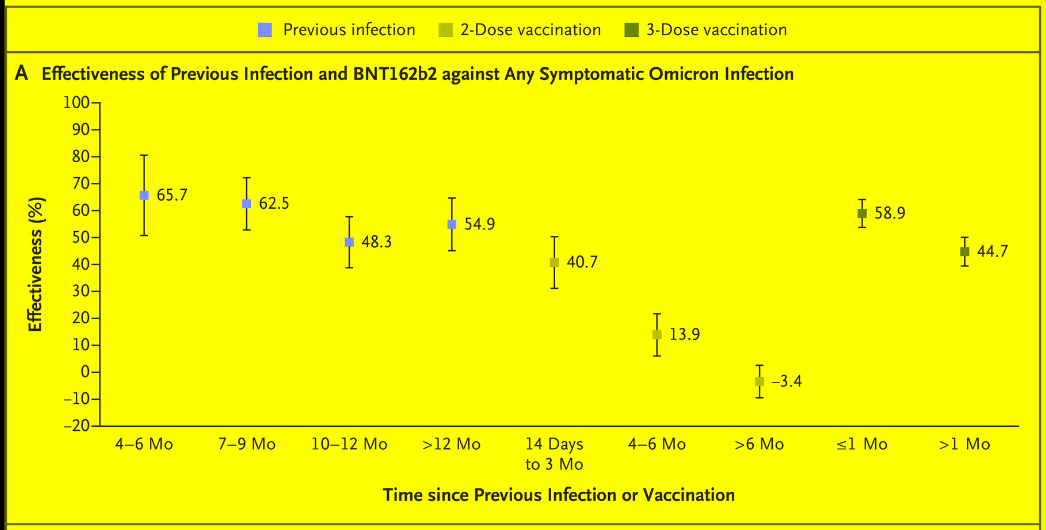
A new study was based on the whole population of Qatar. It shows that people who caught the original older variants had about 50% immunity to catching Omicron — even ten months later. Those who were double vaccinated had so little protection six months later, it was effectively zero. Indeed, if they had Pfizer their effectiveness was minus 3.4% meaning they were ever so slightly more likely to catch Omicron that if they hadn’t had any vaccines. For moderna it was minus 10% at the six month mark, which sounds, well, not good.
Ten months later, those who had caught earlier variants of Covid still had 50% protection against Omicron:
The authors of the study found that those who had a prior infection but no vaccination had a 46.1 and 50 percent immunity against the two subvariants of the Omicron variant, even at an interval of more than 300 days since the previous infection.
Immunity levels for two COVID-19 vaccines fell to negative figures 270 days after the second dose of vaccine. These numbers predict a trend of more rapidly waning immunity for vaccines compared to immunity from infections.
The findings are supported by another recent study from Israel that also found natural immunity waned significantly more slowly compared to artificial, or vaccinated, immunity.
The study found that both natural and artificial immunity waned over time.
Individuals that were previously infected but not vaccinated had half the risks of reinfection as compared to those that were vaccinated with two doses but not infected.
Natural protection was as good as three doses for outcomes that mattered
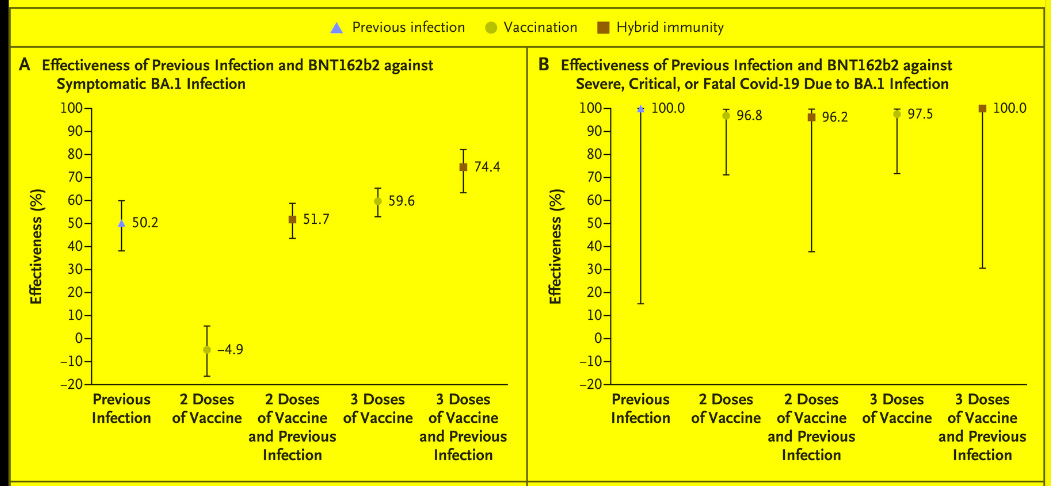
From the paper, the first box below compares people taking Pfizer or catching old versions of Covid and their later likelihood of catching Omicron BA1. Basically two doses were useless and once someone had caught covid they’d need at least three doses before there was much benefit above and beyond what they already had, and when we say “benefit” we’re only talking about a reduction in symptomatic Covid.
The box on the right shows just how useful any kind of protection was against severe, critical or deadly outcomes. Remarkable stuff. 100% everywhere.
Bear in mind that the third dose “boosted” people were usually were still in the seven week honeymoon period. If this study were done now, a few months later, the 3 doses numbers here might not look much different to the other options, or possibly, might resemble the “2 dose” poor results. We can’t tell from this study.
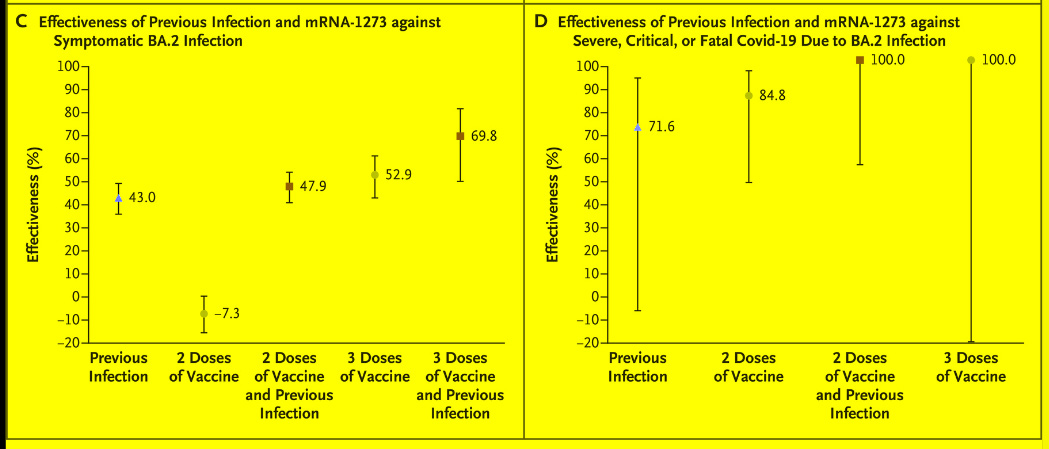
The numbers are similar for the newer variant of Omicron called BA2 but protection was a bit lower (below). Meaning the the newer Omicron version which took over the world in January was slightly better at evading protection than the December one. BA2 was definitely a bit nastier for some people though. And protection against severe, critical or fatal BA2 infection was lower from natural infection, though monster error bars neutralize all simple statements.
All the figures are slightly out of date though. We’re now up to Omicron 4 or 5 or so.
Tracking the slide
The honeymoon period for vaccination lasts for three months and then wears off quickly to the point where at six months the injectee might as well not have had a dose at all.
It also has to be said we don’t know if catching Omicron protects a lot against catching Omicron. It does for a while, but we don’t know how long. It’s possible that a mild case of Omicron doesn’t set people up for long term great protection, which is what happens with other normal mild coronaviruses at the moment.
ENSO is playing games with climate scientists — mocking their ability to predict the single greatest natural short term climate swing factor. The El Niño–Southern Oscillation drives floods, droughts, bushfires, and essentially pushes the planetary temperatures up and down on a year by year basis. Nothing determines the year’s climate headlines more than this one thing, yet climate scientists haven’t the faintest idea what drives it.
Imagine what it would look like if they could? They’d be able to say … blah… solar wind changes driven by, say, solar barycentric dynamics will lead to El Ninos in 2023, and ’25, a weak one in 2026. Farmers could plan ahead. Dam managers would know when water would be scarce. The UN would know which years to ask for even more money.
Meteorologists are forecasting a third consecutive year of La Niña. Some researchers say similar conditions could become more common as the planet warms.
On ongoing La Niña event that has contributed to flooding in eastern Australia and exacerbated droughts in the United States and East Africa could persist into 2023, according to the latest forecasts. The occurrence of two consecutive La Niña winters in the Northern Hemisphere is common, but having three in a row is relatively rare. A ‘triple dip’ La Niña — lasting three years in a row — has happened only twice since 1950.
Get ready: Matthew England predicts more triple events:
This particularly long La Niña is probably just a random blip in the climate, scientists say. But some researchers are warning that climate change could make La Niña-like conditions more likely in future. “We are stacking the odds higher for these triple events coming along,” says Matthew England, a physical oceanographer at the University of New South Wales in Sydney, Australia. England and others are now working to reconcile discrepancies between climate data and the output of major climate models — efforts that could clarify what is in store for the planet.
“Working to reconcile discrepancies” is climate-scientist-speak for “working to fix our broken models”. We note the get-out-of-jail clause on most climate news reporting, some scientists say this, some say that, so some climate scientists are always right.
How useful, exactly, are those models that predict a 51% chance of a La Nina seven months from now?
The latest forecast from the World Meteorological Organization, issued on 10 June, gives a 50–60% chance of La Niña persisting until July or September. This will probably increase Atlantic hurricane activity, which buffets eastern North America until November, and decrease the Pacific hurricane season, which mainly affects Mexico. NOAA’s Climate Prediction Centre has forecast a 51% chance of La Niña in early 2023.
When it comes to predicting what climate change will actually do to ENSO events — for years most scientists hedged and only say that both La Ninas and El Ninos may get more extreme, but not necessarily that one or the other will become more common.
Review says the models of an increase in extreme weather events are agreeing.
According to Cai, extreme El Niño events happened roughly once every 20 years in the 20th century, but they’re now increasing in frequency. “It will almost double, to one in 11 years or so.”
He adds that there’s more consensus among the models they’ve examined than in previous studies, such as one he authored in 2015. “More models are saying the same thing. I think that it’s because we are now able to get more realistic models.”
Cutting-edge models predict that El Niño frequency will increase within 2 decades because of climate change, regardless of emissions mitigation efforts.
Now, new research published in Nature Climate Change has used cutting-edge climate models to predict that by 2040, El Niño events will become more frequent because of changes to the climate. These events are already in motion and will happen regardless of short-term emissions mitigation efforts, according to the authors.
“This [finding] is another layer on a growing pile of work that is pointing quite conclusively to ongoing changes to ENSO related to greenhouse gases,” said Kim Cobb, a climate scientist at the Georgia Institute of Technology who was not involved in the new research.
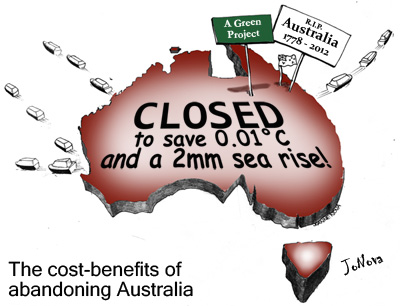
Admiral Chris Barrie will be paid to worry about how seas rising by 1mm a year might affect our supply chains, but not about how making electricity ten times more expensive might destroy manufacturing in Australia.
If we had to actually build our own nuclear submarines will China still be happy to sell us the steel? Will we have an aluminum smelter left in the nation, and how long can we run that on solar panels and batteries? Are 2,000 kilometer long high voltage lines an easy target for hostile forces? Will electric vehicles be easier targets for cyber hackers or EMF weapons? Could dust bombs sabotage 2GW of solar panels? Would paint bombs be worse?
If we managed to build one nuclear submarine by 2040, will it be the most reliable baseload generator left in the national energy market and should we plug it back into the grid so we can build another sub?
Anthony Albanese will ask Australia’s most senior intelligence chief, Andrew Shearer, to personally lead a review of the security threats posed by the climate crisis.
In a document submitted to the UN outlining Australia’s new 2030 emissions target, the Albanese government confirmed it would order “an urgent climate risk assessment of the implications of climate change for national security, which will be an enduring feature of Australia’s climate action”.
The exact scope and terms of reference are currently being drawn up, but the assessment was expected to consider options such as setting up an Office of Climate Threat Intelligence. If created, that office would update the threat assessments on a rolling basis.
Threats will be updated as funds roll in. Imagine if someone was paid to find out if unreliable expensive energy made us an easy target?
Former Australian defence force chief, retired Admiral Chris Barrie… said climate threats and costs would affect Australia in many ways, including disruptions to vital import and export markets and supply chains. He also cited increasing demands on the health system, degraded and lost natural systems, and escalating adaptation needs.
“Globally there will be regional conflicts over shared resources, climate-change enhanced famine, breakdown in social cohesion, forced displacement of populations, and state failure, including in our region,” Barrie said.
These small wins matter. Cancel Culture is about shutting people up — and even if it’s just a dumb joke being cancelled, the danger is that each minor win gives power to self-annointed Thought Police. The Grand Sacred Cows of our culture are created through a thousand irrelevant outrages.
Bill Maher, comedian, savages The Washington Post and Felecia Somnez and half the Millennial Gen:
For the Australians who missed it in our election week:
Nina Jankowicz just quit and the Disinformation Governance Board is dead. It’s the best possible ending to a move that was demented from the start.
Whatever the Department of Homeland Security thought the DGB would do, the board’s ham-handed launch (and very name) could only feed the direst suspicions. The US government has no business determining what’s “disinformation” — certainly not via an Orwellian shadow department, housed within a national security agency.
Just like that — Europe is hitting the panic button. Thank the Russians for demanding rubles for their gas and threatening supply. Not only has Germany decided to rescue old coal plants, but so has Austria, which had gone blissfully “coal free” two years ago. How long did that fairytale last? In the Netherlands coal power plants were forced for years to run at only 35% capacity by government ruling, but now, suddenly, full tilt is fine. Sweden and Denmark have both issued an “early warning” to flag potential energy shortages.
In Poland, energy prices are so expensive that three weeks ago the government told people to go and collect wood from forests to keep their homes warm. Last week they the government said it would pay a large part of the cost of buying three tons of coal for each household. It’s that bad.
Much of the EU rely on Russian gas for about 40% of their supplies. The Austrians have storage sites for gas so large they can hold an entire years worth, but they are only 39% full and they want to double that before November.
Gazprom said last week it would reduce supplies of the fuel to Germany via the pipeline due to delayed repairs, but the German government has called the decision ‘political’ amid the widespread European support for Ukraine following Putin‘s invasion.
Germany has also mandated the filling of gas reserves to 90 per cent ahead of the European winter, to hedge against a further reduction in supply. ‘When we go into the winter with half full gas stores and the taps are turned off then we are talking about a difficult economic crisis in Germany,’ Habeck said. Currently, Germany’s gas storage capacity is just under 60 percent full.
Meanwhile Russia is calling it a blockade to stop deliveries to Kalingrad. The Lithuanian Prime Minister says it is not a blockade, only “sanctions”.
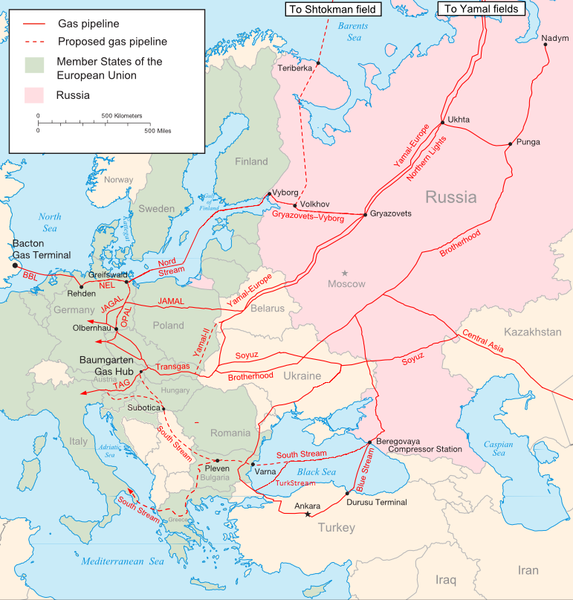
Russian gas pipelines to Europe (Click to enlarge) | Samuel Bailey
That’s a lot of countries suddenly looking for alternative energy:
Russian state-owned energy giant Gazprom has turned off supplies to several EU countries for refusing to pay for gas in roubles — including Poland, Romania, Bulgaria, Finland, and the Netherlands.
But Germany, the Czech Republic, Italy, Austria, and Slovakia have also faced reduced gas delivery volumes, raising fears over gas security supply.
Things people thought were set in stone can be turned on a dime:
The Netherlands said Monday it will lift all restrictions on coal-fired power stations to counter a drop in gas supplies from Russia….
“The cabinet has decided to immediately withdraw the restriction on production for coal-fired power stations from 2002 to 2024,” Jetten told a news conference in The Hague.czech. “This means that coal-fired power stations can run at full capacity again instead of the maximum of 35 percent.”
The Austrian greens were very pleased Austria was only the second European country to go “Coal free” in March 2020. It was “historic” at the time.
State-controlled Verbund AG, Austria’s biggest utility and most valuable company, was ordered late Sunday to prepare its mothballed Mellach coal-fired station for operation. The plant, 200 kilometers (124 miles) south of Vienna, was shut two years ago as Austria became only the second European country to eliminate coal entirely from its electricity grid.
Meanwhile, in Poland, a reminder of how desperate the situation really is:
Authorities in Poland reminded citizens on Friday they can forage firewood from forests to keep warm amid soaring energy costs in the country. The government said it was taking steps to make it easier for people to collect firewood in an effort to ease the pressure created by sky-rocketing energy bills and shortages of coal.
Opponents of the ruling ‘Law and Justice party’ said the comments showed it had not got a grip on the wider economy. Inflation in Poland has climbed to 14 per cent in recent weeks, with fuel prices hitting 8 zlotys ($1.87) per litre. The average monthly wage in Poland is around 7110 zlotys ($1800).
The Polish government wants to subsidise coal for household and housing cooperatives amid rising coal prices and shortages caused by the Russian coal embargo, Energy Minister Anna Moskwa announced Tuesday.
Under the government’s plan, consumers can buy up to three tonnes of coal per household for a maximum price of 996 zlotys (€214). The sellers that keep the price at this level will receive up to 750 zlotys (€161) in compensation.
Would you like blackouts or floods with your Green Burger?
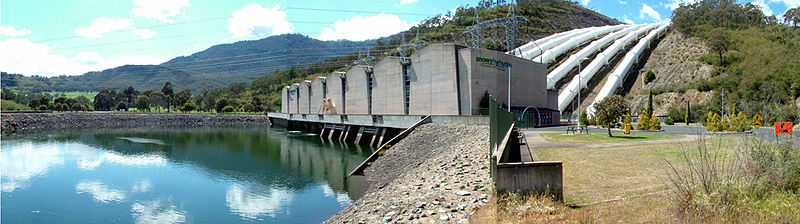
Tumut Generation Station No. 3 Snowy scheme | Joe “velojo” A
Here in Weather-Dependent Renewable World the chief crash test dummy is struggling because of yet another bit of terrible luck. We desperately need the only reliable renewable energy we have to generate while reliable but-badly-maintained-coal is breaking — and our national grid sits on the edge of blackouts. But Lordy No! Oh the schadenfreude — the dams are all full. Seems we have too much water thanks to the La Nina we didn’t predict, and the excess rainfall that wasn’t supposed to happen, and the dams that weren’t supposed to fill. Now if Snowy Hydro releases too much water to make electricity they may flood lower areas.
You can’t make this stuff up. Hydroelectric dams serve two purposes and sometimes they conflict. If we are lucky, we might avoid both blackouts and floods, but we won’t avoid the bonfire of electricity bills that are coming.
Ponder the impossible quandry of the Green religion. Like the Escher puzzle of Energy — It’s always the weather’s fault. If only we could use enough renewables to get perfect weather we could solve this! And perfect weather is just a hundred trillion solar panels away…
Oh woe is the journalist trying hard not to get the message about relying on weather dependent generation:
It’s only one example of how weather extremes have deepened the nation’s man-made power crisis.
Snowy Hydro’s biggest power station is Tumut 3. At maximum output, it can generate 1,800 megawatts of electricity.
The huge volumes of water used by Tumut 3 are either pumped back up the hill to an upper reservoir or emptied into Blowering Dam.
“Generation from Tumut 3 Power Station is significantly constrained by the current storage levels in Blowering Reservoir and the release capacity of the Tumut River. “In order to meet the predicted energy demands in the coming days, it is possible Blowering Reservoir will fill and spill, potentially exceeding the Tumut River channel capacity. “In this scenario, there is potential for the inundation of low-level causeways and water breaking out of the river channel onto agricultural land adjacent to the river.”
Green motto: If in doubt, blame the weather. Never ever admit it was your own arrogant damn stupidity, your fantasy plans, your lack of humility and your inability to add up.
The real world is so complicated
Ben Kefford at LinkedIn does an analysis that explains the dilemma for the generators bidding. In this case Snowy Hydro was afraid that when the Administrative price cap was forced on the system that many other generators would withdraw (which happened). That would leave them pumping far too much water — and risk the flooding in lower areas. To stop the flooding they would have to pay exorbitant daytime rates to pump water back up to the higher dam at blistering prices above $250/MWh. Normally, like a battery, they try to buy-low, sell-high, in terms of finding cheaper parts of the day to run the pumps. But at the moment, there are no cheap hours.
And then there was the possibility that those dollars would not be recouped for up to five months leaving them with a cash shortfall of millions:
While it is true that there is a compensation mechanism via AEMC for recovering opportunity costs lost via generating during administered pricing periods, the actual methodology for calculating storage opportunity costs is not clear, and the mechanism has been rarely used in the past. Notably, under the Rules there is also an upwards of 90 business day (4 – 5 month) delay in determining these costs, including public consultation plus draft and final methodologies.
With an average output capacity of 260 MW in the week leading into the APC, continuing to operate the same way and keep the same price spread would require $18.2 million* in revenue claims per week which are potentially being delayed up to 5 months. Over the unknown period of time which the price cap would remain in place, this turns into a massive liability.
So finally when the APC did hit, not only was Tumut 3 left with little viable economic options for releasing capacity from the upper reservoir, it became evident that the race for the exits from other limited fuel generators was going to put enormous pressure on the lower reservoir if they were called upon. Taking all of this into account – we begin to see that it made unfortunate sense to follow suit.
The bureaucrats designed a poor market then blame the market or the players when they fail. The Greens and renewable-delusionals were blaming the generators for greed and gaming the system — as if they were withholding generation during wildly high priced market times.
Amazing how fast the Sacred Cows get pushed aside. Until a few months ago, Germany had been planning to close its last nuclear plants and gas production had been falling for 20 years. But the Russians are cutting back the gas feed and even the German Greens understand what will happen by winter if they don’t have enough energy. Though on twitter, a lot of commentators are wondering why they don’t reopen the nuclear plants they just closed first and why they still plan to shut the last three later this year?
As Russia reduces its supply of natural gas, Economy Minister Robert Habeck has said Germany must curb its usage. Otherwise, things “could get tight in winter,” he said. Germany must limit its use of gas for electricity production and prioritize the filling of storage facilities to compensate for a drop in supply from Russia, Economy Minister Robert Habeck said Sunday.
In a move that goes against the principles of his environmentally-friendly Green Party, the country will also have to increase the burning of coal, Habeck said.
They are offering schemes and incentives for industry to save gas so it can be stockpiled ahead of winter. They’re talking about a cap on domestic heating too, but they know it won’t be enough. It hurts:
“That’s bitter, but it’s simply necessary in this situation to lower gas usage,” he said.
Yet they still claim they can go coal free by 2030. The fantasy olive branch to soften the pain:
The coalition government has made it its goal to make German energy production coal-free by 2030.
The third party in the government coalition, the neoliberal Free Democrats (FDP), has also called for Germany to reconsider its 2017 ban on unconventional fracking…
If it wasn’t, it should be easy for the FDA and or Pfizer to reply. If it was this extraordinarily rigged to “find” some infinitesimally tiny benefit among the acres of null and even bad results, we have to ask, does anyone care about babies anymore? If the data Pfizer sent is this awful, no one is even trying to hide the corruption. Does the FDA care about its own reputation?
According to Dr Clare Craig (in the video below) — the evidence that Pfizer sent to the FDA is dubious in the extreme: As she tells it — the trial recruited 4,526 children aged from 6 months to 4 years, but as many as 3,000 did not finish the trial. On that basis alone, she says, “the trial should be deemed null and void.” This trial data is so they can get EUA – Emergency Use Authorisation, but they defined severe covid as a raised heartrate and an increased breathing rate — which hardly sounds like an emergency, or something severe. In the end there were only six children age 2 – 4 that had “severe covid” and who were vaccinated and 1 child that had severe covid that was not vaccinated. There was one child that was hospitalized — they were vaccinated.
In terms of pure cases of Covid — Dr Clare Craig describes a process that filters out nearly every case there was. They vaccinated the babies and children and waited 3 weeks after the first dose for the second dose — but in that time, 34 children got covid who were vaccinated and only 13 got covid in the placebo group. It worked out as a 30% increased chance of getting covid if they were vaccinated. They ignored that data. It takes a few weeks for the vaccines to generate antibodies, so, the vaccinated were not really vaccinated. We understand the reason, but it doesn’t change that if there is an increased risk during that time, it says something.
Then there was an eight week gap between the second and third dose. Again, according to Dr Craig, plenty of children were catching covid during that period, but Pfizer and the FDA ignored that data. They filtered out 97% of the incidents of children catching covid. They looked at tiny numbers left over after all the waiting periods. They claim the vaccines work on the basis of 3 covid cases versus 7 after ignoring all the other cases. There were even 12 children who caught covid twice in the two month follow up period and 11 were vaccinated, mostly with three doses.
Babies are not at risk of Covid… and they have no long term safety data. How is it that an EUA – an Emergency Use Authorisation — even applies to children? The whole cost benefit ratio is vastly different for a one year old to a ninety year old. The long term risks, whatever they are, are so long.
The placebo group was vaccinated — on average — after only six weeks and the trial was unblinded, so there is no long term control group.
As Dr Craig says: “Parents should be demanding that the decision-makers explain themselves.” Not just parents, but where is the media, the Professors, the Doctors, and the elected representatives? Where is the UN Humans Rights Commission, on an issue that actually matters?
….
I seem to recall that it was important for Pfizer to get approval for all ages. It’s not just the bit of extra market share from opening up a new “market” but something much bigger — something about getting approval in every age qualifies the product or indemnifies it in a whole new way. Search engines naturally, are not making that easy to find right now. Perhaps a reader can help explain why — legally — it was important to get the EUA in the USA extended to all ages. The risk they are taking with this shows the stakes must be very high. They know how bad this data is.
The UK government‘s plan to reach ‘net zero’ by 2050 by removing carbon from the atmosphere relies on burning the equivalent of almost 120 million trees a year, a new report claims.
The government’s Net Zero Strategy, released in October 2021, aims to capture up to 58 million tonnes of CO2 from the burning of biomass and piping it under the North Sea.
But to create this much carbon, a whopping 32,534,939 tonnes of wood pellets would need to be burned every year, according to a report by The Telegraph — the equivalent of 119,834,572 trees.
The UK plan assumes trees are carbon neutral, though some of these forests are shipped from America, and probably not via sailing ships. Who can forget how in 2015 Drax, Britain’s biggest power station, received more than £450 million in subsidies for burning biomass, which was mostly American wood pellets. Who also can forget the remarkable coincidence that Chris Huhne, former UK parliamentarian who poured millions of UK tax money into biomass, later got a job directing a company called Zikka Biomass. He did spend time in jail, but that was for lying about speeding tickets.
To balance the UK carbon books some extra CO2 now has to be stuffed under the North Sea in a carbon capture project called BECCS (bioenergy with carbon capture and storage). Not only will it be obscenely expensive, and serve no purpose, but no one will know until years later whether the carbon obediently stayed there.
Ponder that the Greens say that Net Zero will prevent forest fires, and so we arrive at a point where The Science apparently says we have to incinerate 120 million trees a year to stop forests burning. Witches never had it this easy.
The UK Government says that 120 million trees is not a number they can use in a screenplay or something like that:
Speaking to The Telegraph, a spokesman for the Department for Business, Energy and Industrial Strategy (Beis) said that the plans are not final, and that they ‘do not recognise this characterisation’ of the number of trees being burnt.
Presumably the trees would not identify as “burnt” either.
In France the government is banning events “because of a heatwave” of 40 degrees C (104F) — as if adult mammals cannot figure out whether the temperature is too hot for their own health. Ancestors of mice and rats worked out their own temperature sensors and behaviour changes 200 million years ago. It’s a Big Government attempt to infantalize and gaslight the whole population. Will they obey?
It’s only the region around Bordeaux but will French teenagers accept being told to stay home in forty degree heat, something that millions of humans live with all over the world every summer?
“Everyone now faces a health risk,” official Fabienne Buccio told France Bleu radio, after announcing the regional restrictions around Bordeaux. Outdoor events – including, ironically, annual ‘Resistance’ celebrations – are banned until the officials declare the heatwave is over. They’re even restricting some indoor events that don’t have air conditioning.
Concerts and large public gatherings have been called off in the Gironde department around Bordeaux. On Thursday, parts of France hit 40C earlier in the year than ever before, with temperatures expected to peak on Saturday. In Gironde, officials said public events, including some of the official 18 June Resistance celebrations, will be prohibited from Friday at 14:00 (12:00 GMT) “until the end of the heat wave”. Indoor events at venues without air-conditioning are also banned. Private celebrations, such as weddings, will still be allowed.
Excuses, excuses.
The increased use of air-conditioners and fans was forcing France to import electricity from neighbouring countries, grid operator RTE said.
The real problem is not the heat, its that half the French Nuclear power fleet is down (the new reactors have convoluted pipes and odd cracks remember?).
In the UK, temperatures are expected to reach 33C in southern England, while a level three heat-health alert has been issued for London.
It’s not just Europe according to the BBC:
On Wednesday a third of the entire population of the United States were advised to stay indoors due to record temperatures…
At least it was only “advice”.
European countries prepare for blistering weekend heatwave
The Red Cross also organised efforts to distribute fresh water to the homeless community in Toulouse, where temperatures are expected to soar to 38 Celsius today.
Note the ridiculous caveat:
“There are more deaths of people in the streets in the summer than in the winter,” said volunteer Hugues Juglair, 67.
Far more people die in winter, but if we cherry pick a random enough factoid we can make a scary sentence.
Indeed, while there are apparently a few new variants of “record heat” in France — for most it’s just early in the season — and climate change is so unprecedented that it was even earlier in the season back in 1947.
And there they go with that cause and effect thing — if one hot weekend is “climate change” so is every cold snap:
Experts warned that the high temperatures were caused by worrying climate change trends. “As a result of climate change, heatwaves are starting earlier,” said Clare Nullis, a spokeswoman for the World Meteorological Organisation in Geneva. “What we’re witnessing today is unfortunately a foretaste of the future” if concentrations of greenhouse gases in the atmosphere continued to rise and pushed global warming towards 2C from pre-industrial levels, she added.
It’s a theatre performance of — swoon — the dire new world of “climate change” where any normal hot summer day can be turned into a red light lecture about the “risks” of eating beef, or using cars with petrol engines.
Will young people, at no risk from heat stroke if they drink enough water, really accept the cancellation of their festivals and concerts, because of “climate change?”
The climate experts didn’t warn us we’d need more electricity for winter in Australia.
If only carbon dioxide make winter nights warmer, Australians wouldn’t have been using up stockpiles of coal and gas in the last six weeks, and setting winter-time demand records. These geniuses got everything wrong.
Coldest start to winter in decades for eastern Australia with power grid under strain
The Guardian
Early June temperatures in Melbourne didn’t go above 15 degrees for first time in 70 years as cold weather pattern starts to break
Eastern Australia’s giant cold snap is finally breaking down but not before temperatures reached lows not seen for seven decades or longer and pushed the country’s main electricity grid to the brink.
The extended chill was caused by an unusual weather pattern that locked in cool pools of air over southern and eastern states, triggering the deepest snow dumps in the alps since 1968, according to Ben Domensino, a senior meteorologist at Weatherzone.
Australia so cold it’s already setting winter electricity demand records
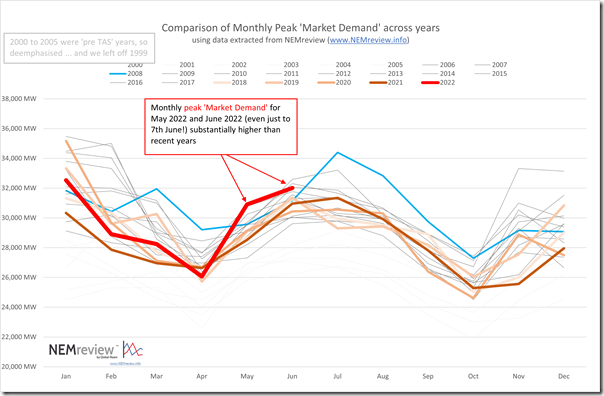
It’s not about record cold snaps, it’s more of a long run of below average days. In a sign of how not-warm it is in Australia the sheer number of megawatts being used on the East Coast was the highest ever recorded for May, and WattClarity noted that the first week of June was already in the top four years. Demand on June 7th this year was 32,000 Megawatts — the highest winter day since 2008. It’s not as high as our highest summer records which are just under 36,000 MW. Nonetheless, it wasn’t supposed to happen much was it?
As a temperature proxy the NEM leans heavily on Melbourne and Sydney conditions.
May and June peak ‘Market Demand’ very high on a historical scale | WattClarity
Anyone who wants to file a complaint that a cold month or two doesn’t mean anything can send it in with all their complaints to the ABC for every news story about a hot weekend being “climate change”. We want receipts.
So it’s a new record. In the 20 years since the National Energy Market formed it has never operated on such a vapor thin margin. Only a few days ago Paul McArdle at WattClarity thought a mere 15% instantaneous reserve plant margin was a headline event, but tonight the grid survived (so far) on a tiny 3% Instantaneous Reserve Plant Margin NEM-wide. Things were so tight the NSW Minister for Energy sought emergency powers to force coal companies to provide fuel to coal generators for the next 30 days on his say so. Presumably next on his list would be emergency powers from God to make the wind blow.
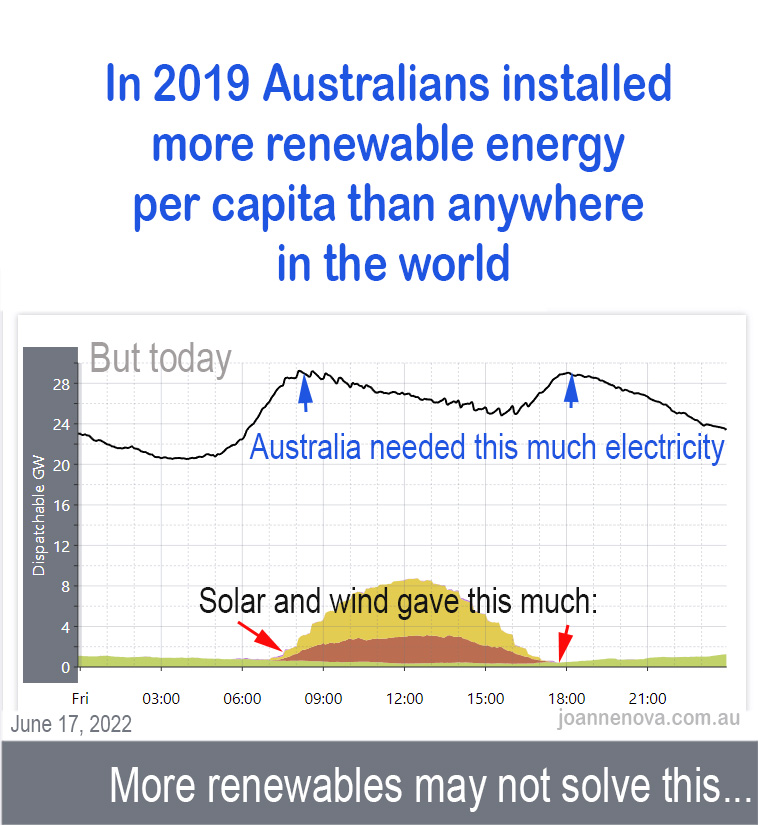
Two years ago Australian taxpayers spend $13 billion a year in climate action (Moran). As researchers at ANU noted, Australia was leading the way — installing more megawatts per person than any other nation on Earth. (Blakers) Despite being the fastest growing and sparsest population, on the most remote nation which was practically a quarry and farm built on coal and uranium deposits, Australian political leaders rushed to compete for green booby prizes in Beautiful Weather Contests.
And the toll from the bonfire in prices is just starting with Iron Foundry’s and Brickmakers already going to the wall. Businesses that have survived wars and market collapses couldn’t survive green fantasies.
Rising gas prices blamed as Advance Bricks says its oven will go cold after 82 years in Stawell
In the Victorian town of Stawell, about 230kms north-west of Melbourne, local manufacturer Advance Bricks is shutting after more than 82 years in business.
Managing director John Collins says the company, which employs 23 people, could no longer afford the power bill after the collapse of commercial gas supplier Weston Energy in late May forced it onto a plan with “retailer of last resort” Energy Australia.
“The assertion by (Victorian) Premier Andrews and (federal) Minister Bowen that heavy industries can transition to renewable energy is complete and utter fantasy,” he said.
For every green job we create we destroy two to five real ones:
A South Australian manufacturing business reliant on wholesale electricity has labelled the national electricity market a “failure,” after standing down 170 employees due to unaffordable operating costs.
Mr Lawrence said soaring wholesale electricity prices had been a “nightmare” for the iron foundry, which accounts for about 1 per cent of South Australia’s total electricity consumption per day when fully operational.
Some coal mines have struggled with both covid and also rain from the La Nina slowing down production. Look at the detail published in The Australian. Every coal unit matters. For some reason no one is mentioning the one they shut deliberately at Liddell in March this year. If only they hadn’t….
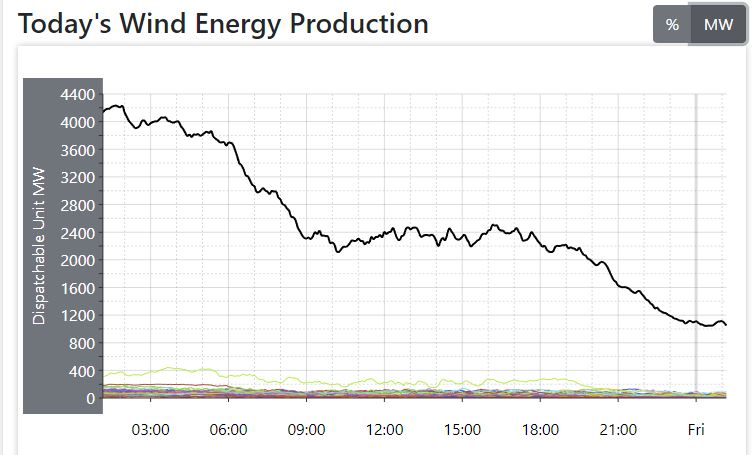
For energy-nerds following the Australian experiment, today is a big day. On the up-side, three coal turbines have rebooted adding another 1200MW to the grid. On the down-side, the wind has slowed and 3000MW has disappeared. On the hope-side, another 4 coal turbines may possibly get back in gear by Sunday, and you never know, the wind might pick up. Though it doesn’t look good.
Wind generation. June 16, 2022, Australian NEM. | Anero.id
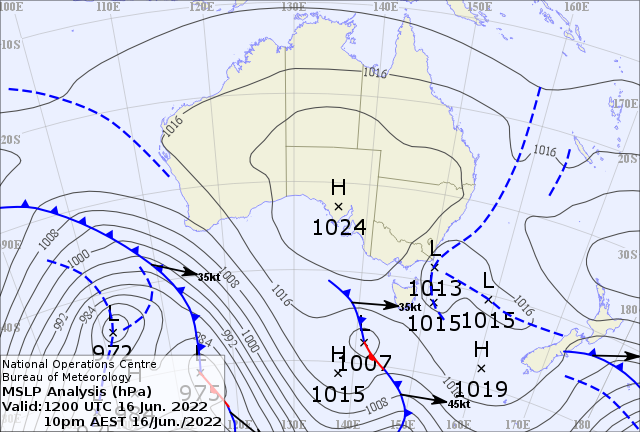
It doesn’t matter how many wind farms we build when one High Pressure cell arrives to sit on them all
And here is the cell that stops a million dishwashers.
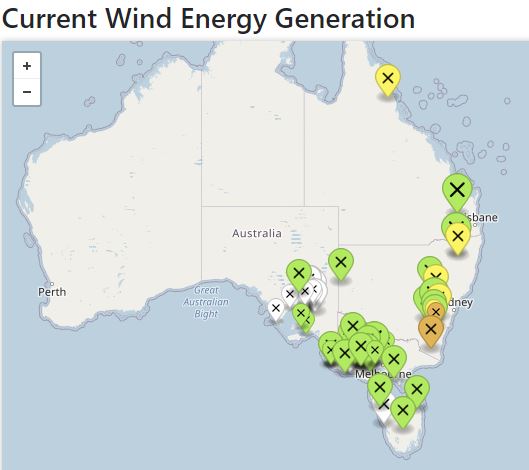
This is where all 76 Australia NEM grid wind farms are which could, in theory be generating as much as 9.8GW but are turning out 10% of that now.
Map of Wind generation Australia
Ninety percent of Australians are being asked to be careful with their electricity today while we wait for the wind to start blowing again or the weather to warm up. And millions of dollars is being burned in electricity bills (assuming people have electricity) because we shut down too many brown coal plants and didn’t maintain any of the coal fleet as if our quality of life depended on it.
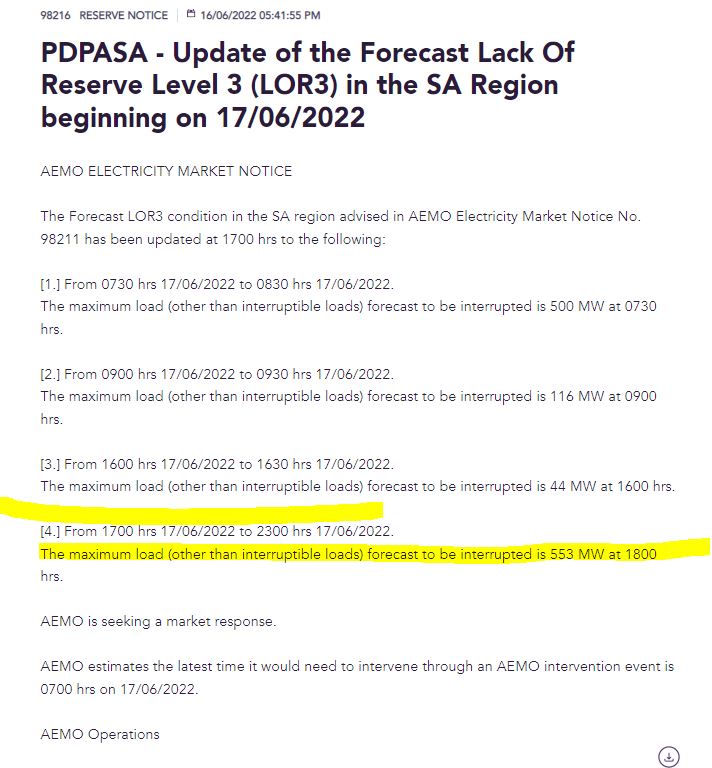
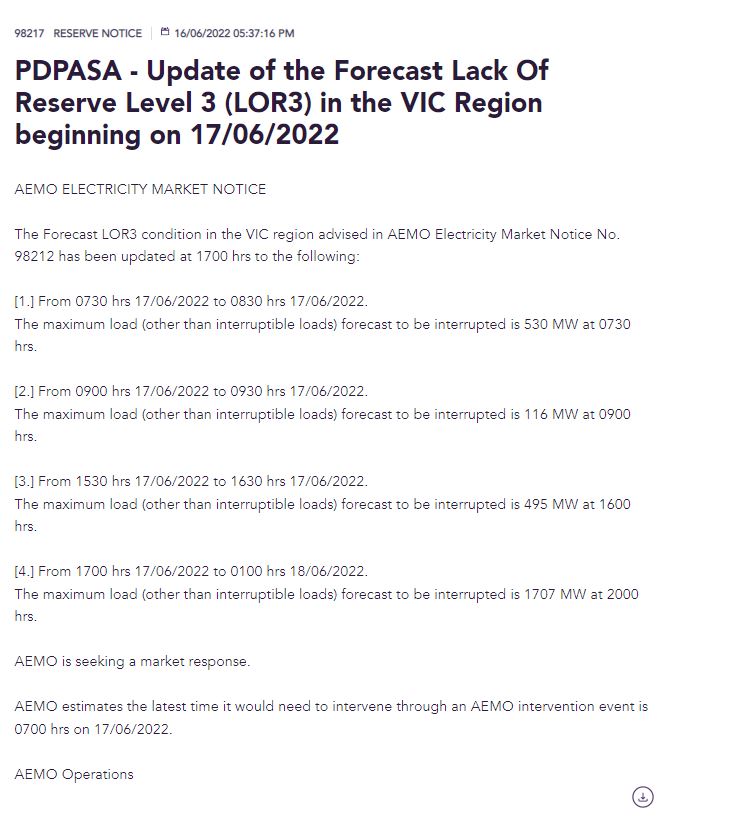
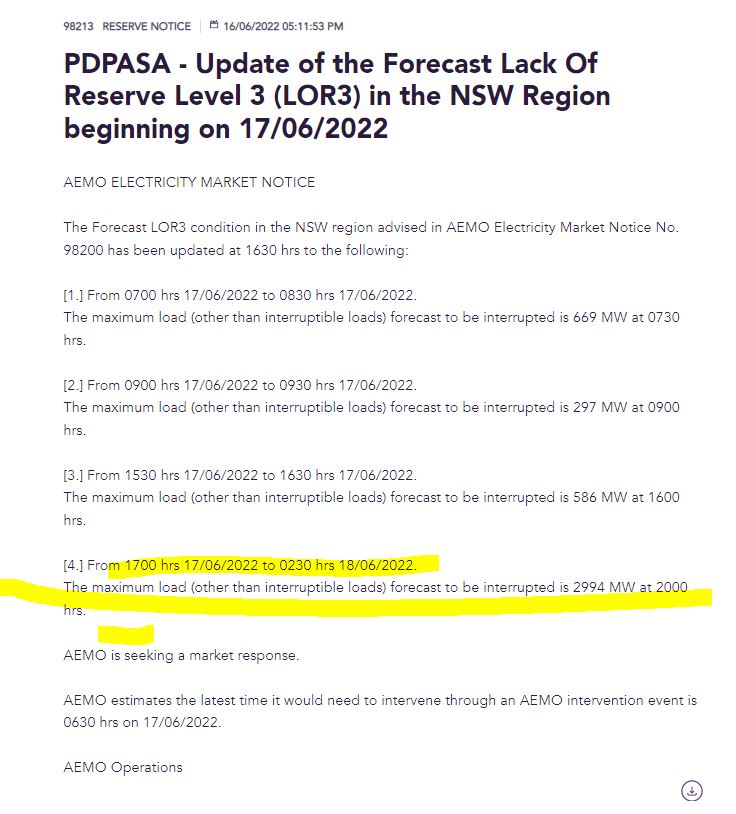
The AEMO has issued LOR3 (highest risk lack of reserve) announcements for SA, Victoria, and New South Wales for today. These are updated often and it is hard to keep up. LOR3’s are a kind of “Blackout watch”. Potential shortfalls of megawatts 18 hours in advance of the 6pm evening crunch time did look ominous: In Victoria the maximum forecast load that may be interrupted was 1400MW from 5pm to 1am. In South Australia it’s 273MW from 5pm to 9pm. In New South Wales the maximum “interruptible” load is a whopping 3007MW between 5pm to 2.30am. That’s potentially one third of the total demand in New South Wales. All of these may be resolved just in time, but somebody is sweating tonight sorting this out.
These notices linked above were 98212 (Vic), 98211 (SA), 98200 (NSW) – but which have been updated. Just for the tenor of what could theoretically go wrong, note the size and multiple problem times for one NSW update (copied below). I suspect the updated LOR3 notices 98223, 98225 and 98226 are still active. But curiously the Administered price period in NSW has ended. So the spot market is back in NSW?
“You can say the wind doesn’t always blow and the sun doesn’t always shine. Well, the rain doesn’t always fall either but we managed to store the water,” Bowen said.
Chris Bowen isn’t having any of Uhlmann’s ‘wind doesn’t always blow’ rhetoric.
“the rain doesn’t always fall either, but we manage to store the water – we can store the renewable energy if we have the investment”#auspolpic.twitter.com/LjJkEr3zJy
Is this Chris Bowen’s Zuma-numbers moment with electricity?
He doesn’t seem to realize that electrons won’t politely sit in a shoe box waiting for the day they run your toaster. When South Australia got the worlds biggest battery in 2017 everyone got excited but few realized it would only power the state for two whole minutes before it ran out. South Australia is just 6% of the total National Energy Market, but if we were trying to make it truly 100% renewable with a reasonable battery backup Paul Miskelly and Tom Quirk calculated we’d need 7.5 million tonnes of lead acid batteries and a spare $60 to $90 billion dollars.
In a recent “record winning moment” in solar and battery powered excitement one of the smallest and sunniest towns in Australia made headlines when it managed to run off 100% solar and battery power for a whole 80 minutes. Onslow is a metropolis of 847 people. As I said at the time, we’re only 520,000 minutes short of a year.
That’s how ready we are to power a nation of 26 million people on solar and wind and big batteries
Storage can be more than batteries, but we’re already spending $10 billion plus on Snowy Hydro 2.0 — the giant renewables-storage scheme that will waste 20-30% of the renewable energy fed into it so we can make a non-despatchable generator into a partly-despatchable one.
Hydrogen is hardly the answer. As David Archibald says it’s is such a reactive gas that there is no source of it in nature. The only naturally occurring hydrogen is the flammable part of farts. Otherwise, the cheapest way of making hydrogen is a water shift reaction with natural gas. But about 60% of the energy contained by the natural gas is wasted in the process — if you just wanted a source of energy, obviously, you’d use the natural gas.
As a fuel, hydrogen has some big shortcomings. It’s has low energy density, so a big, high-pressure tank of the stuff doesn’t take you far. It has an explosive range in air of 18% to 60%. It causes embrittlement of steel. There is a plot at the moment to add hydrogen to the natural gas distribution system — which then might start leaking like a sieve. It has a colourless flame, so leaks that have caught fire can’t be seen. In the days before infrared cameras, workers at a rocket fuel factory in Texas used to detect hydrogen leaks by walking with a straw broom in front of them. When the broom caught fire they had found the leak.
Last night hospitals were ordered to reduce electricity use and millions of people urged not to use basic appliances.
The potential for mass blackouts has increased with about 1800MW of coal-fired power not operating in Queensland and 1200MW of capacity offline in the states of NSW, Victoria, South Australia and Tasmania.
The Tomago aluminium smelter in NSW, the country’s biggest electricity user, was also forced to cut production to reduce the chance of a blackout.
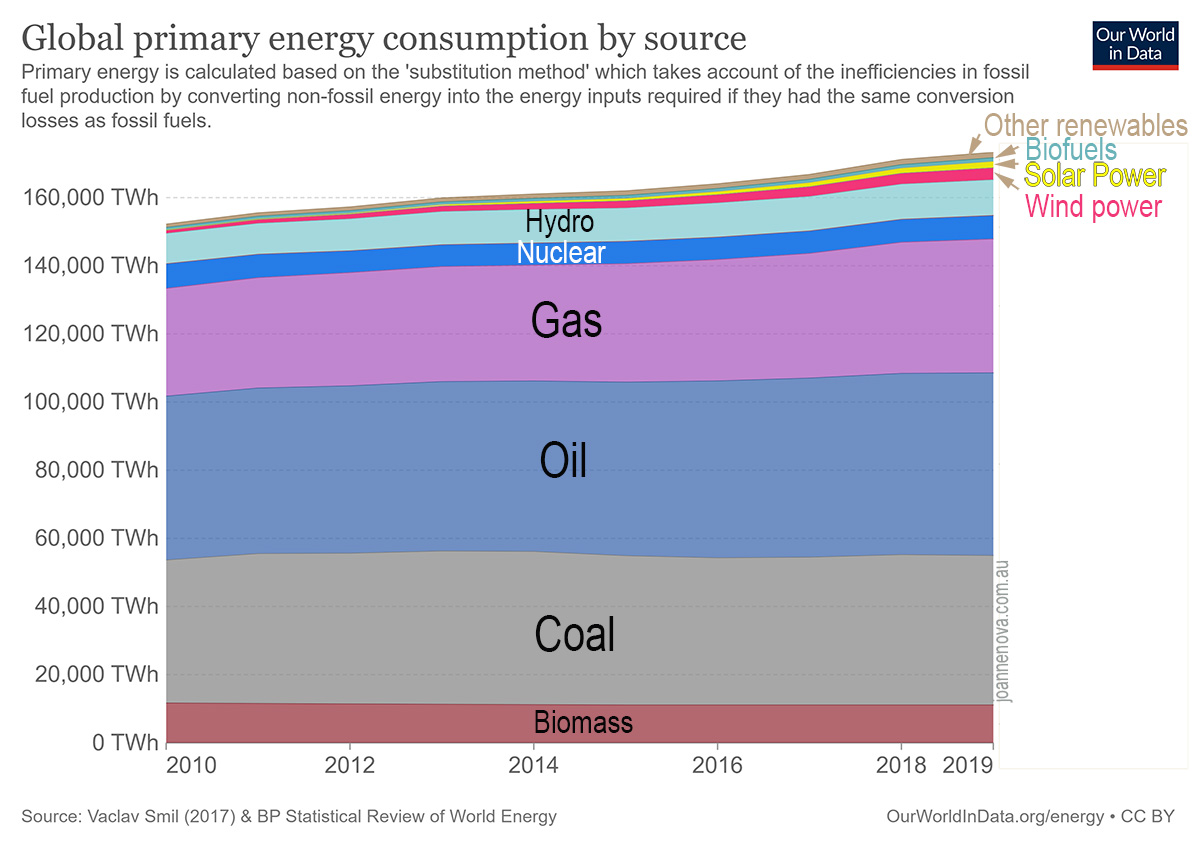
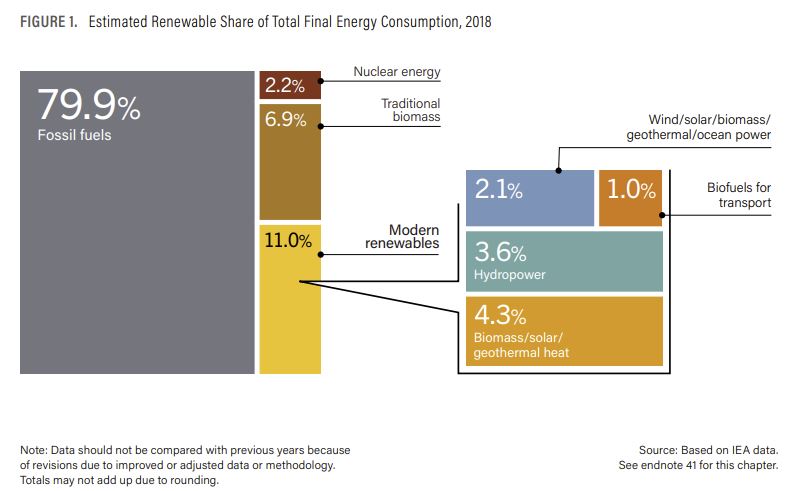
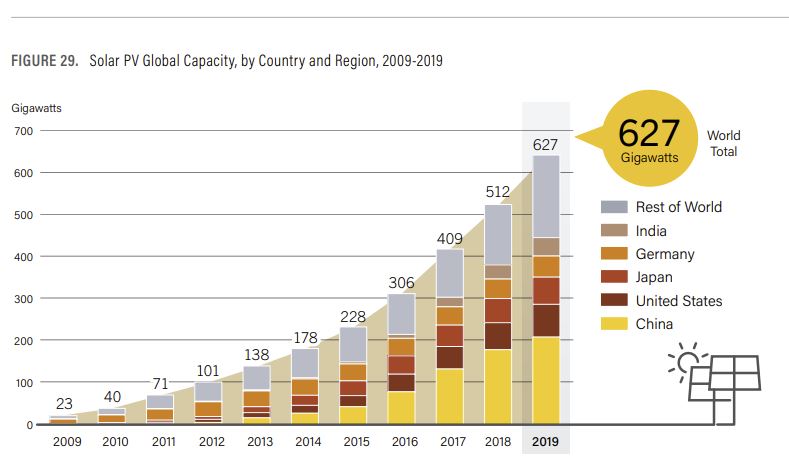
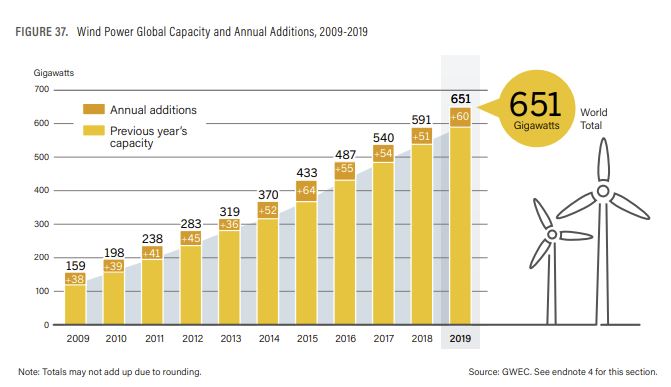
Reality must be depressing for Green-believers. Here they are, after all this revolutionizing, they’ve installed more than a million megawatts of glorious solar and wind totems and it has barely made a dent. The world still stubbornly runs on fossil fuels.
“The share of renewable energy has moved in the last decade from 10.6% to 11.7%, but fossil fuels, all coal and gas have moved from 80.1% to 79.6%. So, it’s stagnating,” said Rana Adib, the executive director of REN21. “And since the energy demand is rising, this actually means that we are consuming more fossil fuels than ever.” As the world rebounded from Covid-19 in 2021, there was a significant rise in overall energy use, most of which was met by fossil fuels.
Here is the whole last ten years of the renewables revolution
Despite having 61 figures in their 367 page report, they didn’t seem to have a graph of how global fuel sources have changed. To help them, I created one:
What would you do, if you had thousands of marketing dollars to spend and wanted some eye candy that made renewables look like they weren’t a complete failure. You might use something like this:
We use cookies to ensure that we give you the best experience on our website. If you continue to use this site we will assume that you are happy with it.


 Amazing how fast the Sacred Cows get pushed aside. Until a few months ago, Germany had been planning to close its last nuclear plants and gas production had been falling for 20 years. But the Russians are cutting back the gas feed and even the German Greens understand what will happen by winter if they don’t have enough energy. Though on twitter, a lot of commentators are wondering why they don’t reopen the nuclear plants they just closed first and why they still plan to shut the last three later this year?






_-_panoramio.jpg)
Recent Comments