Normally in a prewar situation a country might be increasing industrial production
h/t Rafe Champion
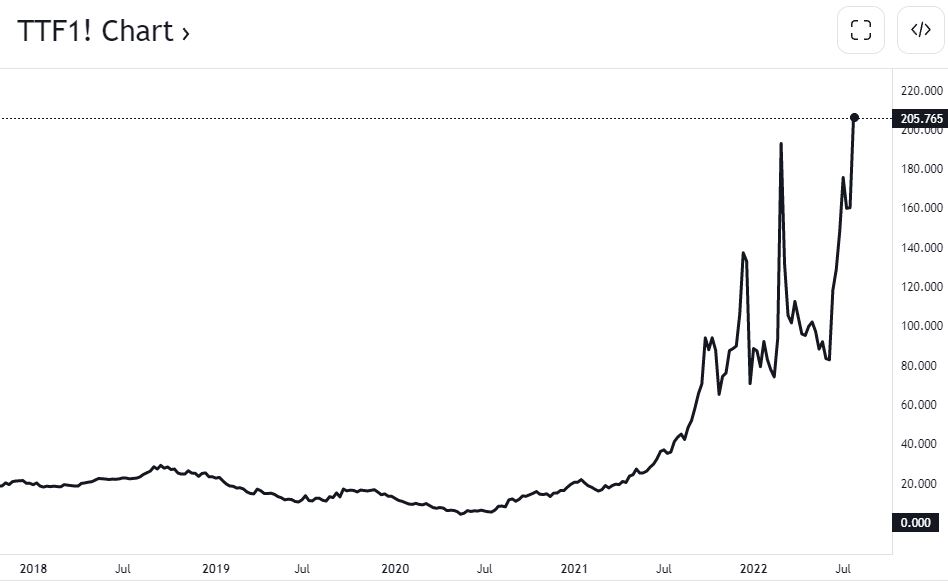
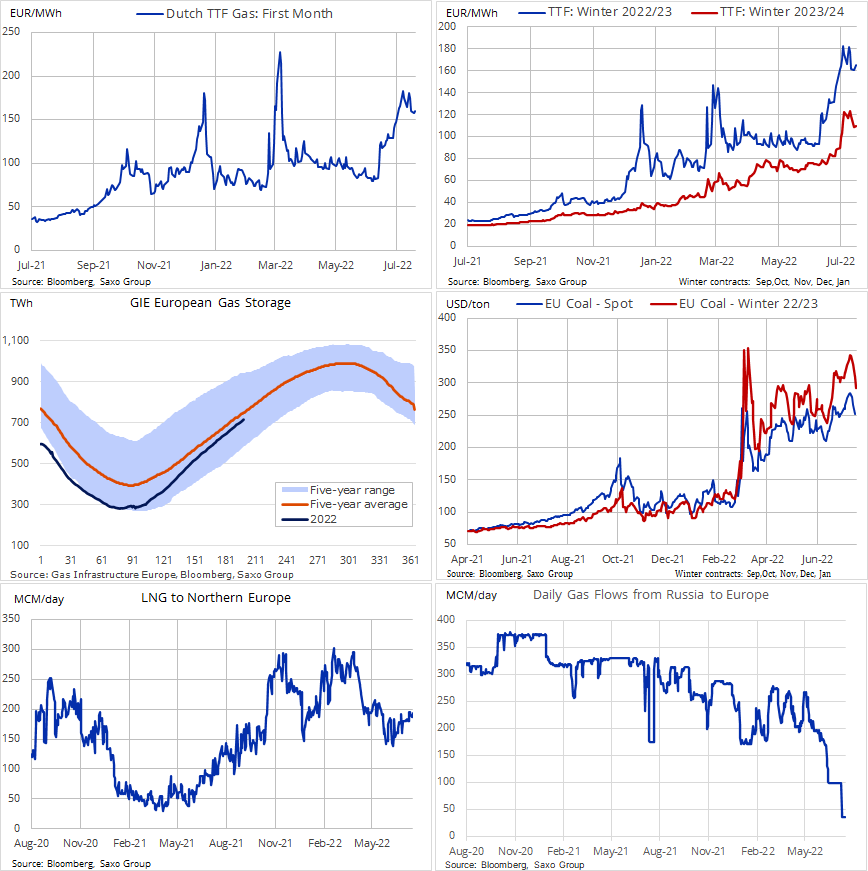
Russia has cut gas supply again, arguing over the German paperwork, after Canada dithered on sending the last turbine back, and Poland reneged on some dividends. Everyone is playing poker with energy, even if some of them didn’t count their cards before they started — and gas is predictably, hitting new record prices. But even before the ante was upped in the latest round, 15% of German industry were already cutting production. Many others are planning to or were considering moving. People are starting to wonder if this might be a permanent loss for the famous German industrial power.
In other news, rather frantic landlords in Germany want to be able to legally restrict temperatures of their tenants units. Someone has got to pay that gas bill, and just asking tenants to take shorter showers doesn’t seem to be working.
Now they tell us:
“Gas is now not only part of Russia’s foreign policy, but possibly also part of the Russian war strategy,” said [Klaus Müller, the president of Germany’s Federal Network Agency, Bundesnetzagentur]
If only someone saw that coming, like say, in 2018, when Germany had plenty of time to make sure energy didn’t become a threat to national security and their industrial base?
With Nord Stream 1 flowing at just 20% of capacity from July 27, Germany will NOT have enough natural gas to make it throughout the whole winter **unless big demand reductions are implemented**. Berlin will need to activate stage 3 of its gas emergency program
“The European gas crisis continues to escalate. Gas prices have returned to levels only seen in March as Nord Stream flows dwindle, while the outlook for winter looks bleak for European consumers,” BCS GM said in a note.
German power for delivery next year, the benchmark European price, shot up to a record 388 euros ($394) per megawatt hour on Wednesday — more than 400% higher than a year earlier. It later pared its gains slightly.
Though those slaves to the Australian National Energy Market would say “is that all”. We’re already paying $400 a megawatt hour. We don’t have to wait til next year. And we’re exporting gas too.
And so it begins: According to the DIHK survey of 3,500 companies the energy intensive industries are suffering so much they have to move or shut down.
One of every six German industrial companies feels forced to reduce production due to high energy prices, a survey by the Association of German Chambers of Industry and Commerce, DIHK, showed on Monday.
Nearly a quarter of the companies forced to reduce production have already done so, and another one-quarter are in the process of scaling back production due to sky-high energy prices, according to the survey of 3,500 companies from all sectors and regions in Germany.
The survey also showed that only half of Germany’s industrial companies have covered their annual 2022 gas requirements via contracts. More than a third of industrial firms still have to buy more than 30% of their annual gas needs.
Germany’s second largest private real estate group, LEG Immobilien, says “”I believe that in the current war situation, the population in Germany must be made aware that renunciation is now the order of the day,” CEO Lars von Lackum told the Handelsblatt.
Coming soon? Let’s “wear a ski-jacket to dinner” for your country?
If we measure the vibrancy of an economy by its energy use, the EU peaked in 2006 and is down 10%. The UK, alas has fallen even further and faster and is down 30%.
John Constable at the GWPF has produced a damning report on Europe’s Green Experiment and remarked that there hasn’t been a fall in energy this large “since the end of the late middle ages”.
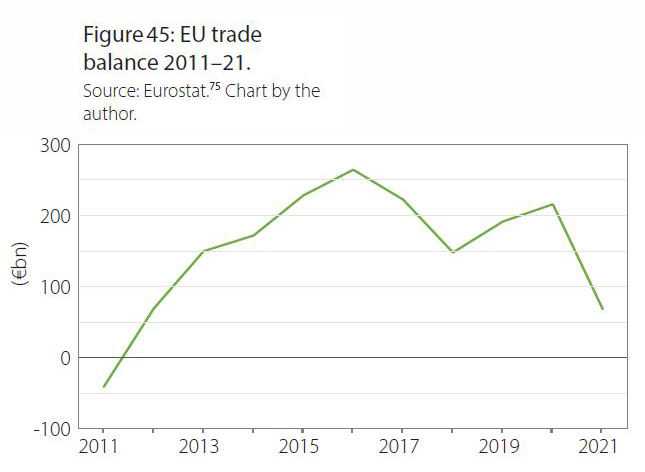
Effectively, the EU paid €770 billion to export it’s carbon emissions and jobs to China and import nearly everything else.
The study shows that up until 2005 the EU’s energy consumption was on a rising trend, but it has now fallen by over 10% on the 2006 peak, and is now back at levels last seen in the 1990s. The UK is even more severely affected, with consumption falling by about 30% on its peak in the early 2000s and is now at levels last seen in the 1950s.
Further analysis reveals that electricity generation productivity has collapsed, with system load factor falling from an adequate 56% in 1990 to a worryingly inefficient and expensive 37% in 2020.
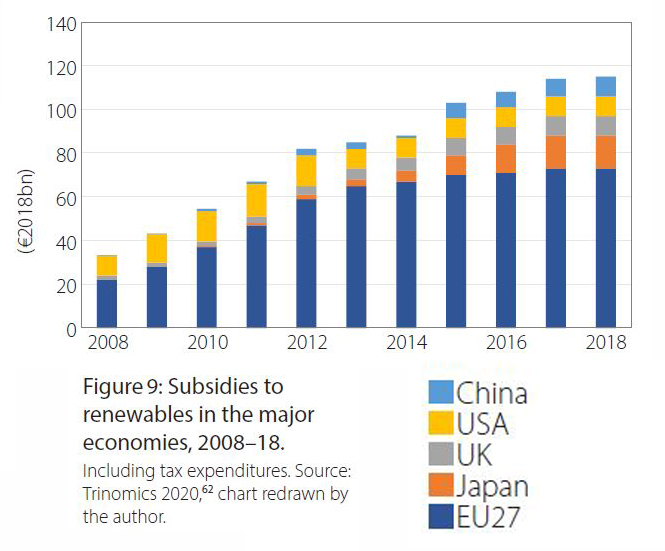
A trillion dollars in subsidies to renewables — mostly paid by the EU
It takes a lot of money to destroy a good industrial base, and the EU had the cash:
The EU’s commitment of subsidies to the renewable energy sector is nearly 70% of the total across major economies, as can be seen in Figure 9, which compares annual subsidies (including tax expenditures) in the EU27, Japan, the UK, the US, and China. Over the period covered in this figure, total subsidies to renewables, including tax expenditures, amounted to €893 billion, of which the EU was responsible for €612 billion.
Like the fall of Rome
As the cost of energy went up, the people of the EU started to buy things from places which could make them cheaper:
The EU’s own data shows that energy prices have been consistently above the non-EU G20 average, with household electricity prices for example being 80% higher and industrial electricity prices being 30% higher, a difference that is largely due to policy. Similar effects are found in relation to both natural gas and transport fuel prices.
Was this “peak EU”?
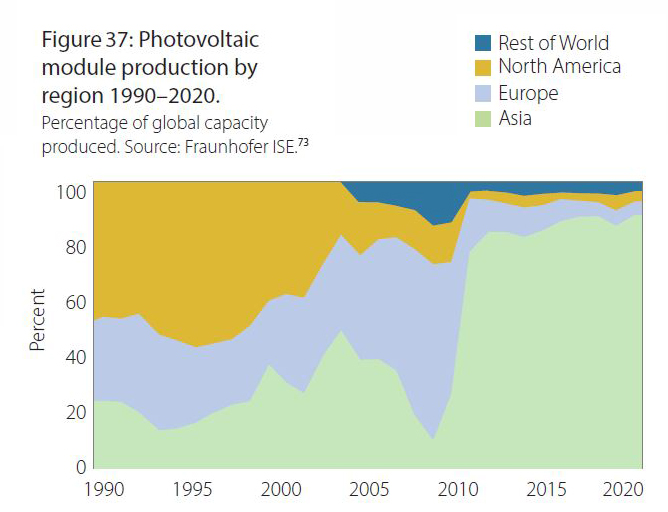
EU and American Solar Panel Production never recovered from the GFC
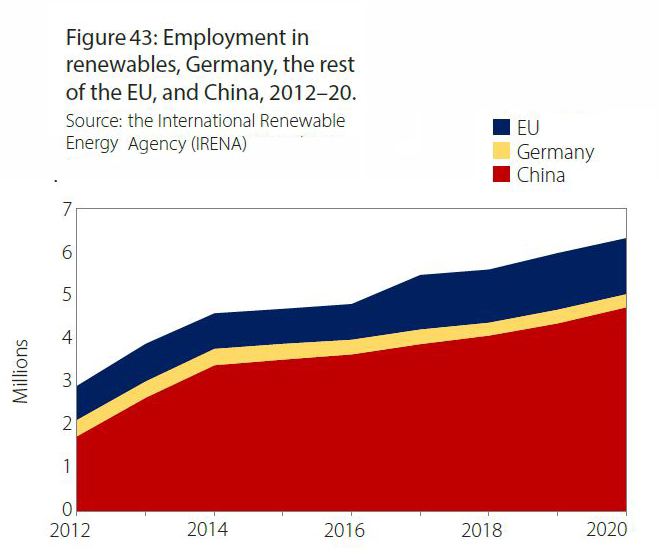
Just look at the exodus. All those subsidized jobs in solar panel production headed for China in 2009. Wow. Just wow.
European subsidies created lots of green jobs (in China)
And this is just employment in the renewables sector. It’s not showing all the jobs destroyed in the EU making hairdryers, cars, fridges, and everything else…
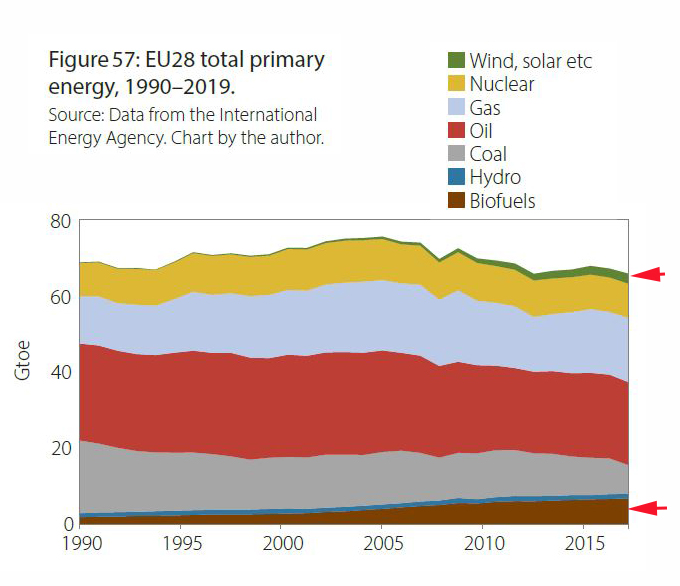
This is what Europe got for a trillion dollars
Europeans paid all that money but got less energy and made these dramatic changes to their energy sources (not).
The increase in actual power from wind and solar and biomass is marked with arrows.
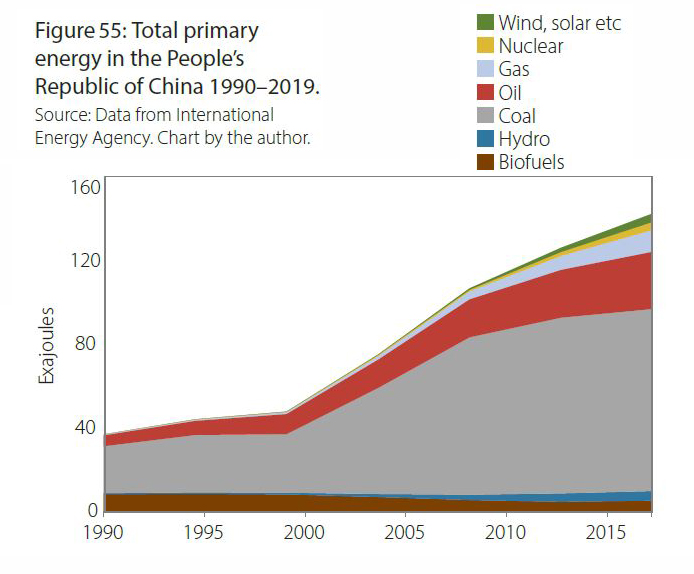
China could afford to make solar panels because it wasn’t building them with solar power
Hapless consumers in the EU paid for expensive electrons to make them feel good, while they paid people in China to build the exact same things but with more coal than they would have if they had made them themselves.
All hail the clean green energy reset — where people are being warned to get ready to live in colder, darker houses, and big energy users will be offered money to stop work. Make plans to turn that factory off! Buy candles!
The UK sits on a giant gas storage site they could have tapped 10 years ago. Instead costs are up so much Ofgem has warned this could push around 12 million people into fuel poverty which is one in six people in Great Britain. The energy price cap is projected to hit around £3,200 (maximum annual tariff).
Back to the dark ages? Now millions of Britons could be told to switch off the lights and turn down the thermostat to avoid blackouts this winter under emergency plans
Daily Mail, 24 July 2022
Households might have to turn down their thermostats and switch off lights to avoid blockouts under emergency plans.
To avoid rolling blackouts in the UK, the National Grid could also pay some large energy users to use less power to ease the pressure on the grid.
…with the energy price cap tipped to soar to around £3,200 (maximum annual tariff) in October, industry regulator Ofgem has warned this could push around 12 million people into fuel poverty.
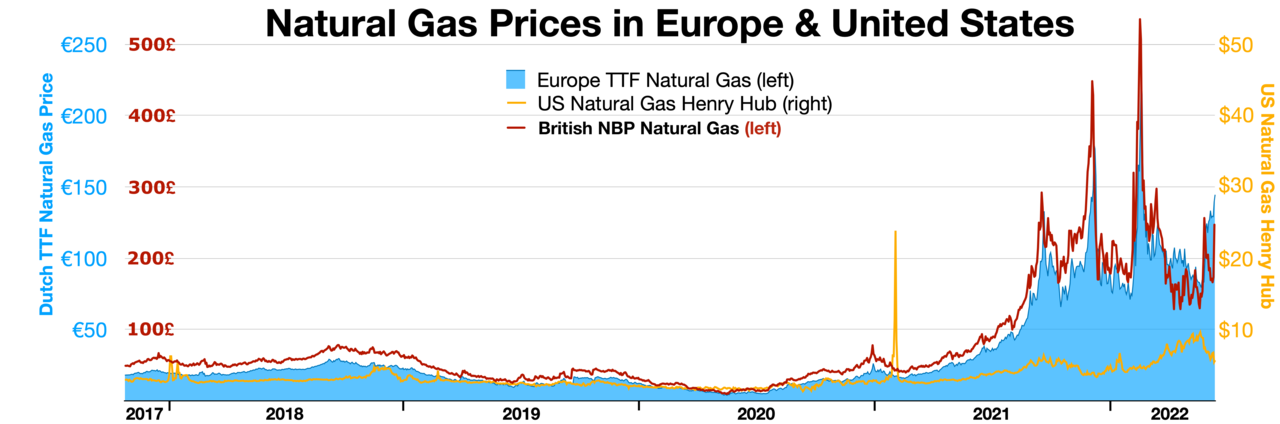
Those that frack, get cheap gas
Benny Peiser from NetZeroWatch said natural gas prices in Europe are ten times higher than in the US because Europe is not using its shale resources. Which leads me to this rather blistering graph by Wikideas1.
But the UK Business Secretary, Kwasi Kwarteng, says it won’t help if the UK develops some more gas wells. The UK has “no supply issues” — he declared in magical-economics — the energy crisis is just a “price issue”. Who needs to frack when you can have a focus group?
Meanwhile Greenpeace are doing everything they can to help Russia:
The eco campaign group claims Shell was wrongly granted a development licence for the Jackdaw field without proper environment checks last month, in defiance of the UK’s climate commitments. It has brought a legal challenge against the Government and is vowing to frustrate other schemes brought forward in the North Sea as well.
Director of Global Warming Policy Foundation Benny Peiser says Russian President Vladimir Putin has “colluded” with green movements to tighten energy markets in Europe.
A group of Polish lawmakers have presented Germany with a proposal to lease the country’s three remaining nuclear power plants, which, despite the energy crisis in Europe, the German government has maintained its commitment to shut down. “If the Germans do not want to use their nuclear energy themselves, they should lease it,” argued Polish MP Paulina Matysiak of the Lewica Razem (Left Together) party. — Kurt Zindulka, Breitbart
Poland wants to build its own nuclear plant but it won’t be finished til 2033.
The $64 billion question is why Germany wants to get to Net Zero the hard way?
Wokism is just another cycle of the bossy righteous social climber, and it will be defeated, not when we take them seriously, but when we laugh at them.
Nothing is funny any more, all jokes are microagressions. The world’s unctuous busybodies are humorless sods, telling everyone to eat bugs and arm themselves with solar-panel-shields to stop the tide. They pretend to care for the poor while they condemn them to poverty. They earn points in invisible beauty contests while they accidentally raze forests, kill bats, and slaughter birds in a quest to be holier than the guy next door. The only thing they care about is themselves.
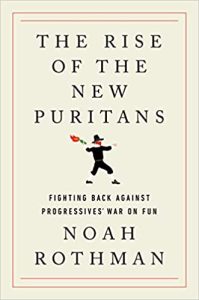
Nick Cater reviews a new book by Noah Rothman that sounds like a good read. The point I appreciate the most is that humans have gone through these waves of righteous madness before and that there will be an end, and the more we mock them, the sooner it will come. As Nick Cater sublimely does with one performer at the Melbourne Comedy Festival who he describes as “.. an Indigenous woman who identifies as a comedian.”
From the Publisher: The New Puritans can judge a person’s moral character by their clothes, Netflix queue, fast food favorites, the sports they watch, and the company they keep. No choice is neutral, no sphere is private. Not since the Puritans has a political movement wanted so much power over your thoughts, hobbies, and preferences every minute of your day. In the process, they are sucking the joy out of life.
Welcome to the new age of puritanism where stand-up comedy has been replaced with performative piety. It doesn’t have to be funny, it just has to contribute to the fight against systemic evils and the creation of a less shameful society.
Like Hollywood directors, artists and athletes, comedians are no longer tasked with delivering enjoyment for its own sake. They must convey the correct moral and political message or risk being deplatformed.
The enthusiasts driving this culture of moral conformity have more in common with their 17th- and 18th-century puritan forebears than they care to imagine.
Not surprisingly, the requirement comedians be both earnest and funny is threatening to kill off the business altogether. In 2008, comedy movies accounted for 25 per cent of Hollywood box-office takings. Ten years later comedy was reduced to just 8 per cent. Comedy box-office receipts had more than halved even as overall revenue had grown larger.
These striking comparisons between puritans old and new are drawn in a new book by US conservative commentator Noah Rothman. Others have compared today’s progressive ideology to a fundamentalist new religion replete with dogma, liturgy and conformity with a narrative of sin and redemption. Rothman goes further, explaining earlier generations of puritans sought more than personal salvation. They were engaged on a utopian, messianic mission not dissimilar to the people we today consider as woke. Puritanism was more than a religious creed, “it was also a program for society” furthered by the good work of the righteous.
Whatever it is, it’s not about respect:
The new puritans bring their morality to bear on the food we eat. The production of meat and other animal products is causing global warming, they claim. The world must move to a vegan diet supplemented only by bugs, the only type of fauna considered to be acceptable for human consumption. The absence of meat is seen as a virtuous form of self-denial.
“Proponents of this sort of thing seem constitutionally incapable of arguing in favour of a bug-heavy diet because you might actually like it,” writes Rothman. “For the New Puritans, a smug sense of self-satisfaction is the most delicious dish of all.”
We can feel the witchhunts of cancel culture rising to new absurd heights, but there is a self-limiting nature to it. The more righteous they get, the more there is to laugh at. All we need are more people with the spine to laugh out loud.
Nick Cater is executive director of the Menzies Research Centre.
Shut Up, say Climate Alarmists trying to ban Fossil Fuel Ads
When science is not on your side you have to stop the other half speaking somehow. Obviously, these marketers are not going to win a science debate.
So 300 public relations geniuses who are dependent on fossil fuels want to deny the companies that feed, cloth, warm and move them — the right to even pay to make their case? Well, Over to you I say. When you switch off the grid, we’ll believe you are sincere, rather than status seeking junkies looking to earn fashionista points in a debate you haven’t done five minutes of real research in.
They, the physics dropouts of university, may protest that they have solar panels, and an EV, and timeshares in a windfarm near Ararat, but not one of them has the integrity to do this properly. All of them rely on power from coal plants in the dead of night to keep them warm, to stabilize the fifty hertz, and to be there when the wind don’t blow. Even in the unlikely event one of the 300 has bought the Super-Uber battery bank that charges their car and the fridge and has themselves disconnected from the grid, — who among them would also eschew flights, and feed themselves with food from farms run with windmills and horses? Or buy mobile phones built from metals mined only by hand or solar powered robots and smelted with sustainable forests? Oh, they protest, but that’s not fair?
What’s not fair are the 240 Volt hypocrites who claim fossil fuels are “like” tobacco while they enjoy the benefits of them every single day of their lives. They are trying to force their own expensive fashionable fantasies on the poor, but they don’t want the poor to hear other views. They resort to namecalling to smear those who provide them their essentials, so the poor don’t find out how stupid it is.
The truth is these marketing brains are scared Fossil fuel ads might make them look like selfish, unethical tyrants:
At least one climate advocacy group argues such marketing should be banned in Australia, in a move similar to the outlawing of tobacco advertising three decades ago.
Comms Declare, a group made up of 300 marketing, public relations, advertising and media professionals, as well as 80 organisations that have committed to not supporting companies contributing to the growth of fossil fuel emissions in Australia, has launched a campaign of its own calling for a tobacco-style blanket ban on advertising by coal, oil and gas companies in Australia.
“We founded in recognition that, famously, marketing and PR has been used for decades to help polluting companies,” Comms Declare chief executive Belinda Noble said. “We want that to stop.”
A second Australian household have been rushed to hospital with carbon monoxide poisoning after attempting to warm their house with a charcoal burner – laying bare the reality of the country’s ongoing energy crisis.
Emergency services attended a home in Adelaide‘s Bedford Park on Friday morning after four people woke up feeling faint and suffering from nosebleeds. They had been attempting to warm their home overnight using a cooker. All four showed signs of carbon monoxide poisoning.
It comes after a family of six from Sydney’s west were also hospitalised this week after using a burner to warm their granny flat.
His father said it was a response to rising gas prices in Australia.
Twenty South Australians have been admitted to hospital with carbon monoxide poisoning caused by unventilated heating in the past year.
The MFS has revealed that as well as the latest case, two people were taken to hospital last week.
“We are seeing a spate of people bringing outdoor heaters into the home, and burning heat beads, charcoal, and wood in unventilated rooms,” he said. “It is a combination of a very cold winter and the higher cost of electricity and gas (causing people to do this).
How can this be? South Australia has all that clean renewable energy …
Natural immunity against Omicron from a previous Omicron infection is better than advertised (75%+) so far
Two new interesting studies out of Qatar in the last month show that natural immunity against Covid is better than recent headlines suggest, and also that (as expected) immunity created from a real infection lasts about three years whereas vaccine immunity may “last only one” (at best, and if that).*
Although people who caught early variants (up to Delta) are only 28% protected against catching the latest Omicron BA5, people who have caught some form of Omicron itself already may have 75 – 80% protection. And what really matters is that everyone who has caught any form of Covid has “robust” protection against severe disease.
Qatar is an interesting population to study — it has a youngish demographic and they can literally include everyone which removes a lot of selection biases. It’s a very diverse conglomerate: Nearly 90% of Qatar’s population are expatriates from over 150 countries, coming …because of employment.
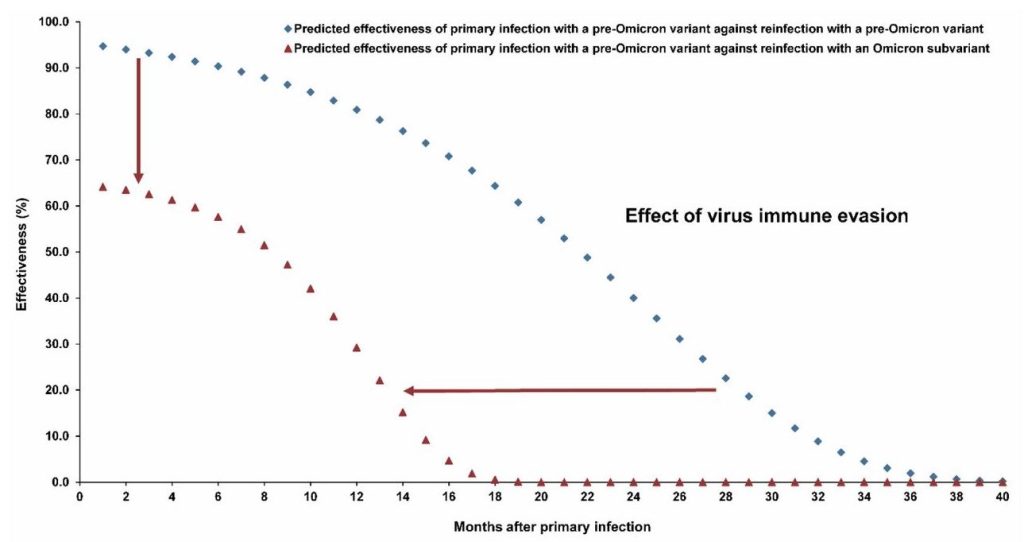
The first study is one of the longest term research projects on Covid to date. Chemaitelly et al followed people who got Covid in Qatar from nearly the beginning of the whole pandemic. They estimate protection against reinfection starts off at 90% and gradually declines over the next couple of years, until it reaches nothing, they figure (with Gompertz curves), by about 32 months. The good news is that protection against severe infection appears to be robust, even when people do get infected again.
Now that doesn’t mean there isn’t some cumulative damage from reinfection (and other studies suggest there might be, which I’ll discuss soon), but at least the second infection itself probably won’t put people in hospital or a morgue. As far as decisions for boosters go, will doctors tell their patients about this data?
There was never any justification for forcing people to take vaccines if they already had natural immunity.
Only Omicron really protects against Omicron reinfection
The second study (Altarawneh et al) from a similar group of researchers, looked at the most recent data when the superinfectious BA5 variant was spreading rapidly in May and June this year. They estimate that immunity against old Covid infections (Delta and earlier) are not that useful in stopping these later two Omicron variants. People who caught Covid in 2020 and 2021 appear to have about a 28% protection against reinfection. But people who caught an early variant of Omicron are much better protected — with 75% – 80% protection against reinfection. Part of the weaker protection from catching an early variant of Covid is because the virus has changed shape so dramatically, and part of it is due to the waning of immunity. Obviously people who caught the original Wu-Flu are a long way past the infection.
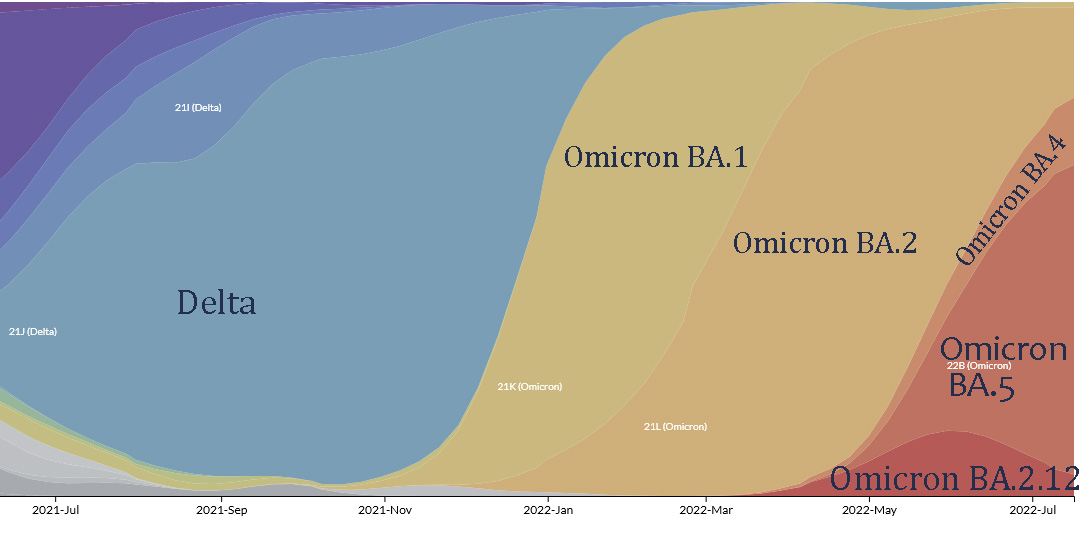
This graph below is the past year of Covid variants globally. Obviously Omicron BA.5 is taking over. It was virtually unknown at the start of May but now is about 63% of global infections. Depending on which country you live in, you can check the Nextstrain database to see which strain was dominant at various times (like say, when you may have caught Covid, so you can figure out what the variant may have been). (Mouseover their graphs).
Natural immunity induced by infection with SARS-CoV-2 provides a strong shield against reinfection by a pre-Omicron variant for 16 months or longer, according to a study (Chemaitelly). This protection against catching the virus dwindles over time, but immunity triggered by previous infection also thwarts the development of severe COVID-19 symptoms — and this safeguard shows no signs of waning.
The study, which analyses cases in the entire population of Qatar, suggests that although the world will continue to be hit by waves of SARS-CoV-2 infection, future surges will not leave hospitals overcrowded with people with COVID-19.
Chemaitelly: The top line shows protection of early variants against other early variants. The lower line shows what happened when Omicron arrived. Presumably natural protection from Omicron against Omicron is similar to the top line.
Now they tell us…
Regardless of the extrapolations, the data indicate that naturally acquired immunity is hardy — something that is not always championed.
“In the US, we were underselling the immune protection provided by previous infection,” says Jeffrey Morris, a biomedical data scientist at the University of Pennsylvania in Philadelphia. He adds that the Qatar team’s study affirms the substantial evidence for natural immunity’s capabilities.
The second paper looked specifically at Omicron protection against Omicron:
To see how much protection previous infection offers against the two Omicron subvariants, Abu-Raddad and colleagues analysed COVID-19 cases recorded in Qatar between 7 May this year — when BA.4 and BA.5 first entered the country — and 4 July. They looked at the number of people known to have been infected previously who tested positive or negative for COVID-19, and identified which infections were caused by BA.4 or BA.5 by examining positive test samples to see whether they contained a protein that these subvariants lack.
The researchers found that infection with a pre-Omicron variant prevented reinfection with BA.4 or BA.5 with an effectiveness of 28.3%, and prevented symptomatic reinfection with either subvariant with an effectiveness of 15.1%. Prior infection with Omicron granted stronger protection: it was 79.7% effective at preventing BA.4 and BA.5 reinfection and 76.1% effective at preventing symptomatic reinfection.
Effectiveness of a previous pre-Omicron infection against symptomatic BA.4/BA.5 reinfection was 15.1% (95% CI: -47.1-50.9%), and against any BA.4/BA.5 reinfection irrespective of symptoms was 28.3% (95% CI: 11.4-41.9%). Effectiveness of a previous Omicron infection against symptomatic BA.4/BA.5 reinfection was 76.1% (95% CI: 54.9-87.3%), and against any BA.4/BA.5 reinfection was 79.7% (95% CI: 74.3-83.9%).
The study was implemented on Qatar’s total population, perhaps thus minimizing the likelihood of bias.
*Natural immunity may last three times (or even five times) as long as vaccine induced immunity
Protection of natural infection waned with time after primary infection, prior to Omicron emergence, and reached ∼70% by the 16th month. This waning likely reflects genuine waning in biological immunity rather than viral immune evasion, as pre-Omicron variants demonstrated much less immune evasion than Omicron.14–16 This waning in natural immunity mirrors that of vaccine immunity,4, 6, 30 but at a slower rate.Vaccine immunity may last for only a year,4, 6, 30 but natural immunity, assuming Gompertz decay, may last for 3 years, as also suggested by long- term follow-up of SARS-CoV-1-associated antibodies,36 and incidentally not dissimilar to pandemic-influenza-associated antibodies.37
Immune evasion of Omicron subvariants reduced overall protection of pre-Omicron natural immunity and accelerated its waning (Figure 3), mirroring the effect of Omicron on vaccine immunity, but at a slower rate. Vaccine immunity against Omicron subvariants lasts for <6 months,5, 7, 8 but pre-Omicron natural immunity, assuming Gompertz decay, may last for just over a year.
Despite waning protection against reinfection, strikingly, there was no evidence for waning of protection against severe COVID-19 at reinfection.This remained ∼100%, even 14 months after the primary infection, with no appreciable effect for Omicron immune evasion in reducing it. — Chaimaitelly et al
Informed consent means knowing more about natural immunity as well as vaccines and the risks associated with them. Given the risks of vaccination, once people have had any variant of Covid, are there any benefits for “boosting”? These are questions doctors or bosses need to answer.
Altarawneh et al (2022) Protection of SARS-CoV-2 natural infection against reinfection with the Omicron BA.4 or BA.5 subvariants, doi: https://doi.org/10.1101/2022.07.11.22277448
Michlmayr et al (2022) Observed protection against SARS-CoV-2 reinfection following a primary infection: A Danish cohort study among unvaccinated using two years of nationwide PCR-test data, DOI:https://doi.org/10.1016/j.lanepe.2022.100452
A Johannesburg man who tried to illegally reconnect electricity faced injuries after he allegedly opened an electricity substation and it blew up in his face.
The spokesperson revealed that there is a ‘serious problem’ of vandalism of infrastructure in the City. This includes incidents where residents attempt to illegally operate the electricity network – they are often aided by unqualified electricians and try to reconnect or make illegal connections.
We hope he is OK.
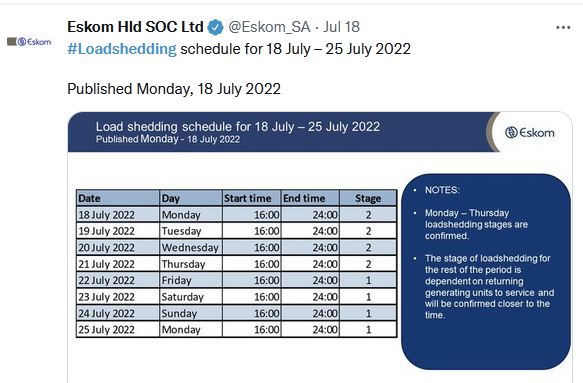
These are eight hour regular rolling blackouts. People have Apps on the phone to tell them when their next blackout starts. People on twitter are telling others to go home early from work so they can use electricity before it runs out. They say, don’t worry, your boss won’t mind, they need to get home early too!
According to CEO Andre de Ruyter the Board of Eskom (the main electricity network) has no engineer, no chartered accountant, and no experienced industrialist and businessman on the board. (Perhaps they have diversity instead, just not the right kind?)
To bridge the severe gap in supply, Eskom is relying on backup gas turbines that blast through 14 litres of diesel (3.7 gallons) per second. Seven of these turbines were in operation Friday. The cost of using diesel as a substitute fuel has been stratospheric. Eskom CEO Andre de Ruyter said the company spent 1.54 billion rand ($93.8 million) in June alone — more than double its original budget. It has also spent more than double its annual budget for diesel only halfway into the year.
Meanwhile, not surprisingly mental health is not too chipper:
You can’t do your work because there’s no power. You eat late and bolt your food before the lights fail. And then to be at home, in the utter dark, gives you the creeps. As blackouts (popularly referred to as load shedding) unfurl across South Africa, triggered by problems that have overwhelmed its energy provider, stress is taking a mounting toll on mental health, experts say.
“People are frustrated, some (are) angry, some are experiencing symptoms” of post-traumatic stress disorder, said Sinqobile Aderinoye, a psychologist in Johannesburg. “The consistent on-and-off of the electric grid is creating an air of disillusionment.”
Anxiety, depression and other disorders were already up almost two-thirds since the start of the coronavirus pandemic, according to Cheryl Johnston, a Johannesburg-based psychologist
Officials are hinting that they might keep using some coal:
South Africa’s power utility Eskom Holdings SOC Ltd. could run coal-fired stations for years longer than originally planned to allow more renewable power to be built as the country transitions to a greener energy mix.
Here’s a heroic denial:
Its Camden plant in Mpumalanga province, one in a fleet of aging stations, could close in 2027 instead of 2025, Mandy Rambharos, head of Eskom’s Just Energy Transition department, said in an online presentation. Keeping the plant open longer would allow the development of more renewables and is “not a life extension,” she said.
So people are in hospital, can’t do their job, and are suffering depression and anxiety, but Reuters is worried that it might slow down the “transition”:
By Promit Mukherjee, ReutersJOHANNESBURG, July 21 (Reuters) – South Africa, where daily blackouts are a fact of life, knows better than most that it cannot rely on coal power.
Ganymede: I feel your stress. Last Thursday we had a “technical fault” that lasted 26 hours with us in the dark. When that was finally fixed, we’re due for loadshedding two hours from then. This country is rough now
Miguel Valdoleiros: @Eskom_SA How about actually leaving the power on when there is no load shedding. We had no power since 6 last night, came back for 2 hours this morning and then off again. Get your shit in order!
Mduduzi Ngwenya:
So I reside in Boksburg #WindmillPark . Our schedule shows we pending loadshedding from 16:00 today. Taking into account that we have not had electricity for almost an hour now, are we now going to also fall into the bracket of loadshedding when it starts?
In other South African news:
Javier Blas says: OIL MARKET: The only operating oil refinery in South Africa was forced to shut down this weekend after it **ran out of crude** (yes, you read that just fine: the refinery completely ran out of crude)
Another entirely unnecessary crisis. Everything about our energy system is running on the edge.
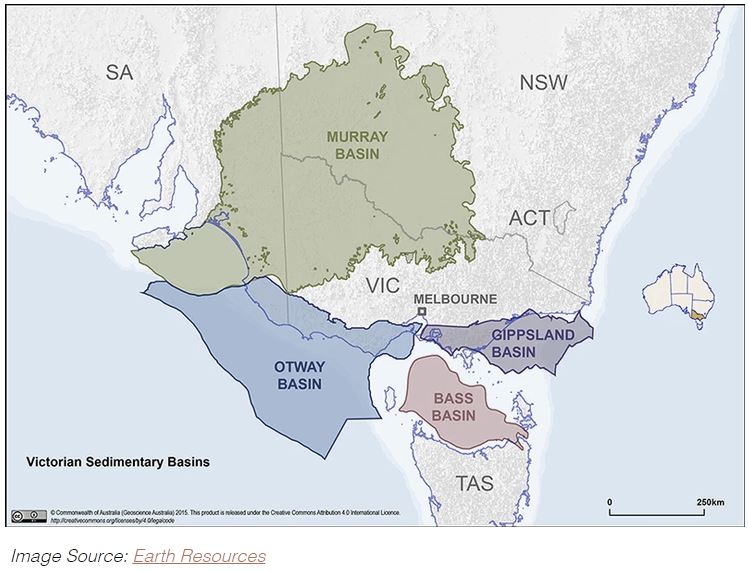
Despite sitting on a “lake of gas”, Victoria Australia is in danger of running out of usable gas midwinter. The AEMO is back in crisis mode (if it ever left). In Victoria gas supplies are so low, two gas power plants have been ordered to switch off to preserve some gas storage, and the AEMO is begging Queensland for extra gas supplies. There were even warnings yesterday that homes might run out of gas (though that doesn’t appear to have happened).
A bun-fight is breaking out between Australian states over gas supplies, with others grumpy that Victoria is buying their gas fired electricity, but is not exporting gas to make it. Notoriously, Victoria has also banned exploration for new gas wells, and most of its gas exports would come from offshore Commonwealth managed deposits, supposedly belonging to the whole nation, while Queensland and South Australia were digging up their own gas.
Homeowners are warned that if the gas storage underground (in a old reused gas field) falls too low, their home appliances might not work. Welcome to the first world!
When gas levels in storages fall too low, pressure may drop below the optimal range, air bubbles may form and customers may not receive their gas in a steady stream or at the correct pressure for their plant and appliances. — Australian Financial Review
If only Australia had some other energy sources to use?
It takes real genius to have an energy crisis in a nation which is the fifth biggest gas exporter in the world, the highest value coal exporter, and has the largest reserves of uranium. In the race to the bottom, Australia is burdened with more energy per capita than anywhere on Earth — and yet Big Government has succeeded, and wildly, showing that the richest nation on Earth can still be poor.
Australians are paying wildly high prices for electricity in order to stop the storms of 2100 by trying not to use two of the three assets above — while exporting all of them.
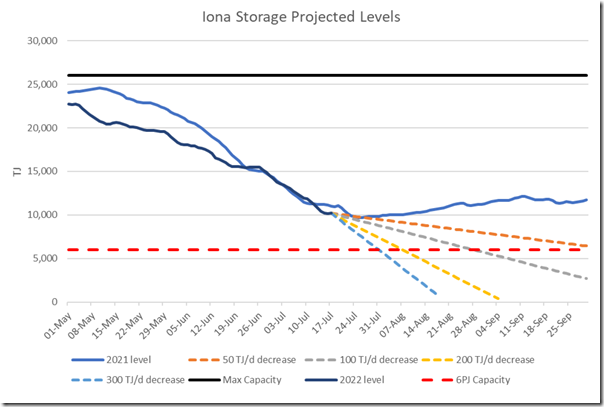
The Australian Energy Market Operator has activated its emergency gas supply guarantee mechanism for just the second time on record to help arrest shortfalls in Victoria as the nation’s electricity market lurches to a fresh crisis. Storage levels at Victoria’s underground gas storage plant, Iona, dropped to a record low and forced AEMO on Monday to put an official system security threat in place until the end of September.
Wattclarity has a graph that shows just how low the storage is at Iona — the fall from 23,000 to 10,000TJ took just ten weeks.
….
Yet strangely they didn’t see this coming until there is just two weeks to go?
The Iona gas storage facility in Victoria is on track to fall to an all-time low of just six petajoules by August 6, with the depletion of inventories leading to the risk of “total system” gas supply shortfalls for the state.
The AEMO chief will say gas storage was already rapidly depleting before winter started, with more LNG being exported from Queensland, which meant lower flows to southern states, triggering more gas to flow north to NSW sourced from Victoria’s offshore Bass Strait fields.
In a shock to bureaucrats, normal rules of supply and demand apply:
A rare cap on Victoria’s gas prices has been in place to calm the market but the move has -provided an incentive to producers to direct supplies to other states further exacerbating the tight market.
Who would have thought artificial price caps create shortages?
Victoria is relying on other states for electricity that often comes from gas even as new rules prevent the export of spot market gas from the state to other regions, industry sources have complained.
Under rules imposed by the Australian Energy Market Operator on Tuesday, gas processed in Victoria and purchased through the spot market cannot be sent outside the state to NSW or South Australia or Queensland amid a critical shortfall that threatens to destabilise the energy system.
… one gas industry executive accused Victoria of “playing politics with gas”, with the result that customers in Queensland and NSW were being hurt.
“I don’t think Queensland is going to tolerate it for much longer,” the executive said. “They will want to secure Queensland supplies, maintain LNG export volumes and investor confidence. They will want other states to play their part in bringing on supply in future years.”
For people in Brisbane, don’t miss Peter Ridd & Jennifer Marohasy this Sunday at 2pm. They will attend a premiere viewing of their new film “A Coral Bleaching Tragedy”.
It is now nine months since the High Court decision (Ridd v JCU) was handed down and I thought donors to that legal action might be interested in what has happened in the meantime.
As you will recall, the HC ruled that JCU acted unlawfully in censuring me for my comments on the Quality Assurance of Great Barrier Reef (GBR) science, but was allowed to fire me for speaking about JCU’s unlawful behaviour. I have been working with Morgan Begg from the IPA on a new volume that will analyse the case in detail. Contributors include Chris Merritt, legal correspondent for The Australian, James Allan (Law Professor at the University of Queensland), and Aynsley Kellow (Emeritus Professor at U. Tasmania). The aim is to make sure as much as possible is learned and documented for future work to improve academic freedom of speech.
This will draw a line under those legal proceedings.
The issue of quality assurance of GBR science, which sparked the legal action, is never far from my mind, and I have been assisting Jennifer Marohasy in making a couple of high-quality films about the GBR. You have doubtless heard about the latest bad news of the bleaching on the Reef. Do you ever wonder if there might be more to the story? Jennifer will be releasing her new film shortly and there is a premier viewing on Sunday for those living in Brisbane. 24 July 2:00 pm – 4:00 pm Newfarm Cinemas 701 Brunswick St.
(I will be there and would be delighted to meet if you can make it. It is nice to thank people in person.)
Right now, internal critics of these agencies are focused on one issue above all: Why did the FDA and the CDC issue strong blanket recommendations for Covid vaccines in children?
The calls and text messages are relentless. On the other end are doctors and scientists at the top levels of the NIH, FDA and CDC. They are variously frustrated, exasperated and alarmed about the direction of the agencies to which they have devoted their careers.
“It’s like a horror movie I’m being forced to watch and I can’t close my eyes,” one senior FDA official lamented. “People are getting bad advice and we can’t say anything.”
That particular FDA doctor was referring to two recent developments inside the agency. First, how, with no solid clinical data, the agency authorized Covid vaccines for infants and toddlers, including those who already had Covid. And second, the fact that just months before, the FDA bypassed their external experts to authorize booster shots for young children.
Formerly great institutions are being eaten from the inside:
…
That doctor is hardly alone. At the NIH, doctors and scientists complain to us about low morale and lower staffing: The NIH’s Vaccine Research Center has had many of its senior scientists leave over the last year, including the director, deputy director and chief medical officer. “They have no leadership right now. Suddenly there’s an enormous number of jobs opening up at the highest level positions,” one NIH scientist told us. (The people who spoke to us would only agree to be quoted anonymously, citing fear of professional repercussions.)
The CDC has experienced a similar exodus. “There’s been a large amount of turnover. Morale is low,” one high level official at the CDC told us. “Things have become so political, so what are we there for?” Another CDC scientist told us: “I used to be proud to tell people I work at the CDC. Now I’m embarrassed.”
The data shows a 4% efficacy for Moderna in babies, nothing for Pfizer, and with no long term studies on side effects:
Using a three-dose vaccine in 992 children between the ages of six months and five years, Pfizer found no statistically significant evidence of vaccine efficacy.
Moderna’s results—they conducted a study on 6,388 children with two doses—were not much better. Against asymptomatic infections, they claimed a very weak vaccine efficacy of just 4% in children aged six months to two years. They also claimed an efficacy of 23% in children between two and six years old—but neither result was statistically significant.
Dr. Marty Makary is a professor at the Johns Hopkins School of Medicine, the author of The Price We Pay, and a medical advisor to Virginia Governor Glenn Youngkin. Dr. Tracy Beth Høeg is an epidemiologist affiliated with The Florida Department of Health who has published research on Covid-19 in schools in the CDC’s journal MMWR.
None of this would have got this far, if it weren’t for the failing of the legacy media. The journalists are as scared as the family doctors are. None of them want to publicly disagree with the sacred scientists at the FDA and CDC — the same ones who are also too scared to speak up.
Deutsche Bank says Germans should use less gas any which way they can. Their new report suggests they use more hard coal and lignite for power stations, wood for home heating, and use oil in industry. That’s sparked a debate on the merits of using wood. (Nobody say the word “nuclear”.)
WOOD could be used to heat German homes this winter as the country grapples with a gas crisis.
Opinion is divided over the merits of using wood as a fuel with some saying doing so increases CO2 emissions and would unleash a logging boom, trashing biodiversity. Others argue wood is a renewable source of energy and expanding its use could prompt landowners to plant more trees, resulting in more carbon storage.
The Deutsche Bank analysis adds both savings and substitution have already led to a drop in German gas consumption by more than 14 percent year on year in the first five months of this year, largely driven by a mild winter.
Desperate: The European Commission suggests countries pay companies to use less gas, subsidize other fuels, and basically plan what they will have to shut down, and in what order, come the next emergency.
A European Commission plan due to be published on July 20 will suggest countries launch financial incentives for companies to cut gas use; use state aid to encourage industries and power plants to switch to other fuels and roll out campaigns to nudge consumers to use less heating and air conditioning.
Measures targeting industry could include auctions or tenders where large consumers would receive compensation for using less gas, according to a draft of the plan. It adds Governments should also decide the order in which they would force industries to close in a supply emergency.
Meanwhile NoTricksZone reports that the German people were far ahead of them and already bought out most of the wood.
As natural gas and oil for heating skyrockets, many Germans are now turning to firewood as a way to keep warm this coming winter. But now firewood is getting rare too, and prices are skyrocketing. The German online Merkur reports of “exploding demand”.
According to firewood dealer Konrad Kötterl. “Some people are panicking about not being able to get any more wood.” As a result, they’re stockpiling. Normally, he has three to four orders a day in the summer. “Right now, it’s 20 to 30.”
Personally, I called a local firewood dealer earlier in the week. They told me they have none left and that they could put me down on a waiting list.
If that comes to pass in Europe, this would not be the first time Germans and other Europeans would switch to wood for energy. During World War II, as many as a half million passenger cars were run on what is called “wood gas”, also called syngas or producer gas. Germany did not have sufficient supplies of petroleum for its military uses, so it developed synthetic fuels. General Patton even had some of the 3rd Army’s vehicles run on synthetic fuel that they drained from captured or abandoned German tanks.
In the 1920s, French chemist Georges Imbert invented a coal gasifier, later licensing the process to German firms.
Apparently wood gas is created with high temperature pyrolysis and conventional internal combustion engines will run on wood gas without many modifications though the 50-Gallon gasifier needs to be attached at the back or on a trailer. The problem may not be the lack of gasifiers, but the lack of forests to cut down.
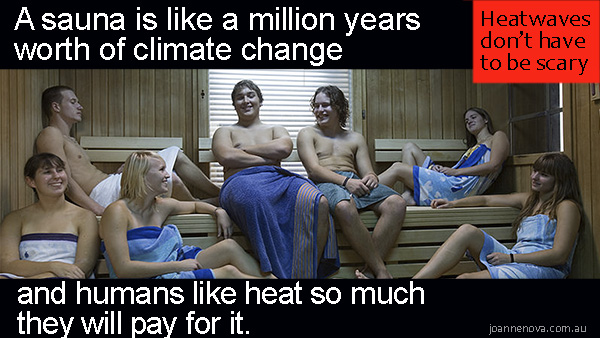
Even the Australian ABC was telling Australians with a straight face that the extreme heat in the UK was so dangerously bad that healthy young people might die in the heat. For most Australians, it’s not summer if it doesn’t hit 40. And for people with a sauna, it’s not fun if it’s not 60 degrees. People enjoy an hour at 60C all the time without dying. We are mammals, we just need to drink. (And make sure we never forget the kids in the car).
Toby Young at the Daily Sceptic found the perfect study released last week reminding us of how deadly UK heatwaves are:
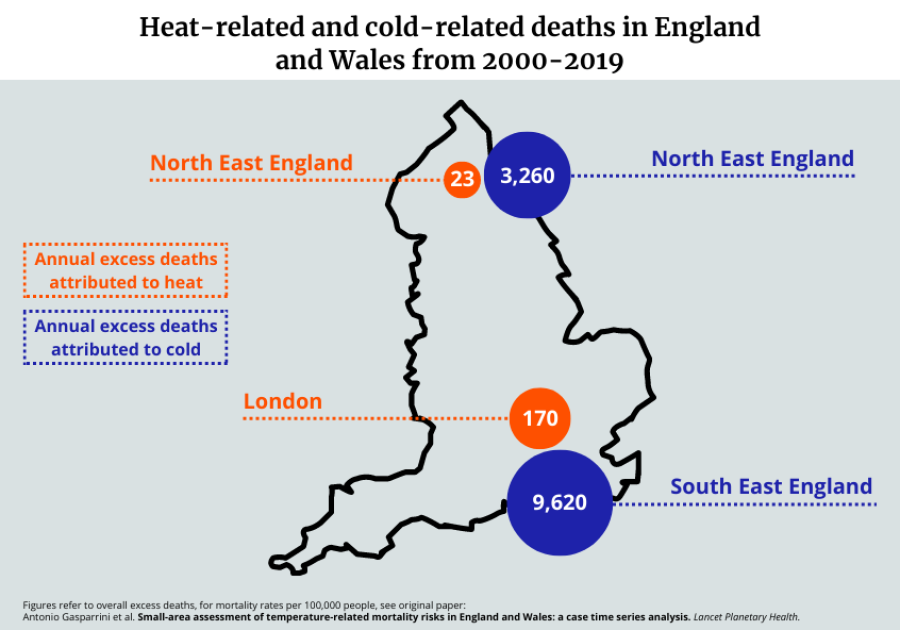
According to a recent study in the LancetPlanetary Health, between 2000 and 2019, there were an average of 65,000 excess deaths per year in England and Wales associated with cold, but fewer than 800 a year associated with heat. In other words, roughly 80 times more deaths per year are associated with cold than heat.
When winter comes, if UK energy bills ‘hit more than £3,300 a year’, sadly, energy poverty will kill even more people than usual.
From the study we see that the Urban Heat Island effect is very real, and almost certainly saves many more people than it kills:
The team found that London had the highest heat-related mortality rate, with3.21 excess deaths per 100,000 people, which translates to 170 heat-related excess deaths each year. Heat-related risks were also much greater in urban areas across the two countries.
In contrast, the risk of death associated with the cold was highest in the North East of England and Wales, with an excess mortality rate of 140.45 deaths and 136.95 deaths per 100,000 people, respectively. London had the lowest risk associated with cold temperatures, with 113.97 deaths per 100,000 people (almost 5800 cold-related excess deaths each year).
The Red Extreme Heat warming might be a record new announcement — but when exactly, did the Bureau of Met first devise the Extreme Heat Warning scale? How many years has it sat there unused?
Both heat and cold increase risk of death in England and Wales but rates vary across geographical areas and population groups
Headlines like that hide the news in plain view. Imagine the blockbuster front page expositions if the result had showed heat was more deadly? Not only would it have been short and punchy and conveyed the message, but the study would have become a mantra on the Nine O’Clock News.
Lancet Planetary Health study here — even if they can’t do headlines, it sounds like a decent job with the data.
The researchers analysed 10.7 million deaths that occurred in England and Wales between 2000 and 2019 across over 37,473 small areas that include around 1,600 residents, also known as lower super output areas (LSOAs). They then linked these data with high-resolution gridded temperature maps and potential drivers of vulnerability to heat and cold, including demographic and socio-economic factors, health and disability, housing and neighbourhood, landscape, and climatological characteristics. This allowed the researchers to characterise differences across small areas and map variation in temperature-related mortality risks across the two countries.
Other posts on the deadly effect of moderately cold weather and the life saving use of fossil fuels
We use cookies to ensure that we give you the best experience on our website. If you continue to use this site we will assume that you are happy with it.
 Follow Jo's Tweets














Recent Comments