The site was hit yesterday morning with yet another DDOS (Denial of Service attack)
If you had trouble accessing the posts, you weren’t imagining it. Yesterday morning tens of thousands of “people” in Brazil all wanted to read this site in the same hour, which crowded out the usual traffic. So we can add that to the previous attacks from Singapore, USA, Vietnam and China.
Someone with control over thousands of computers spread across the world doesn’t like what we discuss here.
“It’s just a matter of time” says Frontier Economics chief Danny Price
Even though it was a public holiday, there was a raging bonfire in prices in South Australia on the evening of Australia Day. The spike in prices hit a blistering $20,000 peak and stayed there for three long hours…
The average price for every hour of the 24 hour period in South Australia was $2,457 per megawatthour.
Frontier Economics chief Danny Price, a key architect of energy policy for state and federal governments, warns renewables cannot meet high electricity demand and predicts significant outages and high prices.
Wholesale electricity spot prices spiked in SA to near the $20,000 per megawatt hour limit on a still Monday night, when household batteries drained and wind generation dipped, prompting the Australian Energy Market Operator to issue a low-reserve warning at 8.42pm.
“It is only a matter of time. It will happen. There’s no doubt that it will happen. Year by year the system becomes more fragile and that’s because people are spending less on coal.”
Dan Lee at WattClarity tracked the big batteries in South Australia and says they were run almost flat by 8:30pm. The 1.5GWh battery was down to 66MWh — empty.
This outcome is perhaps unsurprising given that much of the region’s battery fleet contains around two hours of duration, while the period of sustained high prices extended for more than three hours, pushing many batteries toward their energy limits as the evening wore on.
Danny Price thought it was “very, very lucky” that so far, heatwaves have basically hit Australia on weekends and holidays.
The state was running on an LOR1 — lack of reserve, Level 1. for hours. So any unexpected unit failure or break in a line could bring down the system.
To shore up Australia’s electricity grid, obviously then, we need more public holidays and weekends? Do it for the nation, eh?!
The globalist unaccountable Blob wants us to forget what makes The West great. They want to erase our heritage, our customs, our history, and even the names of places in the land we grew up in.
The gradual character assassination of every early hero is not an accident. Their stories of success can be turned into woke-fairy tales to scare little children.
When we become a lost people, apologizing for every tiny imperfection, we are easy to rule. But when we stand on the shoulders of the world’s greatest civilization we expect to be treated as equals. For we are the children of people who built a nation. And it’s a nation worth defending.
March For Australia locations Monday
Melbourne: Flinders St Station
Sydney: Prince Alfred Park, Cleveland St
Gold Coast: Macintosh Island Park, Surfers Paradise
Adelaide: Wigley Reserve, Corner of Anzac Highway and Adelphi Terrace
Perth: Wellington Square, Hill Street Entrance
Canberra: Parliament House Lawns.
Hobart: St David’s Park Davey St.
Australia Day is a test. If we don’t celebrate it, they will take it away.
Way back in his 2021 annual CEO letter, Larry Fink, CEO of BlackRock, wrote: “No issue ranks higher than climate change.” It will reshape global capital flows, he said, and declared “…anyone can see the impact of climate change in the natural disasters in California or Florida.”
Now though, nevermind about global extinctions and flash floods. Fink just spoke at the Davos ski club for billionaires, and declared that we need “trillions of dollars” of investment for AI. Data centres, he said, are rapidly expanding — one technology company he spoke to said that “its data centres currently use about 5 gigawatts, but by 2030 it expects to need 30 gigawatts.”
But like a true banker, he doesn’t see a backflip, he sees only investment opportunities — the world is short of power he says. (He doesn’t say that this is in large part because BlackRock leaned on companies and countries all over the world to abandon fossil fuels.) Fink helped create the energy shortage that he now calls an investment opportunity. BlackRock is the largest asset manager in the world, controlling $10 Trillion dollars in assets, or five times Australia’s GDP. When that much money talks, everyone listens.
Now Larry Fink throws wind and solar under the bus
He’s matter-of-fact, with a straight face, almost like he never pushed intermittent generators:
Fink: “At the same time, this represents a huge investment opportunity. The world is going to be short of power. And to supply these data centres, you cannot rely solely on intermittent sources like wind and solar. You need dispatchable power, because these data centres cannot simply turn on and off.”
Larry Fink slides the bomb in after 45 mins 30 seconds:
This man probably did more than any single person to pump up the Great Renewables Bubble that peaked in 2022. He presumably has taken his profits long before this speech — leaving mums and dads and pension funds holding the bag with investments in unreliable, expensive generators.
Transcript of Larry Fink at the WEF:
“AI is fundamentally a large-capitalisation business. At the moment, if you look at the S&P 500, the ten largest companies account for about 38% of the index. If AI develops the way many expect, and if you look at the scale of reinvestment these companies are already making, that share could rise to 50%. We may end up with an “S&P 10” and an “S&P 490”. That alone shows the power of what is coming.
Humans used more coal in 2025 than at any point in human history.
The International Energy Agency (IEA) solemnly announced that global coal demand reached another all time record high in 2025. “However, it is expected to decline by 2030 amid competition from other energy sources” they say, just like they say every year when coal hits a new record.
The IEA are a fully paid up part of The Blob– their funding comes from taxpayers in rich nations — so their role is to manage the narrative on energy to keep that funding flowing. Every year that coal hits a record high, the IEA also projects that coal use will plateau or fall. Back in 2019, they said “Over the next five years, global coal demand is forecast to remain stable.” Which it didn’t. In 2020 they said “Coal’s partial recovery is set to fade after 2021”. And it didn’t do that either. In 2022 they said “Global coal demand is set to plateau through 2025”. Yet again, demand for coal keeps rising.
Every year they do some version of the plateau graph (below) which includes their wish-list forecast of coal trending flat or down.
This fictitious faded out extension on the right (after 2026) distracts the eye from drawing a rising line. It feeds the expectation that coal use will start to decline soon, and hides the relentless rise in coal use in the last twenty years.
No doubt China is happy if other countries don’t feel any urgency to ramp up their coal generators. And the UN is happy because they told us coal was a stranded asset for twenty years and they don’t want to look too stupid. And the renewables industry, and all the bureaucrats that feed in that trough, don’t want the taxpayers to know other countries are feeding on coal.
It’s all part of the Psy-Op.
The growth of renewables might be fast, but it’s not even quick enough to reduce the growth of coal use.
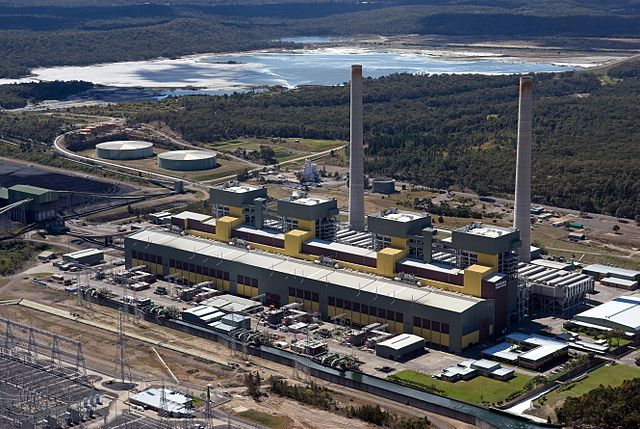
Eraring coal plant is Australia’s largest coal power station. Obviously it’s a polluting monstrosity that kills koalas and is more expensive than solar panels. It’s also old and yet, for some reason, when it was supposed to shut down in August last year, the government dished out nearly half a billion dollars to keep it running for another two years until 2027.
Now, in a second round of baffling electrical fever, the NSW government has twisted the arm of Origin Energy to make sure they don’t shut the coal plant until 2029. All four coal units will be kept running.
Eraring supplies nearly a quarter of the electricity used in our largest industrial state, but apparently the wonderland new renewables grid isn’t quite ready, even though it’s 2026 and we are supposed to be aiming for 82% unreliable energy by 2030. But cruelly, the renewables revolution hit a wall and the Snowy Hydro Scheme hit an unmodeled rock. Only three new wind farms have been built in Australia last year, and everyone hates the interconnector transmission lines.
If the renewables grid was utterly failing, and the targets were all going to be missed, this is exactly what the early stages of a big backflip would look like. They can just keep extending the coal plants.
Ministers say Eraring will be used less and less and exists only as “insurance”. Which is like buying a truck to sit on the lawn, just in case your bike, roller skates and e-scooter can’t get you to work.
NSW Energy Minister Penny Sharpe said the extension will help keep power bills down. “My number one job is keeping the lights on and putting downward pressure on power prices. NSW is making real progress replacing ageing coal-fired power stations. Since the election, we have increased the amount of renewable energy capacity in operation by almost 70 per cent. That’s equivalent to Eraring’s capacity,” said Ms Sharpe.
The longer lifespan would not impact Origin’s own emissions reduction targets and taxpayers will not at this stage be called upon to provide any financial support, underscoring the profitability of the coal power station near Lake Macquarie.
Shares in Origin rose 2.6 per cent to $11.34 as the market cheered the prospect of additional returns from Eraring.
Green groups are calling this a disaster. They believe that renewables are cheaper than coal, yet say that keeping an old coal plant going will “crowd out” cheaper investments — though they don’t explain why people will choose the coal….
The CEO of the Nature Conservation Council of NSW, Jacqui Mumford, said “far from supporting the transition, Origin’s decision will crowd out investment in the clean, modern sources of generation we need to be switching to”.
Meanwhile The Blob speaks its own language — this decision has obviously increased real “certainty”, but the Blob says it has been undermined.
Johanna Bowyer of the Institute for Energy Economics and Financial Analysis said extending Eraring “undermines certainty right when investors in new replacement generation need clarity”
Just substitute the phrase “certainty” with “certain income”, or “subsidies” and it all makes sense. And do the same for “clarity” which is another Green word for “money”.
Aurora Watch Current due to the X1.9 flare that went off early Monday morning Australia time.
Glendale App reports the strongest ever substorm they have ever recorded hit Earth this morning 9am Eastern Australian time, sadly during daylight hours for us. Europeans got a roaring show, as are people in North America now. There may or may not be some action still running as darkness falls across Australia. It is cloudy in New Zealand, but they’ve probably seen too many auroras already… 🙂
How fast was this backflip? How big was this mistake…
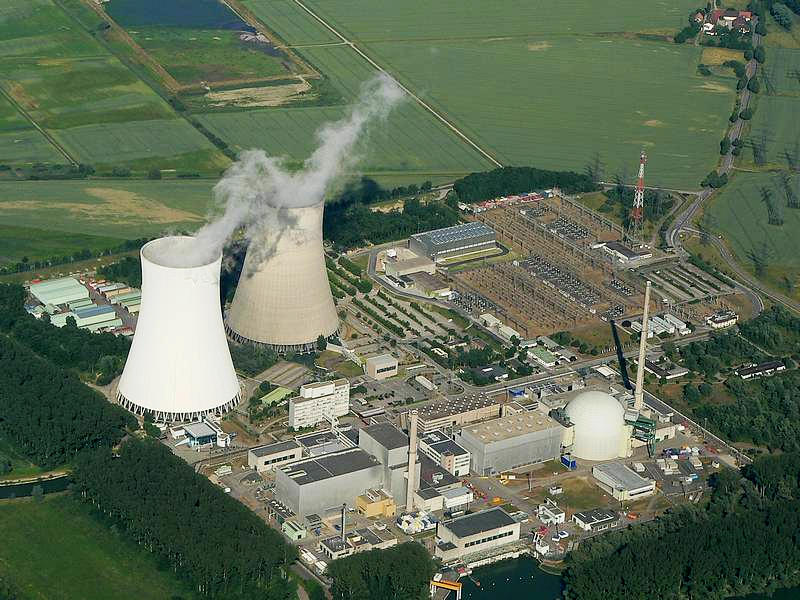
Germany shut down its last three reactors in April 2023, but three years later, they’ve realized it was a terrible mistake and want to rebuild them or put small modular reactors “likely on the same sites”.
After 66 years of operating nuclear power without any major accidents, the irony was that Germany shut down its nuclear industry mostly because other countries had accidents. But now they admit they need more electricity.
This would be one of the biggest backdowns in the fake renewables “transition”. Germany is the third largest economy in the world, and Chancellor Merz said this openly at a business conference a few days ago, but the mass media have said nothing.
The media groups that have reported it are niche outlets with names like Deseret News, TVPWorld, and American Thinker.
Translations from the video below:
Chancellor Merz “It was a serious strategic mistake to exit nuclear energy. We are now undertaking the most expensive energy transition in the entire world. I know of no other country that makes things so difficult for its own industry.”
“To have acceptable market prices for energy production again, we would have to permanently subsidise energy prices from the federal budget,” Merz said, adding: “We can’t do this in the long run.”
“If you are going to do it, you should at least have left the last remaining nuclear power plant in Germany on the grid three years ago, so that you at least have the electricity generation capacity that we had up until then,” he said.
Abdulvehab Ejup reports on TRT World — the Turkish Public Broadcaster.
Germany once had 19 nuclear power plants, which provided more than a quarter of its electricity, but now they are bleeding industrial power, losing solar, wind power, EVs and now AI before it has barely started:
Germany, meanwhile, is watching the digital economy and the jobs that come with it flow to nations with cheaper, more reliable electricity. And Berlin’s solution seems to be if you can’t beat them, join them. Merz has dropped German opposition to nuclear energy in EU law, opening the door for German companies to invest in French small modular reactor projects.
Don’t call these fossil fuel generators — they are baby hydrogen plants!
Facing industrial death, Germany has finally decided it needs dispatchable reliable electricity. But they can’t announce that they suddenly need to build 10 gigawatts of fossil fueled gas power plants. It would be like admitting the sacred Energiewende had been a ghastly mistake that wasted billions of dollars on a reckless vanity quest to change the clouds. So instead, these new “power plants” with a focus on “gas-fired sites” must be convertible to run on hydrogen by 2045. Of course, they may never run on hydrogen, given that makes pipes brittle, leaks, and costs four times as much as natural gas, but it makes a good cover story.
This is exactly what I would do if I wanted to hide a major backflip and pretend this was just a slight variation on the renewables theme. (Especially if I had no scruples).
Note that the Reuters Blob-Media story (below) does not mention the words “fossil fuels” or “dispatchable” it just talks about the need to generate electricity over “a longer period of time”.
The gas to hydrogen plant story is the PR cover and escape hatch from the Sacred Renewables Mission.
It’s just another marker of how fast the renewable energy plan is coming undone…
BERLIN/FRANKFURT, Jan 15 (Reuters) – Germany said on Thursday it had reached an agreement with the European Commission on a plan to build new power stations, adding it would tender 12 gigawatts (GW) worth of capacity in 2026, with a focus on gas-fired sites.
This is a major step on Germany’s path to ensure security of supply in light of the country’s ongoing phase-out of coal-fired power capacity. “With the short-term tenders … we are also laying the foundation for a secure electricity supply in Germany in the future and thus for the competitiveness of our industry,” Economy Minister Katherina Reiche said.
Most of the new capacity, 10 GW, must be able to generate electricity over a longer period of time to ensure steady supply, Germany’s economy ministry said, adding that this included but was not limited to gas-fired power stations.
Wow — 10 GW of new power by 2031!?
The new power stations, which are expected to enter service in 2031, will be able to run on hydrogen by 2045 at the latest, in line with Germany’s goal of becoming climate neutral that year, the ministry said.
Obviously, there are no apologies, no honesty, and they will never admit they were wrong.
We use cookies to ensure that we give you the best experience on our website. If you continue to use this site we will assume that you are happy with it.











Recent Comments