|
|
||||
Congratulations to Cory Bernardi in the SA election.Bernardi was always a skeptic… and brave enough to say so when others were afraid. Excellent news.
By Jo Nova Foreign readers may not be aware of the bunfight for petrol and especially diesel fuel in Australia. Three weeks in, and the energy and exporting giant of coal and gas is unraveling at the seams. Regional towns and some servo‘s are running out, farmers aren’t sure if they will be able to seed this year, and miners are starting to lay off staff. Three weeks. It could be something to do with forward planning.
While the rest of the world has 90 days stockpile, Australia imports 90% of its oil, and has about three weeks fuel left. Obviously, our great leaders looked at our remote, low density island with an economy based on heavy industry and said “who needs diesel”? David Archibald has spent 50 years around the oil industry and he has a plan“There are no impediments to Australia becoming completely autarkic in liquids fuel production, and also petrochemical precursors and LPG, and ammonium sulphate for fertiliser.” — David Archibald The method as described in The Solution To Our Fuel Crisis has three main parts:
It was not that long ago we produced three times as much diesel: It’s amazing what fifteen years of climate fog can do to an industry…  Graph from Scott Ashton David Archibald explains that climate change ideology killed off a perfectly good plant: “An unforced error” There used to be an oil refinery run by BP at Kwinana, but that was closed in 2021. It had a capacity of 140,000 barrels per day. It was running at a profit and didn’t need upgrading. At the time, BP was run by a bloke called Bernard Looney, who “became CEO in February 2020 and served until September 2023, during which time he spearheaded a strategic pivot toward renewable energy and set net-zero ambitions.” In effect, the Kwinana refinery was sacrificed on the altar of global warming. As a modern refinery with the ability to handle a range of crude types it would have a replacement cost approaching $6 billion. The WA and Federal Governments could have stopped the refinery’s closure but they both worship at the same altar of global warming. The nearest refinery is the Viva refinery in Geelong, 3,300 km to the east. … His story symbolizes the whole downfall of Australian energy policy. We believed the hype on climate change and stopped thinking of fossil fuels as the motor of civilization. We stopped paying attention. Our big states need a lot of diesel Queensland and WA use half the national tally of 33 billion liters of diesel.
David Archibald says: 1. Use the oil we already haveThe first thing to do to fix our fuel problem is to utilise the oil and condensate we are producing but not refining. Onshore and offshore, Western Australia produces 50,000 barrels of oil and 250,000 barrels of condensate per day. The condensate is a byproduct of gas production for the LNG plants 1,300 km north of Perth. There used to be an oil refinery run by BP at Kwinana but that was closed in 2021. It had a capacity of 140,000 barrels per day. It was running at a profit and didn’t need upgrading. At the time, BP was run by a bloke called Bernard Looney who “became CEO in February 2020 and served until September 2023, during which time he spearheaded a strategic pivot toward renewable energy and set net-zero ambitions.” In effect, the Kwinana refinery was sacrificed on the altar of global warming. As a modern refinery with the ability to handle a range of crude types it would have a replacement cost approaching $6 billion. The WA and Federal Governments could have stopped the refinery’s closure but they both worship at the same altar of global warming. 2. Open new oil fields: The next thing to do to secure Australia’s fuel security will be to develop the Pavo oilfield which is located 100km off Port Hedland. This is a 109 million barrel oilfeld discovered in 2022. The Pavo discovery was preceded by the Dorado discovery in 2018. This is a big field at 162 million barrels of oil (half of Australia’s annual consumption) with 748 BCF of gas…. initial production is still five years away at best. Australia needs the Pavo oilfield online tomorrow. Pavo is a national security issue now. Pavo is a simple, uncomplicated development. It is in 88 metres of water and has a low gas to oil ratio. 3 .Turn the excess, bountiful coal we have into liquid fuel that we can pour into tanks, trucks and tractors: The solution for the east coast is installing Bergius coal liquefaction plants. There is plenty of coal that is too low grade for export, either due to ash content or water content, which would be ideal because it is next to worthless. There was a Japanese research Bergius plant in the Latrobe Valley which operated up to 1991. Victorian brown coal has a high reactivity and thus a low residence time. This Japanese effort determined a price hurdle of US$40 per barrel for development in 1991 dollars (oil was US$24 per barrel at the time). That equates to US$95.20 in 2026 dollars which is less than the current Brent price of US$102 per barrel. To quote a line from the movie Aliens, the readouts are all in the green. There are no impediments to Australia becoming completely autarkic in liquids fuel production, and also petrochemical precursors and LPG, and ammonium sulphate for fertiliser. Well, no impediments apart from the current State and Federal Governments. But those can be overcome by the will of the People once the People have suffered enough to get organised. Archibald adds that Western Australia could use the Bergius coal process too: When the oil and gas fields run out, as they will, liquids production can switch to applying the Bergius liquefaction process to the lignites that exist in a belt from Salmon Gums, north of Ravensthorpe, wrapping around the Yilgarn Craton towards the South Australian border. A few details about converting coal to liquid fuel:Coal liquificationThe current diesel price in one of the better suburbs of Perth is $2.92 per litre which equates to $464 per barrel, which is US$325 per barrel. The future is coal liquefaction by the Bergius process. That involve a lot of stainless steel because the Bergius reaction takes place at 300˚C, 250 atmospheres of pressure with hydrogen. Hydrogen causes embrittlement of carbon steel above 200˚C and so stainless steel needs to be used. How it works is shown in this graphic from Bergius’ Nobel Prize acceptance speech in 1931:
[The] addition of 5 kg of hydrogen to 100 kg of coal turns it from a low value solid into precious liquids. The hydrogen is made by steam reforming of part of the gas stream. Oil has a specific gravity close to 0.8 so 100 kg of coal converts to 81 kg of oil which has a volume of 100 litres. On that basis, one tonne of good quality coal will convert to 6.3 barrels of oil. Lignites, with a 40% water content, would produce 40% less. How much stainless steel? A length of stainless steel pipe 50 metres long, 900 mm in diameter and with a wall thickness of 10 mm will allow a one hour residence time to produce 5,000 barrels per day. Learn to weld stainless steel. Everyone needs to do their part. Read it all How to solve Australia’s fuel crisis. David Archibald is also the author of The Anticancer Garden in Australia. He has had over 50 years in and out of the oil industry. His first oil industry role was as a juggie on a seismic crew in the Channel Country of far western Queensland in 1974.
March 20th, 2026 | Tags: Archibald (David), Coal, Diesel | Category: Global Warming |  Print This Post | | Print This Post | | By Jo Nova For the first time Antarctic ice core teams have got hold of ice that is 3 million years old and the results have confounded themThe way CO2 responds in ice cores is canon to “the faith” so this is more important than it seems at first glance. Believers are really struggling. Three million years ago the world was warmer, and about to cool into the violent ice age cycles. The ice core experts were expecting to confirm that CO2 levels were about 400ppm, as other proxies had shown, and they thought that greenhouse gases might fall and lead the cooling shift. But instead of CO2 being at 400 parts per million, and then leading the cooling, the bubbles trapped in ice were only 250 parts per million to start with and they stayed constant through important temperature swings. Sacre Bleu! CO2 did not appear to have any role in causing the warmth that was, or the cooling that followed. And nor did methane. O’ the dilemma? Some sacred cows have to be sacrificed. Either CO2 is not a major driver of climate change, or the ice cores are wrong (or both!). Watch the last few addicts coping with this news. Follow the ‘reasoning’ — it still “might” be worse than we thought, you know! I mean, it’s possible, that tiny changes in CO2 that are too small to measure could be affecting the Earth… It’s like the homeopathy of climate science, except homeopathy has more data to support it. It’s a cult : Ice core reveals low CO2 during warm spell 3 million years agoBy Marissa Grunes, New Scientist “We definitely were a bit surprised,” says Marks-Peterson. If correct, the findings may suggest that even small changes to greenhouse gas levels could trigger major shifts in climate. “Maybe the Earth system is even more sensitive to changes in CO2 than we have understood,” she says. “That’s a little bit of a scary thought and something that I would say that our record can’t answer yet.” “Ultimately, any new data that suggests Pliocene CO2 levels were lower than previously expected means future climate change might be worse than previously expected,” says Cristian Proistosescu at the University of Illinois Urbana-Champaign, who was not involved in the study.  Click to enlarge
But choosing sacred cows is quite the dilemma, because the ice cores are sacred too. The Vostok graphs were the core propaganda graph of climate change even before The Hockey Stick. Then they starred as a giant extravaganza in the Al Gore documentary. So every other way we have of guesstimating ancient levels of CO2, like stomata and alkenones, are considered fine until they disagree with the ice cores, then everyone forgets they exist. These proxies below in the graph — are all the esstimates of the atmospheric levels of CO2 3 million years ago. Obviously, there is quite a lot of data suggesting that CO2 was 400ppm at the time. And since temperature causes CO2 to rise, we’d expect CO2 to be higher in a warmer world. So maybe these proxies are right. Either way, CO2 is still a minor player. 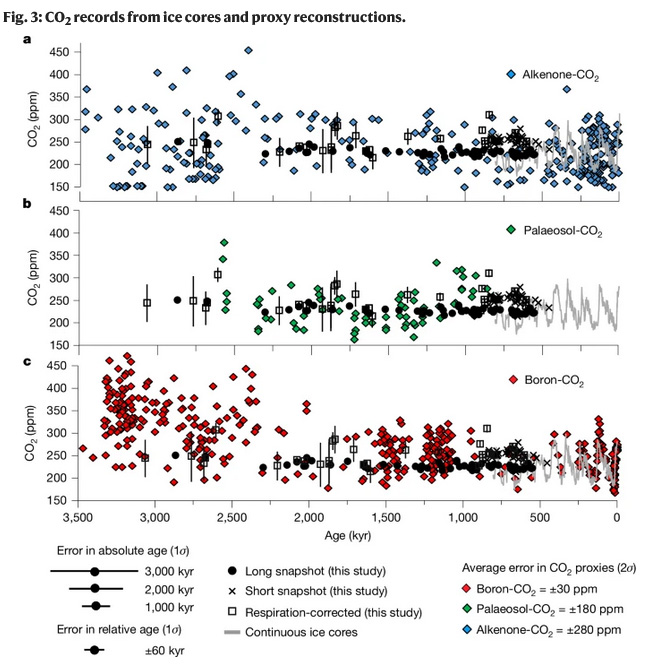 … For those wondering where they can find ice that’s up to 6 million years old — the cores were dug at Allan Hills where strong winds stop new snow from depositing on top of the ice core, preserving the really old ice somewhere near the surface. But this study is quite the spanner in the works.When forced to choose between the ice cores and “CO2 as Earths control knob”, surprisingly the ice cores are more important to the believers . And the second Nature paper released actually considers whether CO2 is a driver rather than toss out the ice core graph — even wondering out loud if the power of CO2 was weak… There are three possible explanations for this tight balance: (1) it reflects the CO2-thermostat responding to a decline in CO2 sources; (2) it reflects the CO2-thermostat responding to an increase in continental weatherability; and (3) the CO2-thermostat is weak and CO2 sources and sinks are invariant and constant over the past 3 Myr. — Marks-Peterson (2026) The Blasphemy… At least one science writer got the idea that CO2 could be the main driver today, but not 3 million years ago. Those laws of physics you know, switch on and off: By Jess Cockerill, ScienceAlert The rapid climate change we are experiencing today is mainly driven by the greenhouse gases we humans keep releasing into the air. But new evidence from ancient Antarctic ice cores suggests this wasn’t always the case for the past three million years of Earth’s changing climate. According to the findings of two new papers published in Nature, at certain transition points ocean temperatures could have had a greater influence over Earth’s climate than greenhouse gases. Lordy! Imagine the oceans being more influential than a trace gas at 0.04%?! What was she thinking….? REFERENCESMarks-Peterson, J., Shackleton, S., Higgins, J. et al. Broadly stable atmospheric CO2 and CH4 levels over the past 3 million years. Nature 651, 647–652 (2026). https://doi.org/10.1038/s41586-025-10032-y Shackleton, S., Hishamunda, V., Yan, Y. et al. Global ocean heat content over the past 3 million years. Nature 651, 653–657 (2026). https://doi.org/10.1038/s41586-026-10116-3
March 19th, 2026 | Tags: Antarctica, Evidence, Ice Age, Ice Cores | Category: Global Warming | Print This Post | |
By Jo Nova The Soothsayers of Weather have come up with a new spooky fundraising term — “Climate Whiplash”. It’s multi-purpose: it’s a handy excuse for their failures at the same time as a plea for more cash. Essentially the BOM needs more of your money because they’re more wrong than ever before. The same experts that told you it’s just the physics stupid, are now saying that the climate has changed in ways that they didn’t predict, and that makes it harder for them to predict. It’s such bad luck… Where were their forecasts of “Climate Whiplash affecting their BoM predictions,” thirty years ago? ‘Climate whiplash’ making Australian weather forecasts increasingly unpredictable and costly7 News Australians are facing a new climate reality where traditional weather patterns no longer apply, with scientists warning that “climate whiplash” is making seasonal forecasts increasingly unreliable and costly. The phenomenon has left meteorologists struggling to predict what’s coming next, as one season can bring floods, fires, storms and record heat with little warning. Sounds like an infinite excuse. The BOM were never able to do seasonal forecasts anyhow and there wasn’t even a “climate whiplash” factor until they needed a new dark marketing term to scare the horses. Now they’ve got a new $77 million dollar super computer, apparently things aren’t getting better. Lets just check their past accuracy of the chance of unusually dry forecasts for May rainfall 3 months out : Might as well be random chance. The rain fell where it fell, and the BoM couldn’t tell.
The truth is that the BoM can’t lose what they never hadThey were never able to predict Australian seasonal forecasts six months in advance because it’s all dominated by the Pacific Oscillation and they have no idea what drives the biggest weather phenomenon on the planet. The BoM can only guess at the likelihood of when an El Nino will bring a BBQ summer next. Imagine how different it would be if the BoM could say that 2027 will be a mild year, but 2028 will be a scorcher? Think of the farmers…! If the BoM bothered to graph their own accuracy of prediction they’d probably find cycles in their ability that came and went with the Pacific and have nothing to do with CO2. Climate Whiplash is a marketing ploy not a variable of scienceThe BoM might distance themselves from the “whiplash” hyperbole, and pretend it was journalistic license, but they never complain when the Blob Media sells the full-spooky witchcraft of a new “climate reality”. The more money we throw at the BOM the worse it gets. Think of the $96 million dollar website makeover everyone hated? They probably don’t want me to mention that the old website is still there at reg.bom.gov.au (and we want our $96 million dollars back). 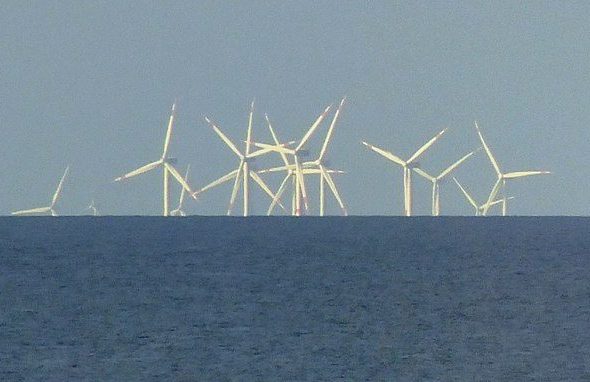 by Lieven By Jo Nova It’s the New Zero-Defence Strategy — where we build the shields to hide the enemy’s bombsIf Britain (or Australia) ever needed to build an iron dome to protect itself, it’s a shame that giant rotating objects interfere with the radar. A senior defense source has told the Daily Mail that Britain is a sitting duck: Ed Miliband’s wind farms could cripple UK ‘Iron Dome’ anti-missile systemsBy Glen Owen and Dan Hodges, Daily Mail Britain is a ‘sitting duck’ in the face of drone attacks because Ed Miliband’s wind farms interfere with radar-based defensive domes, senior defence sources have claimed. Ministers have been warned the UK lacks any equivalent to Israel‘s famous ‘Iron Dome’, which gives it the capability to intercept ballistic missiles at high altitude from 40 miles away. The source added: ‘Wind farms are effectively giant chunks of metal that stand in the way of way of the tracking stations. It’s fair to say wind-farms and radar are not a great mix. Labour is committed to switching to 95 per cent clean power sources by 2030 – a goal that will require a tripling of current wind capacity. It could lead to the relaxation of planning rules governing turbine construction. There will be excuses that the nature of war has changed and they couldn’t have seen this coming. Except that we already knew that offshore wind turbines interfered with the ship’s radar signals, and scrambled the Air Force radar. Three years ago RAF pilots were already using the turbines to help them hide in training exercises. Sweden blocked 13 off shore wind farms in 2024 because it was worried it would get less warning of a Russian missile attack. Luckily in Australia, we don’t need radar to see hostile attacks coming — we have Virgin airline pilots. Thanks to the Daily Skeptic.
By Jo Nova The US CDC was one of the biggest institutional Big Government failures of the pandemic, and so naturally, Australia had to get one. The aim of the new Australian Centre for Disease Control is not about our health per se, but to be an antidote to skepticism. No, seriously. They say that. The new Director General has “vowed to prioritise transparent medical evidence and proactive engagement with vaccine sceptics.” You might think stopping Ebola and nixing bioweapons would be higher on the list? Silly you. This agency will get $250 million dollars over the next four years to basically help sell vaccines for starving multinational pharmaceutical giants. “Trust us” they say.
It’s another “Independent” agency that’s 100% dependent on Big Government funding, so it’s not independent at all. It will always serve its paymaster. They’ve already swallowed the full United Nations mantra — taking a One Health approach that recognises the link between your health, climate change, and the importance of a One World Government that you can’t vote out. They may lie about their independence, but at least they are honest about their aims, and it has nothing to do with our health. Listen to the new head — she speaks like a marketing and PR guru who happens to have a medical degree: New pandemic tsar wants to rebuild trust, evidence baseBy Natasha Robinson, The Australian Zoe Wainer – a medical doctor, academic and policy leader, and now inaugural head of Australia’s new independent CDC – is under no illusions about the challenge of rebuilding trust among pockets of the population who have lost trust in vaccines and are angry at what they saw as unjustified intrusions on individual liberty during the Covid-19 pandemic. The enemy of the CDC is not a Sarbecovirus but social media influencers: “We have seen a global trend of lack of confidence and trust in science,” she said. “I think that really has emerged post-Covid, but we also have burgeoning media channels that people are turning to, and a real rise in social media influencers. The CDC don’t want to understand the drivers of dengue fever, they want to understand “distrust”: “The CDC is very committed to understanding the drivers of disengagement and ensuring as an organisation that we are building community trust in public health. And that means understanding what those factors are that are driving distrust. We very much want to be seen as trusted.” How telling — did she really say she wants to “be seen as trusted?” — Dear Dr Wainer, I say, to share the lesson your parents forgot to teach you — you don’t create trust by studying it, first you save lives and help people, then you earn trust the only way there is. Speaking of her parents, which I normally wouldn’t — Zoe Wainer comes with a back-story about them that she sells to win us over. It’s part of the whole “trust” narrative — and it’s bound to appeal to any woke die-hard government-loving-lefty. Her father was a brave abortionist: Independence and commitment to public safety is something that is in Professor Wainer’s DNA. Her father was Victorian GP Bertram Wainer, a towering figure in women’s health who shot to national prominence more than half a century ago when he became a pioneer in performing safe – but then outlawed – abortions. Professor Wainer was not yet born when her father undertook this work after seeing too many women turn up at his surgery haemorrhaging with septicaemia from backyard abortions. The kind of people who are “committed to social justice” Professor Wainer’s father died when she was 13. “I had the great luck privilege to be born into a household where my parents were deeply committed to social justice with every fibre of their being,” [Zoe Wainer] said. “My mother and father were frontier leaders really in ensuring access to safe, legal abortion in the state of Victoria. Clearly she hasn’t done her market research yet. Bragging about “social justice” is like waving a red flag to half the voters who just want to get the government out of their hair, their house and their blood. Of all the things we didn’t need — Our own crony CDCAnd just to remind everyone of how degenerate and corrupt the US CDC has become, lets remember the time they tested a vaccine on 8 mice then approved it for 50 million children. Dr Martin Makary told Tucker Carlson in serious straight tones … that 50 million American children will be told to take a vaccine that has only been tested on eight mice, for a disease that poses little known threat to them, with a vaccine that isn’t likely to help for long, and which has serious known side-effects, and, by the way, there’s no clinical data to assess. Big Pharma says they’ve done a study, but the data is so good it’s a secret. We’ve heard that story before. Insiders were mortified that the FDA and CDC issued blanket recommendations for covid vaccines in babies: “It’s like a horror movie I’m being forced to watch and I can’t close my eyes,” one senior FDA official lamented. “People are getting bad advice and we can’t say anything.” And the former CDC director Robert Redfield, now says his own agency had been captured by corporations and was effectively a racket serving Big Pharma: Kennedy is right: All three of the principal health agencies suffer from agency capture. A large portion of the FDA‘s budget is provided by pharmaceutical companies. NIH is cozy with biomedical and pharmaceutical companies and its scientists are allowed to collect royalties on drugs NIH licenses to pharma. And as the former director of the Centers for Disease Control and Prevention (CDC), I know the agency can be influenced by special interest groups. The motto of the Australian CDC tells us they supply “trusted information“. And if they were trusted, they wouldn’t have to tell us that, over and over. How the CDC could regain our trust…Dear Ms Wainer, don’t bother with the psycho-surveys to find out why we think you are untrustworthy grifters. Instead, do something that matters — come out swinging — wanting to know what killed 14,000 Australians unexpectedly in 2022 — the year mRNA vaccination began en mass. Or call for an investigation into Australia’s largest vaccine trial which was unexpectedly abandoned before results were published and the data set was marked to be destroyed? How about asking for placebo controlled trials in all our childhood vaccines before they are put back on the schedule? Why are we giving any child a vaccine that hasn’t been tested properly? A CDC that served the people would be calling for the suspension of all mRNA vaccines due to DNA contamination. It could be reinstating doctors who were deregistered for speaking their minds, and professors like Nicolai Petrovsky. But the CDC doesn’t serve the people… Today 56% of Americans suspect Covid 19 vaccines caused deaths. Thanks, in part, to failures of the US CDC. The Blob feeds its own. The CDC is a pure Blob creature installed to mop up a mess created by other Blob counterparts. March 14th, 2026 | Tags: Blob (The), CDC, Onehealth, Vaccine | Category: Big-Government, Health | Print This Post | |  Young King Penguins are big and brown. Photo by Paul Carroll on Unsplash By Jo Nova Scientists had so much money they were able to follow 17,000 penguins for, wow, 24 years. They discovered they were breeding 19 days earlier now than they were then. It all sounds rather dramatic — with penguins “bringing forward their mating cycles” in an “unbelievably big change”. It’s like penguins have been forced into teenage pregnancy or something.  Photo by Bob Brewer on Unsplash But then there’s the quiet line slipped in there: “….with greater success rates for chick survival.” which seems rather important, or perhaps, even the whole point? Is there any better marker to measure penguin health and happiness than seeing their baby penguins frolic? There can’t be too many penguins who enjoy watching the babies die? So the ABC writes the catchy headline: “King penguins successfully changing breeding habits in face of climate change” But they could have said: “Climate change saves baby penguins” And we all know why they didn’t. Their first line lays it on thick: Climate change is putting pressure on many animals and their food chains at the extremes of our planet. In ABC training school perhaps they learnt that 2001 was the perfect year for penguins, and thus that somehow their behaviour is being pushed far out of past norms. Except of course, that the past norms are what’s wild, and the penguins have been making baby penguins in much colder and hotter times for thousands of years. It’s quite likely that penguins haven’t brought their breeding cycle forward — they’ve just restored it to what it was before. They’ve somehow survived a thousand cycles of warming and cooling. This is just the last 10,000 years.
REFERENCEBardon et al (2026) Multiannual environmental forcing shapes breeding phenology and success in a sub-Antarctic seabird, Science Advances, 11 Mar 2026 Vol 12, Issue 11
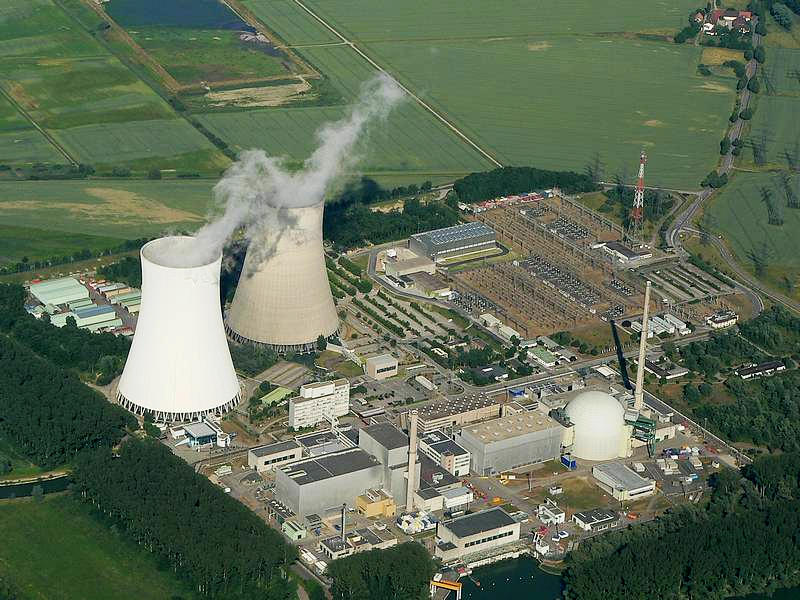 Phillippsburg Nuclear Power Plant by Lothar Neumann, Gernsbach [1] A few days of war and a $100 oil spike was all it took for the EU to figure out the bleeding obvious after wasting a $1000 billion dollars.Couldn’t they have seen this coming ten years ago, or a hundred? German Chancellor Merz lamented the loss of Germany’s nuclear plants 6 weeks ago. Ursula von der Leyen must have been shaken by events in the Red Sea: Reducing Europe’s nuclear energy sector was ‘strategic mistake’, EU chief saysPARIS, March 10 (Reuters) – Reducing Europe’s nuclear energy sector was a “strategic mistake”, European Commission chief Ursula von der Leyen said on Tuesday, as governments grapple with an energy crunch from the Iran war.
Europe produced around a third of electricity from nuclear power in 1990 but that has fallen to 15%, she told an event in Paris, leaving it reliant on oil and gas imports whose prices have surged in recent days.
This is a long contorted way to avoid saying that “fossil fuels are extremely useful”:
Being “completely dependent on expensive and volatile imports” of fossil fuels puts Europe at a disadvantage to other regions, von der Leyen said in a speech.
“This reduction in the share of nuclear was a choice. I believe that it was a strategic mistake for Europe to turn its back on a reliable, affordable source of low-emissions power.”
Likewise, The Blob arrange their sentences so oil and gas are mentioned at the same sentence as “soaring energy prices”, so we are left with a bad taste, but the word that matters here is not oil or gas, but the adjective “imported“: The continued heavy reliance on imported oil and gas exposed European countries to soaring energy prices in 2022, when Russia cut gas deliveries after the invasion of Ukraine. They speak with forked tongue. Oil and gas don’t cause “soaring energy prices” — it’s a lack of oil and gas that does that. Finally, carbon credits are flowing to nuclear powerIt is a sign that the end is near for the renewables fantasy — it never made any sense that nuclear power couldn’t earn credits for low emission electricity, unless of course, it accidentally ‘solved’ the climate crisis. In a sign of the EU’s increasing acceptance of the technology, von der Leyen said the executive Commission would offer a 200-million-euro guarantee for private investments in innovative nuclear technologies.
She said the money would come from the EU’s carbon market.
Australia can’t build a nuclear plant by 2040, but the EU will have SMRs “by the early 2030s.
There is a revival of nuclear power on all over the world.
By Jo Nova This below, is the latest graph of coal plants in operation in the world today. Luckily there is one place on Earth where carbon emissions are irrelevant.
Global Energy Monitor: Coal Plant Tracker (GW) While most CO2 emissions cause wars, droughts, and kill eagles, there are some CO2 emissions that just create refrigerators, so nobody minds. Where is that Boycott, Divest, Sanction China Movement?China has 1,271 gigawatts of operating coal power capacity, over half of the world’s total. The UN has met every year for twenty-eight years to badger everyone to stop using coal to appease the Goddess of Trace Gases and Weird Weather — all while China became the coal furnace of the world. Or perhaps The UN met every year, so China could do exactly that? Lord above, imagine if the bureaucratic diplomats of the West could be bought off so easily by trophies, trinkets and photo-opportunities? Or perhaps they were naively trapped in cheap honeypot schemes? As a trade strategy, it would be a bargain. And it surely was. Somehow life on Earth depends on Extinction Rebellion protestors, but they can’t seem to find the Chinese Embassy. And just so we can appreciate what a standout China really is, let’s compare China to every country in the world.  Global Energy Monitor: Coal Plant Tracker (Total in megawatts) Everything else is irrelevant.
|
Jo appreciates your support to help her keep doing what she does. This blog is funded by donations. Thanks!
 Follow Jo's Tweets
   
 
|
|||
|
Copyright © 2026 JoNova - All Rights Reserved |
||||






Recent Comments