|
|
||||
|
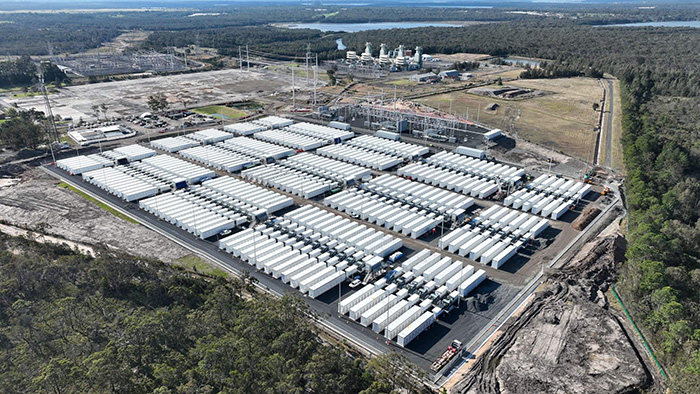
By Jo Nova It’s the worst kind of surprise for the Renewable fantasyThe billion-dollar “shock absorber” for NSW’s renewables grid has effectively short-circuited before it even ramped up to full power.* One of the world’s most powerful battery storage projects has suffered a crippling failure just a couple of months before it was supposed to be ready for full operation. The problem with one, and possibly two of its three transformers is so bad, it’s the kind of glitch that affects the whole national transition. This battery was supposed to provide stability for the grid as coal power stations were forced out by the renewable subsidies. But suddenly generators all over NSW are recalculating maintenance schedules and closure dates. The company is saying it will be six months to a year-long delay, but, given the waiting times for transformers in the US have blown out to an astounding 120 weeks, and up to 210 weeks or 2 to 4 years, it seems wildly optimistic to hope this can be back in action next year. Currently the AEMO officially describes this fault as continuing until May 3rd, 2026. This highlights the fragility of the whole transition which is dependent on new technologies that are being invented just-in-time (or not). This giant battery was supposed to arrive in time for Eraring Coal to shut last August. And the grid, once again, is rescued by an old coal plant that keeps running. The big battery project is part of a $500 million BlackRock consortium which include NGS Super and $100m from the Australian government “Clean Energy Finance Corporation” — just to make sure the foreign bankers make some money. Two transformers fail on hook upThe one-billion-dollar Waratah Super Battery is rated at 850 MW (1680 MWh) — in other words, it can deliver 850 megawatts of power for about two hours before it’s a flat battery. The team had one transformer running on October 18th, and was testing the other two to add them in, when it suffered what the CEO of Akaysha Energy describes as a “catastrophic failure”. Nick Carter’s internal message to staff: — As seen in The Australian Financial Review Dear Akayasha Team, I wanted to let you know of an incident that occurred at Waratah over the weekend that is serious and has implications for Akayash in a number of ways. On Saturday, High Voltage Transformer (HVT) #3 had a catastrophic failure. This results in damage to the transformer and it is beyond repair. … As a precaution, HVT#2 has been de-energised and put into a safe state pending further inspection. Of course, everyone is bitterly disappointed as we were only a few hours of testing away for passing Hold Point #5 and a week or so away from final SIPS testing, which the final step in completing the project. Each of these custom-built transformers was a feat of engineering in itself. The three at Waratah were made in Victoria at Wilson Transformer Company, and according to Tristan Rayner at PV Magazine, it took nine days to transport the last 477 ton unit 950 kilometers from Glen Waverley to its new home, about 100 kilometers north of Sydney. For the engineers reading, the unit is described as 350MVA 330/33/33kV. It converts the grid’s 330 kV transmission voltage down to 33 kV for the battery inverters. The three transformers arrived in May last year, so they’ve been waiting 18 months to feed them into action. SIPS stands for System Integrity Protection Scheme (it’s a thing we didn’t need a name for twenty years ago because spinning coal turbines provide it for free). But exact details of the fault or the state of the third transformer are hard to come by. According to Colin Packham today in The Australian “industry figures said they had never seen two transformers suffer crippling issues simultaneously.” NSW’s $1bn Waratah Super Battery faces a year-long delay after major faultBy Colin Packham, The Australian “Transformers can be a difficult asset to quickly replace in the energy market. The Waratah Battery is located within the 330kV network so getting a like-for-like replacement might be difficult as it is not a common network voltage across the planet,” he said. “The Waratah transformers were delivered in May 2024 more than 18 months ago.” The delay underscores the growing pains facing Australia’s transition to renewable energy. Large-scale batteries, considered vital to smoothing the intermittency of solar and wind-powered generation, rely on complex electronics systems and high-voltage equipment but industry figures said they had never seen two transformers suffer crippling issues simultaneously. It’s not clear if both transformers need to be rebuilt from scratch, or whether one can be refitted, or whether the problem was with the control unit, testing process, or system harmonics. The fact that the third unit was locked out of action suggests they suspect it would have catastrophically failed on contact too. Transformers are the new bottleneckIn the US the demand for transformers is so high that waiting lists are measured in years, not months. Though the US only makes 20% of its own transformers. Demand for transformers is surging with new data-centres for AI work. Because transformers need to be made to custom specifications they are not mass produced factory items sitting in a warehouse waiting to be put on a truck. Plus, in this case, the need for a 330 kV transformer is not very common. Even with the full force of a desperate government behind them, it may be difficult to commandeer a half finished transformer and rejig it to speed things up. The left are baffled, it’s such bad luckThe left wing Grattan Institute is mystified. The director of energy there says that we thought transforming our energy was going to be easy and cheap but it’s not turning out that way. Like, it could happen to anyone, you know… It’s almost like redesigning major infrastructure with new technology that was crafted with a century of engineering — was nothing at all. Waratah’s $1 billion super battery failure throws coal-to-renewables transition into disarray, experts warnTony Wood, senior fellow and director of energy and climate change at the Grattan Institute, said the energy transition has turned out to be increasingly difficult. “When we began this transition, I think there was some optimism that almost it was going to be easy and pretty cheap, and it’s turning out not to be easy or cheap,” he said. “I think our governments didn’t realise how challenging getting it all lined up was going to be.” The arts graduates running the country have no clue how engineering works — which would be fine if they just listened to the engineers. *UPDATE: I’ve rephrased that first line. Technically it has started, just not reached full power. To clarify — the Waratah Super Battery is currently working at about half pace at 350MW and 700MWh, so it is still “useful” (but only for a grid crippled with unreliable generators and if you don’t mind wasting a billion dollars). But until we know exactly what went wrong, questions remain about how much we can rely on it. It’s lost a key redundancy, and it could be that there is a lot we don’t know about operating giant batteries that could come back to bite us so easily. The video of the nine day trip of the last transformer: h/t Neville, Bally, Penguinite.
November 12th, 2025 | Tags: Battery, Net Zero, NSW (New South Wales) | Category: Global Warming |  Print This Post | | Print This Post | | ***Auroras being seen all over NSW Victoria Tasmania and NZ tonight.***See Glendale app! AURORA WATCH — This week has been one of the most active of this whole solar cycle. A major X5.1 Class Flare went off at 8pm AEST time yesterday from Sunspot AR4274. The strongest flare for a year. It appears to be full halo — which means is is probably aimed at Earth. There may be auroras on Nov 13th, especially since there were two smaller X class flares in the last couple of days. Sometimes a stacked set of strong solar flares can give a bigger show. See Glendale App. SpaceWeatherLive. Or X (Twitter) BoM space Weather.
 Image by taiga_valley_media from Pixabay By Jo Nova The unwashed masses know Net Zero is bad sciencePlumbers, taxi drivers, boiler makers, tradies — they don’t believe the Professors of Climate Science (just ask them). Climate change has been pushed too hard for so long, that nobody needs a PhD in atmospheric physics to know it’s a scam. Climate change causes everything that’s bad and nothing that’s good. It’s just like long form infomercial for a weather pill. 100% guaranteed to make your Wedding Day sunny in 2096 or your money back. *Terms and conditions apply. CO2 will cause the sixth mass extinction — but the people who say they worry about that, don’t worry so much they want to use nuclear power. If you thought the oceans were going to boil, and you could stop that with a nuclear plant, wouldn’t you? It’s a fifty year old technology with a great record. If we’d started building the plants 15 years ago, we’d be done now. Instead, they were so worried, they insisted we use a totally new technology and invent the answers, and the batteries for it, on the way. Sure, in an emergency, break glass, discover stuff! No one needs an Earth Science degree to notice that the same people who say they are panicking about carbon emissions still fly private jets, and buy houses on the beachfront. There is no missing that *Doom* has been coming for thirty years, but the world still looks the same. Fifty million climate refugees never came, the beaches didn’t shrink, the oceans didn’t boil, and global crops hit record highs. The real world is beating the Liberals over the head — but yet they still might not get there. Faced with oblivion — at the last minute, the Liberal Party are finally thinking about dumping Net Zero this week.They are meeting in Canberra on Wednesday. Donald Trump did all the hard work for them, took all the risks, and proved voters want this twice. Nigel Farage shows it translates to other countries, and polls show 69% of Australians want more coal and gas power if they get cheaper electricity. And yet the “moderates” pretend that elections are unwinnable if any party annoys the 7% of voters who think carbon emissions are more important than cheap electricity. Everything has flippedAs a topic Climate Change is more likely to push voters away.
This week AGL Energy is selling its stake in Tilt Renewables. Tellingly, the team at the Australian Financial Review say this is a trend: “The divestment comes as gentailers across the world move away from holding and funding capital-intensive renewables projects on their balance sheets.” Across the country the members of the Liberal Party in state branches are voting against Net Zero.The grassroots membership is trying Queensland | WA | SA | Victoria | and the Northern Territory.
The only people in the world still scared of being called a Climate Denier are in the Australian Liberal Party. In just one year, the UK Tories went from being a 200 year old ruling party in government to being a minor party. Kemi Badenoch finally vowed to repeal the UK Climate Change Act, but it was too late. The UK conservatives had failed to represent half the country, thus leaving the door wide open for a real alternative. That space was filled by Nigel Farage and Reform, and now Farage looks brave and the old conservative party looks like they are just copying him. Real leaders make decisions when they are hard to make. They don’t wait until every man and his dog has figured it out and is barking at them. In Australia 93% of Australians don’t want to spend any more than $2 a week to get to Net Zero. (And yet they are). How is that not an election winning majority just begging for a party to vote for?
November 11th, 2025 | Tags: Australian Politics, Net Zero | Category: Global Warming | Print This Post | |  Image by ThankYouFantasyPictures from Pixabay By Jo Nova The stench of failure is written all over Cop30 in BrazilThe USA, China and India are not attending. The UN has said the 1.5 degrees target is no longer possible. And the OECD admits “policy commitments have fallen from 10% annual growth to just 1%. The Consensus is not only dead, but no one can hide the body under the rug any longer. Things are decomposing so fast, even Keir Starmer has flown all the way to the COP conference in Brazil to say “the consensus is gone”. Keir Starmer didn’t even want to go to COP30 lest he look like he’s in the palm of the globalist Blob which would feed his nemesis – Nigel Farage. So he’s put in a last minute appearance and gone out of his way to avoid the usual fire and brimstone devotion by uttering a blasphemy. The consensus, after all, was the holy grail. It was the reason “to believe” and a reason to act even if we didn’t believe. The Blob always said: “We don’t want to fall behind” like moving with the herd was a benefit in and of itself. For a bunch of Groupthinkers, this is big admission:[The Guardian] The UK prime minister told world leaders on Thursday at the Cop30 climate summit in Brazil that the “consensus is gone” on fighting climate change around the world, a decade after the landmark Paris agreement in 2015. “Ten years ago, the world came together in Paris … united in our determination to tackle the climate crisis,” Starmer said. “The only question was how fast we could go. Today, however, sadly that consensus is gone.” For Starmer, this might be the best escape route from the Net Zero bomb. As long as the fuse is lit and the carbon-clock is running, the globalist Blob parties face a wipe-out at the next election. But if “the consensus” is over, maybe he can pack the climate-talk away in a box for a few years and curb the fury over electricity prices. It’s what Mark Carney did to win in Canada. He scrapped the carbon tax on his first day in office and de-fanged the opposition. It may even placate the Groupthinking Greens, if he can convince them that no one else is acting and to wait for a better day. Further to that, Starmer shocked everyone by pulling out of Brazil’s flagship policy. The Tropical Forests Forever Facility (TFFF) was supposed to raise $25b which has been downgraded to $10 billion this year to pay people to preserve forests, and the UK was expected to be one of the first contributors. Without $1b from the UK, it’s hard to see it succeeding at all. Chris Bowen, the Australian Minister for Weather Control even agrees with Keir StarmerBut in renewable-crazy-land that just means that Australia has to do even more. The Guardian asked him about Keir Starmer’s words and he replied: “I think that’s fair comment. Yes, it’s a contested space, but that makes supporting action in keeping with the science more important, not less important. “It makes continued action by governments and industry who get it – that this is a scientific and environmental imperative, but also excellent economics – even more important. And that’s certainly our approach in Australia.” Unlike the Reform Party in the UK, the opposition in Australia is a Lump of Jello, and doesn’t have a climate policy. So Chris Bowen is free to keep sprouting crazy witchery. He’s not afraid of the opposition because, effectively, there isn’t one. Indeed, Bowen has to keep waving the flag, because the Australian government wants to host the next loser COP event this time next year. Thankfully, the opposition and the Nationals have both said “Let Turkey have it”. We want our billion dollars. Even the OECD admits policy commitments have stalled. Globally, they only increased by 1% last year, when previously they would grow by 10% each year. Global climate action losing momentum: OECDBy Ryann Cropp, The Australian Financial Review The pace of global efforts to address climate change has ground to a halt, according to a report by the OECD that is likely to turbocharge Coalition wrangling over its commitment to emissions reduction. The expansion of international climate policy commitments increased by just 1 per cent in 2024, with only 17.7 per cent of global emissions now covered by legally binding net zero pledges, according the Organisation for Economic Co-operation and Development’s annual Climate Action Monitor. According to the OECD, the slowdown in climate commitments since 2021 contrasts significantly with the prior decade, when average emissions reduction policies expanded by about 10 per cent each year. They have run out of excuses: “This slowdown can no longer be explained by the COVID-19 pandemic or economic shocks: it reflects a loss of momentum in implementing effective policies,” the report said. Even the UN agrees that we will fail to hit their 1.5 degrees magical targetIt is, of course, our fault and we are moral failures: The failure to limit global warming to 1.5 degrees Celsius is an emergency and nations must now “lead or be led to ruin”, UN secretary-general António Guterres has said as the COP30 climate conference got underway in Brazil’s rainforest city Belém. He added: “Every fraction of a degree means more hunger, displacement and loss — especially for those least responsible. This is moral failure — and deadly negligence.” Mr Guterres, being a Blob man and the total socialist, paints this as capitalist greed: “Too many corporations are making record profits from climate devastation, with billions spent on lobbying, deceiving the public and obstructing progress,” he said. “Too many leaders remain captive to these entrenched interests.” After all, it’s not like the consensus died because millions of people in the largest economy on Earth were not convinced and voluntarily voted (twice!) for a man who called Climate Change a con and a hoax. Oh no… UPDATE: Just to clarify, the consensus Keir Starmer refers to is not “The Science consensus” (which is still sacred to socialists everywhere). He’s talking about the consensus for climate action, meaning political or economic moves. As long as “The Science” is still standing, this is just a pause in climate grifting. It’s never enough to win the economic arguments, we still have to beat down the bad-science monster.
November 8th, 2025 | Tags: Australian Politics, UK, UNFCCC | Category: Global Warming, Politics | Print This Post | | Plastic-eating bacteria have already evolved to eat our PET bottles and spread through global oceans Image by Filmbetrachter from Pixabay By Jo Nova The Experts thought PET plastic was impossible to degrade naturallyWWF tell us it will take 450 years for a plastic bottle to break down. The US EPA says it will take up to 1,000 years. And the UN says “plastic is forever”. But now that we’ve banned plastic straws and picnic spoons, and changed our shopping bags and spent hours sorted our rubbish, it turns out bacteria have already evolved to capture the energy left in the plastic. And furthermore, they weren’t just in one shallow bay, they found them spread throughout the world’s oceans. Presumably there will be some microbes working on our landfill that we don’t know about. If not now, then soon. How much of our recycling is just a waste of time and money? Life on Earth was never going to leave a free meal sitting aroundIn 2016 researchers found one sort of bacterium in a Japanese recycling plant was able to live off the plastic waste. Now we know that the enzyme PETase breaks down plastic, and that it is found in marine bacteria too. Researchers looked at 400 sites around the world and found the plastic-chewing-enzyme in (by golly) 80% of them.
A previous study looked for any enzymes that degrade any kind of plastic bond and came up with 30,000 candidates. They also were more likely to be found in areas with a lot of plastic pollution. All over the world, a whole new ecosystem is rising out of the mud. With a library of some 200 million microbial enzymes across the land and sea, and quadrillions of bacteria flexing their mutations, it was only a matter of time. Plastic is just a different form of C-H-O waiting to be converted into CO2 and water. 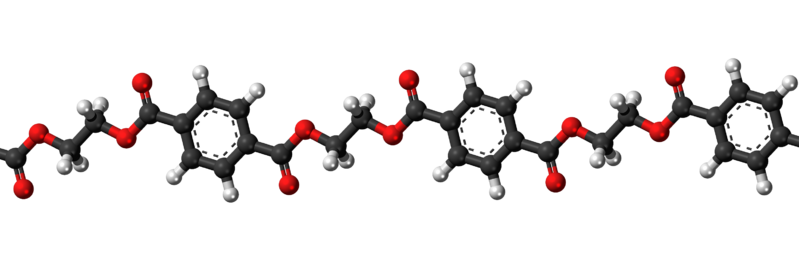 Polyethylene-terephthalate (PET) Artist: Jynto The time to panic is over…. Plastic-eating bacteria discovered in the oceanKeep reading → 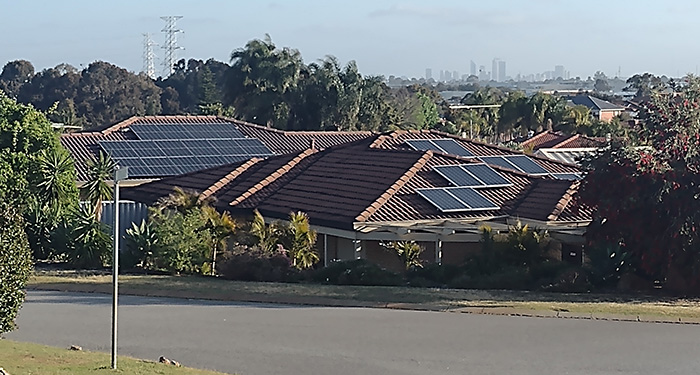 Solar Panels, Perth Australia
By Jo Nova The government plays Santa Claus, but poor people paid for the “free” electricity a long time agoIt’s a very socialist solution to a socialist problem. Having screwed the free market, the government has to take desperate measures to limit the damage being done by the solar death spiral. The more solar panels we install, the more expensive electricity gets, which forces more people to install solar panels, etc and so on until “poof” we turn into Zimbabwe. Last year, Jeff Dimery, the head of Alinta claimed that the “the rooftop solar glut” was so bad, the renewables transition itself had stalled. The solar surge in Australia has destroyed the profit margin for reliable generators. But it also killed the business case for new solar installations, and wind turbine parks too. With the national market bleeding negative prices at lunchtime, most generators would have to pay real money if they generate at lunchtime, but the household solar owners don’t. This created the perverse incentive where the only escape for households from rising electricity prices was to put solar panels on the roof. We’re reached the point where two thirds of Australia was subsidizing the other third to buy solar power. Like a dragon that eats it’s own tail, it couldn’t go on forever. Since solar panels were always subsidized, we know they were not economic to install. They were never really cheaper than mass coal fired power — not on a 24 hour system. So we’re added 4 million inefficient generators that wouldn’t have been installed without the subsidy, and we’ve paid the subsidy too. Now we’re putting bandaids on top of bandaids so we can pretend that it will get cheaper, maybe, one day. “Free” electricity will slow solar sales, increase batteries, shift the load, and get more people on smartmetersWithin the confines of a crazy grid, it makes sense. It also makes the government look like heroes, until the people realize they were tricked. The Labor Government wants to force the retailers to give some customers three free hours in the middle of the day. (Those with smartmeters, and in certain areas). They’re hoping: 1/ This will reduce new sales of rooftop solar panels. Fewer people will want to pay thousands to install solar panels when their best working hours are already free. This is good for a grid overflowing with energy at noon. It’s bad news though for solar panel installers, and will leave a nasty taste in the mouths of people who are still paying off their solar panels. 2/ It will increase battery sales. People who can charge their batteries free may find it appealing to sell electricity back to the grid at peak prices at 6pm, or to just avoid the evening price spikes themselves. This assumes that batteries are still subsidized, which means they still don’t make sense, and the country is still be getting poorer, but it will keep the Labor government out of hot water a bit longer. 3/ It will shift demand to noon (somewhat) to match the sun. Grid managers will be hoping that they can shift some demand from breakfast and dinner to the middle of the day. The new market intervention gives an incentive to people to spend hours figuring out how to rearrange their lives to match the “free” energy. It will help retirees who are at home and can do their washing and make their pot roast at lunchtime. But dual income families struggling to make ends meet won’t be home to use the free gift they paid for. It will take some effort to reprogram their hot water systems, and set their air conditioners and washing machines to run at noon while no one is home. They may not bother. It won’t help those who need to charge their electric car at night. 4/ It will increase the uptake of smart meters (not that people have much choice in that). But Big Government loves that control. It means they can turn off poor people’s air-conditioners on the hottest days of the year. As an unwanted side effect retailers may have to charge more during the rest of the day. Like all government finagling, it will raise prices in ways the government didn’t see coming. There is no free lunch — the poor already paid for a share in these solar panelsFor years the unwashed masses have been quietly forced to pay for wealthier people to install solar panels in Australia. It was all so well disguised. Solar installers would sell panels below their real cost and then collect the SRES carbon credits as a rebate the cover the difference. But on the other end of that deal, electricity consumers paid for those carbon credits as an unlisted extra on top of their rapidly rising bills. This charge hit the poor who didn’t have solar panels harder than those who could afford them. It means, then that part of the cost of installation of solar panels was paid for by neighbors who got nothing in return.
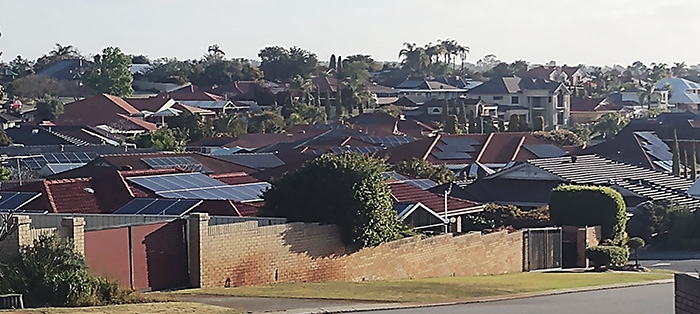 Solar Panels Perth Australia It makes sense in Renewable Crash Test Dummy LandAt the moment solar power is being wasted in the middle of the day, so this is an improvement in a system overloaded with generators that are supposed to make it rain in 2100 AD and which no one would have bought otherwise. Right now, the government doesn’t want to tell Australians that don’t have solar that they can’t install it (“you missed the boat”). They don’t want to tell people with solar panels to pay back the subsidies and rebates to help reduce electricity prices (“We said it would be cheap, but it isn’t”). The government needs a lot of batteries to keep the renewable fantasy alive a bit longer, but they can’t afford them, so they need some carrot-and-stick-tricks to get Australians to do it for them. Thus we arrive at the “three free hours of electricity” plan that was suddenly announced this week in a move that shocked the retailers.
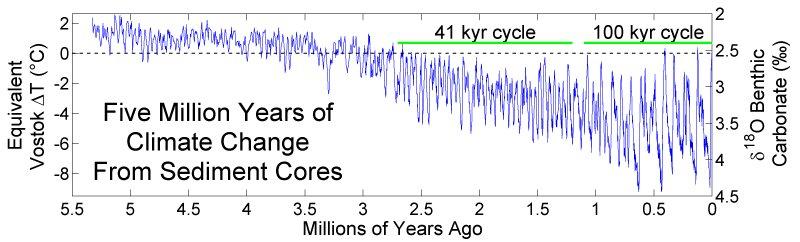
November 6th, 2025 | Tags: Big-Government, Solar Energy (PV) | Category: Global Warming | Print This Post | | 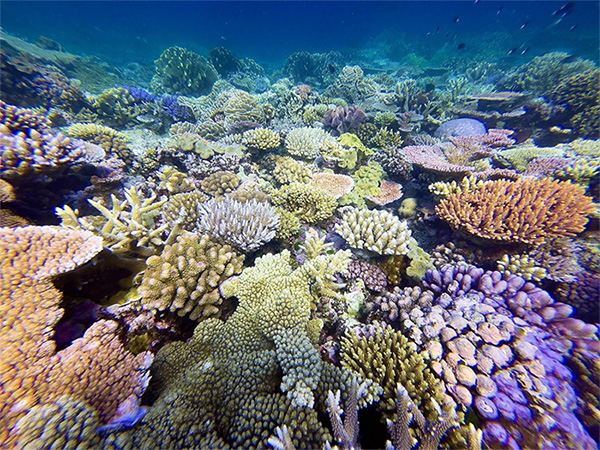 Corals in the Great Barrier Reef off the coast of Australia. (Courtesy of Jessica Hankins) By Jo Nova Everyone was sure that corals would be degraded by our “increasingly acidic oceans” (a political-activist-term for “slightly less alkaline”). But when a team took cores from 200 year old corals in the ocean — instead of studying them for a few months in a laboratory — they discovered some corals have adjusted to the pace of “acidification” much more effectively than anyone thought. The corals actively manage the chemistry of the thin layer of fluid next to the skeleton as the ocean chemistry shifts. Who would have thought that corals would have the ability to cope with rapid changes in the climate? In the last 4 million years, corals have only survived 90 or more ice-age cycles.
L. E. Lisiecki and M. E. Raymo (2005) If only someone had thought to test actual corals at sea before they spent twenty years scaring little children at school? Thanks to Oldbrew at Tallboke’s. From the Press Release: Corals are “More resilient than previously thought” Corals, the foundation of ocean biodiversity, are threatened by climate change. But new research suggests that these organisms might be more resilient than previously thought. In a study published August 27 in Science Advances, a CU Boulder researcher showed that despite a gradual increase in ocean acidity levels over the past 200 years, some corals seem to be able to adjust and continue to generate their hard, stony skeleton structures. While it remains unclear how the corals adapted to the changing environment, Hankins said the secret might lie in their calcifying fluid. “It could be that the processes corals use to modify and regulate their calcifying fluid are more complex than we’ve been able to constrain previously,” said Hankins. “More studies are needed to determine if different species, or if the same species in a different location, have similar responses,” she said. The ocean absorbs about 30% of carbon dioxide emissions from human activities. As more CO2 dissolves in the ocean, the seawater undergoes a chemical reaction that makes the ocean surface more acidic. Previous studies suggest that ocean acidity has increased by 40% since the Industrial Revolution and is likely to rise further. Corals use aragonite, or calcium carbonate to build their skeleton. It turns out that pH of the water is so important that corals don’t leave it up to chance, but manage the right pH in the calcifying fluid around the skeleton. Corals build their skeleton in a microscopic compartment between the coral’s tissue and the skeleton. The area is only micrometers thick, and they use proton pumps to get rid of H+ molecules and control the pH themselves. In the graph below, in part A we can see that the aragonite in the calcifying fluid (Ωcf) has been increasing since about 1840 in the oldest coral. In B the aragonite in the seawater starts to fall rapidly from about 1970 onwards, which ought to “change everything”. However in D, despite all that, the annual calcification rate stays remarkably similar.
 Fig. 2. Multidecadal time series of coral growth parameters and seawater conditions. Just because one study in one type of coral shows that corals may be more resilient than thought doesn’t mean the whole Great Barrier Reef will be fine. But it does show that the experts have been talking out of their hats, whipping up dramas they really didn’t understand. REFERENCESJessica Hankins and Thomas M Decarlo (2025) Multidecadal decoupling between coral calcifying fluid and seawater saturation states, Science Advances, 27 Aug 2025 Vol 11, Issue 35 DOI: 10.1126/sciadv.adr0264 L. E. Lisiecki and M. E. Raymo (2005) — A Pliocene-Pleistocene stack of 57 globally distributed benthic δ18O records, Paleoceanography 20, 1003
November 5th, 2025 | Tags: Corals, Great Barrier Reef, Hyperbole | Category: Global Warming | Print This Post | | By Jo Nova This is the state of national energy debate in Australia — preschooler tauntsThe Nationals have finally decided to dump the Net Zero target (an excellent step*). In reply, Chris Bowen, the Minister of Electricity and Weather, could have reeled off all the countries with unreliable energy that are building aluminum smelters, except there aren’t any. He could have dazzled us with talk of terrawatt-hours, or fantasy hydrogen tankers that are just around the corner, but no one believes that any more — so he just went for dinosaur joke he heard in Grade two. Mr Smug, Chris Bowen: “The old National Party — deciding whether the Earth is flat, and whether the Earth rotates around the sun, or visa versa in 2025. Like get with the program…” Effectively the Energy Minister has nothing at all, so he’s calling the National Party stupid like a rock. He hopes you don’t notice. It’s a cheap childish trick, but hey, it fooled the ABC. They were so impressed with his sneering condescension, they played it on the nightly news on Saturday night and introduced this wit as “standing firm on policy”, as if he said something meaningful. Most of the climate change debate is a bluff. It has always been that way.When an impertinent sod asks a hard question, the believers launch into a scathing pantomine — calling them deniers, or mocking them as lizard-brain flat-Earthers. It’s a rhetorical trick that implies the answer is so bleeding obvious, and the questioner is so stupid, they don’t even need to answer the question. When done well, the debate is won before it even starts. And onlookers learn that they don’t want to ask questions like that. It’s just a form of bullying. What’s really extraordinary is the ABC didn’t recognise how silly this makes Bowen look. They usually work as the Labor-Green promotion team, so they must have thought this was not A-Grade moral-preening, but something impressive. Scary. It will be a great day when we see the opposition mock Bowen (and the ABC) for this unprofessional petty behaviour. Namecalling only works until someone calls it out. Make them pay. If anyone wants to see the context, here’s the 40 second segment. *The Nationals leader, David Littleproud, sadly, is still pandering to the “We Believe In Climate Change” crowd, which is a shame, because it will deprive The Nationals of their best points and funniest lines, but in order to get to the Land of Sensible, they have to get over the Net Zero bridge, so it’s a significant win, and may yet drag the Liberals over the line, or split them.
November 4th, 2025 | Tags: Australian Politics, Coercion, Left Wing Extremist, Net Zero | Category: AGW socio-political, Global Warming, Ideology | Print This Post | | |
Jo appreciates your support to help her keep doing what she does. This blog is funded by donations. Thanks!
 Follow Jo's Tweets
   
 
|
|||
|
Copyright © 2026 JoNova - All Rights Reserved |
||||
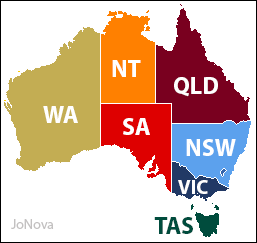 Members in the South Australian branch are so fed up there has been a mass exodus. More than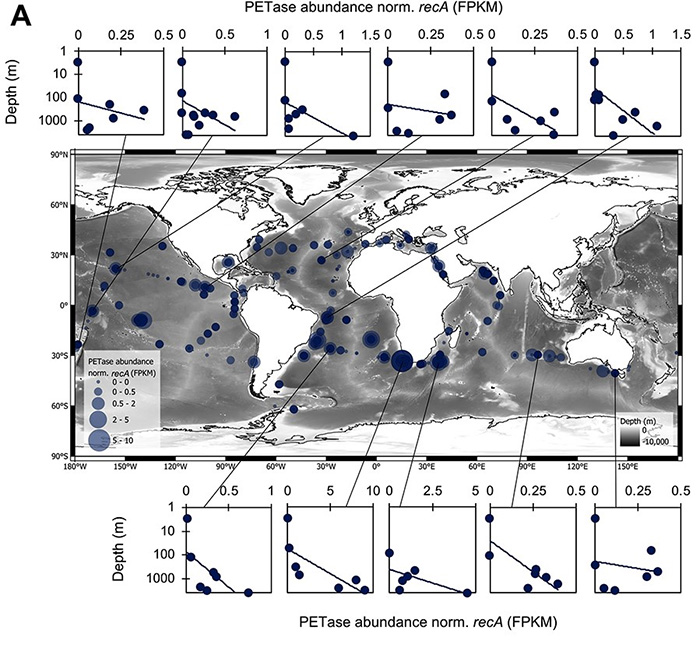






Recent Comments