Engineers were warning the grid was close to crashing due to excess solar
The mass blackouts in Spain and Portugal wrecked havoc on April 28 last year. At the time everyone accountable was feigning confusion, blaming it on a “rare atmospheric phenomenon” which might have set up mysterious oscillations in the line. They were bandying around terms like “ ‘induced atmospheric vibration’ and talking about extreme temperatures (you know, like 23 degrees C). But all along, the head honchos at Red Electrica knew it was due to an excess of solar power and a lack of reliable generation, because the technical staff had told them what was coming:
The Senate committee investigating the blackout heard a second round of conversations this week between private electricity companies and Red Eléctrica, the system operator. Almost a year after the incident, and with no one yet taking responsibility, the latest recordings demonstrate that as early as January 2025, three months before the total blackout, the company chaired by Beatriz Corredor knew that the entire Spanish electricity system was at its limit. They also show that its technicians foresaw an imminent risk— “at some point , we’re going to crash,” they even predicted—and that they had identified the source of the voltage fluctuations: an excess of solar photovoltaic power and a lack of nuclear and gas generation. Once again, the recordings of the incident put the spotlight on the management of the company controlled by SEPI (the Spanish State Holding Company) and call into question the narrative of its leadership.
On January 31st, there was such a bad power surge that staff at the Asco nuclear power plant warned, “if the units trip, we’ll be left with zero power .” They went on to say that “Solar power isn’t like wind power, which has inertia. With solar, someone comes along and pushes a button, and if they don’t scale it up a bit, they’ll cause problems, and that’s what happens.”
Prophetically, on the morning of the blackout, staff knew exactly what they needed, telling the state’s operator’s control center: “We need more large-scale, thermal generation capacity, which is what regulates the situation.”
For a laugh, lets remember those glorious excuses:
The Portuguese prime minister, Luís Montenegro, said that the issue originated in Spain. Portugal’s REN said a “rare atmospheric phenomenon” had caused a severe imbalance in temperatures that led to the widespread shutdowns.
REN said: “Due to extreme temperature variations in the interior or Spain, there were anomalous oscillations in the very high voltage lines (400 kV), a phenomenon known as ‘induced atmospheric vibration’. These oscillations caused synchronisation failures between the electrical systems, leading to successive disturbances across the interconnected European network.”
Not only did the Spanish staff lie to the voters, but most of the media in the West covered up their lies, didn’t ask hard questions, and let them get away with it.
The reports are coming out now, but no one who was accountable has been held to account. (Not yet). Will it ever happen?
Mysterious line oscillations,
And rare atmospheric vibrations,
Showing power failure signs,
In the high voltage lines,
Caused blackouts in the Iberian nations.
–Ruairi
UPDATE from commenter Paulie: The final 472 page report — “Don’t mention the Solar Excess”
For those who don’t have the time to read it all, it is a 472 page apology for not being able to identify a clear causal sequence leading up to the blackout. Lots of excuses, including insufficient instrumentation on their lower voltage transmission network, and operators not being able to provide documentation on the behaviour of specific generators.
Specifically, the report takes great pains not to identify the generators or specific equipment that were the source of the voltage instability that caused the blackout. But Figure 1-2 on page 10 shows that, on the day of the blackout, that voltage instability started at about 10:30am local time.
Figure 1-6 shows how voltage instability resulted in a rapid rise in grid voltage to well outside the normal operating band (max 420kV) within the final minute before the blackout. Again, while this figure identifies some critical events, the report fails to address why the grid operators were unable to deal with this rapid voltage increase.
The investigators were able to do one very useful thing: they built a model of the Spanish grid and were able to accurately replicate the behaviours seen on the day. But it takes them until page 311 to produce a result that clearly shows the source of the problems on their grid.
Figures 4-114 and 4-115 show the behaviour of grid voltage and frequency, had the grid had eight new synchronous condensers operating. The preceding text provides no technical information on the capacity of those syncons, but the results from their simulation are self-evident. They show that complete failure would not have occurred had the syncons been operational.
Had the Spanish grid maintained sufficient synchronous generation, from coal, nuclear, gas or hydro, the blackout would not have occurred.
So the authors of the report never say the obvious! The Spanish grid failed because it had too much inverter based energy, and not enough synchronous energy. When instability events happened, the lack of sufficient system strength and inertia caused the grid voltage to increase uncontrollably, tripping numerous automatic safety systems, that led to the blackout event.
But you won’t find any such straightforward explanation in the report’s Root Cause Tree 14 factors on pages 333/334.
The big losers in this war, apart from some former Iranian leaders, appear to be China, and NATO.
In the last two months China has lost easy cheap access to cheap oil from Venezuela and now Iran. China was getting around the sanctions and buying discounted Iranian oil through a shadow fleet of ships. It was acquiring as much as 80% of Iranian oil production. Now it has to pay market prices and fight for a limited supply.
Meanwhile the divide between the US and Europe is suddenly very obvious. NATO has been shown to be an empty shell.
Victor Davis Hanson, the military historian, explains the big picture:
GB News: Basically, is this a victory for Donald Trump? Does Does this ceasefire represent a victory for his sort of strategic campaign?
Victor Davis Hanson: Well, if it’s honored, it is because when all of the rhetoric and all of the politics vanish, and if they abide by the agreement and we stop and the straits stay open and … if we’re viligant — then it is.
He [Trump] comes back and he says when I came into office Iran had the ability to make 11 bombs apparently … we’ve realized they had missiles that would reach Europe. They had shut down, through the proxies, the Red Sea. They had caused October 7th — and they can’t do that anymore at least for the foreseeable future. If they think they’re going going to try, I or any future president can stop them at very minimal cost. This has cost about 50 to 60 billion dollars.
It’s about probably a quarter of what was stolen in California under the Newsom regime by welfare fraud. And we’ve lost tragically 13 soldiers. We lost the same amount in one day in Afghanistan getting out of Afghanistan. So if everybody just keeps calm and looks at the actual data, the cost, the benefit, uh, and who wins and loses, … I think in two months nobody’s going to be talking about this if it holds.
We’re in an information war. I recommend people watch this to understand just how deep and complete the wall of anti-Trump propaganda is.
From the Transcript: A brief history of the last 47 years of the Iranian war — “Death to America”
Victor Davis Hanson asks “what was the alternative?”
Because for 47 years [the Iranians] had bombed the American embassy in Beirut. There were operatives who bombed us in Tanzania and Kenya. They had kidnapped people and butchered them. They blew up 243 Marines. They probably killed anywhere from 700 to 1,500 American servicemen in Iraq and Afghanistan by sending advisers and shape charges to the opposition.
They tried to kill Donald they had a plot to kill Donald Trump, Mike Pompeo, John Bolton and they wanted to kill the Saudi ambassador right inside Washington DC. They were supplying the Houthis that were disrupting and causing a lot longer and more extensive damage in the Red Sea, the entry to the Suez Canal. They shut that down for 5 months. And then in addition, we would never have [had] October 7th. None of this would have happened had Iran not supplied Houthis, Hamas, and and Hezbollah.
So at some point somebody had to bell the cat and every single administration said they were going to do it. Ronald Reagan said he was going to do it. We had the tanker wars where they did shut down the Hormuz strait. We had then George HW Bush who said this was intolerable. He did nothing. Bill Clinton thought of doing something. He did nothing. George W. Bush — people advised him.
People say that Trump is guided by the Israelis. The Israelis told him in 2003 it was a mistake to go after Saddam and it would be a preferable target for Iran which was the nexus really of terror not Saddam. [The US] did nothing about Iran even when they supplied these charges. Then we had Barack Obama and his idea was to appease them and create an alternate nexus of power in Iran and then Damascus and then Beirut and the Gaza and then play that off against the Gulf states in Israel and he would adjudicate as if there was a moral equivalence between the two. That didn’t work.
And then we had Trump’s first term — he didn’t want to do this. He put maximum pressure. He sanctioned them. He declared that the Houthi is a terrorist organization. And then they were silent for a while. Soon as Joe Biden came back in, he lifted all the sanctions, all the punitive measures. They got a hundred billion dollars in oil revenue. The Houthis were right back at it.
And then he came in a second time, Trump, and he said he was going to … stop this. And I think you could make a plausible argument that they have suffered the greatest military loss in the history of the Middle East as far as the number of missiles, uh, launchers, uh, naval assets. They don’t have an air force. They have shoulder fired missiles now. They will be resupplied by Russia and China, but they still, even when they had air defenses, the Israelis, the United States took them out.
The end of the NATO era?
Later in the interview Victor Davis Hanson wonders “What’s the purpose of NATO after this latest war?” The US helped the UK and Europe in the Falklands, in Serbia, in Libia, Ukraine, but now weak countries speak against the US and pay the Danegeld to Iran to get their boats through. Iran had long wanted to set up a payment system (effectively extortion) for ships passing through the Strait of Hormuz and the Red Sea, and only one country stood against that.
Finally, a year after the Democrats realized that climate change was a vote loser, the Australian Labor Party are taking their first baby steps to hide their climate zealotry.
Even they realize that bragging about renewable energy targets is like juggling sticks of dynamite when the nation is in danger of running out of diesel. Every time someone mentions the 82% target during an oil crisis, it just reminds us how the government have been barking up the wrong tree.
Make no mistake, they aren’t renouncing Climate Change, they’re just packing the idea away quietly and hoping no one notices. They are testing-the-waters. After the war, if it’s safe to bring aggressive Net Zero policies back, they can pretend it was just a typo. If it isn’t safe, which it probably won’t be, they will be hoping everyone just forgets.
Labor has dropped references to its 82 per cent renewables target in a preliminary draft of the national policy platform it will take to the next election due in 2028, but is vowing to use wind and solar power to bring down electricity prices and reindustrialise Australia while blaming coal for grid unreliability.
Labor sources are playing down the omission of its goal of 82 per cent by 2030 in the draft, declaring the party remained committed to the target and it was covered in a broader reference to “ambitious and achievable 2030 and 2035 targets”.
And we can see they are afraid of Andrew Hastie — they mocked his idea of reviving an Australian car industry, but lookie here — the government want us to become a leader making EVs?
An initial draft of Labor’s platform would tie a third-term Albanese government to “urgently” grow the manufacturing base by addressing high energy prices and “poor-quality trade agreements”, while backing Australia as a potential producer of electric cars.
Sure, let’s compete with China but with electricity at twice the price?
The Labor Government have been caught with their pants down in an energy war
They’ve spent years trying to stop the tides rising by a millimeter a year, when they should have been keeping our oil refineries running, exploring for gas and oil, and setting up coal to liquids plants for national security.
This is the feasibility study for the whole country that the government could have done…
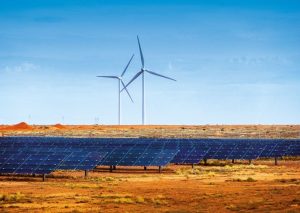
Instead of doing reckless experiments with our national grid, we could have done a practice run and transitioned one small town to see if it worked. If renewables were going to be successful anywhere, it would be in a place like Coober Pedy. After all, these small desert communities have wide open spaces, lots of sun, and new renewables only have to compete with expensive diesel generators, not cheap coal.
Fans of renewables were partying last week because one small town had managed to run for “nearly five days” on renewables. Nearly five!?
You might think this was a new set up, but this is a system that was built in 2017. Basically, the people of Coober Pedy have been waiting for nine long years to get this lucky with the weather.
And the previous record they set with this equipment was in 2019!
In a LinkedIn update on Tuesday, EDL said its Coober Pedy Hybrid Renewable Power Station recently clocked 116 hours of continuous diesel-free operations. “That’s almost five straight days of energy for the iconic Australian mining town, all generated exclusively by wind, solar and battery power,” the post says.
The previous record for the longest continuous period operating on 100 per cent renewables was 97 hours in December 2019.
It’s been a long time between drinks, so to speak.
And the big question is “How much did that cost”?
This is a town in the South Australian desert with a population of about 1,600 people. They tried to build a big solar system in 2009 for $7 million but it didn’t get off the ground. Then in 2014 they tried again, but this ended up costing about $40 million in capital costs, and the total project ballooned out into $192 million dollar power purchase bonanza over the next twenty years.
It was so bad, The State opposition called for an inquiry, and an independent report estimated that if they had just got another quote, they could have saved $85m (off the $192m bill) over the course of the 20 years operation.
Or they could have given every man, woman and child $120,000 to buy their own generators…
And how much did it save over 20 years?
Wait til you hear:
A DSD spokesperson said the project was forecast to save the Government $5.4 million against diesel generation costs over a 20-year-period.
So the State Government spent about $100m in subsidies that it didn’t need to spend in order to save $5m in fuel costs spread over the next two decades. But the good news is: we know our national renewables grid isn’t worth doing. The bad news: we’ve already wasted hundreds of billions of dollars and we didn’t need to.
How long, exactly, would Australia last without diesel??
Google was going carbon free by 2030 right up until it needed reliable hard energy itself, then the Net Zero goals were dropped in a hole. Even though The Goolag has been censoring skeptics and lecturing the public for ten (or twenty) years about the dangers of fossil fuels, now that it wants more power, Google chooses “gas”. Never mind the families that can’t afford dinner …
Google didn’t just promise to use more renewables—it promised to run on carbon-free power every hour of every day. “Climate Change is an urgent threat to humanity,” said Google in 2020. But now Google wants to build a 933MW gas plant in Texas, and is exploring building another huge gas plant in Nebraska.
Google was a key part of the marketing and election campaign to crush fossil fuels and promote the renewables industry, and it’s not even pretending that solar and wind power are the answer any more.
Michael Thomas, the founder of Cleanview and author of the report [on Google’s new gas plant] said that this power plant would be one of the first direct investments in fossil fuel infrastructure that he’s seen with Google.
“Google has spent decades crafting an image as a clean energy leader,” said Thomas. “I’ve always considered them to be the most committed to their climate goals. But these projects suggest a major strategic pivot at the company could be under way.”
Google are still pushing for Net Zero (they say) but don’t ask them any hard questions:
Asked by Axios last week at an energy conference in Houston about how natural gas jives with the company’s clean energy goals and overall strategy, Google’s head of advanced energy, Michael Terrell, said: “We don’t have anything to say on that.”
In 2024, the company reported a 48% rise in greenhouse gas emissions since 2019, due to datacenter energy consumption.
What they called climate commitments are now referred to as “climate moonshots.”
Five weeks after it started, suddenly Australians are noticing the bonanza under our feet all along.
That most hated thing, the unthinkable brown coal, could save the day if we would only stop beating it down with blunt sticks and Voodoo dolls.
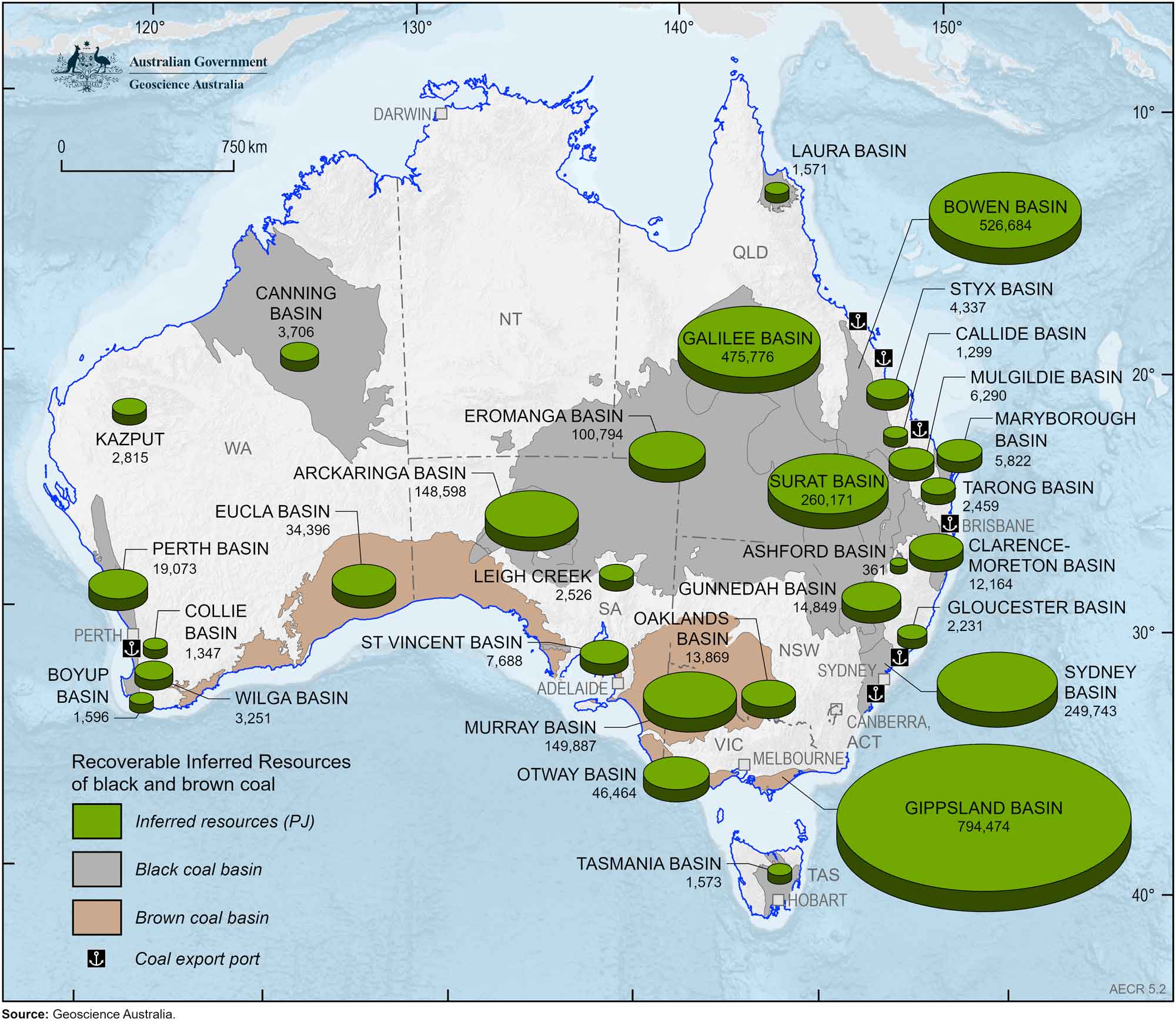
In 2016 Geoscience Australia estimated we have so much brown coal we could keep burning the deposits we already know about at the current rate for our whole lives, and our children’s lives, and their children’s lives too. We could keep going for 40 generations.
“Australia’s recoverable brown coal EDR did not change during 2016. The majority is located within the Latrobe Valley (Victoria). At 2016 production levels, Australia’s recoverable brown coal EDR is expected to last more than 1000 years.”
We burned it to make electricity all year in 2016 but the total amount was so insignificant no one counting national resources could even notice.
Look at the size of the Gippsland Basin deposit. It’s almost like God has a sense of humour putting all that in there so close to socialist HQ.
https://www.ga.gov.au/aecr2025/coal
Brown coal is the cheapest fuel there is for reliable electricity, bar none, but even more importantly, it can be turned into liquid fuels, which Australia desperately needs for trucks, tractors, and mining gear. We need to be able to pour our energy into a tank at room temperature and pressure, and in five minutes flat.
It’s great to see National Party talking about the thousand-year supply, and also about a new method of turning coal to liquid fuel. Do the Liberals have enough gumption to even follow The Nats?
— By Abisha Sapkota and Nathan Schmidt, The Australian
However, 95 per cent of that energy was “locked up in coal and uranium”, Senator Canavan said. “Two things the Labor Party doesn’t like to use,” he said. “In the short term, we need to use the coal and gas we export to these countries in North Asia as a bargaining chip to get liquid fuels.”
In the medium term, the Nationals are urging for the adoption of “coal to liquids” technology, Senator Canavan said, that would turn coal into liquid fuel.
The Nationals also want to get rid of the SafeGuard mechanism (Hallelujah!)
Introduced in July 2023 and reformed in 2023, the [Safeguard] policy requires facilities that emit more than 100,000 tonnes of carbon dioxide to keep net emissions below set limits. It’s a policy to assist Australia to reach net zero by 2050.
“Refineries are covered by the safeguard mechanism, which is designed to put refineries out of business,” [Matt Canavan] said. “OK, that’s what it’s there for, so get rid of that.”
There are two choices in coal liquefaction processes: Bergius and Fischer-Tropsch, both invented in Germany in the 1910s. In the Bergius process, hydrogen is forced into coal molecules at a temperature of 450˚C and a pressure of 170 kg/cm2 (165 atmospheres or 2,420 psi). The Fischer-Tropsch process burns coal in pure oxygen to produce a synthesis gas that is catalysed to long chain hydrocarbons in an oil bath. Bergius is the better process. In WW2, German synthetic fuel production was dominantly via the Bergius process…
For self-sufficiency in liquid fuels, we need 33 Bergius plants producing 30,000 barrels per day at a cost of $4.6 billion per plant for a total outlay of $152 billion. Somehow we have run up a national debt of $1 trillion in the last 25 years and have nothing to show for it. Building the coal liquefaction plants we need will be an enormous benefit by comparison. We can do it.
Bergius plants are the near-term solution. Longer term it will always be nuclear…
Finally, we see a few key topics hitting the media. Things that should have been discussed 10 years ago.
Brown coal could fill an awesome gap in our national energy profile. Imagine we could make all the diesel, jet fuel and petrol we needed yet we were not doing it because we were afraid of 0.0001% more beach-weather a century from now?
The trend is spreading. Coal, the stranded asset of a bygone era, is hot property again everywhere. All it took was a few weeks of an energy crisis, and decades of brainwashing against coal is evaporating.
And the Ecoworriers are starting to fear this crisis will trigger a more permanent shift back to coal — which it absolutely will — not because of ‘sunk costs’ or any of the other excuses the greenies tell themselves, but because the oil crisis will break the sacred exorcism spell cast upon coal. Governments have been shocked at how vulnerable they are without fossil fuel energy.
People might be ordering EVs, but governments want fossil fuels.
Activists should be panicking — the whole anti-coal program was based on petty namecalling, teenage girls, and costumes — not hard numbers. It could fall over at any moment, and they will not be able to put it back together.
A new lease of life for Italian coal-fired power plants. To address the energy crisis, in the event of an emergency, fossil fuels will be allowed to continue to be used until 2038 , thirteen years beyond the deadline set by the National Energy and Climate Plan, which called for a shutdown by December 2025. The extension was included in the billing decree with amendments presented by the League and Azione parties.
The measure also introduces a crackdown on telemarketing and measures to support less polluting transportation. Minister for European Affairs and the National Recovery and Resilience Plan (NRRP), Tommaso Foti, defends the decision: “All energy sources, at least in the immediate future, must be used to their fullest extent.” League MPs in the Productive Activities Committee call the extension “fair and responsible” during a time of international energy crisis.
Energy crisis may force Germany to keep coal-fired power plants alive
Chancellor Friedrich Merz questioned Germany’s plans to abandon coal as a source of power. “We may need to keep our coal plants online for longer,” he said at an event organized by the Frankfurter Allgemeine Zeitung in Frankfurt.
“I am not ready to gamble with the core of our energy supply just because we agreed on some deadlines years ago,” Merz said on Friday.
By Rajesh Kumar Singh, Will Wade, and Eva Brendel, Bloomberg
Power analysts with the London Stock Exchange Group estimate European countries could generate around 20% more electricity from coal this summer than last, if the European gas benchmark averages about 50 euros per megawatt-hour. That figure currently stands at around 54 euros.
“This is a bigger disruption than the Russian war,” said Tony Knutson, global head of thermal coal markets at consultancy Wood Mackenzie Ltd, given the impact on a larger number of countries. Those without enough gas will be forced to pull the coal lever, he added. “I don’t think they have a choice.”
Fortune news lists all the Asian countries reopening coal, and talks about how the effects of the crisis are starting to bite on the details of life like driving and hot showers.
Asian governments are temporarily pivoting to coal…
For Asia, which buys more than 80% of the crude and LNG that flows through the narrow waterway, the consequences have been swift: severe fuel shortages, export bans, and government budgets stretched to the breaking point.
South Korea urged households to take shorter showers, charge devices during off-peak hours and shift usage of high-energy appliances like washing machines to weekends. Samsung, meanwhile, barred employees from driving their car to work if the last digit of their license plate matches the last digit of the current date.
Southeast Asian governments are rolling out similar restrictions. Thailand introduced a four-day workweek for civil servants, and ordered higher office air-conditioning temperatures to curb demand. Vietnam’s airlines are suspending some domestic routes as the country braces for jet fuel shortages.
The risk is that once a coal plant is brought back online, the sunk costs and political economy of energy pricing make it difficult to shut down again. “There’s a danger of a long-term carbon lock-in once countries decide to reverse plans to retire aging coal-fired fleets,” warns Sharon Seah, coordinator of the Climate Change in Southeast Asia program at ISEAS–Yusof Ishak Institute.
The long term ‘lock in’ of revived coal plants is what happens when reality hits the fantasy.
We use cookies to ensure that we give you the best experience on our website. If you continue to use this site we will assume that you are happy with it.










.jpg)