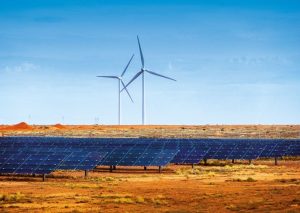
By Jo Nova
This is the feasibility study for the whole country that the government could have done…
Instead of doing reckless experiments with our national grid, we could have done a practice run and transitioned one small town to see if it worked. If renewables were going to be successful anywhere, it would be in a place like Coober Pedy. After all, these small desert communities have wide open spaces, lots of sun, and new renewables only have to compete with expensive diesel generators, not cheap coal.
Fans of renewables were partying last week because one small town had managed to run for “nearly five days” on renewables. Nearly five!?
You might think this was a new set up, but this is a system that was built in 2017. Basically, the people of Coober Pedy have been waiting for nine long years to get this lucky with the weather.
And the previous record they set with this equipment was in 2019!
New record, as iconic mining town runs on 100 pct wind and solar for nearly five days straight
By Sophie Vorrath, Reneweconomy
In a LinkedIn update on Tuesday, EDL said its Coober Pedy Hybrid Renewable Power Station recently clocked 116 hours of continuous diesel-free operations. “That’s almost five straight days of energy for the iconic Australian mining town, all generated exclusively by wind, solar and battery power,” the post says.
The previous record for the longest continuous period operating on 100 per cent renewables was 97 hours in December 2019.
It’s been a long time between drinks, so to speak.
And the big question is “How much did that cost”?
This is a town in the South Australian desert with a population of about 1,600 people. They tried to build a big solar system in 2009 for $7 million but it didn’t get off the ground. Then in 2014 they tried again, but this ended up costing about $40 million in capital costs, and the total project ballooned out into $192 million dollar power purchase bonanza over the next twenty years.
It was so bad, The State opposition called for an inquiry, and an independent report estimated that if they had just got another quote, they could have saved $85m (off the $192m bill) over the course of the 20 years operation.
Or they could have given every man, woman and child $120,000 to buy their own generators…
And how much did it save over 20 years?
Wait til you hear:
A DSD spokesperson said the project was forecast to save the Government $5.4 million against diesel generation costs over a 20-year-period.
So the State Government spent about $100m in subsidies that it didn’t need to spend in order to save $5m in fuel costs spread over the next two decades. But the good news is: we know our national renewables grid isn’t worth doing. The bad news: we’ve already wasted hundreds of billions of dollars and we didn’t need to.
How long, exactly, would Australia last without diesel??
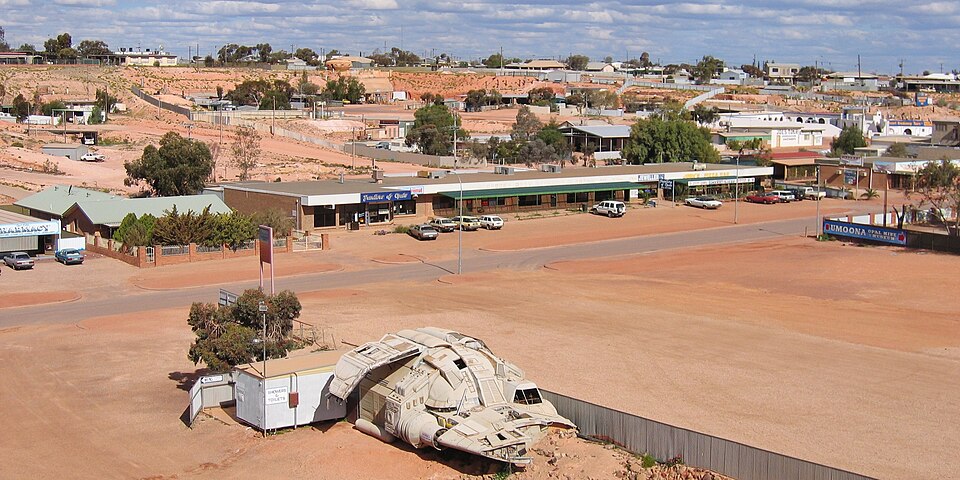
Coober Pedy. | Photo by qwesy qwesy
See other microgrid “feasibility studies” here — like Flinders Island, Alice Springs, and Onslow.
h/t to Helen D and Jim S.
_____________________________
MORE INFORMATION
The Coober Pedy hybrid system has a capacity of 9.25MW of which 1 MW is solar, 4MW is wind, and 4.15MW is diesel power.
Other information is available at the Coober Pedy EDL including a live generation report. (Where solar power appeared to be contributing 0.3KW at from 3am to 4.30am in SA).






.jpg)
And King Island is another ongoing experiment along with the whole of Australia. All doomed to failure.
460
All this for 1MW. Could be supplied by one neutron fuel cell that fits in a standard lead battery space and lasts years connected to the “grid” with graphene superconductors and caps.
The downside is that put enough of them together and you can make a neutron bomb. 10Mt in the backyard.
No doubt government will be working on the bomb not the benefit.
How humanity reached this point of stupid is the amazing bit.
Fortunately, robots are almost upon us. Images of Elon. Guv gone to the dinosaurs.
Just think how fast we can blow each other up when a guv research lab publishes how to manage anti-matter. Look at me Mum, I am famous.
Meanwhile vast amounts of coal, uranium and copper lie nearby to Coober Pedy. Coal to make electricity the old way. Uranium to make the fuel cells the new way. Copper to act as the backing for graphene superconductors and caps.
Its even possible to extract all the diesel from that coal but that involves an agreement involving the voldemort of Climate Change.
390
I understand that it would have been more cost effective to lay a cable from Tasmania
110
If you put a wall around Tasmania in two years most of the population would drown.
So we should build water pipelines not mad electricity schemes.
Tasmania would make more money by selling the mainland water rather than power to run Melbourne’s desalination plant.
The inlet pipeline to the desal plant is an ideal route.
Yet another A$23B gone.
110
The King and Flinders Islands schemes had live performance statistics on line for a long time but they both seem to have disappeared – unless they’ve hidden them somewhere deep in the website.
120
King Island seemed to be static for ages. Every time I looked at it it said diesel was contributing 60%. No wonder it has been canned, if it has.
90
As I keep telling people:
It is ALL about the “spillage”; and has been from the start.
A Billion here and a Billion there, and pretty soon, we’re talking serious money.
BUT, TOR WHOM?
370
years ago I was at the smaller outback town of White Cliff in NSW. The anu had an experimental solar power system that had been operating from sometime in the 1980″s when we where there in 1998/9{not sure} they where celebrating the connection to the grid, after years of intermittent power and subsidised cost that came out of the ANU s pocket, a cost they ANU could no longer afford. My information may be sketchy but the outcome noted by the townsfolk is not.
200
On the subject of the defunct White Cliffs solar-thermal intermittent power facility, what happened to that other crazy idea, the 1km tall chimney designed to produce an updraft to power wind generators? The taxpayer subsidies probably weren’t forthcoming.
160
David:
it’s hard to keep up with those “SAVE THE WORLD” schemes, especially they usually – like that one – collapse with reality.
I sort of remember those, they were going to be everywhere. Much like the rest. I think that time we had a Federal Government with some commonsense,
although they had a few then who wanted alternative “SAVE THE WORLD” schemes, like building a pipeline to make water go round and round.
I wonder what happened to that?
150
Wealth creation schemes Graeme for vested interests who therefore support climate change hoax politics
100
Language is important.
I don’t like their use of the term “power station” to refer to mostly random generation apart from the backup diesel.
It might be correct in a sense, but it implies a false association with traditional properly designed coal, gas, nuclear and real hydro (not SH2) facilities designed to produce large amounts of electricity, continuously and at low cost with no subsidies and with high capacity factors, dispatchability, ability to provide base load and peak power requirements and minimal visual, land use and ecological footprints (except hydro).
It’s typical Leftist manipulation of the language to suit a political objective.
A better term would be intermittent power facility or diesel-hybrid renewable microgrid.
Calling it a “power station” borrows prestige from dispatchable, high-reliability plants while the renewables part is mostly “random” generation that needs a lot of integration technology and backup to be usable and at high cost.
It’s just wrong to equate variable, subsidised, backup-dependent generation with the stable, high-output plants that have powered modern economies. With ever more penetration of wind and solar and removal of coal, gas, nuclear and real hydro, economies fail as is obviously the case in Australia and Europe.
The fact that after seven years Coober Pedy managed to have a few random days running without diesel backup proves nothing. It doesn’t magically turn intermittent sources into proper coal, gas, nuclear and hydro equivalents. The diesel backup generator is still doing the heavy lifting for reliability when the wind doesn’t blow and the sun doesn’t shine.
The claim that Cooper Pedy running on “renewables” is just a massive lie based on a rare, random weather occurrence. If it were really running on renewables it would disconnect the diesel and give its fuel to productive people to run their farming and mining machinery.
350
Rather than call it a ‘renewable power system’, is basically is a diesel driven system with occasional diesel fuel burn reduction from ‘unreliables’ contribution.
230
Sales and marketing “hyperbole and puffery”, same as “farms”
100
Engineering solutions to produce clean, reliable electricity at low cost have been available for a very long time. Coal, gas, nuclear and real hydro for large scale generation or diesel for small scale. Let’s return to them.
270
I can see the promotional video, “the Little Windmill that could”.
And we’re really impressed down here, I can tell you.
The near total failure of wind is now obvious.
Or as Economist Judith Sloan wrote in the Australian this morning
“The so-called ‘experts’ simply did not accept the possibility renewable energy would not replace fossil fuels.”
410
Nor all those things made directly with and from fossil fuels. Like fertilizer, plastics, ammonia, explosives, glass, steel, chemicals generally, metals generally and not least, cheap carbon dioxide itself for hospitals, meat packing… When the US ceased ammonia manufacture for fertilizer in the UK, there was a major shortage of meat in stores.
180
Not quite correct, batteries don’t generate power, they store the power generated by wind and solar
260
I think Cooper Pedy has had some success with a solar powered water distillation system . A true way to utilise the “free” power of the sun.
60
Here’s the King island and Flinders island hybrid systems and both running on DIESEL this morning as usual.
The site seems a bit crappy and the graph sections seem to come and go every now and then. IOW just like their clueless, toxic, unreliable W & S rubbish.
https://www.hydro.com.au/our-energy-system/our-power-stations/bass-strait-islands
110
The Flinders display has been broken since last year.
70
The population of both King + Flinders islands combined are about 2600 people and when the W doesn’t blow and the S doesn’t shine they have to rely on DIESELs.
Every night the S is definitely AWOL and if the W is lousy or weak the DIESELs have to completely take over.
So why do the delusional left-wing loonies rave on about these barking mad, unreliable fantasies?
180
BTW to “rave” is to talk wildly and incoherently.
Now doesn’t that perfectly describe your average left-wing loony?
70
Even being in the path of the ‘Roaring 40’s’ doesn’t guarantee generation.
100
And yet wind system proponents still want to build wind systems in the Bass Strait.
50
Having lived on the north coast of Tasmania, ie the southern shore of Bass Strait, I can tell you that you definitely get windless days there. Mostly in winter with nice thick cloud cover and it’s bloody cold.
60
Did anyone ever say there would be no diesel usage?
40
According to most of the politicians it’s all about petrol.
sarc
50
Its telling when the fanboys are punching the air about the most pathetic of achievements, usually achieved at high cost. The dont see it of course , and if they just do more of the same it will work out fine, by magic or something.
100
Correct.
It doesn’t excite or amaze me one little bit.
If they had powered the township for a minumum of 6 months, (preferably a year) I would be impressed. However I would then want to know what the renewable extravaganze cost in total.
Imagine if “Yes Minister or “Utopia” did skits based on a cost benefit analysis of this scheme.
They would have a field day.
110
As the Lion King is quoted “surrounded by idiots”
80
It appears the demand averages around 1.4MW. So 33MWh per day or 21kWh/d per person. A reasonable number for a desert location.
I expect it would have been far lower cost to forget the grid then set up a loan scheme so every business and household could establish their own rooftop (or back paddock) solar system.
Isolated grids do not make economic sense when solar energy is ubiquitous.
Rural Australia has the greatest potential for solar power of anywhere in the world. This is where the revolution to solar power should have started. The linked article gives the economic case:
https://www.grainshed.com.au/rural-solar-power-complete-setup-guide-properties/
And a living example:
https://www.dpa.energy/blogs/case-studies/reliable-power-for-a-remote-cattle-farm
This system is a bit smaller than my neighbour installed and he has remained on grid.
Current diesel prices will accelerate the move to solar/battery on rural properties. But I doubt there will be electric tractors in regular use on rural properties in Australia.
60
From the first link:
If you design for the worst case and 3-5 days storage then generally you’re drastically oversizing your system. Especially as a back-up generator is still required.
If you’re spending money on a generator then use it. Make it part of the design and save a lot of money on the system build because the worst case is a rare case.
Yes. Unlikely there’ll be any rush to electric vehicles on the farm. Would need to be a very big solar/battery system to charge vehicles. Especially tractors and similar.
What farmer would want the re-charging down-time. And a bummer if it’s cloudy the day you need to re-charge.
90
But if the entire system was over-sized, it would be experiencing many more days of “reliable” renewables power. That this is not happening is surely a clear Indication that the system is massively UNDERSIZED for the task of supplying all power from renewables.
I don’t believe that only 3-5 day’s storage is anywhere near adequate, and this is being borne out by what is happening there.
50
The above links from Rick and my reply relates to small scale individual property setups. Very different to the Coober Pedy or larger grid systems.
I don’t know the intent of the Coober Pedy setup to assess whether it is undersized. If it is intended to be a reliable wind and solar setup then it is undersized.
If it is designed to take most of the load off diesel generators then it is probably doing that. But certainly, it is not an example of a reliable renewables grid setup and not an example of money best spent.
FWIW – My off grid setup with just 1.5 days of storage runs without needing a generator most of the time. June and July the generator gets a bit of use. Short stints to add a bit of juice to the battery, say every 3 days average adding about 20% of battery capacity.
Didn’t use generator Nov to Feb.
Used the generator twice in March. Used it twice last Oct. Once in Sept.
Southern Vic.
50
My brother built his first house completely off grid, including battery storage.
When he built his second one he didn’t bother, he simply has solar boosted gas hot water.
10
So why are the OECD countries penalizing themselves by trying to reduce our co2 emissions?
Why can’t we just look up the data and understand the stupidity of our actions?
Why can’t they just look up the world’s co2 emissions trajectory since 1945 and wake up?
BTW the OECD co2 emissions are lower today in 2024 than 1988 and yet the NON OECD co2 emissions have soared over the same period 1988 to 2024.
I’ve added Aussie co2 emissions over the same time period and about the same as our full Oceania co2 emissions line.
https://ourworldindata.org/grapher/annual-co2-emissions-per-country?country=OWID_WRL~AUS~OECD+%28GCP%29~Non-OECD+%28GCP%29~OWID_OCE
71
The best news for the manufacturers of the renewables (China) is that they get to replace it all again in under 20 years. I guess that’s why they’re called renewable, and who gets to pay for the clean up and disposal of the solar panels?
150
Fact No. 1: Molecules are matter and, excluding radioactive isotopes, do not generate heat which is energy an entirely different entity, therefore CO2 cannot raise the temperature of anything as it does not generate any heat to do so.
Fact No. 2: The Earth has always experienced climate change from hot to cold and back again due to the Milankovitch cycle arising from the different orbital periods within the Solar system.
Fact No. 3: The solubility of CO2 in water is inversely related to the temperature so during hotter periods the atmospheric concentration of CO2 increases due to effervescence from the warmer Equatorial oceans.
Fact No.4: Increasing Solar radiation intensity has maximum effect on the Equatorial seas and minimal effect on the Antarctic causing an increase in the temperature gradient between the two which results in climate change, nothing whatsoever to do with CO2.
150
While molecules do not by themselves generate heat, they can acquire and release energy under certain conditions.
40
When has a scientist suggested fact no.1?
When have they denied #2?
Why is #3 simplified to leave out rates and ocean dynamics?
What has 4 got to do with anything?
013
One good hailstorm or tornado and they’ll be getting replaced well before 20 years.
100
Yes, and often not just from hail or lightning. When a storm passes the wind veers 180 degrees in an instant and no wind turbine blades can handle that change or force. Years ago I was sitting in the cockpit on the tarmac at Alice Springs waiting to depart and watched a 25 knot north easterly wind suddenly change to a 30/40 knot south westerly as a line of thunderstorms came across the aerodrome. This happens all the time with frontal activity and is a major reason the bearing and gear boxes fail on wind turbines, a subject not mentioned by the operators and manufacturers. The worst force is the vertical one downwards under a thunderstorm cell where all three blades get driven hard down regardless of any feathering mechanism and a force that cannot be designed against. There is a reason all those Southern Cross windmills lie wrecked across the country.
20
I have a document that provides an excellent discussion on the forces on a turbine’s bearings. Quite an eye-opener – no wonder many turbines prematurely fail.
10
The big difference between an outback village and a real power system for a real city is the firming required to meet normal power-on-demand needs. Anyone who wishes (and I’ve done it) can get ChatGPT to cost, say, a new clean solar/wind/battery power supply for Greater Sydney, based on AEMO/CSIRO official costing software, GenCost.
Total cost $110 billion. Roughly 75% is for batteries.
And that calculation completely avoids the issue of where to put the components. You could spread them around NSW, surrounding Sydney with the structures and bearing the huge transmission costs. No government would dare.
No, real power systems will have to use large industrial scale generators analogous to our traditional power stations. First step is to get rid of dreaming politicians and their renewables-passionate assistants.
110
What reliability factor did you use? The AEMO figure of 99.998% is quite high.
Also what amount of power per residence did you use? These systems need to be able to handle more than peak loads, not average loads.
40
I have stayed overnight in Coober Pedy three times in the last twenty years for retirement travels and did not see the wind turbine turning once
120
There is little wind in Coober Pedy and just up the road there are plans to build a space station.
‘Moon Plain as a Mars analogue.
‘The Moon Plain extends over 1,500 km2, 18 km north-northeast of Coober Pedy, in central South Australia. The locality derives its name from the overall lack of vegetation and a flat hummocky landscape that resembles the surface of the moon.’ (EnergyMining)
71
I have visited there four times in the past 15 years and also noted it was never working and told by locals it was unserviceable, too costly and too far away to get repaired. Maybe too old a model too.
50
About 25 years ago, I recall seeing a short documentary about Coober Pedy. Some homes and a church were underground, using abandoned mining shafts and corridors. Such would reduce the need for cooling that I assume they now use. Most cities in Australia would not have this “luxury”.
70
I was in that church in 1968. It was a bit cooler down there.
40
There is also an underground Motel for visitors.
Any visitors are usually advised NOT to go there in summer.
00
The best future option for off grid Australia electricity supply …..
https://a7dffb77-e855-4fa6-bd37-0bc063cdb46e.filesusr.com/ugd/e63596_57f326cd401146e09580d9c4f2024f51.pdf
60
How does Coober Pedy go for EV vehicle charging? Do they have them and if so are they powered from renewables with battery backup then diesel if those sources are inadequate? Another question: what’s the real story about outback EV chargers? Are most powered by diesel? Google’s AI sugests that this is mostly falacy, and contrary to the sceptics, these outback chargers are successfully powered by renewables with diesel as emergency backup only. I think this is propaganda. Correct me if i’m wrong.
80
>outback chargers are successfully powered by renewables
How long does it take to build up enough stored energy using “renewable” energy generating contraptions, to recharge one almost empty Tesla model 3?
30
There has been a discussion of an NRMA charging station on the Sturt Highway. Although touted as charging from solar, it was obvious that there was insufficient panels to both charge and recharge storage batteries. So the standby diesel genset was doing all the work.
The charging stations on the Eyre Highway, discussed recently, have their own diesel.
40
1600 people – LOL!!! –
The Climate Change, Energy, Environment and Water bureaucracy total staff number over 8000…..
20
On a national scale it is not clear how the ‘inertia deficit’ can be addressed or funded via ‘synthetic inertia’ to maintain grid stability. With spinning mechanical reserve a system disturbance was addressed by this rotating mass adapting. Synthetic inertia requires the creation of a real time grid management system that acts faster to disturbances than a human can.
00
Does anyone have any updates on Yackandandah’s goal of being 100% renewable by 2022? I know they haven’t achieved that target due to the complexity of transitioning to a fully renewable system, despite scamming millions from the public to fund it.
00
Is this link of any use to you?
https://totallyrenewableyack.org.au/
00
Sadly no. It is just the propaganda that leaves out the reality, which is what I am after.
00