|
|
||||
|
By Jo Nova It wasn’t supposed to be this cold and windless in AustraliaFor some reason that no climate model can explain, Australia has run out of wind power three months in a row, which means we had to use more gas than expected. It’s also been colder than climate models predicted, despite global emissions being higher than ever in history. For some other reason that no rational adult can explain, the State of Victoria banned gas drilling for most of the last decade (to reduce the beachy-weather days in eighty years) and thus, as night follows day, the state is running out of gas. Ergo, predictably, it is also facing blackouts, cost blowouts and manufacturers dependent on gas are warning they may have to close down, or move to the US, where gas is still cheap. If only the climate models could predict temperatures and wind even a month in advance? The AEMO (our electricity grid manager) says Victoria will run out of gas before winter runs out of bite. Apparently Victorians are pulling twice as much gas out of their main storage as they can afford to at the moment. Not only does Victoria need the gas for electricity, but 80% of Victorian homes have gas for cooking or heating. And then there is manufacturing, not just in Victoria but most of Australia as gas prices rise all over the East Coast. Who needs explosives and fertilizer, anyway?Orica — one of the largest gas users in the country warned it may have to cut production and jobs in Newcastle due to the gas shortage. Since they supply explosives to the mining industry, and Australia is a big quarry, the repercussions would spread quickly. Victoria’s main gas facility to run out by end of winter as wind farm output slumps to five-year lowBy Perry Williams, and Rhiannon Down, The Australian The nation is facing a deepening energy crisis on two fronts, with gas shortages so acute that Victoria’s main storage plant is set to run out by the end of winter and one of Australia’s biggest manufacturers warning it will slash jobs and close factories if supplies remain short. German Morales, Orica’s president for Australia Pacific and sustainability, told The Australian that “there is not enough gas and there is not affordable gas”. “Clearly if we fail to secure long-term gas at a reasonable market price, we may be put in a position of rethinking what is the manufacturing strategy for ammonia in Australia,” he said. “The Australian gas price is significantly more expensive than that you can buy in other jurisdictions, such as the US. That’s making it very difficult to justify manufacturing in Australia.” And we thought wind generation was bad in April and May but June may be worse.The awfulness of the fickle wind is upon us and reaching into our wallets. This was the total contribution of 11.5GW of wind generation to our national grid this month. Paul McArdle from WattClarity said the capacity factor for wind is as low as 21%.
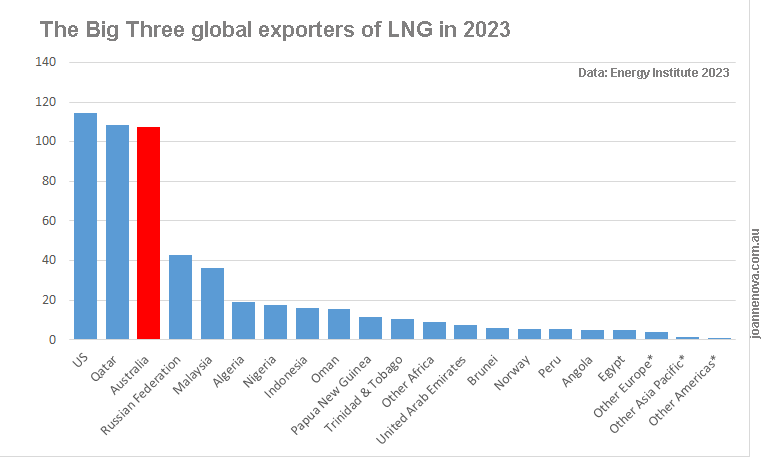
Not-so-coincidentally on June 4th and June 13th when wind generation was exceptionally low, average prices in the whole system doubled (See below). And this is a major problem with an electricity market that isn’t designed to find the cheapest solution for consumers. Cheerleaders like the CSIRO will still be saying “wind is cheap” when it’s obvious the lack of wind in a wind-dependent-system is very expensive. But these price spikes that were caused by wind turbines will be slapped on coal, gas or hydro, whatever rescued the grid, not on the wind industry. The more wind fails, the “higher” the prices are for its competitors. Neat eh? If only the “experts” at the CSIRO understood how unreliable wind drives up the cost of everything else on the grid.  Bad days for wind were June 4th and June 13th, then most other days too. Those prices are awful and often obscenely high across all five states… On June 13th wind generation fell to just 88MW at lunchtime, and was low all day. The spike this produced is obvious. Some of the lows like June 20th caused mayhem because they were hitting at dinner time when solar power has gone to bed. Back before the subsidized renewables gold rush, prices would average $30/MWh across the whole grid — not just all day, but all month. This month so far, average prices respectively are SA $197, Tas, $287, Qld $132, Vic $182, NSW $165. It takes some skill to run out of gas when we are also one of the Big Three LNG exporters in the world, but the Australian government has achieved this. Incompetence knows no bounds:
Not to belabor the point, but if we had decent climate models, we would know. Gas price cap train wreck on the wayby Saul Kavonic, The Australian The gas industry is scrambling to try to squeeze out any incremental supply, going as far as blending extra LPGs into the gas stream to eke out an extra per cent or two of production. Every lever to lift supply has now been pulled. Australia’s energy market is one hiccup away from a major crisis, again. The gas market train wreck – long visible on the horizon – is now in front of us. Set in motion by Labor’s hostile gas policies since 2022, there are no easy levers left to pull to keep the lights on, while also keeping us warm in winter, and manufacturing jobs going. And it is only going to get worse in the years ahead. If we run out of gas, we’ll just have to burn diesel, or sit in the dark, banging our heads on a cold wall. Image by ThankYouFantasyPictures from Pixabay
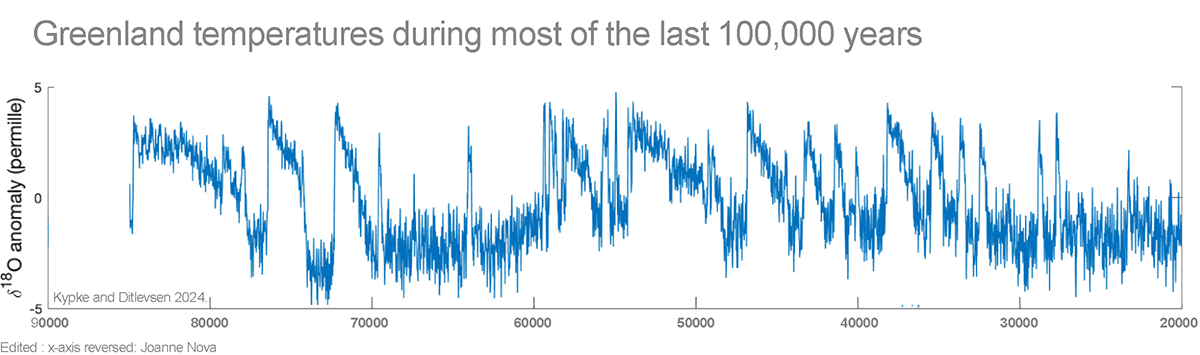
June 24th, 2024 | Tags: Gas, Victoria, Wind Power | Category: Australia, Cost, Global Warming, Renewable, Wind Power |  Print This Post | | Print This Post | | 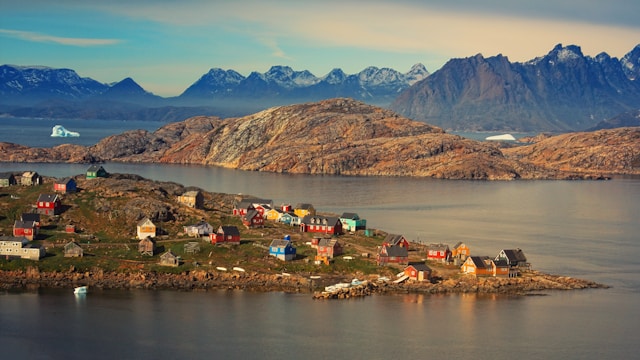 Greenland by Johannes Plenio on Unsplash By Jo Nova We may be living through some of the best weather in the last 100,000 yearsKenneth Richard at NoTricksZone reports on a new paper showing the incredible extreme climate shifts of Greenland. During the depths of the last ice age Greenland temperatures would swing abruptly by 10 to 15 degrees Celsius (or 30F) in the space of 30 years. And we’re panicking at the moment about warming at 0.13°C per decade. These Dansgaard–Oeschger (D–O) events occurred 24 times from 120,000 years ago until 11,000 years ago. There were no humans living there at the time, as far as we know. The best estimate is that people first arrived in Greenland 4,500 years ago. As far as we know, it’s only Greenland that was gyrating wildly in temperature but the bare truth about climate scientists is the expert models can’t predict or explain any of this. So the seismic shifts came and went and went and came, and it had nothing to do with whether you turned the airconditioner on. If any poor sodding homo sapiens did manage to wash up on Greenland during the peaks 30 or 40,000 years ago, their little villages would have been wiped out in a blink.
Click to enlarge.(Kypke and Ditlevsen) After 100,000 years of savage cold and shocking volatility, the world warmed nicely into the wonderful Holocene period. Humans moved to Greenland, and things were green. Unfortunately the warmth started to get rarer and rarer in the last few thousand years: 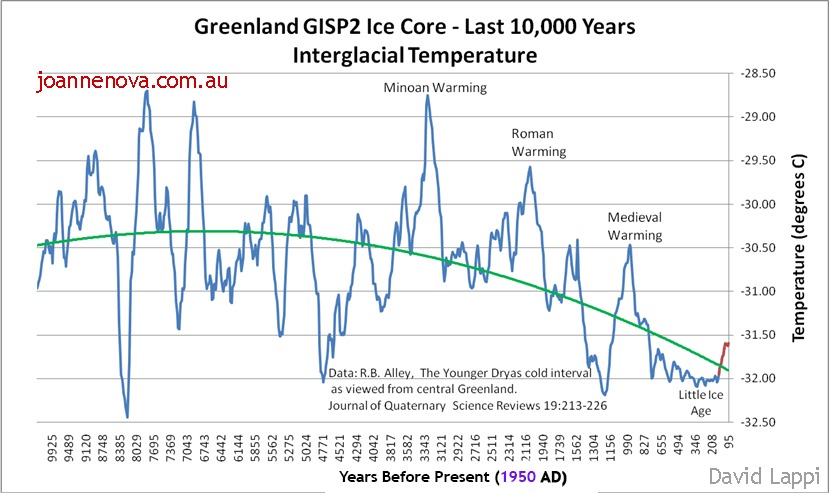 7,000 years of cooling in Greenland. UPDATE: This graph shows the ice-core data up until 1855. The last 150 years (1705 to 1855) are highlighted in red to show the warming as the Earth began coming out of the LIA. But in the last 150 years we’ve warmed out of the Little Ice Age and despite humans building the first coal fired plant in 1880 and putting out 99% of all the carbon dioxide we’ve ever put out, the temperature there has barely moved at all. About 6,500 million people have been born on Earth since 1880 and it’s made hardly any difference. 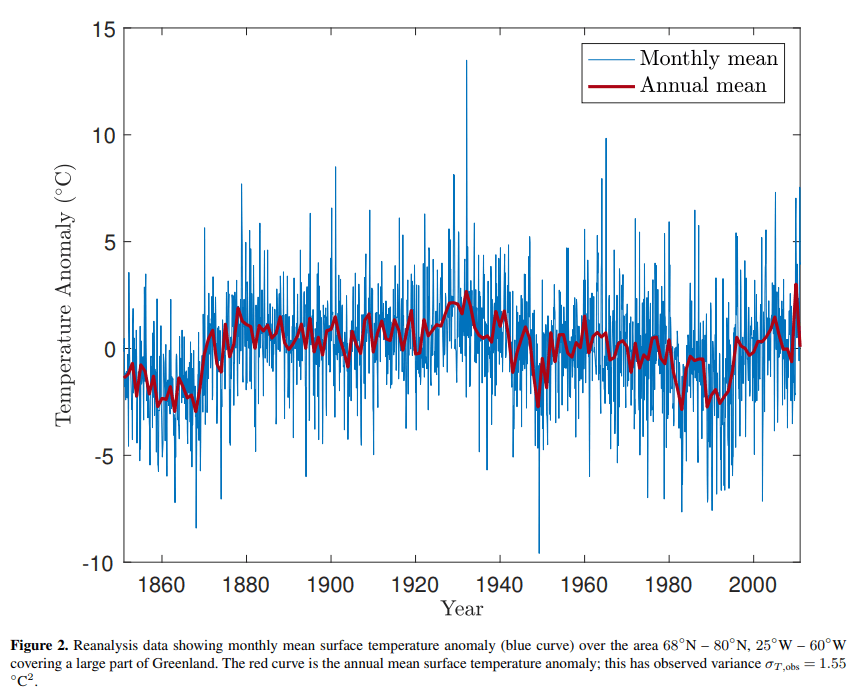 Greenland surface temperatures ( Mikkelsen et al., 2018) So despite the climate of Greenland being in the news every year, somehow the award winning journalists and the Nobel prize winning scientists forget to mention that the temperatures on Greenland have been largely stable recently despite humans emitting 1.7 trillion tons of CO2.They also fail to explain that Mother Nature is a thousand times more brutal than anything our cars, trains and planes have done. But who cares about cause and effect? There’s always a way to make it look bad: Big Meaningless Numbers!
PS: Today in Greenland, a fisherman actually netted a fish with three eyes. Someone should tell the Australian Labor Party. They need it to explain their national energy policy. REFERENCESKolja Kypke, Peter Ditlevsen (2024) On the representation of multiplicative noise in modeling Dansgaard–Oeschger events, Physica D: Nonlinear Phenomena, Volume 466, October 2024, 134215, https://doi.org/10.1016/j.physd.2024.134215 Greenland photo by Johannes Plenio on Unsplash
June 22nd, 2024 | Tags: Arctic, Greenland, Ice Age | Category: Europe, Holocene, Paleolithic | Print This Post | | By Jo Nova Global fossil fuel use hits a new record level in 2023We spent $1.77 Trillion dollars on the clean energy transition last year, yet our fossil fuel use is still rising and our emissions are still increasing. The Energy Institute released their annual “Statistical Review of World Energy”. Total energy used in the world went up by 2% showing no sign of slowing down. For the first time, more coal was used in India than Europe and North America combined, a trend that is unlikely to stop soon. Despite there being more EVs on Earth than ever before, oil consumption was up 2% to above 100 million barrels for the first time. China overtook the US as the country with the largest oil refining capacity in the world last year at 18.5 million bpd. But the US overtook Qatar as the largest exporter of LNG. And global man-made emissions of carbon dioxide exceeded 40 gigatons for the first time. Imagine what a different place the world would be if we spent that money on something useful? Just a tenth of that might provide clean water and sanitation for the poorest of the poor and stop children dying of dysentery. Instead, wealthy nations build spinning totem poles — hoping they’ll give us the perfect amount of rain 80 years from now. Despite what they say, we are still a fossil fueled world. Coal, oil and gas made up 81.5% of the world’s total consumption of energy, down from 82% a year before. Not much of a “transition” — renewable energy makes up only 8% of our total global energyAnd despite having every data-point since 1951, the Energy Institute were careful not to draw a graph like this below showing just how irrelevant unreliable renewables are (so I did one).  Energy Institute EI, Global Energy consumption 2024
And despite ten years of rampant growth in renewable energy, and 28 UN global junkets, the trend in man-made global emissions is not slowing down.
 Energy Institute EI, Global carbon dioxide emissions. 2024
The Energy Institute also apparently didn’t want people to see a graph like this one either — drawn by OWID from the Energy Institutes own 2022 data. Nothing else quite captures how fake or pointless the whole forced “Transition” is.
Headlines will presumably hail the record amount of renewable energy produced like it means something. With great timing three professors of sorts at University College London wrote this unwitting satire at The Conversion* only two days ago:
Proving the government can strangle any hard science if it throws enough money at it. Should we make 80% of the world’s energy “taboo” or should we just discuss the pros and cons like grown ups? REFERENCE: The “Statistical Review of World Energy — 2024”. *Since The Conversation banned the dangerous “climate deniers” it’s hardly a conversation. We wish them luck in overcoming their fear of alternate scientific opinions.
June 21st, 2024 | Tags: Fossil Fuel | Category: Energy, Fossil Fuels, Global Warming, Renewable | Print This Post | | The shortest or longest day The point where the tilt peaks is at 6:50am EST Australia which is 4:50pm Thursday in New York.
 Clearing in the Snowy Mountains. Geoff Wise on Facebook, June 4th 2024 It’s just another day on the job to save the world from man-made pollutionIn a quest to make the weather a bit nicer in 100 years these trees needed to be cut down now so we can connect up a big hydropower “battery” for holy solar and wind power. The towers will be 75m high and the path through the forest, 140m wide. When we ran off coal and gas power, we didn’t need pumped hydro. Fossil fuels protect the forests and hills of Australia. These photos were posted by Geoff Wise on the “High Country of Australia” show us what our clean green future will look like: “Here is where the power lines from the Snowy Hydro 2, at Lobs Hole, will cross the Tumut River ravine to go to the recently cleared site of the switching station in the Maragle State Forest, before heading north to feed into the National Power grid. The power lines will come from near the distant horizon. Look at the photos for more information. You can see this for yourself, as I was standing on Elliot Way when I took the photos, down hill, to the east is Kosciusko National Park and uphill, to the west is Maragle State Forest.” Other parts of this project (not pictured here) will even cut through national park. Originally the 330kV interconnector towers were going to be put underground in the Kosciusko National Park, but after costs ballooned it was decided that the Snowy Hydro 2.0 pumped storage was “critical state significant infrastructure to NSW for economic, environmental and social reasons” and the National Park was not so significant. Who knew, socially, people in NSW benefit from pumped hydro? Apparently renewable shareholders have friends in high places. Trees and koalas, not so much. h/t Roger Remember small business foresters and farmers are bad people, but industrial hydroelectricity helps the environment. See how caring they are with their clearing… Geoff describes how extensive these lines are: “One of the power lines from there travels through Maragle State Forest, then Bago State Forest. A second travels through from Cabramurra and next to the new switching station being built. Snowy Hydro 2 may add, 1 to 2, more lines, as two lines are going to the switching station.“ The standard joke on facebook with these photos is “look at the damage those brumbies have done!”:  Clearing in the Snowy Mountains for high voltage lines (from Elliot Way) between Maragle and Lobs Hole. Because over the hill, feral brumbies are being shot from helicopters to “reduce their impact” on the Alpine wilderness. Though some wonder if it’s more the high country colonial history that the bureaucrats are really trying to kill. Geoff also notes the irony that electric vehicles will be everywhere in the renewable future, but they won’t be allowed in the Snowy hydro power station. He wonders, after all the combustion engines are gone, whether they’ll need those horses to pull the carts: I received an email from a well informed commentator who noted that the Lobs Hole approval notice is allowed to kill and displace all sorts of things:The Critical State Infrastructure Approval for the Lobs Hole and the Switching Station on KNP allows that no more than: (i) 9.35 ha of Caladenia montana species habitat (ii) 89.06 ha of Gang-gang Cockatoo (breeding) species habitat (iii) 10.86 ha of Masked Owl (breeding) species habitat (iv) 117.29 ha of Eastern Pygmy-possum species habitat (v) 59.03 ha of Yellow-bellied Glider species habitat; and (vi) 1.67 ha of Booroolong Frog species habitat can be cleared for the development; and the developers have to minimise: (i) the impacts of the development on hollow-bearing trees; (ii) the impacts of the development on threatened species; and (iii) the clearing of native vegetation and key habitat. Apparently, the sanctioned clearing is offset by contributing or buying offset credits. The question is, why can’t farmers within the Great Barrier Reef catchment area have the same option when managing their land? At the moment, bureaucrats scan satellite images and if any bare ground the size of a kitchen table is found on their land, they turn up and carry out an audit essentially accusing the farmer of environmental degradation of the Great Barrier Reef. — R Some endangered industries are more protected than others.
June 20th, 2024 | Tags: Pumped Hydro | Category: Australia, Big-Government, Global Warming, Hydroelectricity | Print This Post | |
The Renewable Crash Test Dummy hits a fork in the roadFinally the Australian opposition is bravely popping the sacred cow of the Energy Wars. The Dummy nation was aiming for the holy grail “low emission” grid that no other nation had tried. The driest continent on Earth, with small hydro, and no extension cords to any nuclear power, were going to build the perfect grid based on the wind and sun alone. It was always doomed to fail, it was just a question of how much money would be burned at the pyre before the Crash Test Dummy crashed. Because they didn’t do their homework, and the fan-media didn’t ask them to, the Labor Party set themselves up to fail. They left their left flank wide open, and the Opposition is finally launching the missiles that have been there all along in the mist. The ultimate low-emissions generator was always and obviously the unspeakable nuclear power. It’s a fifty year old technology. If anyone actually cared about carbon dioxide, they would have done this instead of the Kyoto scheme in 1997. But it was all a theater of grift and graft for unreliable, fairy energy, or for self-serving players who like trips to ski clubs in Davos, or jobs after politics with the UN or “energy companies”. (Not mentioning any names, Matt Kean). Australia doesn’t need more “large-scale renewables” says the Opposition party, offering nuclear power instead of renewables technohellFinally the dirty laundry of renewable power might be hung out to dry in an election. After ten years of rampant renewables growth in Australia, a dawning realization is sweeping the nation that wind and solar are not cheap, and will never be cheap. It’s hard to believe only two years ago Labor won on promises to bring electricity costs down by $275 dollars a household, only for prices to rise by $750 instead. At the same time, the awful reality of collecting low density energy is all too apparent in regional areas where developers are swarming to cover the land in renewables infrastructure. No one wants industrial plants in their backyard, but when we have to build 10,000 kilometers of high voltage towers, 40 million solar panels, and 2,500 bird killing turbines — its in everyone’s backyard. Suddenly the real environmentalists are the ones who just want to build seven small nuclear plants on old industrial sites. Save the eagles, spare the whales, and don’t club the koalas, OK? The opposition are promising to build nuclear plants on the old coal sites, give cheap electricity to locals and to block major offshore wind projects and oppose large solar plants too. As they so aptly say, the low hanging fruit on this tree are already done. This is the Deputy Opposition leader saying what was unthinkable only a year ago: Nationals leader David Littleproud says Coalition* will find energy alternatives ‘so we don’t have to pursue large-scale renewables’By Rosie Lewis, The Australian Nationals leader David Littleproud has said a Coalition government will look at alternative energy sources so it doesn’t have to pursue large-scale renewables such as wind and solar, after suggesting he would axe an offshore wind industry if elected. Amid a pre-election brawl over climate and energy policy, Mr Littleproud said the Coalition would send “strong investment signals” that Australia didn’t need large-scale industrial wind farms onshore or offshore or other big renewable projects. Mr Littleproud also indicated to The Australian that he was opposed to large-scale solar farms, saying: “We’d like to look for whatever option we can so we don’t have to pursue large-scale renewables full stop. “All the low-hanging fruit for large-scale renewables has been done, we’ve now got to go out beyond that. He had to clarify that one big wind farm offshore would go ahead, but one that was just approved this week in the Illawarra, would not. The Coalition says the Commonwealth will own the nuclear plants. They’ll build them in the Latrobe Valley in Victoria, the Hunter Valley in NSW, Collie in WA, Port Augusta in South Australia, and the southwest Queensland electorate of Maranoa. According to The Australian Peter Dutton said in April that the “first small modular reactors could be operational by the mid-2030s, following a meeting with British manufacturer Rolls-Royce, which told the Coalition it could deliver them at an estimated $3.5bn to $5bn each. Rolls-Royce is contracted by the Australian government to supply the nuclear reactors for the AUKUS submarines.” Nuclear power is the sleeper policy — even half the Greens agree the government should be talking about itLast year political number crunchers suddenly realized there is no mass anti nuclear protest movement here, just the ghost of one from forty years ago. Polls came out in May 2023 showing that with virtually no national discussion about it, right out of the starting blocks, fully 56% of Australian voters thought the government should seriously consider small modular reactors (SMRs), and only 12% disagreed. Which is all the more astonishing given that only 24% of Australians even knew about SMRs at the time. Wait until Australians find out there are 440 nuclear power plants in the world, and that even Armenia has one. And Belarus.
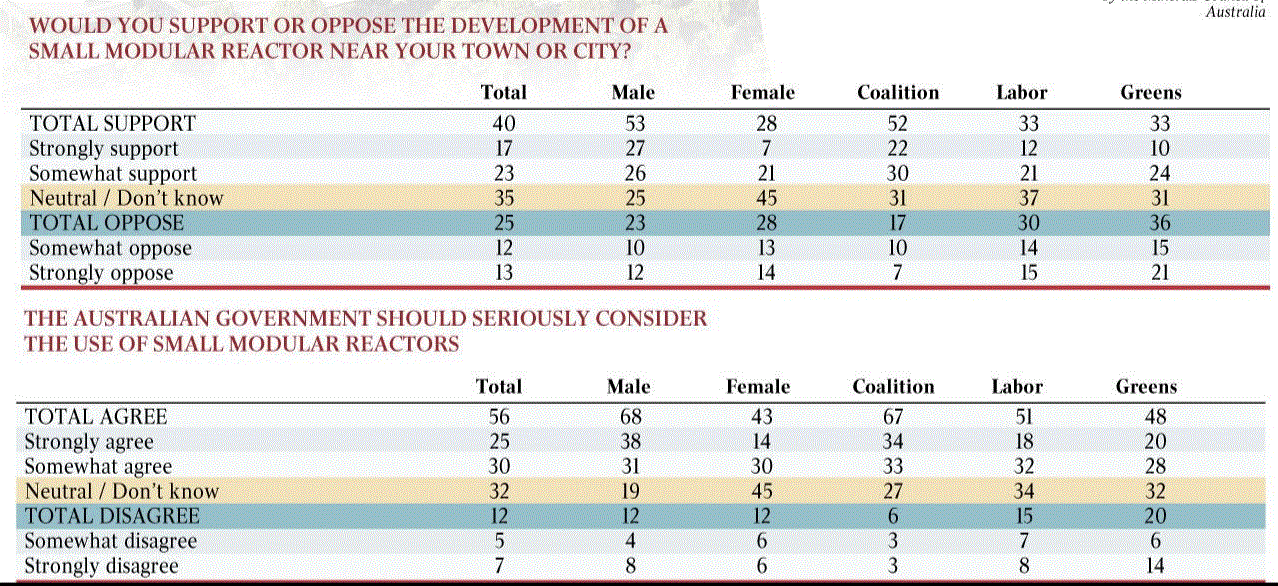 The Australian: commissioned by the Minerals Council of Australia | Insightfully polled 2,400 people, May 2023.
When will we get over the adulation of roof top solar?Not everything about the Coalition plan is smart, Australia already has a glut of solar power at lunchtime, so promising to put more on roofs in capital cities isn’t going to help. It’s just more electricity we can’t store at a time of day when we don’t need it which non-solar households have to subsidize. The duck curve at noon vandalizes the market for reliable generators, which have to recover costs at breakfast and dinner time anyway. And one cloud can cover a million suburban houses simultaneously. There goes another gigawatt. If a large solar plant doesn’t make sense in Alice Springs where there is no cheap coal fired power, it certainly doesn’t make sense in Sydney where there is. Most new solar panels in capital cities are a waste of glass, metal and labor that someone has to pay for. They are a pagan shield against the storms, supposedly protecting coral reefs from somewhere in Parramatta. But we all had cheaper electricity when no one had solar panels. Thou still shall not question the scienceThe bottom line, which neither party is saying, is that we need to get the science right before we start pretending to change the weather — not after we blow a trillion dollars making high voltage temples to fend off the evil spirits. Nuclear plants are good, but coal plants are cheaper, and CO2 is a gift from God. The world should pay Australia to burn more of our coal and feed the forests and fields. Who audits the foreign committee in Geneva? Which scientists are paid to find holes in the IPCC religious sermons about boiling oceans? We’re betting the nation on sacred-cow science. Once we win the energy war we need to win the science war. Your donations keep me going. Thanks to the readers who help make this work possible. —————- *The conservative Coalition is the pairing of the Liberal Party and the Nationals.
June 19th, 2024 | Tags: Australian Politics, Nuclear Energy | Category: Australia, Cost, Global Warming, Nuclear Power, Renewable | Print This Post | |
By Jo Nova The cost problem is solved (for all the wrong reasons), but it’s still not enoughAround the world, governments are trying to force people to buy electric vehicles because they are nice people who are worried about polar bears. And since drivers out there all believe in climate change, according to all the pollsters, it shouldn’t be a big ask. (Who wouldn’t want to save the Earth?) Supposedly, just 10 years from now, they told us, we wouldn’t be able to buy a new combustion engine car at all. Instead, not only are sales of new EV slowing rapidly, to the point where there is a glut, but as prices fall for used cars customers are not rushing out to pick up the cheaper second hand EVs either. Look at how fast the turnaround in this market has been in the last year — a 25% price premium– gone: Used EVs are now selling for thousands of dollars less, on average, than comparable gas-powered vehicles.Kaya Ginsky, CNBC The difference between the price of a used Tesla Model 3 and BMW 3 Series shows how a “premium” associated with EVs in the initial boom has been erased, according to an analysis from iSeeCars. The decline has been dramatic over the past year. In June 2023, average used EV prices were over 25% higher than used gas car prices, but by May, used EVs were on average 8% lower than the average price for a used gasoline-powered car in U.S. In dollar terms, the gap widened from $265 in February to $2,657 in May, according to an analysis of 2.2 million one to five year-old used cars conducted by iSeeCars. Over the past year, gasoline-powered used vehicle prices have declined between 3-7%, while electric vehicle prices have decreased 30-39%. And all leading indicators are down. Fewer people have plans to buy an EV, and the pool of people who won’t even consider buying one is growing: A Gallup poll of Americans in April found ownership of EVs increasing by 3% annually, but an equal percentage decline in consumers who indicated serious interest in buying an EV, down from 12% to 9%. Overall, 35% of Americans said they might consider buying an EV in the future, down from 43% last year. In Germany, the formerly great industrial empire, EV sales are down 30% compared to this time last year, but sales of petrol engines are up 2% and diesel cars are up 3%. Pierre Gosselin at NoTricksZone tells us the German Federal Motor Transport Authority (KBA) reports a 30.6% fall in registration of new electric cars compared to May a year ago. CO2 emissions of new German cars also rose 3.3%…indicating the green transition has stalled and is reversing. Hat-tip: Blackout News The KBA also adds that 89,498 passenger cars were equipped with a gasoline engine – an increase of 2.1 percent compared to the same month last year. 44,893 new cars were diesel-powered, an increase of 3.2 percent compared to the same month last year. History books will be written about the crazy political EV bubble.
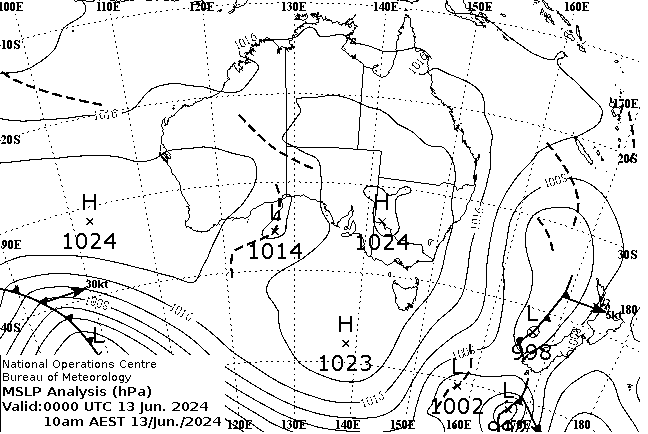
By Jo Nova How much back-up do we need for our 11.5 gigawatt wind system? About 11.4 gigawatts.Wind energy failed on Thursday at what must be close to a record low — with barely 88MW of production from 11,500MW of wind turbines. That’s about 0.7% of total nameplate capacity. With construction costs running at $2 million for every theoretical megawatt of turbine, that’s $20 billion dollars of machinery sitting out there in the fields and forests of Australia producing about as much as two diesel generators. We have 84 industrial wind plants across 5 states of Australia, and the green band below was their total contribution to our national electricity needs on Thursday — put your reading glasses on. Things were even worse in Western Australia, where at the one point that afternoon when I happened to look the state’s total wind generation was minus 11MW. Some wind turbines were drawing a megawatt here and there, perhaps to keep the turbines rolling so they don’t get flat spots on bearings. It was an attack of another climate-denying high pressure cell on Thursday. There was no place in Australia good for wind generation except (maybe) for our research stations in Antarctica. Again, this is now a feature of our weather dependent electricity grid, unless the government can stop these high pressure cells or conquer New Zealand and build a bridge.
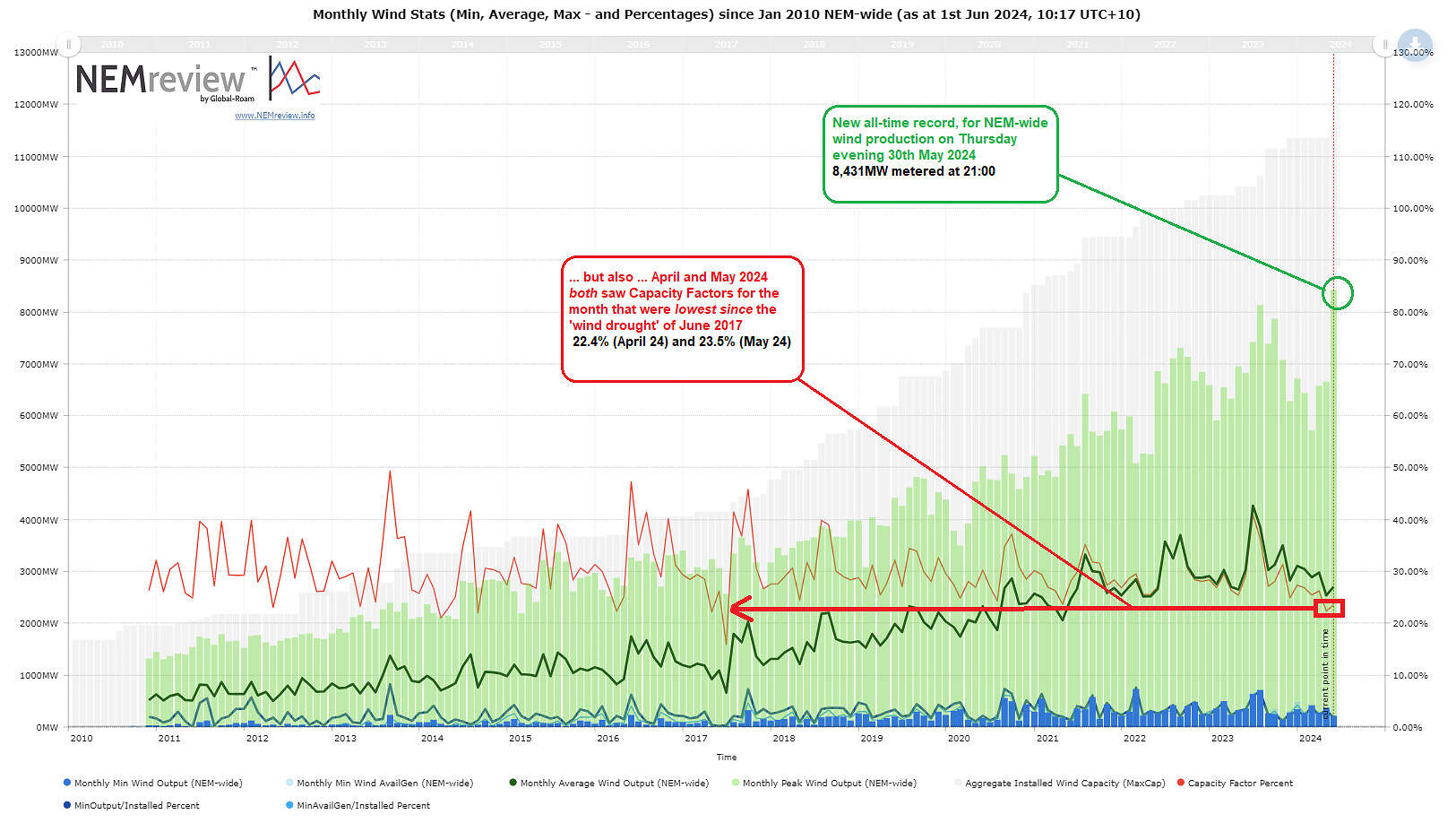
But sadly, there is no “building” our way out of this. One thousand more wind-plants won’t keep many lights on, and $100 billion dollars of interconnectors will not connect us to wind power if there is a high pressure cell 5,000 kilometers wide, which there is every two or three weeks. Wind power went from producing 7.2GW in the early hours of Wednesday to 0.09GW by lunchtime Thursday. It was sheer luck it bottomed out at lunchtime on a sunny day when solar panels were at their peak. Seven gigawatts of power disappeared in just 36 hours. If we lost 7 gigawatts of coal plants in a week, we’d never hear the end of it. It’s the minimums that matterPaul McArdle at WattClarity has all the grid data, and provides a spectacular graph of the system-wide peaks and troughs of our wind generators over the last 13 years which he has updated recently to highlight how bad the months of April and May were for wind production in Australia. Click to enlarge this graph to really appreciate the devastating message. While the total wind farm “capacity” has grown massively (the grey columns on the graph), the minimum lowest guaranteed production has not shifted much at all. This is the generation we can rely on, the minimum monthly points are marked in dark green at the bottom. Ten years ago the lowest monthly minimum was practically zero (reaching just 3.7MW one day in July 2014). But since then we’ve built 8,000 MW of extra wind power, at an effective cost of $16 billion, and only bought ourselves effectively two diesel generators worth of reliable electricity?
Source: WattClarity If someone asks how much wind can we rely on, the answer is “about one percent”. UPDATE: Paul McArdle at WattClarity confirms that this event occurred, was only 88MW and 0.77% of capacity, and that it was not caused by any human management or curtailment, just by being becalmed. h/t Apoxonbothyourhouses
June 15th, 2024 | Tags: Renewable Energy, Wind Power | Category: Global Warming, Renewable, Wind Power | Print This Post | |
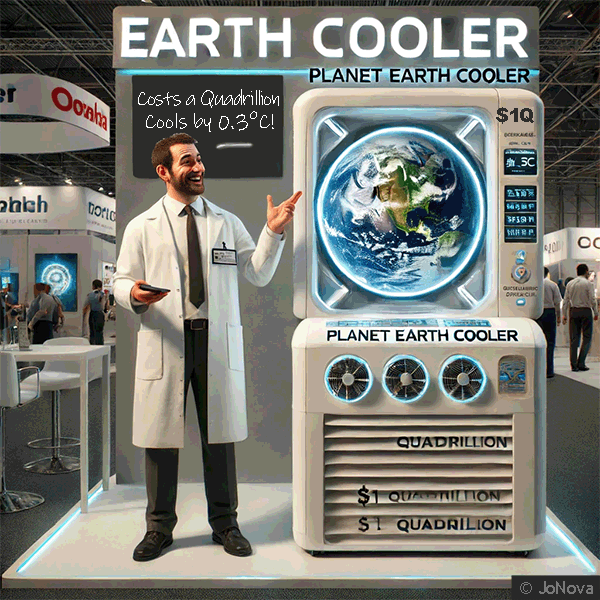
The deadliest climate question: How many degrees cooler will that be?Ask it now, ask it later, before breakfast and while watching “the news”. Teach the children to ask in kindy. We know the IPCC wildly exaggerates, but pretend they’re right and it still doesn’t make any sense. Richard Lindzen, Will Happer, and William van Wijngaarden took the IPCC at its word and calculate that even if we get to Net Zero by 2050, will only make the world a tiny bit cooler, assuming they’re right (which they’re not) and assuming the rest of the world joins in (which they aren’t). Say we stop all coal, oil and gas, redesign our energy grids, cull the cows, give up our holidays, our cars and ride bikes to work, fill the oceans with windmills, and turn our thermostats down. We spend a quadrillion dollars on a Moonshot to stuff a perfectly good fertilizer in holes underground, and instead of getting to the moon, the world is barely 0.28 degrees C cooler. That’s a half of one lousy Fahrenheit less that it would have been. This ladies and gentlemen is the best case scenario for the global action plan against the 6th mass extinction. This is why 100,000 people in private jets meet each year in Egypt, or Doha, or Azerbaijan. (Or so they say). The whole United States of America could go Net Zero by 2050 and it would, at best, change global temperatures by three one-hundredths of a degree, which we can’t even measure. Rounded to the nearest tenth of a degree that’s a big 0.0°C. And if the Sun does a bit more, then it’s even less. Net Zero Averted Temperature IncreaseR. Lindzen, W. Happer, and W. A. van Wijngaarden Abstract: Using feedback-free estimates of the warming by increased atmospheric carbon dioxide (CO2) and observed rates of increase, we estimate that if the United States (U.S.) eliminated net CO2 emissions by the year 2050, this would avert a warming of 0.0084 ◦C (0.015 ◦F), which is below our ability to accurately measure. If the entire world forced net zero CO2 emissions by the year 2050, a warming of only 0.070 ◦C (0.13 ◦F) would be averted. If one assumes that the warming is a factor of 4 larger because of positive feedbacks, as asserted by the Intergovernmental Panel on Climate Change (IPCC), the warming averted by a net zero U.S. policy would still be very small, 0.034 ◦C (0.061 ◦F). For worldwide net zero emissions by 2050 and the 4-times larger IPCC climate sensitivity, the averted warming would be 0.28 ◦C (0.50 ◦F). Read the entire short paper here at the CO2Coalition: Net Zero Averted Temperature Increase And Christopher Monckton points out the cost to benefit ratio for this $2 Quadrillion dollar project is every billion dollars we spend cools the world by 20 millionths of a degree. So let’s keep all the national science institutions that pointed out what a terrible deal this is for all our nations, and shut down the rest — NOAA, NASA, Hadley, CSIRO, NIWA, BoM, Potsdam, NRC, ARC, and while we’re at it — the ABC, BBC, the CBC because they should have asked better questions, like “how many degrees will that cool us?” UPDATE: And a long time ago Dr David Evans calculated that if Australia got to Net Zero and the IPCC were right, we would “cool” the world by 0.0154°C. June 14th, 2024 | Tags: CO2 emissions, IPCC, Net Zero | Category: Global Warming | Print This Post | | |
Jo appreciates your support to help her keep doing what she does. This blog is funded by donations. Thanks!
 Follow Jo's Tweets
   
 
|
|||
|
Copyright © 2026 JoNova - All Rights Reserved |
||||












Recent Comments