Recent Posts
-
The UN wants to be One World Government and it starts with a carbon tax on ships and planes
-
Thursday
-
What if Global Warming was just because something made the clouds go away…
-
Wednesday
-
Snowy 2.0 is the Trillion dollar Black Hole of Australia — sucking in energy, money, land, industrial relations, the dollar, our lifestyle
-
Tuesday
-
Monday
-
Winter Solstice
-
Saturday
-
We were throwing-renewable-energy away at record levels in 2025
-
Friday
-
Pauline Hanson, the centrist, just wants a free market in electricity, and an end to the renewable energy bribery
-
Thursday
-
Blame the Climate Yeti again for making your life more expensive! (It’s a smokescreen)
-
Wednesday
-
The Sunrise Project funneled $343 million from overseas to push net zero
-
Tuesday
-
Monday
-
Sunday
-
The US government has been secretly funding 120 dangerous biolabs around the world
-
Saturday
-
New report shows renewables are a drag on our national productivity
-
Friday
-
Thursday
-
Well, how convenient. AI data centers have arrived to be the fall guy for the Energy Minister
-
Wednesday
-
Billionaires are leaving the room with excuses — Bezos says “AI will solve climate crisis”
-
Tuesday
-
Monday
-
Sunday
-
The Craziest eco laws against Farmers. Let’s check that science…
-
Saturday
-
China cooks the carbon accounting books by 400 million tons
-
Friday
-
The Wind Power Puzzle (add more wind turbines and get the same output)
-
Thursday
-
To save the world, Cement Australia stops burning coal and burns trees instead
-
Wednesday
-
On Fire! US hunger for gas power so large, wait time for turbines blows out to 5+ years
-
Tuesday
-
Monday
-
Sunday
-
Saturday
-
Perth event Saturday May 30th: Green Greed and the Grid
-
Catastrophic warming already happened in Antarctica 130,000 years ago
-
Friday
-
Suddenly the Paris Agreement grows teeth
-
Thursday
-
Australian renewable investments evaporate in 2025: reaching a ten year low
-
Wednesday
-
The Bubble Pops: Big Miner BHP quietly backs away from decarbonization
-
Tuesday
|

By Jo Nova
It’s a Pantomine from beginning to end — the fakery never ends
Australia’s National Climate Risk Assessment has dropped on us yesterday like a mass-produced propaganda-bomb. Life and death depends upon “the science”, but the intense, dire and secret climate modeling was mysteriously delayed last month for no reason (except to get some spooky headlines), whereupon the Greens jumped up and down to get it released, and then patted themselves on the back saying Labor caved in. Yes, indeedy, the Government put out the report with perfect PR timing a few days before they plan to tell us how they are raising our emissions target from impossible to astronomical. If they released the “science” a month ago, people would have more time to pick apart the 274 pages of propaganda (or even read it).
Science is just a marketing tool for Big Government now, and the document is a fishing mission for catastrophe.
We know it’s not science because everything is 100% bad. It’s the purity that gives it away. In the real world, there are always trade-offs.
It’s all cost and no benefit
The document is a risk assessment which calculates the cost of inaction, but not the cost of action. Not surprisingly, the cost of inaction is always going to be “higher” (higher than nothing). It was apparently, exactly what the Minister wanted:
“One thing that is very clear from this climate assessment is that our whole country has a lot at stake,” Bowen said. “The cost of inaction will always outweigh the cost of action.” — The BBC
Nobody knows what the cost is, not the Minister of the Department of Better Weather and Energy. Though one guesstimate from a group called Net Zero Australia in 2023 tossed out numbers like $1.5 trillion by 2030 and $7-$9 trillion by 2050. That’s a lot of cost savings we need to make to make action make sense. Grown ups would like to discuss this, perhaps?
It’s all deaths and no lives saved
Heat waves will kill more people, but somehow warmer winters won’t reduce any deaths, even though moderate winter cold kills 6 times as many people as summer heat does.
 Attributable fraction of deaths: Heat, cold and temperature variability together resulted in 42,414 deaths during the study period, accounting for about 6.0% of all deaths. Most of attributable deaths were due to cold (61.4%), and noticeably, contribution from temperature variability (28.0%) was greater than that from heat (10.6%). (Cheng et al) Heatwave mortality will increase by 444% in Sydney if the world warms by 3°C the report tells us, with no mention of the word “air-conditioning”.
If reckless spending to stop-storms-in-2100 makes energy unaffordable, heatwave mortality will increase even if the world doesn’t warm at all. No one will be able to afford air-conditioning.
The only mention of “benefits” in the whole document is that a few areas might benefit from reduced frosts — not that our expert modelers can say which areas, or which seasons that will happen in.
Like advertising, “everyone” will be better off if they just buy this weather controlling widget.
The 72-page report – released days before the government announces its emissions reduction targets for 2035 – found that no Australian community will be immune from climate risks that will be “cascading, compounding and concurrent”. — The BBC
The 274 page blockbuster has a nifty 74 page overview for anyone who only has a day or two to devote to the combinations and variations of modeled imaginary catastrophe. There’s nothing there that we haven’t seen a million times before.
ht Old Ozzie, Neville, another ian.
10 out of 10 based on 105 ratings
9.4 out of 10 based on 15 ratings
8.7 out of 10 based on 25 ratings
8.8 out of 10 based on 23 ratings
8.9 out of 10 based on 22 ratings
 Greens are best friends of the Bankers By Jo Nova
It hurts the Greens when skepticism rises in polls and they have no good answers
It must drive them wild when backward redneck farmers refuse to see the bat killing wind turbines as the shiny totems against bad weather. The ingratitude! (How could they not like high voltage lines!)
So The Greens set up a Senate Inquiry on “Information Integrity on Climate Change and Energy” convinced that there are buckets of money washing around for astroturfing farmers and paid jobs for bloggers and commentators to spread climate misinformation.
It’s as if they think they’re only losing the battle because voters are too stupid to figure out the truth if they accidentally hear both sides of the argument. They have to be fed a pure stream of “the green information”. And thus the caring compassionate Greens turn out to be arrogant, condescending and profoundly undemocratic status seekers yet again.
The Greens recite their own religious hymn:
“For decades, vested interests have been waging a global war of disinformation against the clean energy transition, including environmental and climate legislation, and these vested interests have recently achieved significant political success in nations such as the US.
The craziest thing is that after “climate change” approved agitprop has been shoveled out through every media outlet and school for twenty years, the Greens can still pretend that somehow a few dissenting voices can confuse half the country.
They fool themselves that they are the little guys bravely fighting the Big-Oil powers of the world, while they hold hands with Big Bankers and One World Government wannabees. If it’s honest, this inquiry to follow the money will lead right back to their own team. Nearly all the vested interests in this debate are stacked 6 feet high on the side of the Greens. They stand with The United Nations, global academia, the media, the bankers, the pension funds, industrial wind and solar power, the battery manufacturers, the climate modelers, the Bureaus of Meteorology, and to round it all off, the Chinese Communist Party too.
Speaking of bankers, at one point GFANZ — the Glasgow Financial Alliance for Net Zero had 500 members which controlled some $130 trillion dollars of assets. There is no bigger “vested interest” in the world than 500 financial houses, insurance groups and asset managers. They were managing funds six times larger than the GDP of the most powerful nation on Earth. They openly colluded to change energy policy around the world, despite the wishes of voters, and to undermine the free market. It looked, acted, and smelled like a cartel. So much so, that 19 Republican states in the US launched legal proceedings on antitrust and fiduciary duty. At that point many of the banking houses backed away obviously recognizing the legal danger they were in.
UPDATE: My submission has been accepted and published at #155.
Submissions close today, (Friday 12th September.) My draft follows with rough edges. I will polish later, thanks for suggestions…
______________________________________________________________________________________
Select Committee on Information Integrity on Climate Change and Energy
The Terms of Reference
A Draft submission from Jo Nova
1.a. “the prevalence of, motivations behind and impacts of misinformation and disinformation related to climate change and energy;“
The Prevalence of misinformation is rife — mostly through lies-by-omission
The most powerful and pervasive misinformation is that of the lie of omission. Australian people have been subject to misinformation in the form of half-truths and the suppression of relevant facts, without the context that renders the point irrelevant, minor or not so frightening.
- Water is the most powerful greenhouse gas — absorbing across a broader range, and 10 to 100 times more abundant. The word games pleading that it is “not a driver” are mere assertion based on climate models that we know don’t work.
- The world was hotter 5 to 10,000 years ago in the Holocene, and 120,000 years ago during the Eemian, and for most of the last 500 million years. Life on Earth evolved during hotter periods that lasted hundreds of millions of years.
- Seas have been falling for 7,000 years since the Holocene optimum. Australian seas were 1 to 1.5m higher. (Lewis et al)
- Temperatures of 50°C were recorded all over Australia in the 1800s. (Trove, NLA) The BOM would say these were not done on certified official equipment (because there was none at the time) but this is Australian history, and some of these temperatures were recorded at observatories by trained staff. Shouldn’t Australians at least know this?
- Most Pacific Islands have grown in size in the last 50 years. 89% of 709 Pacific Islands were found to be the same in size or growing (Duvat et al). There are no inhabited islands, not one, that is smaller now than it was in 1970. (Kench et al).
- Nobel Prize winners and astronauts are silenced? While the media will tell us a high school activist’s opinion on climate change they would not phone up and interview Nobel Prize winners who were skeptics — like Ivar Gievar (now deceased), Robert Laughlin, or John Clauser. They would not talk to men who walked on the moon and ask them why they were skeptical. Isn’t the opinion of Buzz Aldrin, Harrison Schmidt, and Charles Duke worthy of reporting?
For thirty years all media outlets have misinformed Australians about what science is:
The media have given Australians the impression that science is done by a kind of religious “expert” decree which must not be questioned, when the truth is the exact opposite. Tragically, the CSIRO, and most of our universities have sat quietly by allowing this (they have a vested interest and motivation in doing so, don’t they?)
- Science is not done by consensus. Professors of Science don’t vote for gravity. The truth is revealed through observations and measurements, not via opinion polls.
- The science is not “settled” — if it was, we’d know if next year would have a barbecue summer, or wet winter. We’d be able to predict El Niños & La Niñas. There would be only one Climate model, and expert modelers would not be “surprised” that the Antarctic sea ice is suddenly melting, while the Arctic hasn’t shrunk in the last 20 years. They wouldn’t have said that warming in the upper troposphere was a “fingerprint” of man-made climate change only to find that 28 million weather balloons showed the fingerprint wasn’t there.
- All scientific theories must be falsifiable. If a theory can never be proven wrong, it isn’t science but religion. Both warm and cold extremes “prove” climate change, as does both droughts and floods, more cyclones, less cyclones, faster and slower winds, more sea ice, less sea ice, and also completely stable sea ice for twenty years.
- Peer Review is neither essential for science nor proof of anything. Einstein’s great works were not peer reviewed.
- It’s not science unless all methods, and all data are published in full. The Bureau of Meteorology homogenizes temperatures by an in-house subjective process that they admit they cannot explain to outsiders. (The BOM Technical Advisory Forum report. 2015) This is more like a medieval guild than a scientific institute. They will not publish the side-by-side temperatures recorded with two different types of thermometers (electronic sensors versus liquid in glass) even under FOI, and it shouldn’t require an FOI in the first place.
- Wind and solar power are not cheap in any meaningful sense — there are few uses of intermittent or random electricity, so it is misinformation to report short term prices for wind and solar as if they are comparable to prices for reliable stable supply. Australians need to know the cost of 24 hour reliable electricity, which is what they have been paying for, for decades. This includes storage, back-up, frequency stability, transmission, and network costs. Since intermittent supply
The motivations are obvious (but unreported)
There are many vested interests in the climate debate and most of them profit from promoting Catastrophic Anthropogenic Climate Change.
Bankers can act as brokers in buying and selling carbon credits (but only if the governments force people to buy them). If they are also heavily invested in renewables, or EVs, or insurance, or want to do business in China, they have many ways to profit from climate change fears and the quest for Net Zero.
-
Global finance: GFANZ (Glasgow Financial Alliance for Net Zero) claimed in 2021 to represent 500 firms with US $130 trillion in assets under management — six times larger than the GDP of the USA. While these funds were not invested in “climate change” per se, the point of the GFANZ group was to use their market power to advance Net Zero policies and industries. This dwarfs any fossil fuel lobby. As I reported at the time, Scott Morrison and Josh Frydenberg admitted they pushed through a Net Zero Target for Australia in November 2021, not because Australians voted for it, but because the bankers threatened to raise interest rates by 1.5% which would cause market chaos, and raise payments on national debt.
- The Global Carbon Market was worth $909 billion USD two years ago. Several forecasts (e.g. in the carbon credit market) project values of ~US$2 trillion by 2030 under current growth trajectories.(Fairfield )
-
The Australian government: The Clean Energy Finance Corporation (CEFC) has committed over $18 billion in taxpayer-backed funds, heavily tilted to wind, solar, and storage. ARENA (Australian Renewable Energy Agency) has provided over $2 billion in grants. If it turned out that there was no catastrophe, many careers would be lost, and politicians reputations ruined.
-
Universities: Billions in research grants flow to projects aligned with catastrophic climate messaging, while skeptical proposals receive effectively zero support. Skeptical researchers are often sacked for speaking out (see Peter Ridd or exiled like Prof Bob Carter and Murry Salby). In addition, University superannuation funds are often invested in renewable or green funds, and thus, benefit from promoting climate fears. This is a direct conflict of interest.
- Unisuper — is the dedicated super fund for the higher education and research sector in Australia.It manages over $135 billion (as of 2024) for ~600,000 members (university staff, researchers, etc.). UniSuper publicly states its commitment to net zero emissions by 2050 across its portfolio, with interim 2030 targets. It has invested in renewable energy developers, infrastructure, and green bonds. Example: In 2021 UniSuper joined other big funds in Climate Action 100+, a global investor initiative pressuring companies to decarbonise.
- And there is also AustralianSuper, HESTA, and AwareSuper all who have made NetZero pledges.
-
Subsidies: In the last ten years renewable subsidies are estimated to add up to $29 billion (CIS). But the total burden on households is much larger. Dr Alan Moran’s broader estimate is $1,300 per household or $13 billion a year.
- China is also a supermassive vested interest that benefits from the climate fear campaign — selling 80% of the worlds solar PV, much of the wind power, and more than half of the EVs. It is not surprising that China has funded eco-lawfare suits in the USA which would impose burdens on US Energy companies, making them less competitive and indirectly making US manufacturing less competitive due to it’s reliance on energy that is not so cheap. Chinese money found it’s way into New York activist groups in the US to push for the climate “SuperFund Law” which may force US Companies to pay $75 billion in climate damages to New York. Meanwhile the Chinese branch of the Energy Foundation has funnelled $12 million to US universities and non-profits to promote green energy and tax reform since 2020.
There is a large asymmetry in motivation — while fossil fuels are in high long term demand which is remarkably inelastic, there is only a small voluntary market for carbon credits, wind power, solar power, or green steel as a fashion item. Without the theory of Catastrophic Anthropogenic Climate Change the subsidies, entire profit margin, even industry would evaporate overnight. Hence the motivation of people 100% dependent on the theory is a life or death type of commitment. Despite twenty years of subsidies, global coal production and use is still rising. Coal companies don’t need to advertise to find customers.
The United Nations gains power, funding, and status with annual giant Olympic size junckets. Every year between 10,000 and 100,000 people fly to meetings that last as long as two weeks. The UN wrings money and favours out of states by threatening to rate their wilderness or reefs as “endangered” and demanding they sacrifice part of their economic advantage to satisfy the
On 30 July 2025, the Senate appointed a select committee, to be known as the Select Committee on Information Integrity on Climate Change and Energy, to inquire into the prevalence and impacts of misinformation and disinformation which relates to climate change and energy.
The committee is due to present its final report by Wednesday, 4 February 2026.
The closing date for submissions is Friday, 12 September 2025.
Committee Secretariat contact:
Select Committee on Information Integrity on Climate Change and Energy
Department of the Senate
PO Box 6100
Parliament House
Canberra ACT 2600
Phone: +61 2 6277 3024
[email protected]
REFERENCES
BOM Technical Advisory Forum report. 2015 — http://www.bom.gov.au/climate/change/acorn-sat/documents/2015_TAF_report.pdf
Duvat, V. K. E. (2018). A global assessment of atoll island planform changes over the past decades. Wiley Interdisciplinary Reviews: Climate Change, e557. doi:10.1002/wcc.557
FairField Market Research, https://www.fairfieldmarketresearch.com/report/carbon-credit-market, August 2023.
Kench, P.S., Liang, C., Ford, M.R. et al. (2023) Reef islands have continually adjusted to environmental change over the past two millennia. Nat Commun 14, 508 doi.org/10.1038/s41467-023-36171-2
Lewis, S.E., et al., Post-glacial sea-level changes around the Australian margin: a review, Quaternary Science Reviews (2012), http://dx.doi.org/10.1016/j.quascirev.2012.09.006 [abstract].
Trove (NLA) — For exact references to the many 50C recorded days and locations see the list at https://joannenova.com.au/2019/01/forgotten-history-50-degrees-everywhere-right-across-australia-in-the-1800s/
Wu, Michael (2024) Counting the cost: Subsidies for Renewable Energy, Analysis Paper 70, Centre for Independent Studies (CIS)
10 out of 10 based on 103 ratings
8.1 out of 10 based on 15 ratings
By Jo Nova
The latest Times polling shows British people have had enough with paying more for electricity bills, taxes and meat in order to change the weather.
Fully 87% said they would not be willing to pay more for domestic electricity or heating bills. 70% said they didn’t want higher taxes, and almost the same number didn’t want to pay more for meat or dairy either.
In a democracy, these would be the easy winners. Rarely on key topics are numbers so far above 50%. Yet somehow, some way, the UK conservative party completely missed the big 80:20 issues and lost the election, and then the Australian conservatives did too.
The EV thrill is over for the British:
The biggest mood shift was away from electric vehicles, and in polling terms, it was seismic. Sometime in the last four years nearly a quarter of Britons changed their mind about whether the government should ban petrol and diesel cars. Between 2021 and now polls shifted from 51% supporting the idea (what were they thinking?) to 58% oppose.
Australian politicians should note how brief the infatuation with EV’s really was. Enthusiasm might be over here before it even starts.

The number of Britons who think the dangers of global warming have been exaggerated has jumped by more than 50 per cent in the past four years, new research for The Times reveals today.
One in four voters now believe that concerns over climate change are not as real as scientists have said, amid growing public concern at the cost of the government’s net zero policies.
Four years ago climate change was identified as the fourth most important issue facing the country ahead of immigration and asylum, education and crime.
Now climate change has fallen right down the list of the public concerns while there has been a marked increase in climate scepticism.
On EV’s the pendulum has swung:
The Money question: Which if any of the following would you be willing to see increase in cost in order to combat climate change?

Hands-up?! Who believes in climate change?
Somehow 59% of people still say they “believe” in climate change, but the question has become a mindless cheerleading chant. What does it mean to “believe”? Only 16 per cent of voters said they would be prepared to pay higher gas bills to encourage the switch to electricity. It means nearly half the country were able to say “yes they believe in climate change” and also tick the box “‘Not willing to pay higher gas bills”. Perhaps they think mankind is doing something to the climate, but either they like the warmer weather and don’t want to solve climate change, or they don’t believe their gas bill will achieve anything.
Or, perhaps they just know they are supposed to say “I believe in climate change” even if they don’t. It’s become a mantra.
REFERENCES
The Times — Revealed: Global warming exaggerated, say soaring number of Britons
Yougov poll results: https://d3nkl3psvxxpe9.cloudfront.net/documents/TheTimes_Results_250604_w.pdf
https://d3nkl3psvxxpe9.cloudfront.net/documents/Eurotrack_ClimateChange_Apr25_w.pdf
10 out of 10 based on 88 ratings
 Vale Charlie Kirk, assassinated today because he spoke for The People, against The Blob. It is a pivotal and dark moment in US History. Vale Charlie Kirk, assassinated today because he spoke for The People, against The Blob. It is a pivotal and dark moment in US History.
The WhiteHouse declared, In Memory of Charlie Kirk — flags will be flown at half staff across the US.
The parasites who had no answer to him can only respond with bullets.
9.9 out of 10 based on 50 ratings
By Jo Nova
That didn’t last long
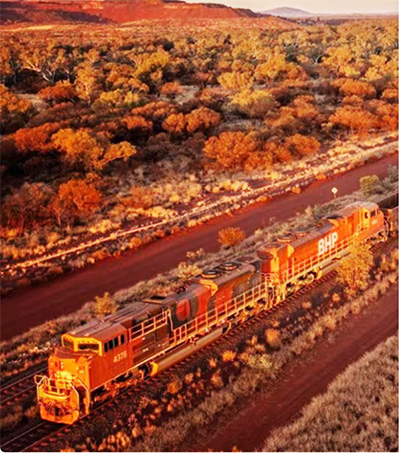
It was only two years ago that BHP announced “Operational Decarbonisation”. They would build 550MW of wind solar and battery storage in the Pilbara region of WA. It was part of a $4 billion global budget for electrifying trucks and reducing carbon emissions. It was all so ambitious — they set a goal of a 30 per cent reduction by 2030, from 2020 levels, and net zero by 2050. The “Responsible Energy” message is still starring all over their home page.
Their diesel haul trucks use 1.5 billion litres of fuel each year, and they were keen to replace them with electric vehicles, which, they said would “save money”. But it’s all fallen in a hole already. The $4 billion USD global plan has shrunk to half a billion — a savage 88% cut. The new Pilbara solar and wind turbines were quietly shelved late last year (perhaps after Donald Trump won) but the news is only being shared now.
Meanwhile the electric trucks haven’t been invented fast enough so they’ve been delayed indefinitely.
 BHP Home page Daniel Mercer, ABC
Mining giant BHP has dumped plans to build a major renewable energy project at its flagship iron ore operations, sparking claims the company is slowly walking away from efforts to decarbonise.
In 2023, BHP announced it would spend about $US2 billion ($3 billion) building more than 500 megawatts of large-scale wind, solar and battery projects to clean up and electrify its iron ore business in Western Australia’s Pilbara region.
BHP estimated the project would cut greenhouse gas emissions from its “inland” iron ore division by 15 per cent by the end of the decade and reduce overall emissions by about 2 per cent.
But internal BHP documents seen by the ABC show the miner binned the plans last year because of budget cuts.
“Due to capital constraints, the project has ceased,” BHP noted in one document seen by the ABC.
Tim Buckley of Climate Energy Finance finds the “capital constraints” hard to believe (which only makes it more interesting). He says the company is “awash with money”, “booking 50 per cent annual returns on capital…”. If they have the cash but still don’t want to buy the Green Dream, it suggests maybe BHP management can read the writing on the wall — perhaps they realize the great renewables bubble is ending, the subsidies are winding up, and they don’t want to be left holding the can? And obviously, none of it was going to save money, or they’d be doing it anyway.
Wow — that’s some flip — an 88% reduction in funding for green energy?
It’s as if they’ve lost their green mojo:
The cancellation of the so-called ‘Inland Solar PV’ project comes amid what one analyst described as a “cooling” by BHP on broader decarbonisation efforts.
In its recent annual report, the mining colossus revealed it had pared back to $US500 million ($759 million) — from $US4 billion previously — the amount to be spent on “operational decarbonisation” by the end of the decade.
But the sudden abandonment of the electric truck plan begs the question — were they really expecting trucks to improve that much or were they expecting more subsidies to make it make sense?
Central to the reduction was BHP’s decision to defer investing in electric truck and train haulage technology that could slash the company’s diesel use. The miner explained the deferral had been prompted by delays in the development of suitable electric technology that could replace conventional diesel varieties.
Solar grows to 30 or 40% then microgrid costs rise exponentially
These remote mining operations in WA are almost all microgrids — each one is a standalone energy system and a feasibility study on renewables. These projects cannot access the main electricity grid more than 1,000 km south, and they run their own small gas turbine — in BHP’s case a 190MW generator. Like Alice Springs, like Onslow and King and Flinders Island.
The most interesting comments came from one funds manager who reveals that many companies are having the same trouble as BHP — they add in solar power until they reach 30 to 40 percent and then the costs rise exponentially as the intermittency.
Sam Berridge, a funds manager specialising in resources at Perennial, said BHP’s moves were consistent with many companies grappling with decarbonisation challenges. Mr Berridge noted miners in many ways had led the charge towards renewable energy because it often made sense for them to do so.
This was because mines tended to be “micro grids” in their own right and, historically, they had sourced much of their power from dirty and expensive diesel. “Now diesel has been sort of pushed off as being like the highest cost option, I suppose,” Mr Berridge said. “More solar has crept into the optimal energy mix up to circa 30 to 40 per cent depending on where that project is located. “And I think it’s starting to plateau at around about that level.”
However, Mr Berridge said the costs of running a mine on renewable energy started to rise “exponentially” beyond a certain point as the need to compensate for the intermittency of wind and solar power mounted.
The Pilbara in the NW of WA is one of the sunniest places in the world — 10 hours a day and 218 clear days a year. If we can’t make a solar powered microgrid work there, where can it work?
h/t David B, BallyB, Brenda Spence
10 out of 10 based on 109 ratings
8.9 out of 10 based on 15 ratings
 By Jo Nova By Jo Nova
This is where the worship of “expert” peer review science gets us — a science crime syndicate
Once science stopped being about winning arguments and became just the-number-of-papers-someone-published, it became an empty shell. And once billions of dollars, depended on sacred ‘experts’, it was doomed.
Long gone are the days when papers were hardly ever retracted and pal review was “the big problem? Now, fake papers and fake editors are so rife they are their own specialist industry. Networks of brokers connect paper-mills up with authors and publishers and place batches of papers in journals with ‘friendly editors’. When Richardson et al analyzed PLOS ONE, they found 33 editors who seemed to have an extraordinarily high rate of retractions. One in particular had approved 79 papers of which, 49 had already been retracted.
Given the vital importance of peer review and science to the UN, the Labor Party and the Greens, the question is will they immediately launch an inquiry and set up a Royal Commission… or do nothing at all, and mention it to no one. Shh!
If an entire modern economy depended on getting science right, there would be constant monitoring and reporting studies like this. Instead some scandalous and systemic failure of science is reported every few years and all the people who “follow the science” don’t give a toss.
And this is just the tip of the iceberg –the study acknowledged that many fake papers had not even been discovered yet. And this paper doesn’t even mention the replication crisis where only half of all papers can even be replicated. Or worse, that the papers that were harder to replicate were more likely to be cited.
Wait til they find out thousands of real papers are worthless because they rely on broken climate models that got the core assumptions wrong decades ago. And that’s not just the papers pretending to predict the climate, but tens of thousands of other papers calculating the floods that won’t happen, or the birds that won’t be extinct, or the cost of building seawalls we won’t need, and of building planes that won’t fly on recycled canola oil. A whole generation of scientists spinning their wheels…
 (A) Retractions are increasingly published in batches. The ∼2010 spike in the number of large-batch retractions is almost entirely attributable to a large swath of conference proceedings articles retracted by IEEE. For the first time since this spike, the majority of 2023 retractions were reported in batches larger than 10 articles. Sophisticated global networks are infiltrating journals to publish fake papers
The problems Richardson and his colleagues documented are growing fast. The team built a list of papers identified in 55 databases of likely paper mill products, looking at the number of suspicious papers published each year between 2016 and 2020.
Richardson and his colleagues found that the problem goes far beyond networks of unscrupulous editors and authors scratching each other’s backs. They identified what appear to be coordinated efforts to arrange the publication of batches of dubious papers in multiple journals.
The team looked at more than 2000 papers flagged on PubPeer for containing duplicated images and identified clusters of papers that all shared images. Those sets of papers were often published around the same time and in a limited selection of journals. Looking at patterns of duplicated images is an “absolutely innovative” method for investigating these networks, Abalkina says. “No one has done this before.”
The rate of fake papers appears to be doubling much faster than the rate of retractions is:
They found that the number of suspected paper mill products doubled every 1.5 years—10 times faster than the rate of growth of the literature as a whole, although still a small proportion of papers overall. The number of retractions and papers flagged on PubPeer had also risen fast, doubling every 3.3 and 3.6 years, respectively, but not keeping pace with the increase in suspected fraudulent papers.
“This means that the percentage of fraudulent science is growing,” Abalkina says. That poses particular risks to fields like medical science, where the fake papers sometimes make their way into systematic reviews and meta-analyses, potentially distorting our understanding of drugs and treatments, she says.
At this rate, soon fake science will eclipse the real stuff, and if we could rule out Woke Science as well, perhaps it already has?
 (B) Annual global scientific activity as measured by items labeled as “journal article” or “conference proceeding article” in OpenAlex (47), as retracted articles reported by Retraction Watch, as PubPeer-commented articles and as suspected paper mill products. We make use of the linear trends observable in the log–linear plot to extrapolate these observations for the period 2020–2030. We show the 95% CI using shaded bands. The number of suspected paper mill products shows the largest growth rate, with a doubling time of 1.5 y. This paper mentions the word “fraud” 59 times. Commenters should be aware (sorry) the word gets caught in the filter here for legal reasons. So please use it carefully.
REFERENCE
Richardson et al (2025) The entities enabling scientific fraud at scale are large, resilient, and growing rapidly, August 4, 2025, 122 (32) e2420092122, https://doi.org/10.1073/pnas.2420092122
10 out of 10 based on 80 ratings
7.8 out of 10 based on 14 ratings
7.9 out of 10 based on 22 ratings
8.2 out of 10 based on 18 ratings
By Jo Nova
It’s still a cult
The Queensland Environment Minister once made the mistake of saying he was “still to be convinced” of the degree to which humans are influencing climate change. Now, 13 years later, he’s had to backtrack in public for the crime of ever having doubts about the climate-bible.
The ABC accidentally sums up the real reason: “It comes as Mr Powell works with Federal Environment Minister Murray Watt to prevent UNESCO from listing the Great Barrier Reef as “in danger”.” So it’s just extortion then? The UN threatens to slap a naughty sticker on their management of the Great Barrier Reef, which would scare off the tourists, and the Ministers have to pander to please the UN? (Nevermind that “in danger” rating would be absurd given the coral cover is still close to a record high.)
This is not about Mr Powell, so much as a message to every other MP to toe the UN line.
The Science is The Science?
By Jessica van Vonderen, ABC Agitprop Unit*
Queensland’s environment minister has stepped back his previously-stated scepticism over human-induced climate change, saying he is confident the science is correct.
In 2012, as the newly minted environment minister under Campbell Newman, Andrew Powell said he was “still to be convinced” of the degree to which humans are influencing climate change.
“It’s interesting that comment [in 2012] was taken the way it was,” Mr Powell said.
“I very much believe in climate change and am confident the science is right.
“My position has always been that the science is the science.”
Does the ABC realize that this radiates like a religious obsession? If there was overwhelming evidence of man-made climate change, they wouldn’t need to doggedly enforce the permitted litany. They’d just answer his question.

Peter Ridd, Reef Rebels
*The ABC calls this “News”.
9.9 out of 10 based on 99 ratings
9.2 out of 10 based on 11 ratings
By Jo Nova
It’s like we live in a movie — everything around us is fake.
Everyone knows Australia won’t meet the fantasy 2030 target of a 43% reduction in carbon emissions, so there’s a flying-pop-tarts chance of us reaching an even higher one by 2035. Renewables investment is down 65%, farmers hate the transmission lines, offshore wind has stalled, and green hydrogen has collapsed, and yet the Labor Government is about to take the impossible and double it up. They are singing a reduction tune supposedly between 65 to 75%. Ludicrous, either way.
To make matters more absurd, not only will it not change the temperature in any measurable way, but the Australian people don’t want a higher target, and the Labor Party know that. If they thought it had any appeal, they would have sung hallelujah about the new target before the election, but they delayed it instead because they knew the voters would hate it.
Added to that, none of the Labor or Green politicians even seem to believe the scare themselves. It they did, they would have campaigned for nuclear plants 15 years ago, to save the world. Instead, NASA will get a nuclear plant on the moon before we build one in Australia. But we all “love The Science”, right?
If hypothetically, this whole charade was being fuel-injected from a foreign country trying to sabotage Australia, it might look like this.
The Government has never told us what the magic fairy cake of Net Zero will cost
It’s like buying a house and you don’t know the price.
For some reason the Business Council of Australia (BCA) is adding up what the Treasury can’t or won’t — and they calculate that a target of 70% by 2035 would *only* cost $530 billion dollars. This bargain deal, ladies and gentlemen, is just $18,000 a person, or nearly $80,000 from a family of four. Perhaps you’d like to vote on that? Nevermind.
The Business Council members include at least five banks, three tech giants, Google, Microsoft, and Meta, and many universities. All in all, the BCA is a walking-talking lobbying team for any Blob Subsidy Train. The universities dine on the grants, and the bankers have sunk “investment” in renewables, or they want to curry favor with the Chinese Communist Party, who want Australia to buy their surplus of solar panels, and wind turbines, and EVs.
But even the Business Council argues that a 70% target will cost us $200b in lost investments. Rejoice, there is a tiny bit of sense there. In an ideal world (for them) the BCA wants a moderately big target, but they don’t want a target so high it breaks the country. They also want the “certainty” of the target being legislated. They need the guaranteed gravy train. This report is totally self-serving.
By Geoff Chambers, The Australian
Anthony Albanese and Chris Bowen have been warned by Australia’s largest employers that cutting emissions by 70 per cent or more would carry a price tag of up to $530bn in capital investment, as business leaders refuse to provide cover for Labor’s higher climate targets.
Ahead of the Prime Minister and the Climate Change and Energy Minister unveiling a 2035 emissions-reduction target in the next fortnight, a Business Council of Australia report reveals the government is facing extreme financial, workforce and delivery pressures to land the net-zero transition
And thus it comes to pass that a group of business traders tells us we’ll all be $10,000 richer if we buy their scheme to stop storms.
Judith Sloan, The Australian
But here’s the thing: notwithstanding the high probability the 2030 target won’t be met – and let’s not forget that this target is legislated – both climate activists and self-interested businesses are campaigning for a ridiculously high target for 2035, of 75 per cent relative to 2005. While this target may seem absurd, fervent beliefs can be a powerful force, even if these beliefs are essentially baseless.
The report, produced by Deloitte Access Economics, reaches the extraordinary conclusion that a 75 per cent target would add $370bn to GDP by 2035, which in per capita terms is $10,000.
In addition, there would then be an additional 69,000 jobs – trivial given the number of employed is almost 15 million. We are also told that export revenues would increase by $190bn by 2050 in total, which is a rounding error. Iron ore, coal and LNG today generate almost $250bn in export income annually.
And everyone keeps a straight face. And no one says “Before we spend half a trillion dollars, shouldn’t we at least check the science?”
9.9 out of 10 based on 94 ratings
9.3 out of 10 based on 16 ratings
By Jo Nova
Antarctica defies the experts
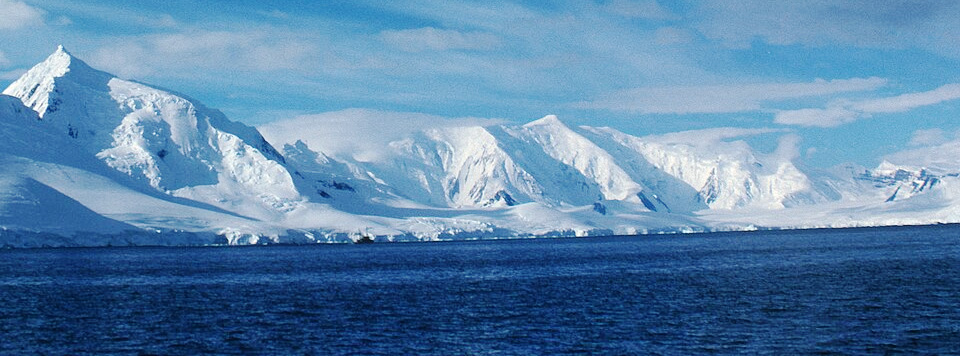
Two studies out this year suggest that something shifted in Antarctica recently and no one knows what it was. In 2016 Antarctic Sea Ice surrounding the continent mysteriously started to disappear. At the same time more snow started accumulating on the main Antarctic ice-sheet (Fig 2b).
The GRACE satellite, measures the total surface mass — with all the gains as well as the losses — and suggests after 20 years of decline the steadily falling trend has broken.
What matters most in this story is that the climate models didn’t see this change coming, and therefore are missing at least one big crucial factor, or maybe ten. Who knows?
Antarctica was supposed to suffer polar amplification, and heat twice as fast as the rest of the world. What happened to that?
 Wang, Wei, et al 2025. Mass Changes from the AIS from 2002 – 2023. The grey shadow shows the gap between GRACE and GRACE-FO. The Climate Blob quickly issued a Fact Check, because it was fueling “climate denial” which is like Ebola or something, and must be stopped immediately. So the scientists who didn’t predict any of these shifts in Antarctica, now tell us it is only temporary “due to the weather”. Presumably their climate models have finally started working, at least until the next time they turn out to be wrong.
A second paper by a different Wang (S) et al, also used the GRACE satellite (NASA’s Gravity Recovery And Climate Experiment). According to the paper, the Antarctic Ice Sheet was melting and adding 0.2-0.4mm each year to global sea levels. But after 2020 it has been reducing global sea levels by 0.3mm a year instead.
 Timeseries of monthly Antarctic mass variation in Gt since April 2002, based on the Gravity Recovery and Climate Experiment (GRACE) data, with the period from July 2020 to June 2023 highlighted. b Timeseries of the cumulative surface mass balance (SMB) anomaly relative to April 2002, with the period from July 2020 to June 2023 highlighted Wang S et al It is, of course, “not an indication that global warming has reversed”, because nothing can show that. It is forbidden.
The bafflement in the headline says it all:
LiveScience News By Patrick Pester published May 14, 2025
An abrupt change in Antarctica has caused the continent to gain ice. But this increase, documented in NASA satellite data, is a temporary anomaly rather than an indication that global warming has reversed, scientists say.
It’s always just weather:
Most of the gains have already been attributed to an anomaly that saw increased precipitation (snow and some rain) fall over Antarctica, which caused more ice to form. Antarctica’s ice levels fluctuate from year to year, and the gains appear to have slowed since the study period ended at the beginning of 2024. The levels reported by NASA thus far in 2025 look similar to what they were back in 2020, just before the abrupt gain.
Just because they didn’t predict this, that doesn’t make it strange, say the experts. There is always some factor a climate scientist can mention like a prophet, to explain why the climate surprised them, but they knew it would happen. It fools most journalists.
“This isn’t particularly strange,” said Tom Slater, a research fellow in environmental science at Northumbria University in the U.K. who wasn’t involved in the study. “In a warmer climate the atmosphere can hold more moisture — this raises the likelihood of extreme weather such as the heavy snowfall which caused the recent mass gain in East Antarctica,” he told Live Science in an email.
Obviously a warmer world has more water vapor in the atmosphere. But they don’t mention this when droughts happen, or bushfires rage, do they?
Hmm. The biggest losses of ice from Antarctica are near those 91 volcanoes we discovered a few years ago.
h/t David Archibald
REFERENCES
Wang, S., Liu, J., Cai, W. et al. Strong impact of the rare three-year La Niña event on Antarctic surface climate changes in 2021–2023. npj Clim Atmos Sci 8, 173 (2025). https://doi.org/10.1038/s41612-025-01066-0
Wang, W., Shen, Y., Chen, Q. et al. Spatiotemporal mass change rate analysis from 2002 to 2023 over the Antarctic Ice Sheet and four glacier basins in Wilkes-Queen Mary Land. Sci. China Earth Sci. 68, 1086–1099 (2025). https://doi.org/10.1007/s11430-024-1517-1
Antarctic Photo: Robert L Dale
10 out of 10 based on 75 ratings
|
JoNova A science presenter, writer, speaker & former TV host; author of The Skeptic's Handbook (over 200,000 copies distributed & available in 15 languages).

Jo appreciates your support to help her keep doing what she does. This blog is funded by donations. Thanks!


 Follow Jo's Tweets
 To report "lost" comments or defamatory and offensive remarks, email the moderators at: support.jonova AT proton.me
Statistics
The nerds have the numbers on precious metals investments on the ASX
|








Recent Comments