By Jo Nova
Antarctica defies the experts
Two studies out this year suggest that something shifted in Antarctica recently and no one knows what it was. In 2016 Antarctic Sea Ice surrounding the continent mysteriously started to disappear. At the same time more snow started accumulating on the main Antarctic ice-sheet (Fig 2b).
The GRACE satellite, measures the total surface mass — with all the gains as well as the losses — and suggests after 20 years of decline the steadily falling trend has broken.
What matters most in this story is that the climate models didn’t see this change coming, and therefore are missing at least one big crucial factor, or maybe ten. Who knows?
Antarctica was supposed to suffer polar amplification, and heat twice as fast as the rest of the world. What happened to that?

Wang, Wei, et al 2025. Mass Changes from the AIS from 2002 – 2023. The grey shadow shows the gap between GRACE and GRACE-FO.
The Climate Blob quickly issued a Fact Check, because it was fueling “climate denial” which is like Ebola or something, and must be stopped immediately. So the scientists who didn’t predict any of these shifts in Antarctica, now tell us it is only temporary “due to the weather”. Presumably their climate models have finally started working, at least until the next time they turn out to be wrong.
A second paper by a different Wang (S) et al, also used the GRACE satellite (NASA’s Gravity Recovery And Climate Experiment). According to the paper, the Antarctic Ice Sheet was melting and adding 0.2-0.4mm each year to global sea levels. But after 2020 it has been reducing global sea levels by 0.3mm a year instead.

Timeseries of monthly Antarctic mass variation in Gt since April 2002, based on the Gravity Recovery and Climate Experiment (GRACE) data, with the period from July 2020 to June 2023 highlighted. b Timeseries of the cumulative surface mass balance (SMB) anomaly relative to April 2002, with the period from July 2020 to June 2023 highlighted Wang S et al
It is, of course, “not an indication that global warming has reversed”, because nothing can show that. It is forbidden.
The bafflement in the headline says it all:
NASA satellites show Antarctica has gained ice despite rising global temperatures. How is that possible?
LiveScience News By Patrick Pester published May 14, 2025
An abrupt change in Antarctica has caused the continent to gain ice. But this increase, documented in NASA satellite data, is a temporary anomaly rather than an indication that global warming has reversed, scientists say.
It’s always just weather:
Most of the gains have already been attributed to an anomaly that saw increased precipitation (snow and some rain) fall over Antarctica, which caused more ice to form. Antarctica’s ice levels fluctuate from year to year, and the gains appear to have slowed since the study period ended at the beginning of 2024. The levels reported by NASA thus far in 2025 look similar to what they were back in 2020, just before the abrupt gain.
Just because they didn’t predict this, that doesn’t make it strange, say the experts. There is always some factor a climate scientist can mention like a prophet, to explain why the climate surprised them, but they knew it would happen. It fools most journalists.
“This isn’t particularly strange,” said Tom Slater, a research fellow in environmental science at Northumbria University in the U.K. who wasn’t involved in the study. “In a warmer climate the atmosphere can hold more moisture — this raises the likelihood of extreme weather such as the heavy snowfall which caused the recent mass gain in East Antarctica,” he told Live Science in an email.
Obviously a warmer world has more water vapor in the atmosphere. But they don’t mention this when droughts happen, or bushfires rage, do they?
Hmm. The biggest losses of ice from Antarctica are near those 91 volcanoes we discovered a few years ago.

Nature Fig 2. Antarctic Map Professor John Smellie.
h/t David Archibald
REFERENCES
Wang, S., Liu, J., Cai, W. et al. Strong impact of the rare three-year La Niña event on Antarctic surface climate changes in 2021–2023. npj Clim Atmos Sci 8, 173 (2025). https://doi.org/10.1038/s41612-025-01066-0
Wang, W., Shen, Y., Chen, Q. et al. Spatiotemporal mass change rate analysis from 2002 to 2023 over the Antarctic Ice Sheet and four glacier basins in Wilkes-Queen Mary Land. Sci. China Earth Sci. 68, 1086–1099 (2025). https://doi.org/10.1007/s11430-024-1517-1
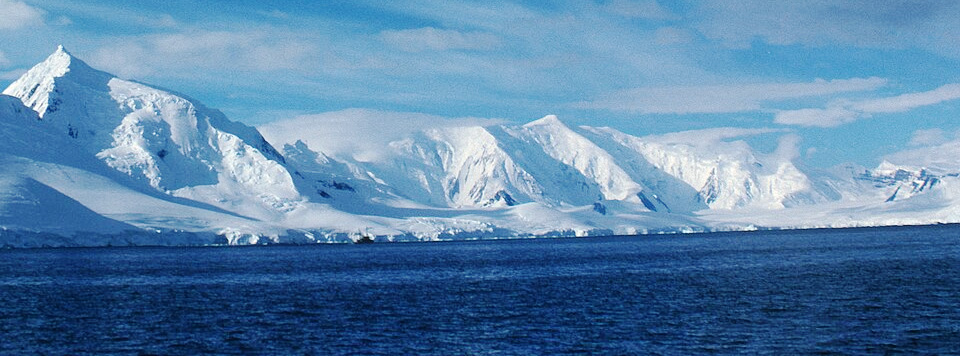
Antarctic Photo: Robert L Dale
