Recent Posts
-
Snowy 2.0 is the Trillion dollar Black Hole of Australia — sucking in energy, money, land, industrial relations, the dollar, our lifestyle
-
Tuesday
-
Monday
-
Winter Solstice
-
Saturday
-
We were throwing-renewable-energy away at record levels in 2025
-
Friday
-
Pauline Hanson, the centrist, just wants a free market in electricity, and an end to the renewable energy bribery
-
Thursday
-
Blame the Climate Yeti again for making your life more expensive! (It’s a smokescreen)
-
Wednesday
-
The Sunrise Project funneled $343 million from overseas to push net zero
-
Tuesday
-
Monday
-
Sunday
-
The US government has been secretly funding 120 dangerous biolabs around the world
-
Saturday
-
New report shows renewables are a drag on our national productivity
-
Friday
-
Thursday
-
Well, how convenient. AI data centers have arrived to be the fall guy for the Energy Minister
-
Wednesday
-
Billionaires are leaving the room with excuses — Bezos says “AI will solve climate crisis”
-
Tuesday
-
Monday
-
Sunday
-
The Craziest eco laws against Farmers. Let’s check that science…
-
Saturday
-
China cooks the carbon accounting books by 400 million tons
-
Friday
-
The Wind Power Puzzle (add more wind turbines and get the same output)
-
Thursday
-
To save the world, Cement Australia stops burning coal and burns trees instead
-
Wednesday
-
On Fire! US hunger for gas power so large, wait time for turbines blows out to 5+ years
-
Tuesday
-
Monday
-
Sunday
-
Saturday
-
Perth event Saturday May 30th: Green Greed and the Grid
-
Catastrophic warming already happened in Antarctica 130,000 years ago
-
Friday
-
Suddenly the Paris Agreement grows teeth
-
Thursday
-
Australian renewable investments evaporate in 2025: reaching a ten year low
-
Wednesday
-
The Bubble Pops: Big Miner BHP quietly backs away from decarbonization
-
Tuesday
-
Monday
-
Sunday
-
Conservatives are tearing themselves apart over “The Paris Agreement”
-
Saturday
|

By Jo Nova
What if a few gigawatts of solar power disappeared without a warning or a cloud in the sky?
Imagine a hostile force had control of half your national power generation at lunchtime and could just flip a switch to bring you to your knees? Or how about a crime syndicate wanting a ransom paid by 5pm?
Steve Milloy: Communist China is setting us up for solar panel-based disaster:
“Solar panels that make the electricity suitable for the power grid and which are usually connected to the web, can be “easily hacked, remotely disabled or used for DDoS [Distributed Denial of Service] attacks.” DDoS is one of the most common types of attacks, which basically try to overwhelm a system… Solar panels were outlined as a vulnerability in several scenarios, also due to the dominance of a single country, China, in the supply chain.”
It’s only a week without electricity…
Daniel Croft, CyberDaily (October 2023)
Cyber Security CRC chief executive Rachael Falk said… that an attack on the solar grid could spark a “black start” event, which could result in the entire power grid going down. … “This could bring down an entire power grid, and it could take a week to recover,” she said.
[Falk said] the threat presented by foreign-manufactured solar inverters is a recent one, as only recent models are internet-connected due to increased interest in smart home technology.
“Traditionally, cyber risk with solar inverters was low because they were not connected to the internet,” said Falk. “However, as the popularity of smart home energy systems has boomed, this has changed, with most solar inverters now web connected.”
The EU and the US have both had a wake up call in the last few weeks
A Dutch white hat hacker got into one system a couple of weeks ago with 4 million panels in 150 countries, exposing a major flaw. That software glitch in American Enphase inverters was fixed quickly once they were aware of it, but how many other doors remain open?
Only two weeks ago another group called Bitdefender claimed that 20% of the worlds solar panels and 195 gigawatts of capacity, had been at risk of cybercrime for months. Rooftop solar management software by Solarman and Deye (both Chinese solar manufacturers) is used by 2 million “solar plants” and 10 million devices. Hackers could have been able to take control of the inverters (which could “change the way the inverters interact with the grid”. They could also steal quite a lot of data, including real time GPS locations and production. What if they could target individuals?
Apparently those issues were reported in May but are now patched too. (I guess no one would be mentioning any issues which are not patched, would they?) SecurityBrief has the gory details.
Whatever threats exist in the Netherlands, Australia is a sitting duck
Even at lunchtime in winter, sometimes half of the Australian national grid power comes from solar panels. That’s 12 gigawatts of solar power out of 25 gigawatts in toto. (And it’s similar in WA). Here in the renewable crash test dummy, fully 58% of the solar inverters that are connected in to the internet come from companies headquartered in China. (And the rest are headquartered elsewhere, but who knows, maybe they’re made in China too, where 70% of the worlds solar inverters come from?)
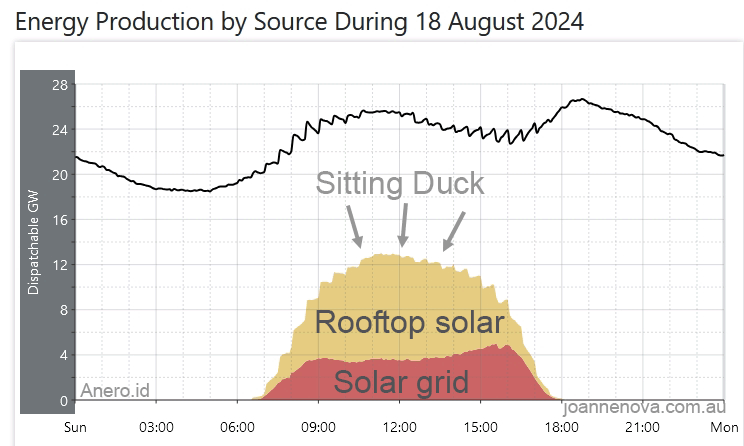 Solar power is a large part of the Australian NEM, even in winter. The black line is total generation. The NEM includes NSW, QLD, Vic, Tas, SA. (Source: Anero.id) So Cyber-expert Falk gave us that warning of a black start disaster in October last year, and how far have we got? By January we were redoing our cybersecurity plans, but somehow still forgetting about smart home devices like solar inverters and control of our national critical infrastructure. But, not to worry, by February we had the news that we were hiring Standards Australia, to develop “a roadmap”. (That’ll stop them!) Meanwhile we’re still going gangbusters on solar installations.
We can always rely on the government to get nothing done, help the enemy…
By Nikolaus J. Kurmayer | Euractiv
An ethical hack of solar panels in the Netherlands has revealed their vulnerability to cyber attacks, prompting industry calls for more rigorous safety assessments.
A Dutch white hat hacker could have gained control of millions of smart solar panel systems, reports investigative outlet FollowTheMoney, using a backdoor.
The findings confirm a 2023 report by a Dutch agency which found that converters, essential parts of solar panels that make the electricity suitable for the power grid and which are usually connected to the web, can be “easily hacked”…
A report by the EU’s own cybersecurity agency from 24 July found that the union is ill-prepared for a concerted attack on its energy infrastructure, whether by a foreign state or by malicious insiders.
How much will that cost?
We need to test and possibly replace inverters and fix the software:
A report by the Perth’s Cyber Security Cooperative Research Centre “recommends assessments be conducted on all solar inverters sold in Australia, with identified vulnerabilities requiring remediation. The report also says cyber security ratings should be introduced for solar inverters and IoT devices more generally, as well as recommending solar inverters with identified serious cyber vulnerabilities be banned from retail sale in Australia.
Thanks to Marc Morano of Climate Depot.
10 out of 10 based on 99 ratings
8.7 out of 10 based on 16 ratings
8.3 out of 10 based on 22 ratings
8.5 out of 10 based on 18 ratings
By Jo Nova
How much money has the world wasted because of some tree ring studies?
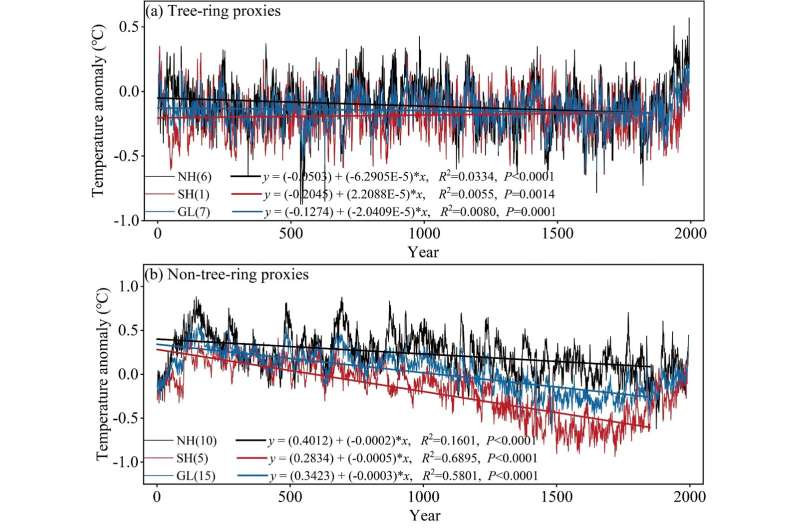
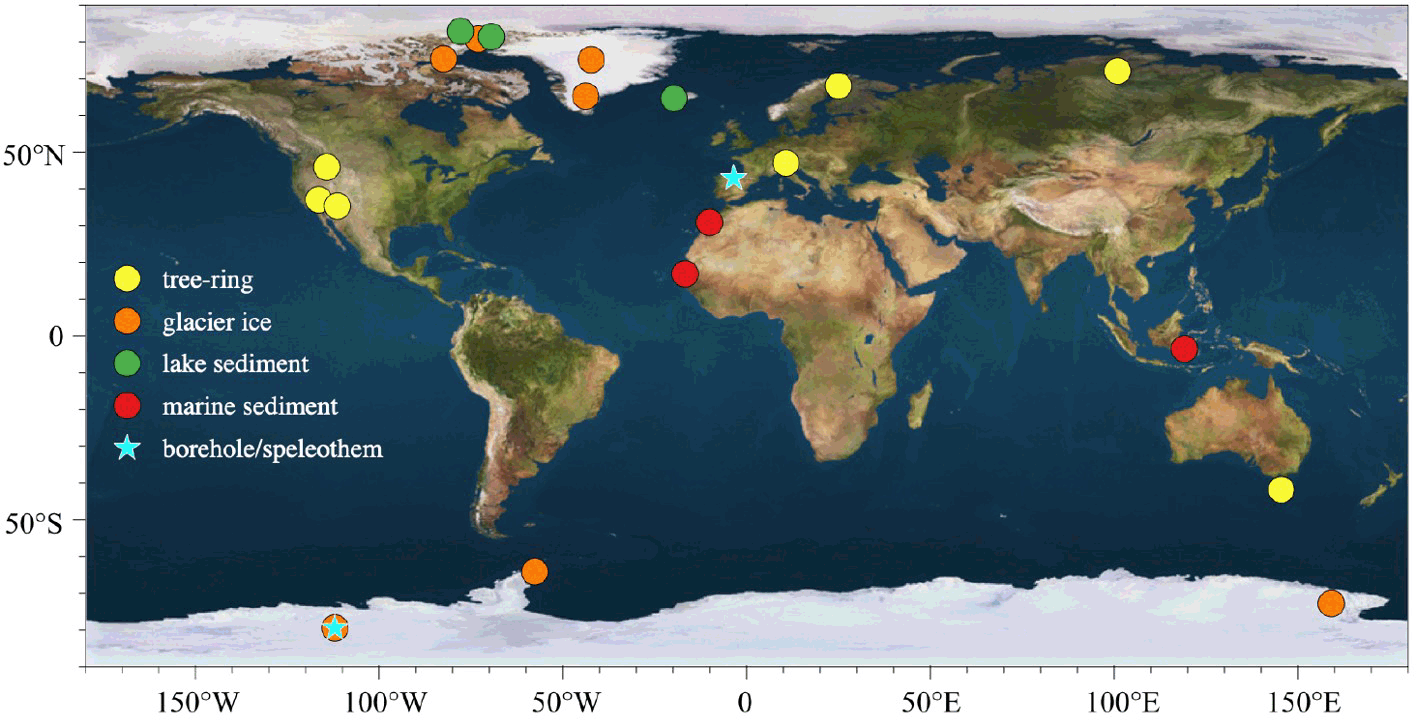
A Chinese group has looked at all the different kinds of 2,000 year long proxies in the PAGES dataset and found that history looks quite different depending on which proxy you pick. Only the tree rings show the HockeyStick shape that matches the climate models. In other proxies, temperatures have fallen for most of the last 2,000 years, especially in the Southern half of the world. And even after the recent warming, we are not yet back to the temperatures the Romans lived through.
So yet again, we see that that current temperatures are not unusual except according to tree rings, which we know are affected by rising levels of CO2. (The paper does not mention CO2 or carbon or fertilizer).
“All the evidence points out that we are still far from a complete understanding of the Common Era temperature variability at hemispheric and global scales,” says Professor Yang.”
“We show that the millennial cooling of annual mean temperatures is likely a global phenomenon.”
The world according to tree-rings is at the top, and other proxies, below:
The map showing that the proxies are spread around the world. There are not that many proxies stretching back 2,000 years:
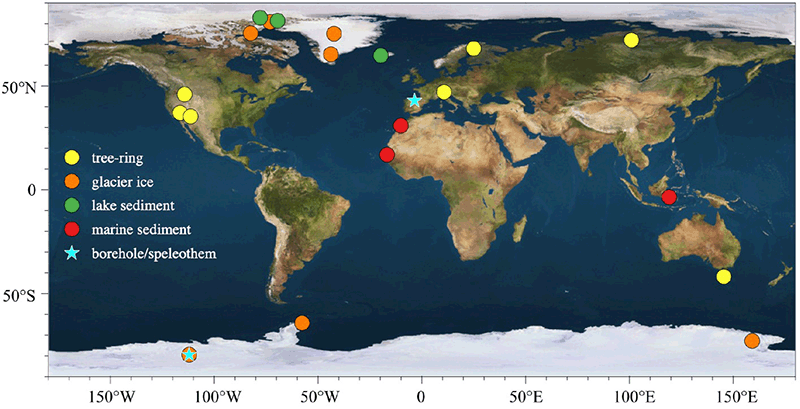 Figure 1 Locations of the proxy data used for the temperature reconstructions over the past 2000 years. The paper looked closely at how all the proxies responded to volcano eruptions, and tree rings do seem to be useful. But without acknowledging that trees love carbon dioxide and grow faster with the fertilization effect of extra CO2, it feels like they are dancing around the point. They said tree rings capture the variability of shorter periods (less than 200 years) but that non tree ring proxies were better for variations longer than 200 years. The news that matters the most to mum and dad voters is that they found a significant long term cooling trend, but that information is buried in the text.
And as so many proxies have shown, global warming started back in the late 1600s, long before human emissions of CO2 started.
UPDATE: Look at the non-tree-ring proxy — the warming began in the Southern Hemisphere before 1700AD. See also the 120 proxies of Christiansen and Ldundqvist, and the signal in China. What started that? Climate modelers have no idea. It wasn’t cars and coal power. It wasn’t man-made CO2. We don’t understand the big forces that drive our climate, yet we make you pay for your imaginary sins anyway.
Keep reading →
9.8 out of 10 based on 98 ratings
8.9 out of 10 based on 21 ratings
 Every person here is breathing out 40,000 ppm CO2 By Jo Nova
Elon is scratching for a reason to keep worrying about CO2
In the interview with Donald Trump, Elon Musk tried to argue that we ought be limiting carbon dioxide because we are too close to 1,000ppm where people get headaches. Not to put too fine a point on it, but we breath out air at 40,000 ppm fifteen times a minute for our entire lives. If 1,000 ppm gave us a headache or made us nauseous, we’d have to hold our breath every time we kissed someone.
@ElonMusk: The point I was making is that, even if CO2 did not cause global warming, it is uncomfortable to breathe air with >1000 ppm of CO2. Given that the outdoor ppm away from cities is now ~420 (lol), it is already getting close to 1000 ppm indoors in cities at times. You can buy a cheap CO2 monitor and measure this for yourself.
As the global base level of CO2 keeps increasing, it will cause air quality in cities to feel stuffy and unpleasant, resulting in drowsiness, poor concentration and eventually headaches and nausea. That would not be a good future.
And then he quotes CO2meter.com which, ahem, sells CO2 meters, and has an incentive to wildly overstate the problems with CO2, which they do.
CO2 is not the problem, the stale air and other pollutants cause headaches and sleepiness
The point of CO2 meters is not so much to warn us about excessive CO2 levels, but to indicate how well the room is ventilated. CO2 levels are just an indicator for air quality. Air with higher CO2 levels usually also has higher levels of organic compounds, humidity, body odour, mold, chemicals from furniture and paint (like formaldehyde) and potentially viruses too. When people report headaches and nausea, the high CO2 levels are not the issue, it’s the bioeffluence that causes problems. When researchers do cognitive tests with pure CO2 added to clean air, performances don’t suffer. The stale air is the problem, not the CO2. (See Zhang, and Misra where they compared the cognitive effects from badly ventilated air and clean air with high CO2 levels up to 3,000ppm. Problems disappear when they use fresh air plus higher CO2.) Well ventilated rooms may also be cooler rooms, which might explain why results so often contradict each other.
Classrooms are at 1,000ppm “typically”
While outdoor air is 420ppm, indoor levels of CO2 are commonly 1,000ppm in classrooms every day, and can rise as high as 3,000ppm if all the windows are shut. The recognized occupational health and safety levels for long term working exposure are 5,000 ppm for 8 hours straight, five days a week. It’s no big deal.
The National Collaborative Centre for Environmental Health (Canada) measured school and buildings and advises that “Typically, in an occupied classroom situation, the recommended level of ventilation would correspond to a CO2 level of approximately 1000-1100 ppm“. Furthermore, they said the “lowest level at which a human health effect (i.e. acidosis) has been observed in humans is 7,000 ppm, and that only after several weeks of continuous exposure in a submarine environment”.
The occupational limits for CO2recommended by the American Conference of Governmental Industrial Hygienists (ACGIH) are 5000 ppm (TLV-TWA) and 30,000 ppm (TLV-STEL), based on the direct effects on acidification of the blood. — via Marc Morano and Climate Depot

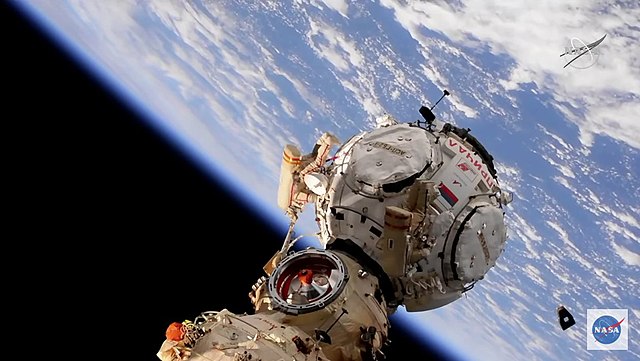
At NASA The Office of the Chief Health and Medicial Officer reports that a typical spacecraft works at around 3,000-7,000 ppm (or o.3-0.7% CO2). The recommended exposure is 5,000, and the permissible exposure limit is 10,000 ppm. Although the flight surgeons found levels of nearly 7,000 were safe and “didn’t affect performance”. On Apollo 13, CO2 levels rose to 20,000ppm. Sweating and shortness of breath became a problem above 30,000 ppm.
Submariners typically live with CO2 levels of 2,000- 5,000 ppm, and when a small sample of sailors was tested at 600, 2500 or 15,000 ppm, the researchers couldn’t find any difference in results from an 80 minute test on decision making. (Rodeheffer at al) Likewise another study at the Johnson Space Centre, people did cognition tests at 600, 1,200, 2,500 and 5,000ppm and there was no dose response effect. Results look rather random.
Lowther et al looked at 51 studies in 2021, and found nothing conclusive in terms of harms from CO2 below 5,000ppm. Most studies were confounded, results were conflicting. Teams of researchers are hunting to find another problem “due to CO2”. If there was a strong negative effect of CO2 it would have shown up by now. Instead CO2 is only associated with occasional headaches and nausea — probably because it is high in crowded rooms with little ventilation.
One large review in 2019 was described as showing CO2 affected people at levels as low as 1,000ppm, but the paper itself points at the confounding data and uses the words “possible” and “potential effects” and concludes “we need more studies.”
UPDATE: Commenters Alan Klein and Mr Farnham points out the safety limits for Australian coal miners (NSW) is 1.25% CO2 which is 12,500ppm, and that is for 8 hour shifts. Brief excursions up to 3% (30,000ppm) are acceptable. See comment #17 for more details.
REFERENCES
Lowther, Scott D., Sani Dimitroulopoulou, Kerry Foxall, Clive Shrubsole, Emily Cheek, Britta Gadeberg, and Ovnair Sepai. 2021. “Low Level Carbon Dioxide Indoors—A Pollution Indicator or a Pollutant? A Health-Based Perspective” Environments 8, no. 11: 125. https://doi.org/10.3390/environments8110125
Mishra AK, Schiavon S, Wargocki P, Tham KW. Respiratory performance of humans exposed to moderate levels of carbon dioxide. Indoor Air. 2021 Sep;31(5):1540-1552. doi: 10.1111/ina.12823. Epub 2021 May 15. PMID: 33991134.
Rodeheffer CD, Chabal S, Clarke JM, Fothergill DM. Acute Exposure to Low-to-Moderate Carbon Dioxide Levels and Submariner Decision Making. Aerosp
Zhang X, Wargocki P, Lian Z, Thyregod C. Effects of exposure to carbon dioxide and bioeffluents on perceived air quality, self-assessed acute health symptoms, and cognitive performance. Indoor Air. 2017 Jan;27(1):47-64. doi: 10.1111/ina.12284. Epub 2016 Mar 7. PMID: 26825447.
h/t to Willie Soon, Marc Morano and Climate Depot.
Photo: NASA/Mark T. Vande Hei (taking some images of the Russian modules) Jan 2022
9.9 out of 10 based on 95 ratings
8.8 out of 10 based on 24 ratings
By Jo Nova
It’s something to be proud of: Russia, Australia and USA have the biggest Greenhouse Gas Export footprint on Earth. It’s a bizarrely contrived title though, where we have to ignore domestic emissions and blame countries instead for the fuels they dig up which someone else uses. (You know they want to).
We could play this game in so many ways. If China uses Australian coal to make a fridge, do those emissions belong to Australia, or China or to the Norwegian who bought the fridge? Correct answer: “all three”. The game of emissions mobile-blame means the shame can be applied to whichever patsy is the most useful. Double counting is not a mistake, it’s a marketing tool.
In a normal world, no one is responsible for what someone does with goods they sold, but in green economics, comrade, it all belongs to the Party.
You are supposed to badger and harass the people you sold the goods to, to ask them not to use it:
[Dr Gillian Moon] said if Australia was serious about its climate commitments, it should be doing more to encourage countries that bought its fossil fuels – particularly the developed economies Japan, South Korea and Taiwan that take about two-thirds of its exports – to move more rapidly to renewable energy. She said it should be having similar discussions with like-minded fossil fuel exporters, such as Canada and Norway. (From The Guardian, linked below).
What this graph really shows is who is the Great Global Patsy — not Russia, because they are not working directly against their own economic interest, but Australia — the nation which stands to lose the most money per capita due to the demonization of fossil fuels, and which aids and abets the carbon-hate all the way, and never spends a cent to audit the UN Committee. This one-sided study was, of course, done in Australia. It was put together by the UNSW “Human Rights” Institute which spent exactly no minutes thinking about the human rights of poor people who want to be warm and buy our coal. Nor did they consider the starving kids of Haiti who benefit from cheaper food grown in a world with bountiful CO2.
The US has larger fossil fuel exports than Australia, but we export more coal, which is a more “emissions intensive fuel”, they say, so we export more emissions. (They should pay us for the coal, the oil, the gas, the fertilizer, and the warmer weather).
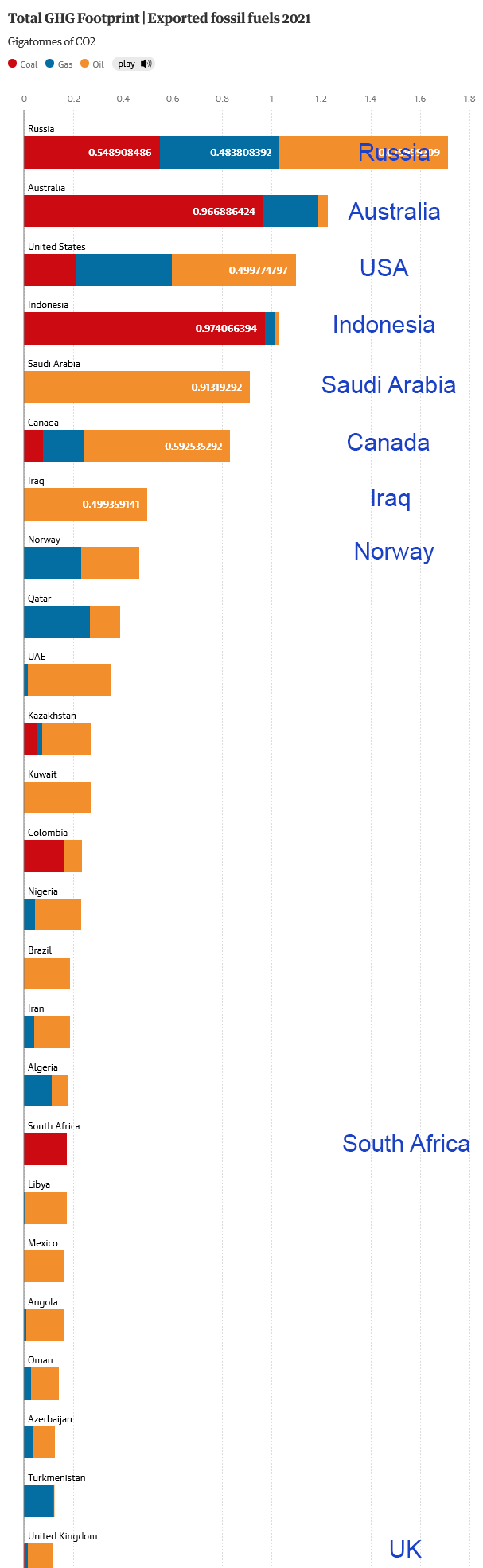
Source:Climate Analytics
Adam Morton, The Guardian
Australia’s coal and gas exports cause more climate damage than those from any other country bar Russia, according to a new study that argues the country is undermining a global agreement to transition away from fossil fuels.
The analysis, commissioned by the University of New South Wales’ Australian Human Rights Institute, found Australia was the third biggest fossil fuel exporter on an energy basis in 2021, trailing only Russia and the US.
See also The Conversion:*
Australia mainly exports fossil fuels to Japan, China, South Korea and India. These countries, which accounted for about 43% of fossil fuel CO₂ emissions in 2022, are also signatories to the Paris Agreement. So they have set 2030 emissions reduction targets and net-zero goals of their own. Continuing to import fossil fuels is incompatible with their own commitments.
*It is hardly a Conversation while they ban skeptical opinions, eh?
10 out of 10 based on 78 ratings
9.5 out of 10 based on 11 ratings
By Jo Nova
Hiding the costs of renewables until after the next election
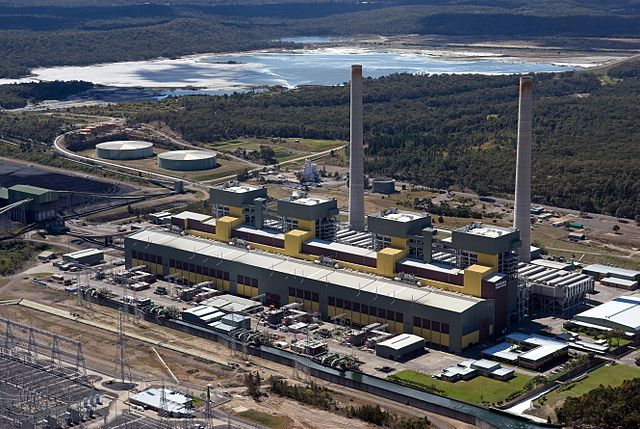
The largest coal plant in Australia was supposed to close in August next year, but the NSW government decided to buy a two year extension until a few months after the next state election. Now the modeling comes out showing that they decided to keep the Eraring coal plant running to prevent the shocking price spikes from disturbing the voters. Keeping the coal plant will reduce wholesale electricity bills by a few billion dollars. (Why don’t we keep it open for ten years?)
Presumably his reelection chances would be worse if “saved the planet”, and shut the coal plant a few months before the election instead.
They know the voters don’t want the transition. They know it will cost more. And yet they do it anyway…
Bizarrely, this news comes from the renewable industry site Reneweconomy, where Giles Parkinson doesn’t seem to notice this shows coal power is cheap and renewables are hideous. Apparently he doesn’t mind inflicting costs on hapless homeowners, he is just bummed that they couldn’t force more unreliable energy and battery packs on the grid even sooner:
The NSW state Labor government has confirmed that its controversial decision to delay the closure of the country’s biggest coal fired power generator at Eraring was primarily driven by concerns over a possible jump in wholesale electricity prices.
The 2.88 gigawatt (GW) Eraring facility on the central coast was due to close on August, 2025, but under an underwriting deal with the state government which could be worth up to $450 million, Origin Energy will now keep at least two units open until August, 2027, a few months after the next state election.
Delaying the closure of Eraring even longer until 2028 could save $4.4 billion:
Modelling that the Minns government relied upon – produced by Endgame Economics and ICA Partners – has now been released (or at least bits of it) – and confirms that the greatest benefit of the delayed closure would come from lower prices.
A summary of the Endgame analysis tabled in parliament on Tuesday suggests that the savings on wholesale market prices would total $4.4 billion, with a relatively small benefit of $300 million allocated to increased energy security and $200 million for avoided system strength measures.
The report says this would outweigh the $1.1 billion negative benefits from higher emissions resulting from the burning of more coal, and other costs of $600 million, including $400 million in payments to Origin. Overall, it puts the net benefits at $3.2 billion to $3.5 billion.
More bizarrely, Giles Parkinson argues that the futures market is predicting even higher prices than the modelers are:
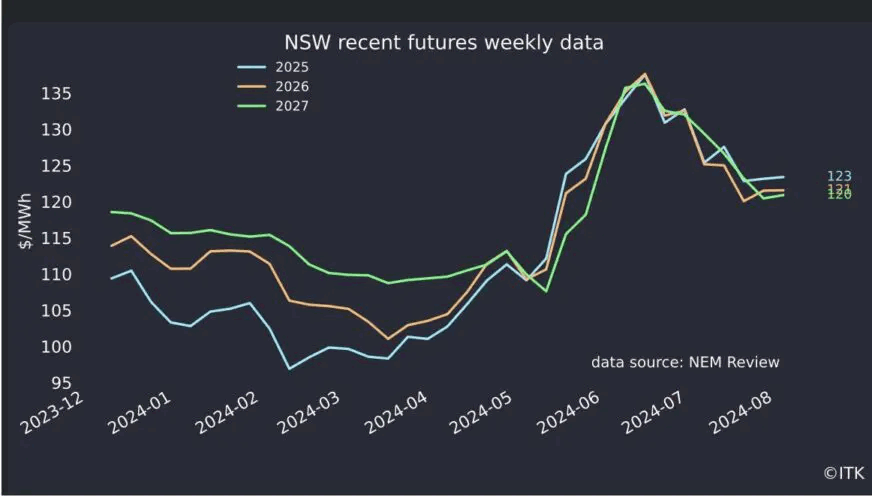 NSW Futures prices Electricity: NEM Review He views this train-wreck as a bad situation caused by Big Market Players exploiting the market, and they absolutely are. But he doesn’t admit that if we weren’t trying to ram a fake transition down everyone’s circuits with unreliable generators, the Predators wouldn’t have nice juicy price spikes to prey on (and subsidized cushions to land on).
With the true genius of all communists-at-heart Giles Parkinson tells us this has nothing to do with prices:
Again, this had nothing to do with the actual cost of generation or the prospect of a supply shortfall, it was simply lack of competition.
But Giles has no idea what competition even is. If more coal power was competing we’d still have cheap electricity. The market he wants is not a free market, it’s just a different kind of Soviet.
So warn the voters of New South Wales. The Chris Minns Labor government is trying to hide the cost of the unreliables until after the election.
Eraring photo by Nick Pitsas, CSIRO
9.9 out of 10 based on 97 ratings
8.8 out of 10 based on 14 ratings

By Jo Nova
A group of arty psychologists has accidentally shown how much skeptics can achieve if they just speak up.
The small, poorly worded study, done by people who have little understanding of the climate debate, or even of the scientific method, doesn’t prove much at all. But if you start with 170 people who have been fed propaganda for years and then ask some random questions, whatever you repeat seems more believable. We could have learnt so much more if these psychologists did not start so confused themselves.
Their big “discovery” was that hearing something skeptical a second time gave it a significant boost in believability, even when the audience were 90% believers. Their big conclusion was the advice to essentially never utter a skeptical word, just repeat the propaganda:
“Do not repeat false information. Instead, repeat what is true and enhance its familiarity.”
They appear to be oblivious that their advice essentially kills the idea of open public debate. They don’t mention public debate or free speech. Possibly, since they are at an Australian university, they’ve never come across it.
But the core message comes through at The Guardian — they are scared skeptics might be heard:
Our new research has produced worrying findings. Climate misinformation may be more effective than we’d like to think because of a phenomenon called the illusory truth effect In short, we are more likely to believe a lie if we encounter it repeatedly. Worse, the effect works immediately – a lie seems to be more true even after just one repetition.
Repetition, boys and girls, is “insidious”:
 The study’s lead author, Mary Jiang, from the Australian National University, said: “The findings show how powerful and insidious repetition is and how it can influence people’s assessment of truth.” The study’s lead author, Mary Jiang, from the Australian National University, said: “The findings show how powerful and insidious repetition is and how it can influence people’s assessment of truth.”
But it is only “insidious” when skeptics repeat things, not when the State says the same thing a thousand times, and starts the repetition at kindergarten. These researchers live in an academic fishbowl.
The survey was a swamp of irrelevant questions on boring things skeptics hardly ever say like “Global warming will not increase skin cancer”. But one question they designated as misinformation may have gone off like a bomb in the survey:
“Emails seized from prominent climate scientists suggest conspiracy and data manipulation.”
Clearly these researchers have never read the ClimateGate emails where esteemed professors admitted in writing that they use “Mikes Nature trick” to “hide the decline”. However, as is their way, they suggest conspiracies themselves based on nothing but their avid imagination. At the Conversion (it’s not a conversation if they ban half the country) they let their hair down — seemingly afraid skeptics might use AI bots to wipe out their “public support” (that was created through decades of mindless repetition).
As our social media feeds fill up with AI-driven bots, sheer repetition of lies may erode the most essential resource for action on climate change – public support. Traditional media has a different problem – in their commitment to presenting both sides, journalists often platform climate sceptics whose untrue claims add to the repetition of misinformation.
Somehow they lie to themselves that “journalists” are committed to presenting both sides and often platform climate skeptics. Where have they been for the last 10 years — not apparently doing any background research for their paper. If they spent half an hour reading skeptical blogs they’d know that belief in climate change levitates on billion dollar propaganda campaigns, a million lines of “carbon is pollution” and mass censorship. The academic world has trained a generation to hate the sixth element of the periodic table, and these psychologists would probably think that’s a good communication strategy.
Their Holy Arc is “the consensus” — that quintessentially unscientific philosophy of polling the scientists you haven’t sacked yet
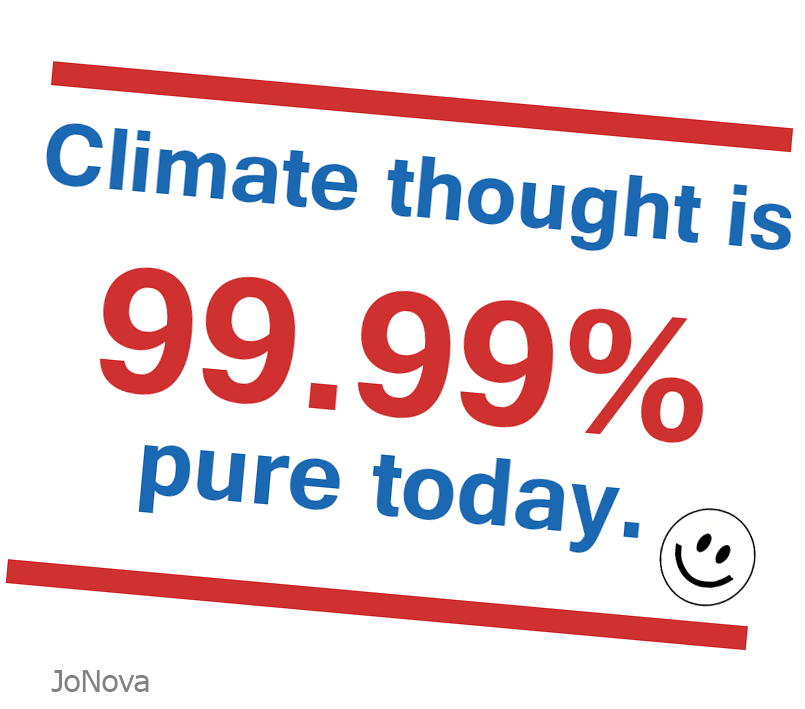 Australian universities are nothing if not hotbeds of GroupThink. Australian universities are nothing if not hotbeds of GroupThink.
What can we do to protect ourselves, they ask, and the answer is to chant the permitted litany. In an immature science it’s absurd that 999 climate scientists out of 1,000 say the exact same thing, but this is their garlic to ward off the vampires:
Researchers have found one reliable solution – come back to the scientific consensus. For decades, scientists have researched the question of whether our activities are the main cause of rising global temperatures. Many different lines of evidence from rates of ice melt to sea temperatures to satellite measurements have now answered this conclusively. The scientific consensus is now 99.9% certain, a figure which has only grown over time. Drawing on this consensus may work to protect us from accepting sceptic arguments by reminding us of the very large areas of agreement.
They write as though they are children afraid of catching of catching typhoid: “Drawing on the consensus may work to protect us from accepting skeptic arguments”. Lord help us all, in case we find a skeptic persuasive!
It’s so pathetically intellectually feeble. And indeed, their conspiratorial minds are unleashed, they see “actors” with “an agenda” and never for a moment guess that they are the actors and their agenda is to protect the establishment that pays them:
There’s a systemic problem here. Never before in history have we been able to access so much information. But our information environments are not benign. Actors with an agenda are at work in many areas of public life, trying to shape what we do or do not do. We need to learn more about how we can battle the power of lies on repeat.
These poor psychologists are so badly trained in the philosophy and methods of science, they have no idea that open public debate is an essential part of science. If the man-made catastrophe was overwhelmingly true, it would survive public open debate. There wouldn’t be a gap where 50% of the population disagree with 99.9% of the experts. Nor would the experts struggle to convince half the meteorologists and two thirds of engineers and geologists.
They only need to worry about maintaining belief in climate change because it is a manufactured falsity which billions of dollars depends on.
As I’ve said for years: there’s a reason we don’t ask scientists if they believe in gravity.
Other Polls
REFERENCE
Jiang Y, Schwarz N, Reynolds KJ, Newman EJ (2024) Repetition increases belief in climate-skeptical claims, even for climate science endorsers. PLoS ONE 19(8): e0307294. https://doi.org/10.1371/journal.pone.0307294
Experiment 1: N = 47 (Judging by the dated questions this was done about ten years ago).
Experiment 2: N= 120 participants (including 5 uncategorized). 36 participants were Alarmed (31%), 35 Concerned (29.2%), 27 Cautious (22.5%), 0 Disengaged (0%), 8 Dismissive (7%), and 14 Doubtful (11.7%).
Photo: Cory Doctorow
10 out of 10 based on 91 ratings
10 out of 10 based on 12 ratings
 By Jo Nova By Jo Nova
UPDATED: The Bureau of Met has issued another Aurora Watch for today (Tuesday 13th). Interested readers can sign up to get these emails, which give a few hours warning of promising conditions.
A major substorm is in progress. People are reporting auroras on the Glendale App across southern Australia and NZ. Because we are in the maximal part of solar cycle 25, with the peak (so far) in sun spots recorded a few days ago, conditions are ripe for auroras, but they are alas, fleeting things. Next burst of activity likely at 9:40pm EST and 7:40pm WST. [Reports live from Mandurah, Flinders Island, Adelaide hills….]
The image from Nullschool is loosely indicative (and usually underestimates the odds).
10 out of 10 based on 26 ratings
8.4 out of 10 based on 30 ratings
8.9 out of 10 based on 24 ratings

By Jo Nova
So you hit “Reply All” and ten years later the heatwaves begin. You know it makes sense — the global cloud is full of cat videos, and storing the code that made Socks sing Bohemian Catsody in a million emails requires another data centre. And as the old copies accumulate the “dark data” that no one looks at piles up. And those servers need electricity.
If only we had cheap reliable, renewable energy sources that worked 24 hours a day, we wouldn’t have to worry, would we? But data centers that only work when the wind blows are not much use to anyone (except maybe Hillary and Hunter). But the awful truth is that the more data we store the more CO2 we produce. Thus in the cult of climate change, the O-so-human quest to connect needs to be suppressed so we can cool the world by a thousandth of a degree in 2143.
Anyone who liked humans would just say “build a nuclear plant”. (Anyone who liked plants would say “build a coal one”). That would solve it. But here we are in the modern era and professors are effectively telling us that our emails are killing koalas.
Most data stored on power-hungry servers is used once then never looked at again
By Helena Horton, The Guardian
… research has now found that the vast majority of data stored in the cloud is “dark data”, meaning it is used once then never visited again. That means that all the memes and jokes and films that we love to share with friends and family – from “All your base are belong to us”, through Ryan Gosling saying “Hey Girl”, to Tim Walz with a piglet – are out there somewhere, sitting in a datacentre, using up energy. By 2030, the National Grid anticipates that datacentres will account for just under 6% of the UK’s total electricity consumption, so tackling junk data is an important part of tackling the climate crisis.
Ian Hodgkinson, a professor of strategy at Loughborough University has been studying the climate impact of dark data and how it can be reduced. He discovered that 68% of data used by companies is never used again, and estimates that personal data tells the same story.
Hodgkinson said: “If we think about individuals and society more broadly, what we found is that many still assume that data is carbon neutral, but every piece of data whether it be an image, whether it be an Instagram post, whatever it is, there’s a carbon footprint attached to it.
Send less emails, and save the world!
One thing people can do to stop the data juggernaut, he said, is to send fewer pointless emails: “One [figure] that often does the rounds is that for every standard email, that equates to about 4g of carbon.
Think of all the days you wake up saying to yourself, I’d like to send 100 pointless emails. Well, those days are over.
Imagine how much better our quality of life will be if we have a struggle session and self-assess every SMS, every message, wondering if we deserve to share a funny story when it might inundate the nursing home in fifty years? The Green philosophy is so uplifting.
Good luck to any EcoWorrier who has to convince their teenage daughter not to share memes to save the planet. What are they going to do, drive their offspring in a car to visit their friends instead? Lordy, think, of the carbon penance! Not that it would be a bad thing if we spent more time visiting real people instead of “sharing” with electric gadgets, but that’s the thing about the carbon religion, it’s not giving us more freedom to do anything at all.
Soon the social credit score will tell you how many messages you can send and how many photos you can store.
First they came for the cars, and then they came for the emails. It only ends when we make them stop.
9.9 out of 10 based on 105 ratings
9 out of 10 based on 14 ratings
By Jo Nova
The Experts thought Greenland’s ice has been there for the whole Pleistoscene era, or the last 2.6 million years. It was just another useless consensus, stultifying science — feeding the myth that the climate was perfect until Big Coal screwed it up.
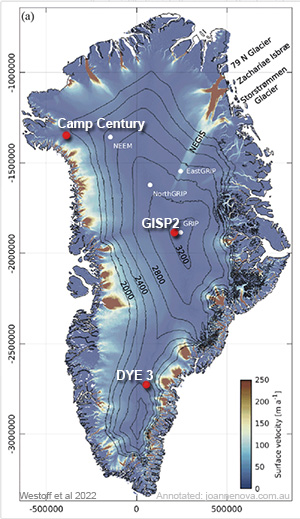
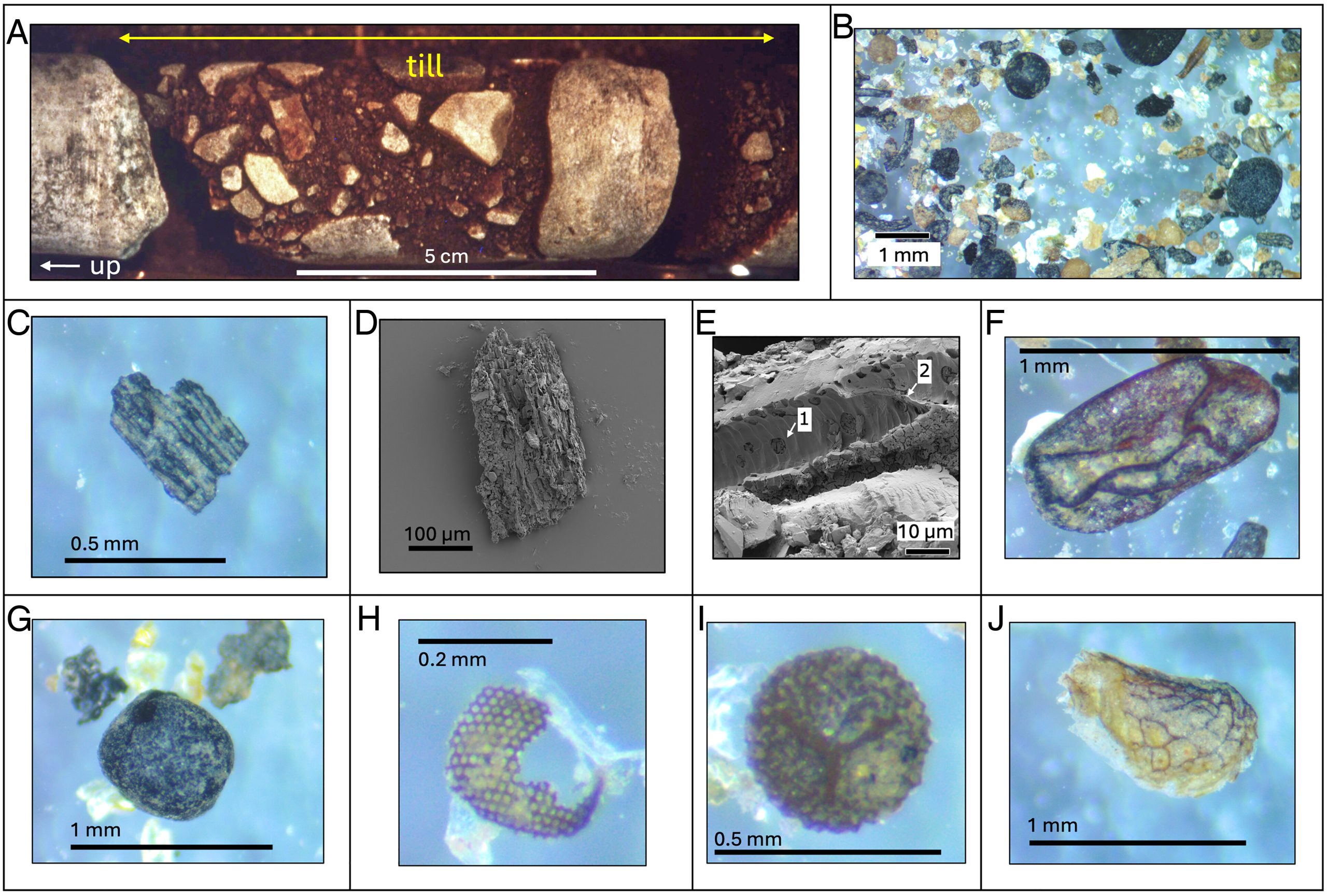
Finally, 30 years after the famous GISP ice core was hauled out of the Greenland summit, someone has bothered to study the dirt at the bottom and found poppy seeds, willow twigs and insects there, where they were not supposed to be. They discovered a vibrant tundra ecosystem where there was supposed to be an ice-cap. The obvious conclusion is that cavemen didn’t cause it, and that there must be some huge other natural forces at work that we have no clue about. Our climate models didn’t predict this, because CO2 was low then and clearly, the models are hopelessly incomplete. We are babes in the wood on the third rock from the sun.
The captive science PR writers don’t tell us that CO2 might be irrelevant compared to the big mystery forces we don’t understand. Instead they tell us that this means that the Greenland icesheet is more fragile than we realized and could melt again (send us your money!)
No matter what we discover it’s always worse than we thought:
Scientists have discovered plant and insect remains under a two-mile-deep (three km) ice core extracted from the center of the island, providing the clearest proof yet that nearly all of this vast territory was green within the past million years, when atmospheric carbon levels were much lower than today.
Their research, published Monday in the Proceedings of the National Academy of Sciences, indicates even greater potential for global sea level rise due to human-caused climate than previously thought.
The stranglehold of government-funded-science meant it took 30 years to do half an hour of research:
The ice core, named GISP2, was drilled in 1993 and although its rock and ice had been studied extensively, nobody had thought to look for fossils in the ’till,’ or the mixed sediment at the bottom.
That’s because until recently the idea that Greenland was ice-free in the recent geologic past seemed too far-fetched.
“Literally, we saw the fossils within the first hour, maybe half hour, of working on it,” lead author Paul Bierman, a professor of environmental science at the University of Vermont, told AFP.
To their amazement, researchers found within this three-inch-layer soil willow wood, spores from spikemoss, fungi, the compound eye of an insect, and a poppy seed – together suggesting a vibrant tundra ecosystem.
The GISP2 site is about as high and central as you can get in Greenland. If the ice was gone there, it was probably gone everywhere. But the same experts who want us to spend $1,000 billion dollars every year, thought that Greenland was an impenetrable ice-fortress.
In 2016 some scientists figured out the bedrock under the GISP core was only 1.1 million years old, which was considered “controversial” since the ice was supposed to have been solid for 2.6 million years. In 2019 Bierman et al were shocked to find that Camp Century (in the far north) had melted totally around 416,000 years ago. (That frozen soil was first dug up in the 1960s, so it sat in a Danish freezer for fifty years.) Another ice core at DYE 3 contained the DNA of spruce trees. Obviously Greenland melts, we just don’t know why, when or how often. The researchers best guess is that the ice melted at the summit probably more than 250,000 years ago and probably less than 1.1 million. Maybe it was 416,000 years ago too.
If the whole ice cap melted, the world’s oceans presumably rose the 7 odd meters they are theoretically supposed to rise. There is no denying that this would be seriously inconvenient today, especially for coastal real estate, but it’s also true to say corals reefs didn’t vanish, there was no mass extinction or runaway Greenhouse apocalypse either. The Earth didn’t turn into Venus.
The important message here should be that natural climate change could smack us over the head, but we don’t understand the big forces at all. If Greenland’s ice-cap melts again, we need a few decades to prepare. So we need climate models that can actually predict things, not ones that suit politicians and strangle real research for decades.
If Greenland melted 416,000 years ago, why didn’t it melt during the other three warm spikes below? (Graph from the EPICA ice core in Antarctica).
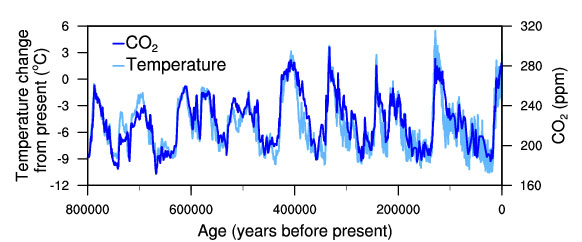 Epica ice core Antarctica. NOAA Photos of the spores, wood and insect eyes that are not supposed to live at the summit of Greenland during an ice age period.
 GISP2 till and macrofossils found in it: (A) Photo of the angular-clast-rich till section of the GISP2 subglacial core, taken 1994, up core to left (Credit: T. Gow, supplied by D. Meese). (B) Overview of sediment, mostly quartz and fossils. (C) Wood fragment. (D) Vertical orientation typical of GISP2 wood. (E) Wood at higher magnification showing simple pits in lateral vessel wall (1) and distinct simple perforation plate (2), along with the helical thickening typical of GISP2 wood. (F) Bud scale of Salix (willow). (G) Sclerotium of the soil fungus C. geophilum* (H) Insect eye, possibly from a fly*. (I) S. rupestris megaspore. (J) Seed of Papaver sect. Scapiflora. The asterisk shows macrofossil types also found in Camp Century sediment by ref. 5. Wood fragment images are same specimen. REFERENCE
Bierman, et al (2024) Plant, insect, and fungi fossils under the center of Greenland’s ice sheet are evidence of ice-free times, PNAS, August 5, 2024, 121 (33) e2407465121, https://doi.org/10.1073/pnas.2407465121
Christ et al (2021) A multimillion-year-old record of Greenland vegetation and glacial history preserved in sediment beneath 1.4 km of ice at Camp Century, PNAS, March 15, 2021, 118 (13) e2021442118, https://doi.org/10.1073/pnas.202144211
10 out of 10 based on 110 ratings
|
JoNova A science presenter, writer, speaker & former TV host; author of The Skeptic's Handbook (over 200,000 copies distributed & available in 15 languages).

Jo appreciates your support to help her keep doing what she does. This blog is funded by donations. Thanks!


 Follow Jo's Tweets
 To report "lost" comments or defamatory and offensive remarks, email the moderators at: support.jonova AT proton.me
Statistics
The nerds have the numbers on precious metals investments on the ASX
|






Recent Comments