Recent Posts
-
What if Global Warming was just because something made the clouds go away…
-
Wednesday
-
Snowy 2.0 is the Trillion dollar Black Hole of Australia — sucking in energy, money, land, industrial relations, the dollar, our lifestyle
-
Tuesday
-
Monday
-
Winter Solstice
-
Saturday
-
We were throwing-renewable-energy away at record levels in 2025
-
Friday
-
Pauline Hanson, the centrist, just wants a free market in electricity, and an end to the renewable energy bribery
-
Thursday
-
Blame the Climate Yeti again for making your life more expensive! (It’s a smokescreen)
-
Wednesday
-
The Sunrise Project funneled $343 million from overseas to push net zero
-
Tuesday
-
Monday
-
Sunday
-
The US government has been secretly funding 120 dangerous biolabs around the world
-
Saturday
-
New report shows renewables are a drag on our national productivity
-
Friday
-
Thursday
-
Well, how convenient. AI data centers have arrived to be the fall guy for the Energy Minister
-
Wednesday
-
Billionaires are leaving the room with excuses — Bezos says “AI will solve climate crisis”
-
Tuesday
-
Monday
-
Sunday
-
The Craziest eco laws against Farmers. Let’s check that science…
-
Saturday
-
China cooks the carbon accounting books by 400 million tons
-
Friday
-
The Wind Power Puzzle (add more wind turbines and get the same output)
-
Thursday
-
To save the world, Cement Australia stops burning coal and burns trees instead
-
Wednesday
-
On Fire! US hunger for gas power so large, wait time for turbines blows out to 5+ years
-
Tuesday
-
Monday
-
Sunday
-
Saturday
-
Perth event Saturday May 30th: Green Greed and the Grid
-
Catastrophic warming already happened in Antarctica 130,000 years ago
-
Friday
-
Suddenly the Paris Agreement grows teeth
-
Thursday
-
Australian renewable investments evaporate in 2025: reaching a ten year low
-
Wednesday
-
The Bubble Pops: Big Miner BHP quietly backs away from decarbonization
-
Tuesday
-
Monday
-
Sunday
|
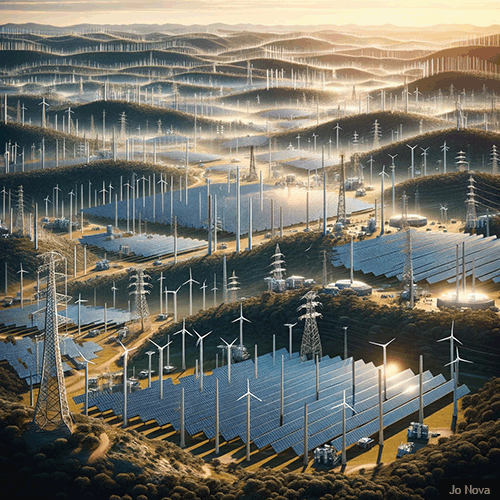
By Jo Nova
The Transmission line cost bomb just went off and it changes everything
This is big. So big the AEMO just announced transmission line costs are up as much as 55%, and they are going to re-visit projects they previously said needed to proceed (which is the nice way of saying they will have to axe some or many of them). What no one is spelling out, is that if the transmission lines can’t be built, they also can’t build the vast solar and wind “farms” that the Labor government was depending on. Suddenly a lot of renewable projects are orphans.
Australia is supposed to build 10,000 kilometers of high voltage transmission lines by 2050. But last week, the AEMO admitted in their Draft 2025 Electricity Network Options Report that these interconnectors would cost between 25 to 55% more than expected, which makes them essentially unaffordable.
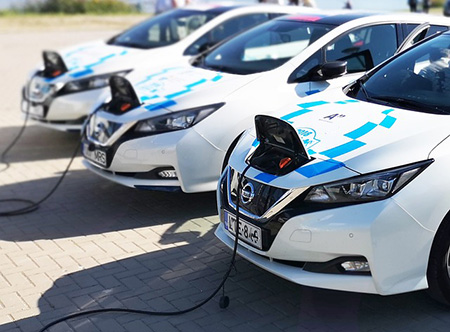
Plan B is where they pretend cars, home solar and batteries can save the “Transition”
The old plan of massive wind and solar factories spread across the continent is quietly mutating into a DIY version where the government hopes homeowners will rescue the Net Zero transition by buying the batteries the government and the wind and solar factories can’t afford. What did I say a year ago: “They want you in an EV so they can use your battery to rescue the unreliable grid they built“.
The code word for this is CER or Consumer Energy Resources.
The big question is whether the government can trick enough people into handing over the cash to buy an EV, or a home battery that even with a $4,000 subsidy will barely break even in a best case scenario. What happens when the punters realize the battery they bought to reduce their own costs is being drained by our electricity management at peak hour to keep the grid from crashing?
What happens when the poor realize they are paying more for electricity so rich people can have solar panels and batteries and (slightly) cheaper electricity? Hell to pay.
Now they talk about “social licence”?
The AEMO and renewables fans are also admit the farmers didn’t like them, so the routes had to be redrawn on longer, more difficult paths, and the payments for the pain and inconvenience turned out to be much larger than the inner city latte set expected. Thus and verily, the timelines have also blown out.
The farmer’s pain is referred to as a “social licence” consideration. The farmers, though, don’t mince words:
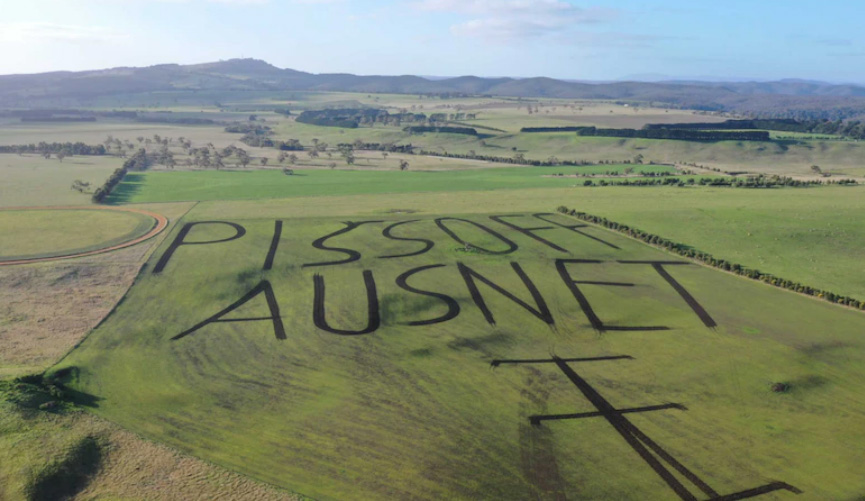 Western Victorian Farmer Would the AEMO care so much about social license if they could have forced the lines through? What they are really afraid of is burning off the whole damn country when families everywhere realize they had to pay for $20 thousand million dollars of high voltage lines so renewables factories could make a profit from the subsidies the families also had to pay for too. Professional leaches at 440,000 volts.
There is karma here. Renewables need high voltage lines, but high voltage line installers need cheap reliable energy. Once upon a time, when we had lots of cheap coal power, we might have been able to afford to make the transmission towers that industrial renewables need. But now that the same people who want renewables have banned gas exploration, and destroyed cheap electricity, they can’t possibly afford to build more transmission lines.
Suddenly the AEMO realizes that transmission line costs will hurt consumers. Now they tell us?
They should have seen this coming years ago:
By Perry Williams, The Australian
A massive surge in costs to build $20bn worth of electricity transmission would trigger a hit in household power bills, the Australian Energy Market Operator says, amid skill shortages and a battle to win over communities and farmers to the green energy switch.
The cost of overhead transmission line projects has ballooned by up to 55 per cent, with substations rising as much as 35 per cent compared with equivalent estimates provided for AEMO’s 2024 electricity plan.
This is big. So big the AEMO is going to reconsider projects it previously said needed to proceed.
“AEMO recognises that increases in costs for electricity transmission network development would impact bills for electricity consumers,” the operator said. “The 2026 ISP will revisit transmission network projects previously identified as needing to proceed … seeking to ensure that overall costs for consumers are optimised.”
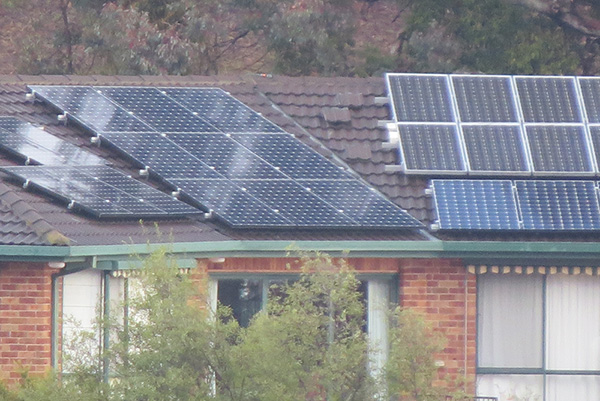
Hence the “Plan B” is to get the consumer to foot the bill:
One area where AEMO may be able to cut back on costs is by leaning more heavily on household sources such as rooftop solar, electric vehicle to grid supplies and batteries which received a recent subsidy boost. Taxpayers will contribute $4000 for an average household battery installation under a $2.3bn election commitment by the Prime Minister, with Labor promising the policy will push electricity prices down for “everyone”.
As Graham Lloyd points out, the power utilities are all warning that shifting the burden to householders is not going to work:
By Graham Lloyd, The Australian
In April, Transgrid said assumptions that Virtual Power Plants will experience the same level of availability and flexibility to respond to market conditions as an equivalently sized utility-scale battery energy storage system are not reasonable.
Households were unlikely to accept that their assets may be accessed frequently and run very hard because household solar and batteries are primarily investments intended to provide utility and value to consumers rather than the market, Transgrid said.
In March, Queensland power utilities Ergon Energy and Energex gave a similar warning.
“We are cautious of the approach to model customer behaviour based on economically rational models, as we consider most CER investments do not conform to these modelling outcomes,” the utilities said.
“For example, based on our anecdotal experience, AEMO’s assumptions regarding the level of battery energy storage systems uptake supported by Virtual Power Plants may be overstated.”
We know this is the new desperate rescue plan for the doomed transition because even the industry lobby site, Reneweconomy, is working so hard to sell it as “handing power to the people”
Giles Parkinson puts on a brave face, pretending that this is “sailing with the wind” and has been “brewing for a while” (as if it’s not a surprise) but this is a big backflip by the AEMO and it’s not remotely good for all those wind and solar projects.
Even he admits this is a fundamental rethink.
Giles Parkinson, Reneweconomy
One thing that seems certain, however, is that the manner of getting there, and closer to 100 per cent renewables over the following decade, is about to get a fundamental rethink, and it could end up delivering the most significant change to the country’s renewable energy blueprint yet.
The document flags a new focus on using existing local networks for more wind, solar and storage, and on leveraging consumer energy resources – the rooftop solar, household batteries and EVs that will be bought and installed by consumers themselves.
That’s a funny way to phrase it Giles? Killing the business…
It’s a significant move. In the absence of a carbon price, rooftop solar has been the most effective tool in killing the business case for Australia’s aging fleet of dirty fossil fuel generators. But it has created issues of its own, and will remain a wild card for the grid if it can’t be tamed by an army of small batteries.
And who pays for that army of small batteries Giles?
Wait, now you tell us that the best way to reduce costs is with “consumer energy resources”, and it’s supposed to be cheaper for everyone. Why didn’t you say so before…
And the growth of consumer energy resources is possibly the best way to ensure that prices do, as promised, actually fall in the transition from coal to green energy – both for those who own and install them, and those who don’t.
He blames the big bad capitalists — but never acknowledges that it was the stupid socialists who rewrote the market:
The evidence so far is that it hasn’t, mostly because the new assets – wind, solar and especially storage – are largely controlled by the same companies that own and control the coal and gas assets.
Indeed, the socialists make it possible for predatory capitalism to monopolize the market and then they act surprised when it does?
Even Giles Parkinson say it’s an appalling mess:
However the plan is framed, social licence remains absolutely critical. Despite the best efforts of some really good renewable energy developers, it’s been poorly handled.
The worst of it has come in the management of the transmission routes, but a combination of entitled development companies, bloody-minded opposition and some appalling planning regimes have created an appalling mess – highlighted by the latest backflip by the new Queensland state LNP government.
Blame the management indeed. Anything but admit it was always a stupid idea. The renewables fantasy was never going to work. It was a horrible plan to cover the country-side in expensive, intrusive, live infrastructure that ruined views, raised the risk of fires, and got in the way of farming and firefighting. And it was all done in the futile hope of changing the weather.
But rejoice, in part, at least, the protests by farmers and communities are working
The industry is so rattled, they even asked Reneweconomy not to publicize their projects lest the people notice what they want to do:
Little wonder some developers are wary of scrutiny. One even asked Renew Economy last week to stop reporting on projects put in front of the federal government’s EPBC process because of the risks of unwanted scrutiny.
Clearly, we need to watch the EPBC list. Can anyone help identify where these are officially listed? If they don’t want us to see, then I’d like to know…
Image by Nerijus jakimavičius from Pixabay
9.8 out of 10 based on 113 ratings
8.1 out of 10 based on 12 ratings
8.2 out of 10 based on 22 ratings
8 out of 10 based on 23 ratings
8.2 out of 10 based on 24 ratings

By Jo Nova
Major flooding has struck New South Wales with 50,000 people evacuated and three deaths. Even as one person is still missing, The Sydney Morning Herald and the Climate Council are already milking the disaster as a Witchdoctor Psy-Op for the Blob.
Our thoughts are with everyone in the major flood areas.
Shameless: The Climate Council is already exploiting floods in NSW as a climate scare
The Sydney Morning Herald reads the tea-leaves of climate seance

Caitlyn Fitzsimmons, The Sydney Morning Herald
Note the spooky tea-leaf reading in the second paragraph — pay attention to the psychological operation.
This dichotomy of drought and flooding rains is not new to Australia, but for it to occur simultaneously on opposite sides of the Great Dividing Range is a phenomenon that scientists say is likely to increase with climate change.
Firstly they say the obvious, lulling the reader into thinking they are sensible — then there’s the “but” — followed by a bizarrely trite, and largely unknowable tea-leaf pattern. It’s that “simultaneous rain on opposite sides of the mountains”, which turns out not to even be an actual observation of a cherry-picked 10-year-trend, but the vaporous emptiness of a “phenomenon” that someone predicts might happen. In other words, they have nothing at all, but they say it anyway in hushed significant tones, like tribal sorcerers have for thousands of years.
They all wheel out the line that climate change increases humidity — the same line they promptly forget the minute there is a drought or a fire:
“Climate change is increasing the amount of moisture the atmosphere can hold by about 7 percentage points of humidity for every degree of warming.”
If humidity doesn’t prevent a single drought how do we know it causes any floods? They never mention that.
Then, buried under 21 paragraphs of fortune-telling-sages winding up the audience, they find one semi-honest scientist who says it’s impossible to say it was climate change:
Dr Chiara Holgate in the ARC Centre of Excellence for Weather of the 21st Century at the Australian National University, said Australia had a highly variable climate, and without an attribution analysis, it was impossible to say that climate change was the cause of any particular drought or floods.
A very honest scientist would also mention that rampant flooding has happened many times before, like in the 1820s, in 1857, 1866, 1893, 1949 and 1955 and CO2 had nothing to do with any of them. And a half decent cub scout reporter would ask these obvious questions. Where are they? We should do up charity rescue package for SMH readers.
Indeed, the not-so-great journalist could have just googled, I’ve written this all up before. In 1857 floods were so bad one boat was washed out to sea and the people on board spent ten days trying to get back, surviving on biscuits. The beaches were piled high with furniture, goats, pigs, melons and “five years of wood”. Then the Manning River flooded again in 1866, this time rising so fast overnight people went to sleep not realizing they were in danger and the losses were terrible because they had no time to prepare. There are heart-wrenching stories.
From my post on the 2021 floods:
The more money we put into government funded science the more it looks like witchcraft
Does CO2 cause floods? It takes 3 minutes in the historic Trove archives to test this theory. In a surprise to climate models everywhere, getting CO2 back to 310ppm (even if it were possible) would return Australia to 1950, so we already know how this works out.
There were a spate of floods in Eastern Australia in the 1950’s and 1960s when La Ninas were more common and the world was cooling. For example, in 1949, 8 people were killed and 20,000 were left homeless in New South Wales by flooding. The Adelaide Chronicle June 23, 1949
 … In Maitland in 1955, 25 people died, 2,000 homes were inundated and 58 homes washed away. This was only three years after the previous floods when The Hume Highway at Camden was under 30 feet of water.
There were floods in New South Wales in 1857 even before coal fired power was invented
A quarter century before the first coal power plant was built anywhere in the world, devastating floods washed over New South Wales. There were three separate floods in 1857, “each worse than the one before”. The floods and storms were described as afflicting an area from far north of Taree down to Goulburn.

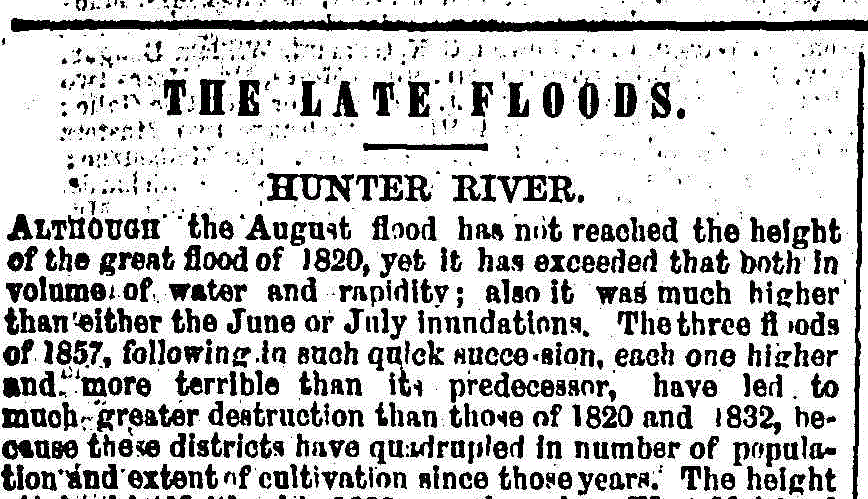 Hunter River Floods, 1857 “Five years of firewood” washed up:
What amount of property was destroyed by the flood it is impossible to ascertain. The piles of wood, which of themselves would supply the inhabitants of both East and West Maitland with firewood for the next five years, have buried in, without doubt, some hundreds of pounds’ worth of property. Many families are left entirely destitute of food and raiment. It is impossible to give an accurate description of this desolate scene.
On the Hawkesbury “Windsor was almost an island, there was no escape by dry land.” In Mudgee, the “consequences were most disastrous “. .. the rain fell in torrents… ” “Other floods occurred at Penrith, Camden, Gouldburn and Cassilis.”
Read the story of boats trapped for days, including one “small trusty craft” that was “driven off course by the violence of the tempest some thousand miles” and out of sight of land for ten days, while the people survived on biscuits. The beaches were covered to “an incredible height with the trophies of some devastating flood…” the debris included the sides and roofs of houses, furniture, cabbages, pumpkins, goats and pigs. Mail was stopped, and at least three boats were seen wrecked.
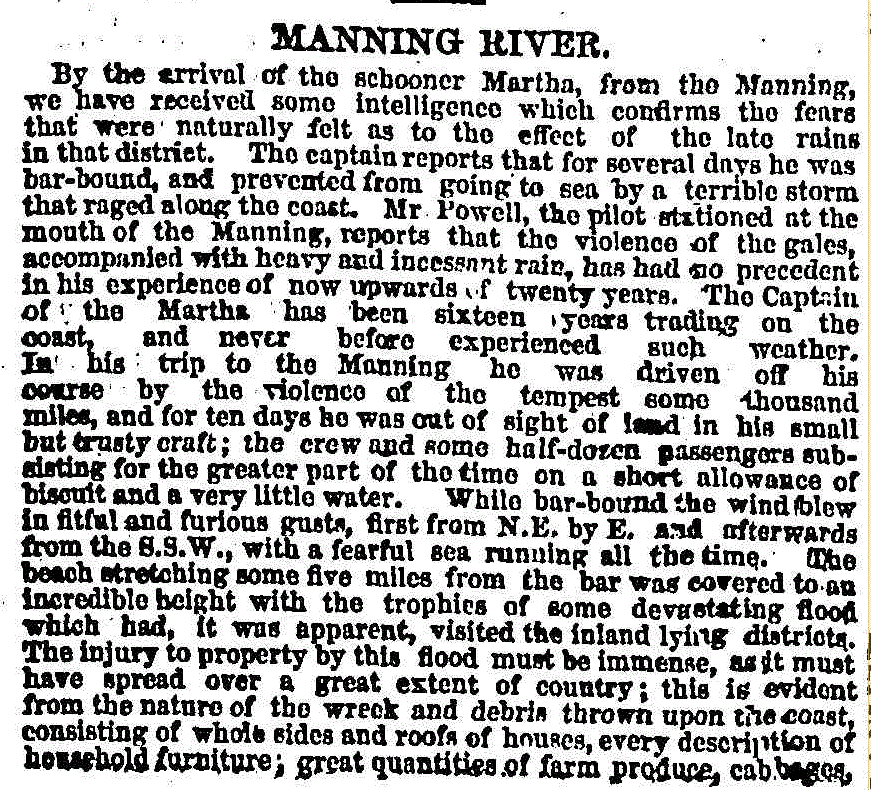 Part a Floods, NSW, September 10th, 1857, Manning River, Trove, NSW. Sydney Morning Herald| Click to enlarge.
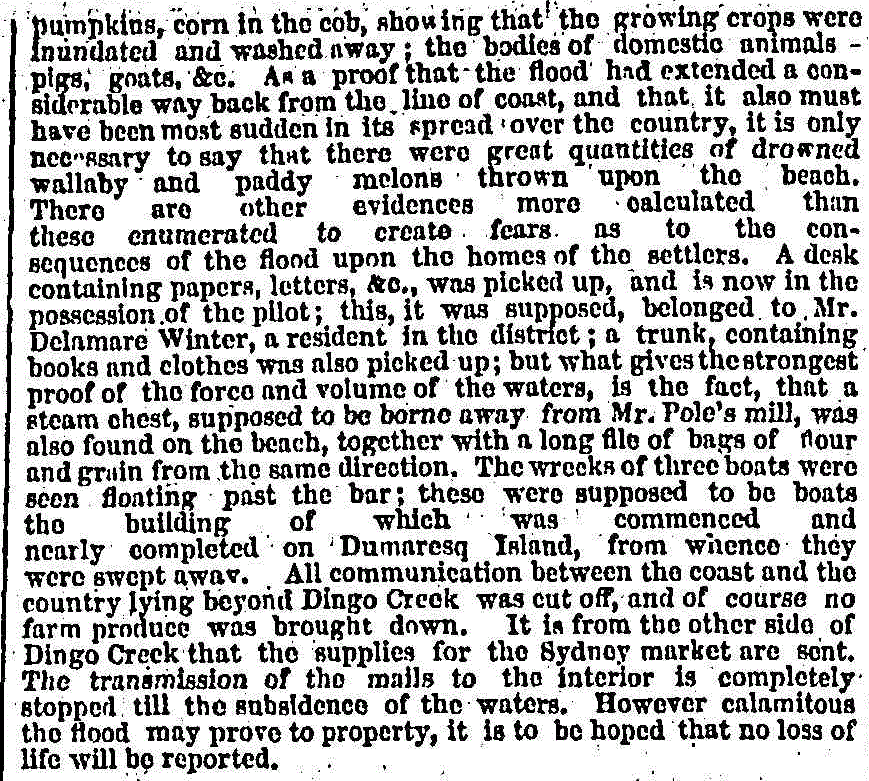 Part b. Floods, NSW, September 10th, 1857, Manning River, Trove, NSW. Sydney Morning Herald| Click to enlarge.
In 2025, as with 2021, among other things, cows are even being rescued from the surf on beaches, which probably makes them a lot luckier than the ones that got washed downriver in 1857.
Thoughts and best wishes for everyone caught in this awful natural disaster. We hope a generation of farmers hasn’t been wiped out.
Related:
Witchdoctor image by Julius H. from Pixabay
9.7 out of 10 based on 114 ratings
A very special note to Edward in Ohio, and Rusty somewhere in Australia.
I checked the post box for the first time in weeks. Smiling!
A nice surprise from both of you.
— Thank you!
9.2 out of 10 based on 32 ratings
By Jo Nova
If the UK had kept the old gas policy, skipped “renewables” — they’d be £220 billion better off
 Since there are 67 million Britons, that means every man, woman and child would be £3,283 richer today. For a family of four that’s £13,000 of savings spread over 20 years. Since there are 67 million Britons, that means every man, woman and child would be £3,283 richer today. For a family of four that’s £13,000 of savings spread over 20 years.
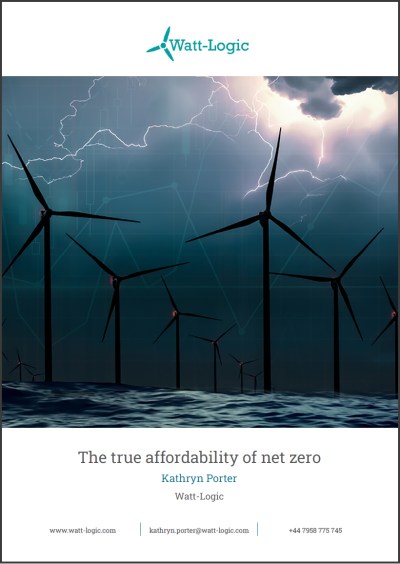
Kathryn Porter has painstakingly unpacked the bureaucratic polyglot to add up the ghastly bill, and published “The true affordability of net zero”
“..had Britain continued with its legacy gas-based power system in the period since 2006, consumers would have been almost £220 billion better off (2025 money) even taking into account the impact of the gas crisis.“
Even if the fuel is free, every other thing about collecting, storing and distributing “free energy” is very expensive.
Ed Milliband might blame fossil fuels for the train-wreck that is UK electricity — but the prices have been rising in the UK ever since vainglorious politicians first dreamt of fiddling with the weather. In the UK, even though wholesale prices remained the same largely, all the other costs of renewables snuck in to household prices to inflate them like the Hindenburg.
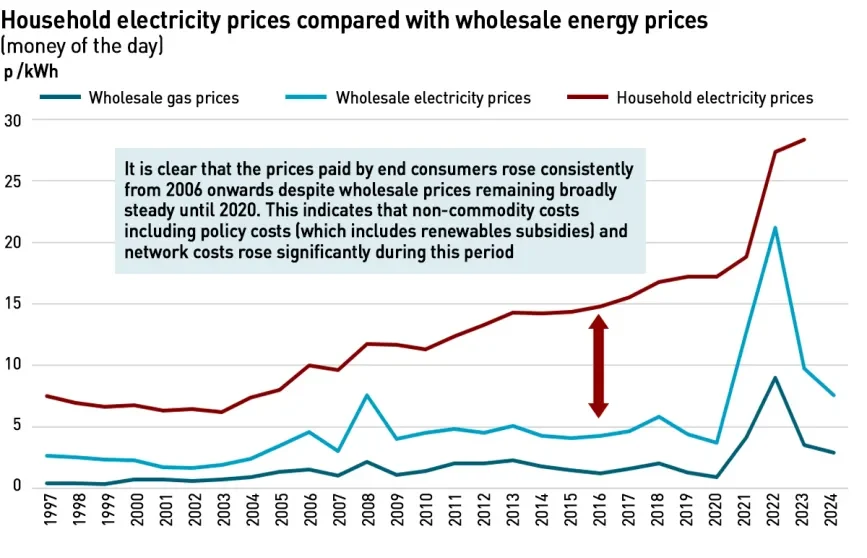
Renewables “profits” come from trickery, deceit and subsidy lies, and not from a free market in electricity
Firstly they lied that wind and solar would be cheaper, then they lied that the subsidies were temporary. Instead the subsidies are still growing 35 years after they started. Last year the total cost of UK levies was £17.2 billion. These renewable subsidies were buried under boring anesthetic labels like “contracts for difference”, “capacity market” or the “CRC Energy Efficiency Scheme”.
Look at the rainbow cluster of levies in the graph below, and their growth in the last decade. If wind and solar were actually cheaper, or even just competitive, environmental levies would be “zero”. If wind and solar were getting more effective, the subsidies would be falling, not rising.
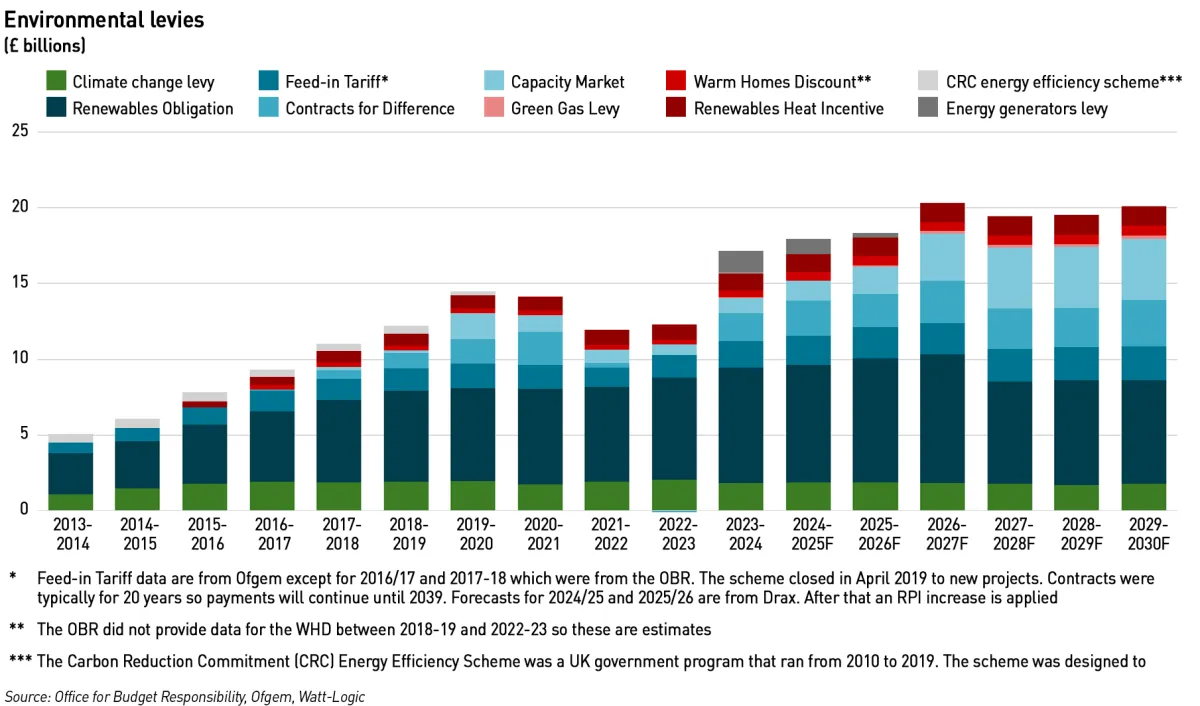
And if those levies had honest names they’d be called “Climate Changing Slush Fund”, or “Forced Renewable Support Fee”. The Contracts for Difference would be the “Guaranteed Profits for Windpower Levy”.
The Renewables Obligation levy could be the Banker Support Fund, or perhaps “Foreign Aid for China”.
By Johnathon Leake, The Telegraph:
According to analysis by consultant Kathryn Porter, green levies on energy bills will hit £20bn by the end of the decade. Staggeringly, this is up from £5bn in 2014, as the vast cost of Miliband’s radical clean energy ambitions rapidly adds up.
As part of Porter’s report into green levies, The True Affordability of Net Zero, she claims the renewables obligation scheme – which is responsible for supporting wind farm construction – is alone adding £7.8bn a year to power bills. That is despite it being closed to new entrants seven years ago. Its successor, the Contracts for Difference scheme (CfD), is adding another £2.3bn, she says.
Kathryn Porter points out that there are 10 levies that are added quietly to electricity bills, rather than being an honest tax. (It’s the same here in Australia).
“If this money was being raised through taxation, it would be scrutinised by the Treasury, the Office for Budget Responsibility, and by voters at general elections,” says Porter.
“But instead, Miliband is taking these subsidies from the pockets of consumers and giving them to renewable generators – without ever having had to win approval for the idea in an election.
These are forced payments from customers who get no choice, and which are hidden in their bills, disguised by lying labels in public announcements, and which are fed through electricity retailers to corporations.
Except for extremely rare circumstances, everything about renewable energy only profits because of State force, deception and trickery.
Read it all: Kathryn Porter: The true affordability of net zero
9.6 out of 10 based on 92 ratings
8.4 out of 10 based on 13 ratings
By Jo Nova
The winds of change are howling through electricity grids
Since 2022, AI -related firms have stormed the S&P 500 market — growing by $12 trillion dollars.
The IEA just posted a whole report dedicated to AI. The demand from data-centers is so large in some places it is already rivaling the kind of monster consumption we are used to seeing from aluminum smelters. There are six states in the United States where data centers already consume over 10% of the electricity supply. In Ireland, data centers swallow about 20% of the electricity.
Currently, a normal data center consumes the same amount of electricity as 100,000 houses. But the new gargantuan data centers under construction will consume 20 times as much — equivalent to adding 2 million homes to the grid.
Data centers of the world are not spread evenly. In Virginia, the largest conglomeration of industrial data, their demand for power pulls in a quarter of the state’s electricity.
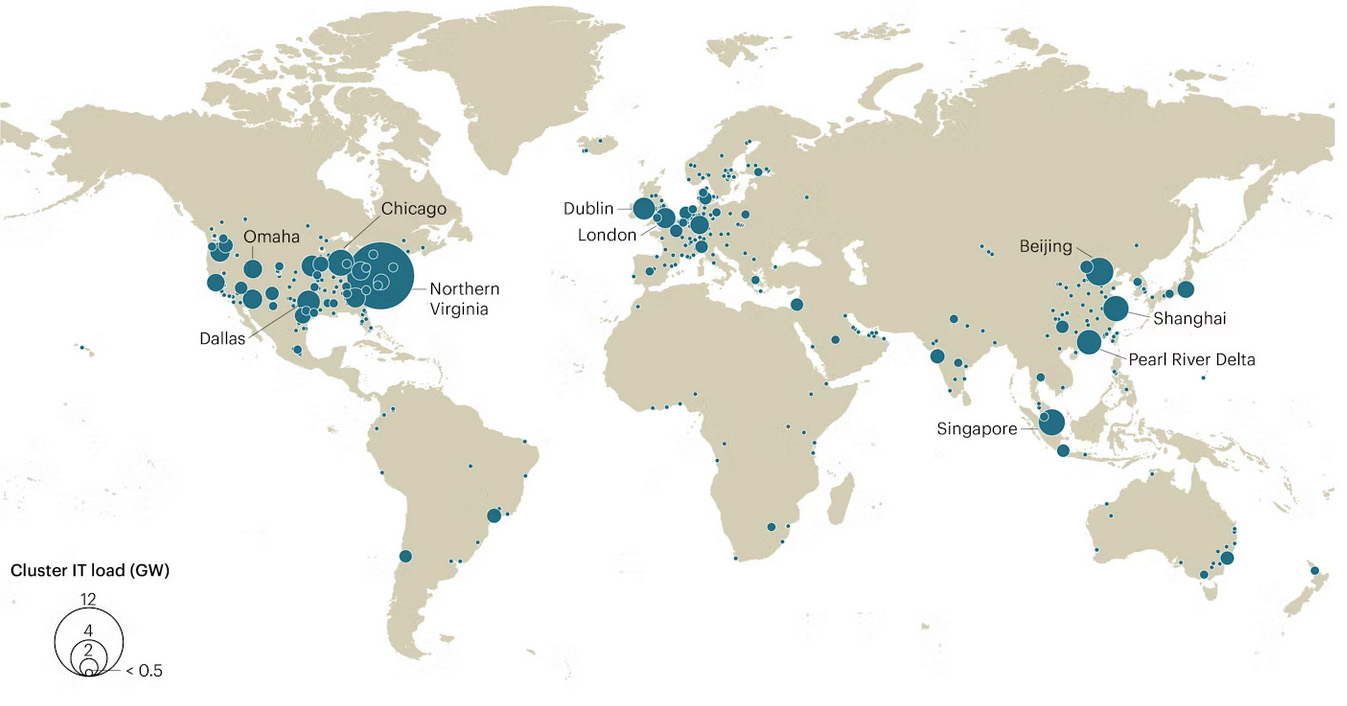
Australia is being left behind, because we won’t build coal plants in case we offend the UN, and we banned nuclear power as a fashion statement in 1998. The AI global race is on, but digital machines need reliable cheap electricity and lots of it.
Also not looking sparkling on the graph above — New Zealand, Norway, Sweden and Canada.
Sometime between now and 2030 (which is like ‘next week’) the world has to build a new network the size of Japan’s national grid — the fourth largest economy in the world.
Data centres accounted for around 1.5% of the world’s electricity consumption in 2024, or 415 terawatt-hours (TWh). The United States accounted for the largest share of global data centre electricity consumption in 2024 (45%), followed by China (25%) and Europe (15%). Globally, data centre electricity consumption has grown by around 12% per year since 2017, more than four times faster than the rate of total electricity consumption. AI-focused data centres can draw as much electricity as power-intensive factories such as aluminium smelters, but they are much more geographically concentrated. Nearly half of data centre capacity in the United States is in five regional clusters.
Data centre electricity consumption is set to more than double to around 945 TWh by 2030. This is slightly more than Japan’s total electricity consumption today.
There is no single factor driving up electricity demand more than AI at the moment:
In the United States, data centres account for nearly half of electricity demand growth between now and 2030. By the end of the decade, the country is set to consume more electricity for data centres than for the production of aluminium, steel, cement, chemicals and all other energy-intensive goods combined.
The IEA report, which was always a sop for “renewables” — suddenly isn’t that concerned about carbon emissions. This is an interesting shift. Almost like there is a sea-change in priorities of whoever it is that controls agencies like the IEA. Now it’s making excuses for industry…
“Concerns that AI could accelerate climate change appear overstated, as do expectations that AI alone will address the issue”
The widespread adoption of existing AI applications could lead to emissions reductions that are far larger than emissions from data centres – but also far smaller than what is needed to address climate change.
Just like private jets for billionaires, big new AI computers will save us from carbon emissions (sure)
AI will find cost savings all over the place, they say, but then again, if everyone has their own automated self-driving car, the plebs won’t need to catch the bus will they? Oh the dilemma…! Just look at the clutching excuses they come up with to justify monster energy increases.
AI applications in transport can improve efficiency and save costs, but they could also increase demand for personal mobility. AI applications are being used to manage traffic, optimise routes, predict maintenance needs and develop autonomous vehicles. The widespread adoption of AI applications across the transport sector could lead to energy savings equivalent to the energy used by 120 million cars. While autonomous vehicles operate more efficiently than conventional ones, they might also attract people away from public transport as costs fall and availability increases, leading to rebound effects.
In buildings, there is significant potential for AI-led optimisations to make heating and cooling systems more efficient and electricity use in buildings more flexible
Even the IEA admits we need affordable and reliable power
Countries with a record of reliable and affordable power will be best placed to unlock data centre growth, localise the computing power that is critical to homegrown AI development, and spur the IT industry more generally.
This graph with a microscopic gray font, compares how extensive those blackouts are around the world, with the First-World looking good (so far):
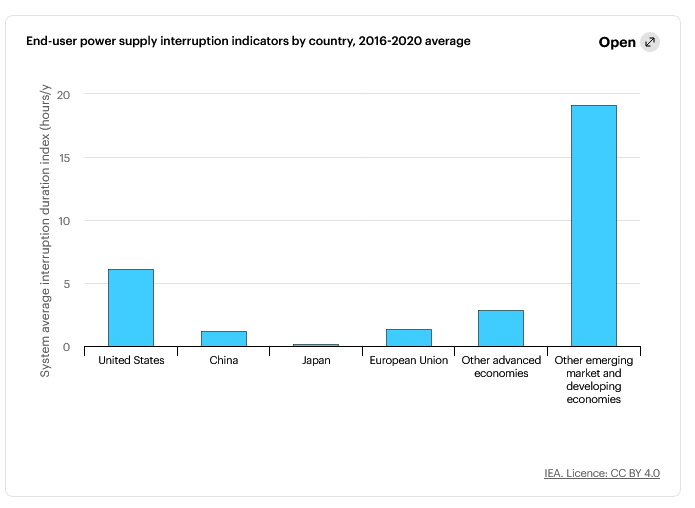
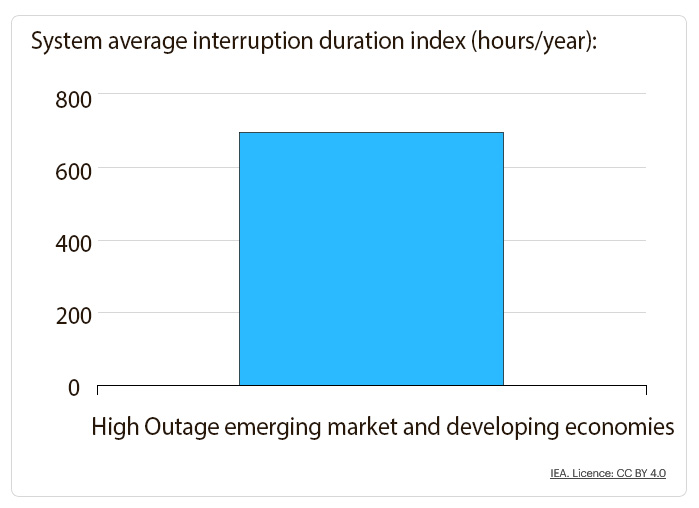
Beside that graph they have a very strange graph with microscopic fonts (which I expanded below) which has one solid square all by itself. This turns out to be the other emerging markets and developing economies they didn’t mention in the last graph.
The High Outage Country class of 2025 has more like 700 hours of average system interruption a year. It’s “off the charts” bad.
Tacitly, it suggests that the AI revolution won’t be moving to South Africa or Cuba.
Is there any industrial complex in the universe that works better on a part time random basis than it does on a predictable, reliable schedule?
History will show that countries with energy to spare will take over the world, and maybe the solar system.
REFERENCES
9.9 out of 10 based on 72 ratings
7.8 out of 10 based on 12 ratings

By Jo Nova
The cause of the mysterious oscillations and the big Iberian blackout is still a mystery, and it will take six months before the world has forgotten, sorry, I mean before the official report is finished.
In the meantime, baffled Spanish grid managers, who couldn’t possibly speculate on the cause, have cranked up the nuclear power and the gas, and reduced solar generation for no reason in particular. It’s all very odd, because gas is more expensive, and sun is free.
The Minister accidentally called this “Strengthened Mode” . (Didn’t they used to call it pollution?).
Lest we forget — in the hours before the crash, solar power was providing 60% of the energy, while nuclear power was covering 11%, and gas was just 3%.
By Oliver JJ Lane, Breitbart
Spain is running its national power grid in “strengthened mode”, using more nuclear and natural gas in place of the renewables it vaunted before last month’s historic blackout, but still hasn’t said what started the outage.
Bloomberg energy industry journalist Javier Blas, who is Spanish, further notes in a digest of Aagesen’s remarks that she also said — without elaboration — in her address to Parliament that the grid operator was now running the system in “strengthened mode”
The people deserve no hypotheses, says the Minister (covering her #$%)
[Minister for Ecological Transition and Energy Sara Aagesen] said: “The government is working with rigour and not making hypotheses, because that is what the Spanish people deserve. Rigour and truth”.
Per the latest data, in recent days, more reliable traditional generation is being used more, with nuclear responsible for between 14 and 23 percent, and natural gas-fired plants accounting for up to 25 percent at times.
It’s just bad luck, you know, that these mysterious oscillations hit Spain. And thus, they have to use CCGT gas turbines for a while, because they can “adjust more promptly to mysterious oscillations”. It’s just a quirk:
By Thomas Gualtieri, Bloomberg
Still, energy regulator CNMC head Cani Fernandez told lawmakers that the system is currently working with more expensive backup mechanisms that would adjust more promptly to unwanted oscillations. That’s a good description of CCGTs versus solar.
“It seems that Red Electrica wants to have tight control over the generation mix to stabilize it” said Javier Pamos, an analyst at Aurora Energy Research. “Combined-cycle plants are being included in it even though there are hours of the day when they wouldn’t be necessary as renewable production is enough to cover demand.”
The output of combined-cycle gas turbines, a more steady generation technology than solar, jumped 37% in the two weeks after the outage, compared with the two weeks prior, data from power grid operator Red Electrica show. Their average share of Spain’s power mix increased to 18% from about 12%.
On May 15th the Spanish Government claimed that there were mysterious oscillations right across the continent:
PV-Magazine
Two oscillations in the system variables detected at 12:03 pm were observed, lasting five minutes, during which strong fluctuations in voltage and frequency occurred.
The second, at 12:19 pm, lasted three minutes. This, according to Aagesen, “is more common within the European system, comes from the center-east, and oscillates with respect to the European synchronous system, which, in turn, oscillates with respect to Turkey. The system operator acted to dampen these oscillations.”
After these oscillations, demand was 25,184 MW at 12:30 pm, at which time there was 3 GW of pumping.

Portugal is now blaming France, saying that because France runs on nuclear power it’s been very slack about building interconnectors to Spain. The unhappy Iberians have said for years that Paris was “resisting” the flow of cheap (but unreliable) energy “to protect its own nuclear power plants and maintain its control over the European energy market.” (Which, of course, it was.)
France is 68% nuclear powered, and the last thing they’d want is surges of useless solar and wind power that the nuclear plants would have to dance around. Unreliable solar and wind generators don’t provide France with anything it doesn’t already have, but the surges would make French nuclear plants operate in a less efficient, more expensive mode.
The EU set a target of 10% electricity swaps between countries by 2020, but at the moment it’s only 3% between Spain and France.
Portugal Scapegoats France After Iberian Blackout
By Javier Villamor, European Conservative
France’s electricity grid operator (RTE) denies any obstruction.
Portugal’s Energy Minister, Maria da Graça Carvalho, has not hesitated to describe the lack of interconnections with France as a direct barrier to the European single market. According to Lisbon, systematic delays by the French government in expanding electricity infrastructure across the Pyrenees have contributed to the energy isolation of both Spain and Portugal, multiplying the impact of the recent system collapse.
Portugal has announced that it will take the case to the European Commission, requesting formal intervention against France for violating the principles of the EU’s internal energy market. The EU had set a target for member states to have electricity import capacity equal to 10% of national generation by 2020 and 15% by 2030. However, the connection between Spain and France barely exceeds 3%.
So the Spanish and Portuguese complaints are undoubtedly true — naughty France.
If only the Iberians had been selling something France actually wanted, it wouldn’t be so hard to make them build the interconnectors.
Image by Greg Montani from Pixabay. | Tunnel by Jo Nova
9.8 out of 10 based on 94 ratings
7.9 out of 10 based on 12 ratings
7.8 out of 10 based on 20 ratings
8.2 out of 10 based on 30 ratings

By Jo Nova
Nobody believes the Experts
Four thousand climate scientists have cried about climate change on TV. Weather maps are red-hot. And every fire, flood and dry weekend is caused by climate change, yet somehow, half the country doesn’t want to pay a cent to stop these catastrophes and most of the other half just want to pay one or two dollars a week, which is practically nothing — not even a coffee. It’s so low it might be “go-away” money — as in, they hope the pollster will go away and stop asking more questions about climate change. None of these people take carbon emissions seriously and this is 90% of the country.
The IPA asked 1,027 Australians how much they would personally be willing to pay for the nation to reach Net zero by 2050, and half of them said, nothing. Another quarter said “$50 a year” which is one pitiful dollar a week. Most of the rest said “$2” a week, which leaves barely 7% of people ticking the boxes $500 or more per year, which everyone is already paying and has been paying for years. They just don’t know it, because the cost was hidden in their electricity bills.
Could there be any more skeptical position than “zero dollars”?
I guess the pollsters could start asking how much money people would need to be paid to believe in “Net Zero”, but that wasn’t an option. So we are left to interpret the “zero money” for Net Zero as people who don’t think the world is warming, or people who like warming and think the UN is a basket of nematodes.
Whichever way we look at it, it’s clear, none of the 48% who said “nothing” believe what the CSIRO, NOAA, NASA and the Bureau of Meteorology are selling. These are the die-hard skeptics. Since we live in a democracy I have to ask — which side of politics speaks for them? (Looking at you Liberals and Nationals). And which journalists at the ABC ask the questions this half of the country are thinking? Obviously, not a single one.
The few small sane political parties that do speak for half the population (or more) are treated like anti-matter, so most voters have no idea who they are.
And lets not forget the 45% who said they’d spend a tiny one or two dollars a week. Clearly, they have no idea the government is helping themselves to so much more. If conservatives could suck up the courage to explain what the costs are, and how pointless they are, 93% of the votes are there for the taking. Most of the country are skeptics, men and women, young and old.
After 30 years of climate agitprop (or perhaps because of it) it’s a rather devastating testament to the loss of whatever prestige university professors used to have.
And worse, it’s a bit of a cluster bomb on the idea of democracy. The Blob has been siphoning off this money for years, and 93% don’t want to spend it, and yet the money keeps flowing.
IPA Poll: Attitudes towards Net Zero, Daniel Wild, May 15th, 2025
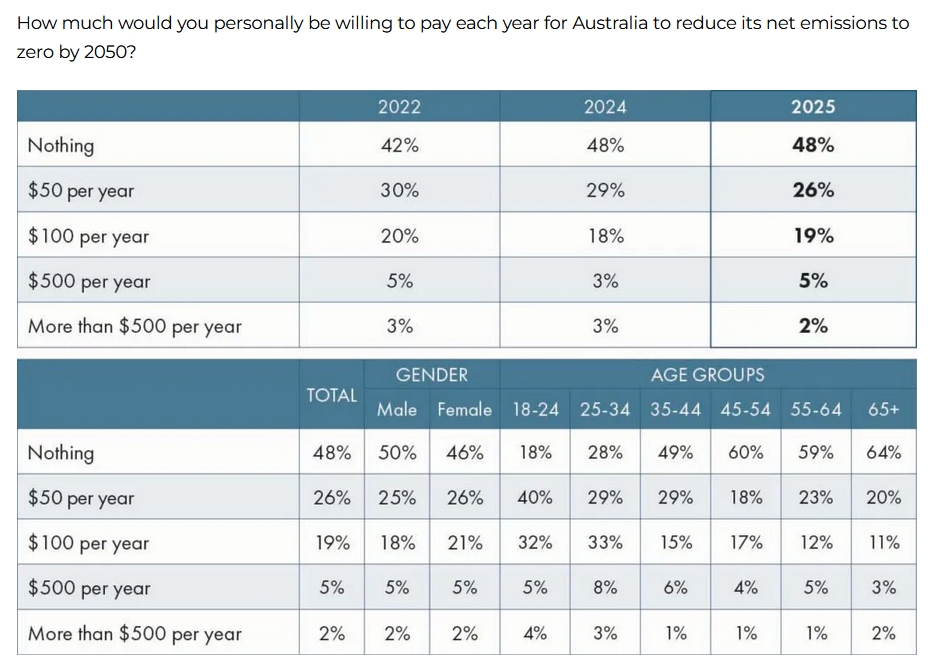
Image by taiga_valley_media from Pixabay
9.7 out of 10 based on 119 ratings
7.5 out of 10 based on 12 ratings
By Jo Nova
Nice grid you have there, shame if someone suddenly… switched it off
Two insiders at the US Dept of Energy say they have found covert devices inside solar panel inverters and batteries that would allow them to communicate with China. Even though firewalls have been put in place, these backdoor devices could operate around them.
Last August a Dutch white hat hacker got into 4 million panels in 150 countries in an effort to warn the West that major infrastructure was vulnerable. A month later an Australian cyber expert warned that a foreign hacker could turn our home batteries into “pager-bombs” too. If a hostile power turned off the overcharge protection on a sunny day, millions of solar panels would be pumping excess electricity into batteries that have no safety cut off. A few houses start to go off like popcorn, and an hour later we’re all living at the Western Front. How exactly would our firemen cope if 1 in 100 homes caught fire at the same time, and then we had a blackout? Anyone?
Individual solar panel inverters are generally too small to trigger national security assessments, but right now at lunchtime solar power is the largest single source of electricity in Australia — making 13 gigawatts out of 27. That’s half our national supply. In summer it’s worse.
We’ve turned our duck curve into a sitting duck…

It’s a win every which way for China if we install more solar panels. Not only are we paying them for the panels, and sanctifying their slavery, but we set fire to our electricity prices, driving our factories to China where they burn our coal. Now to ice this Gridkill Gateau we hand them a backdoor for sabotage or extortion should they ever get the urge to use it.
No wonder China is funding climate activists in the US and UK. They’d be crazy if they weren’t doing it here too.
This is Fall of Rome type stuff, and we’ve got Chris ‘Blackout’ Bowen to save us…
The only good thing about this is that while we were destroying our industrial base with solar panels anyway, the hidden transmitters are so overtly hostile, so in-your-face nasty, that sleeping Westerners might even wake up. Holy smoke. Does anyone think those secret radios were put there to help us?
LONDON, May 14 (Reuters) – U.S. energy officials are reassessing the risk posed by Chinese-made devices that play a critical role in renewable energy infrastructure after unexplained communication equipment was found inside some of them, two people familiar with the matter said.
However, rogue communication devices not listed in product documents have been found in some Chinese solar power inverters by U.S experts who strip down equipment hooked up to grids to check for security issues, the two people said. Over the past nine months, undocumented communication devices, including cellular radios, have also been found in some batteries from multiple Chinese suppliers, one of them said.
The rogue components provide additional, undocumented communication channels that could allow firewalls to be circumvented remotely, with potentially catastrophic consequences, the two people said.
“We know that China believes there is value in placing at least some elements of our core infrastructure at risk of destruction or disruption,” said Mike Rogers, a former director of the U.S. National Security Agency. “I think that the Chinese are, in part, hoping that the widespread use of inverters limits the options that the West has to deal with the security issue.”
In November, solar power inverters in the U.S. and elsewhere were disabled from China, highlighting the risk of foreign influence over local electricity supplies and causing concern among government officials, three people familiar with the matter said.
Reuters was unable to determine how many inverters were switched off, or the extent of disruption to grids. The DOE declined to comment on the incident.
The Communist Party could have said that they would never sanction such a hostile act, and it must be a company acting alone, but they didn’t:
A spokesperson for the Chinese embassy in Washington said: “We oppose the generalisation of the concept of national security, distorting and smearing China’s infrastructure achievements.”
Infrastructure achievements indeed. A Freudian slip?
There is plenty of risk to share around:
The European Solar Manufacturing Council estimates over 200 GW of European solar power capacity is linked to inverters made in China – equivalent to more than 200 nuclear power plants. At the end of last year, there was 338 GW of installed solar power in Europe, according to industry association SolarPower Europe.
Though Europe is saved, somewhat, by having lots of interconnectors and not much sun. That is, apart from Portugal, Spain and Greece, and we still don’t know what caused that blackout that started in the solar farms?
In Australian Senator James Paterson was warning this was possible in August 2023, saying 58% of solar panel inverters in Australia were made by companies headquartered in China. And what have we done? We installed another half a million solar PV units on homes in Australia.
Gangbusters on the gang-plank.
h/t Charles May, Jakk*, Reader.
9.5 out of 10 based on 91 ratings
7.7 out of 10 based on 13 ratings

By Jo Nova
They really do want to turn men into women
The men are the climate vandals who carelessly wreck the Earth. If they would just eat the tofu and drive less, the world would be a better place, eh, especially for bourgeois academic femmebots in London. This is the kind of junk research that Big Government funding feeds. Someone spent a lot of money, and nobody learnt a thing.
Naturally, The Guardian lapped it right up:
Cars and meat are major factors driving a gender gap in greenhouse gas emissions, new research suggests.
Men emit 26% more planet-heating pollution than women from transport and food, according to a preprint study of 15,000 people in France. The gap shrinks to 18% after controlling for socioeconomic factors such as income and education.
But really the 26%-more-planet-polluting-men shrinks to a third once you account for men being, you know, bigger and more likely to travel further.
Eating red meat and driving cars explain almost all of the 6.5-9.5% difference in pollution that remains after also accounting for men eating more calories and travelling longer distances, the researchers said. They found no gender gap from flying.
The enemy of course, is “traditional gender norms”. Real men cause storms and floods. Toxic masculinity is raising Earth’s temperature:
Our results suggest that traditional gender norms, particularly those linking masculinity with red meat consumption and car use, play a significant role in shaping individual carbon footprints,” said Ondine Berland, an economist at the London School of Economics and Political Science and a co-author of the study.
From the paper, these genius economists think red meat consumption is just a male identity thing:
“Red meat and car — high-emission goods often associated with male identity — account for most of the residual, highlighting the role of gender differences in preferences in shaping disparities in carbon footprints.”
Where are words like body-fat, muscle percentage, basal metabolic rate, and bone mass?
Those words are not in this paper. The average man has 50% more muscle mass than the average woman (around 36kg compared to 23kg). He has 13 or 14 kilograms of bone, and she only has nine. All up, he has 15 to 20 kilograms of extra structural mass that needs constant repair and rebuilding. Is he supposed to turn into a girl to save the planet?
Women have a higher percentage of body fat which is metabolically comatose most of the day and also insulates them more from heat loss. Even at rest, skeletal muscle burns about three times as much energy as our fat does. A body with more muscle has a higher metabolic rate and needs more energy and more protein.
So the researchers big concession to men was to study carbon footprints and sometimes, occasionally even control for “calories”. Seriously? The hottest statistic in the abstract (and repeated in the press release) was that women emit 26% (!) less carbon than men in food and transport, but they admit this does not include “biological differences”. They think there was something meaningful about a food statistic which treats men and women like they are supposed to be the same? Food? Any five year old at the family dinner table knows this is stupid.
It turns out the London School of Economics is also the London Preschool of biology.
All around the world men eat more meat than women — it’s not a cultural thing, it’s a human thing.
One study of 20,000 people from 23 nations found that men ate more meat than women nearly everywhere. And when men and women had more freedom and wealth to choose whatever they wanted, the gender gaps grew even larger. In poor countries, presumably, the men would like to eat more meat but can’t afford to. Does anyone care about those men?
Men are also more likely to be injured in sport and at work, and they take more risks. More to the point, they evolved to deal with risks and injuries, so it’s hardwired — the meat-eating men conquered the vegans and recovered faster after the battle.
The Guardian continues the cultural warfare, just so you know, the horrible types who use “soy boy” include JD Vance and a misogynist… (it’s not an accident those words appear in the same sentence).
The term “soy boy” has been used by far-right figures including the US vice-president, JD Vance, and the self-described misogynist influencer Andrew Tate to present progressive men as weak.
And just to twist the manipulative knife — the researchers say women find it easier to be climate goodie-goodies, while men are the selfish climate deniers, because they don’t want to give up their red meat to save the planet.
The French researchers suggested the gender differences in emissions could explain why women tend to be more concerned about the climate crisis, arguing the greater personal cost of reducing their emissions could cause men to avoid grappling with the reality of the climate emergency.
That’s how they wave away the fact that men are more skeptical. I say teenage girls are easily fooled and grown men are braver at standing up to ostracism and petty names. That’s why more men are skeptical…
The transport statistics are almost as silly as the food ones. The biggest gender gap in male and female driving habits was not when men and women were single, but when they lived together and had children. When couples had kids, he drove more than his wife did. She was pushing a pram around while he went to work. That’s your big “gender gap”. A women with little kids is not driving less because she cares about climate change.
The Globalists use women to get to men
The truth is this whole work of cognitive vandalism was probably aimed at manipulating naive young women, not men. (Think of the saccharine flattery of how clever the girls are). The Blob likes to wind up those pretentious 20-something girls who’ll then rank the climate soy-boy above the strong man in the all important dating game. This leverages the pressure on men to play by the globalist rules. It twists the pecking order.
Real men probably don’t read the Guardian, but if they have to, some will ride a bike and eat fish to get laid.
It’s a death by a thousand cuts for free men.
Alarmists tell men they should eat,
A handful of bugs as a treat,
And for the planet to thrive,
They should all cease to drive,
Nor dine in or dine out on red meat.
— Ruairi
REFERENCE
Ondine Berland, and Marion LeRoutier (2025) The gender gap in carbon footprints: determinants and implications, London School of Economics, Working paper 424, May 14, 2025
Image by Ivana Tomášková from Pixabay
9.8 out of 10 based on 95 ratings
|
JoNova A science presenter, writer, speaker & former TV host; author of The Skeptic's Handbook (over 200,000 copies distributed & available in 15 languages).

Jo appreciates your support to help her keep doing what she does. This blog is funded by donations. Thanks!


 Follow Jo's Tweets
 To report "lost" comments or defamatory and offensive remarks, email the moderators at: support.jonova AT proton.me
Statistics
The nerds have the numbers on precious metals investments on the ASX
|








Recent Comments