|
|
||||
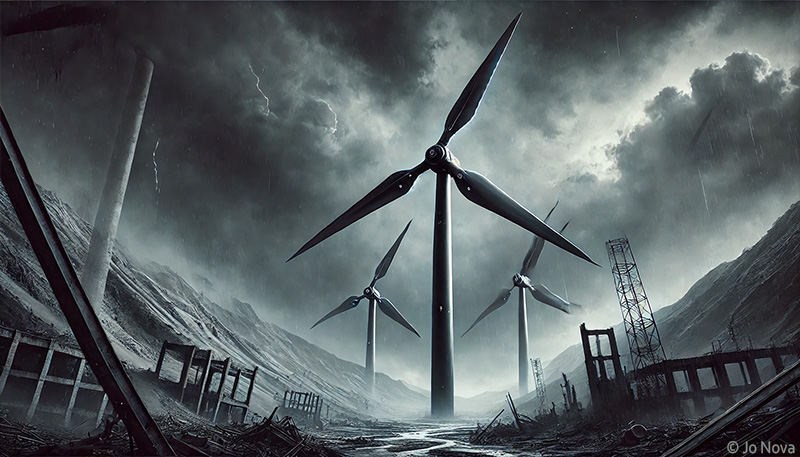 … By Jo Nova Don’t mention that capacity factor…The media and wind industry always sells the biggest, best new generators at their full imaginary capacity. The newest largest wind farms are said to be “1 GW”, even though they will almost never supply that. The real percentage they supply of the advertised “capacity” is called the “capacity factor” and it rarely gets a mention. The average reader, not paying attention, won’t notice that the $2b cost doesn’t stack up at all. It’s like buying a brand new car without knowing it only gets 7 miles per gallon (and only when the wind blows). We need to know ‘the mileage’The latest GenCost report uses the term “capacity factor” literally 100 times (I counted), so obviously it’s central in calculating the value of a generator, yet it is that which shall-not-be-named in public discussions. And when they do say it, it’s often worse than they say, and that bad number is also shrinking. In 2019 the CSIRO Blob Experts bravely assumed that the modeled average capacity factor of onshore wind would be 44.4%. Years later, in the latest GenCOST report they assume, like an addict, that it would between 29% “and 48%” — still fantasizing that a miracle is about to come. So their modeled prediction of the cost of onshore wind power is ridiculously generous. Even after reality doggedly stayed around 30% for six years, a google search shows the NSW government “fact sheet” says it’s around 35% and the Google AI overview says it’s 30% “to 45%“. How imaginary homes are powered by imaginary capacity factorsAnton Lang, also known as TonyfromOz is yet another volunteer creating the graphs that the CSIRO, AEMO, ARENA, ABC, and AER get billions of dollars to provide, but don’t want us to see. For years Tony noticed that the paperwork advertising wind “farms” didn’t mention the capacity factor. It seemed like a strange gap in the documentation. Tony noticed they usually converted their output to the fantasy fairy-thousand-homes it would supply which is a pure marketing ploy. They pretend, deceptively, that wind turbines are capable of powering any homes at all. When Tony back-converted the number of homes, he realized all the companies marketing wind turbines were assuming a capacity factor of 38% to create the imaginary homes value. So he used his collected data to calculate the capacity factor of all Australian wind plants, and discovered, that averaged over the last seven years, it is just under 30%. It started out at about 31% in 2019 but has declined, and over the last year, the rolling 12 month weekly average capacity factor has often been close to 27%. Thanks to Angus McFarlane for the graph where we can see the slide in wind turbine capacity: During this time the total nameplate capacity grew from 5.3GW to 13.5GW. Despite improvements in design, and the young age of this fleet, the capacity factor is getting slightly worse, not better.
As Angus McFarlane points out GenCost uses the highest possible capacity factor on the upside, but calculates the “low option” a different way to hide how low it really is: GenCost uses a low value for capacity factor that is “10% below the average”. This is contrary to normal engineering practice, which would be to use the 5th percentile for the low value. For example, IRENA use 5th percentiles for low values of capacity factor. Furthermore, using the 5th percentile for Australian wind would result in a low capacity factor of 19.5%, which might explain CSIRO’s aversion to using it.
If only we had a scientific institution paid by taxpayers that gave unbiased scientific advice, eh?! Three reasons the weekly capacity factor is headed downwards
Why the lowest of the low points matterThe figures in the graph above are weekly average values, but what also matters are the capacity factor on the worst days, and the worst half hour, because that tells us how much back up power we have to have. In those moments the capacity factor of a whole country full of wind turbines can be as low as 0.7%. On a bad day $20 billion dollars of wind power across Australia can only guarantee as much power as two diesel generators. How much back-up do we need for a 13.5 gigawatt wind system? The awful truth is, about 13.4 gigawatts. The entire wind industry is effectively a superfluous add on to a full reliable grid. It’s main productive benefit (allegedly) is the hope of changing storms and floods in 100 years. It can not possibly be cheaper than our current system unless fuel costs were the largest share of electricity costs, which they aren’t. Those high pressure cells just won’t go away: Look at how big these horrible high pressure cells are which stop the wind across the whole continent. Make them stop! 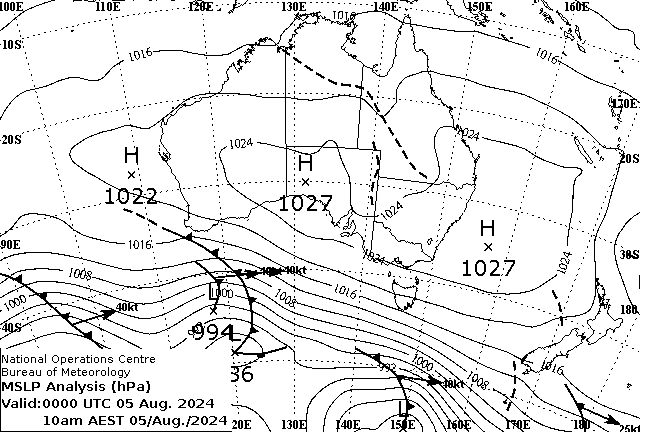 As TonyfromOz says, without isobars, there is no wind… Depressingly, Paul Miskelly did the calculations back in 2012 and the capacity factors were around 31% even then. The AEMO, CSIRO, and AER have known all along, surely, that it wasn’t 35%, 40% or 48%. They were either living off false hope or doing false advertising. It’s time the Australian people knew.
REFERENCESPaul Miskelly, (2012) Wind Farms in Eastern Australia-Recent Lessons, Energy & Environment 23(8):1233-1260, DOI:10.1260/0958-305X.23.8.1233 Anton Lang publishes his work at PaPundits. — More coming soon from Angus McFarlane on the exaggerations and fantasies of CSIRO’s GenCost. —
August 21st, 2025 | Tags: Capacity (wind), CSIRO, TonyfromOz, Wind Power | Category: Global Warming, Renewable, Wind Power |  Print This Post | | Print This Post | |  Bernard DUPONT: El Castillo Pyramid, western side – Tulum Maya site QR Feb 2020.jpg  Photo by Alex Azabache on Unsplash By Jo Nova 13 year megadrought during Medieval Warm Period may have finished off the MayaA slightly spooky new paper shows annual rainfall patterns from a thousand years ago on the Yucatán Peninsula, Mexico. It’s so detailed, they list every drought by year, including 13 unbroken years of drought from 929 to 942AD. It’s a bit like someone unearthed the Maya Bureau of Meteorology records from a thousand years ago (except it’s better, because it’s a rock with no politics). This is one of the highest-resolution tropical stalagmite records ever published. Each year the stalagmite grew by as much as a millimeter, allowing for a year by year analysis — or indeed 12 datapoints within each year. During this era of perfect CO2, for some reason that no climate model can explain, the poor sods in Maya suffered through extreme swings from wet to dry, stacked back to back. The climate was chaotic. Droughts were followed by floods. It’s uncannily like “climate extremes” we are told man-made emissions are going to bring. It is sobering to think the Maya civilization lasted nearly 3,700 years. At it’s peak it was thought there were around 5 million people, but more recent estimates with lidar mapping suggest there might have been as many as 10 or even 16 million people. The Maya civilization started around 2,000BC and peaked somewhere around 700AD before declining in “the terminal collapse period” from 800AD-1000AD. Little pockets of the civilization lingered on for centuries until the Spanish conquest of 1697. Even today some 6 million people still speak Mayan languages. The Southern lowlands (where this cave is) would never be re-urbanized after 1000AD. The megadroughts appear to be the coup de grace.  Stalagmite Tzab06-1 was obtained in 2006 from Grutas Tzabnah near Tecoh, Yucatán, Mexico (Fig. 1 and text S1). The cave is located near several large Classic Maya sites (most notably Chichén Itzá and many sites in the Puuc Region such as Uxmal) and experienced the same regional climate regime as the major Terminal Classic population centers in northwest Yucatán (29). The stalagmite exhibits visible laminations in the section that formed between ~870 and 1100 CE (see Materials and Methods and Fig. 2C). We interpret each lamina as a single year of deposition, which is supported by cyclical variations in δ18O and/or δ13C, reflecting seasonal differences in rainfall (30–32) (see Materials and Methods and figs. S1 and S2). We constructed an age model using a floating layer–counting chronology anchored to 15 U-Th disequilibrium ages (see Materials and Methods and Fig. 2). “Even with the water management techniques that the Maya had, a drought that long would have had major impacts on society.”
Nobody mentions the Medieval Warm Period but this is the same time as things were warming up in Europe: Mexican cave stalagmites reveal the deadly droughts behind the Maya collapse[ScienceDaily] Chemical evidence from a stalagmite in Mexico has revealed that the Classic Maya civilization’s decline coincided with repeated severe wet-season droughts, including one that lasted 13 years. These prolonged droughts corresponded with halted monument construction and political disruption at key Maya sites, suggesting that climate stress played a major role in the collapse. The findings demonstrate how stalagmites offer unmatched precision for linking environmental change to historical events. According to the information contained in the stalagmite, there were eight wet season droughts lasting for at least three years between 871 and 1021 CE. The longest drought of the period lasted for 13 years. Even with the water management techniques that the Maya had, a drought that long would have had major impacts on society. The climate information contained in the stalagmite lines up with the dates inscribed by the Maya on their monuments. In the periods of prolonged and severe drought, date inscription at sites such as Chichén Itzá stopped entirely. The growth hiatus mentioned in 1020AD was found in other studies and apparently so dry the stalagmites dramatically slowed down their growth. Just imagine, the whole region was in severe hydroclimate stress, even without any four wheel drives, oil rigs, or coal plants. In other words, no matter when or where you lived, a witchdoctor somewhere could say the climate was changing.
 … As well as the stalagmite being a freakishly fast growing one, they also used multiple proxies (δ¹⁸O, δ¹³C, Mg/Ca, Sr/Ca ratios, as well as the U-Th ratios to date the layers). They were able to line up the layers with other studies and also with carvings on monuments and other archeological finds. The researchers claim there is ±6-year age uncertainty on the dating. REFERENCEDaniel H. James, Stacy A. Carolin, Sebastian F. M. Breitenbach, Julie A. Hoggarth, Fernanda Lases-Hernández, Erin A. Endsley, Jason H. Curtis, Christina D. Gallup, Susan Milbrath, John Nicolson, James Rolfe, Ola Kwiecien, Christopher J. Ottley, Alexander A. Iveson, James U. L. Baldini, Mark Brenner, Gideon M. Henderson, David A. Hodell. Classic Maya response to multiyear seasonal droughts in Northwest Yucatán, Mexico. Science Advances, 2025; 11 (33) DOI: 10.1126/sciadv.adw7661 The stalagmite in question, called Tzab06-1, was obtained in 2006 from Grutas Tzabnah near Tecoh, Yucatán, Mexico August 20th, 2025 | Tags: Civilization (dawn of), Holocene, Medieval Warm Period, Neolithic | Category: Anthropology, Global Warming, Holocene | Print This Post | |
By Jo Nova What’s left of Australian manufacturingThe CEO of Bluescope Steel is a fan of renewables, but for Mark Vassella to make steel, what he wants is cheap gas, not wind and solar power — and he’s getting desperate. These are strong words from a CEO of one our Big-50. “Manufacturing is at a ‘tipping point‘” he says. “Energy costs are now 3 to 4 times higher than the US”. Furthermore, “Without immediate intervention there will be no Future Made in Australia.” — He twists the knife, talking about the PM’s pet project (the one where we somehow make solar and wind power here cheaper than the slaves do in China. ) He’s especially scathing of the idea that one of the biggest exporters of LNG in the world, now has to import it back. “ In what world does exporting LNG in massive quantities only to re-import it to supply a shorter domestic market make any sense? It’s like importing sand into the Sahara.” Vassella knows US and Australian energy prices all too well. Bluescope also own the North Star steel mill in Ohio and is looking to expand further in the US. BlueScope CEO: Manufacturing at ‘tipping point’ over energy costsBy Perry Williams, The Australian “Today, the situation is more dire than ever,” BlueScope chief executive Mark Vassella said after its annual results on Monday. “Manufacturing is at a tipping point with energy costs that are no longer just too high, but unsustainable. What was once our competitive advantage is gone.” “And let me be really clear about this,” Mr Vassella said. “This does not increase our sovereign risk. Restricting exporters from buying domestic gas for re-export and prioritising domestic supply over LNG imports. In what world does exporting LNG in massive quantities only to re-import it to supply a shorter domestic market make any sense? It’s like importing sand into the Sahara.”
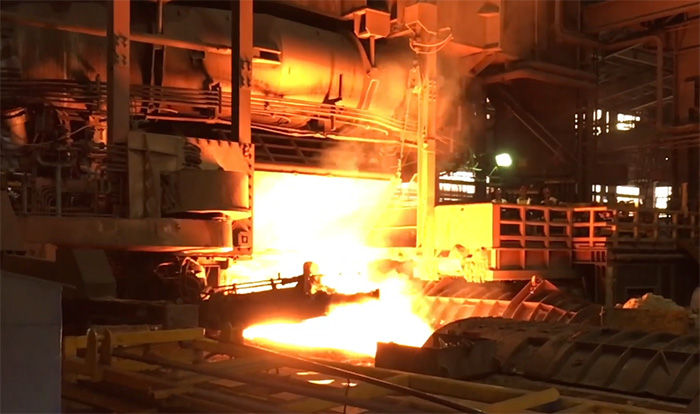
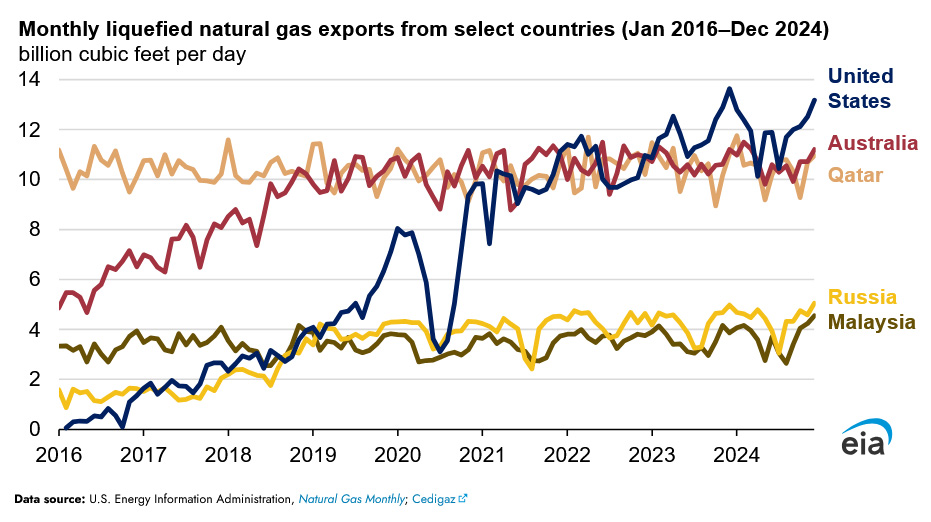
BlueScope warns soaring energy costs threaten Australian manufacturing as profit drops 90pcABC News BlueScope has sounded the alarm over Australia’s energy crisis, warning that unsustainably high gas prices are pushing domestic manufacturing to a “tipping point”. The steelmaker has reported a full year profit of $84 million, a 90 per cent drop from the $721 million reported a year ago. “Without immediate intervention there will be no Future Made in Australia.” Mr Vassella said BlueScope had submitted a detailed response to the federal government’s Gas Market Review including suggested immediate and long-term changes. At least he’s honest about why he likes unreliable generators — they buy his steel. So he repeats the impossible mantra: “We need more energy, we need it to be renewable, we need it to be reliable, we need it to be affordable,” Mr Vassella said. “And we were supportive of the wind industry. Our products go into the wind farm industry.” Just so everyone can appreciate the historic inanity of our situation — this graph below is the state of the top five players in the global LNG export market. Australia is sending off ships full of LNG only to pay someone else to turn them around and send them back. Alternately we could just dig up more brown coal, more black coal, some uranium, or we could explore for more gas, but we don’t because we dream of being a better global weather controller. Interestingly the US has launched itself out of bottom left during the first Trump presidency, right through Covid, and it kept on growing (despite Joe and Kamala). Photo: Smelter From a Bluescope video | Photo: LNG carrie by Shahamah
If the whole renewables fantasy was crumbling, it would look something like thisDespite the Labor Government throwing money at unreliable energy, renewables hopes are quietly unraveling. The largest energy retailer in the country just announced a nice 26% profit jump, based on fossil fueled gas, and they also announced they’d be keeping Australia’s largest coal plant open longer. The two year extension for Eraring, is now a four year extension. Despite reaping in gas profits and keeping the planet-destroying-plant operating, the share price promptly leapt 6% to a ten year high. Significantly, Giles Parkinson at Reneweconomy also noticed that Origin’s annual report includes talk of batteries, but no wind or solar projects, which seems like an important oversight in a nation belting headlong towards the Green Utopia. Meanwhile, for the first time I can recall, a fossil fuel CEO is daring to defend the industry. The shift in confidence in palpable. Mike Wirth, the Chevron CEO, is not only saying “oil is not evil” but he clearly isn’t afraid of the Australian government. He’s so unafraid he also delivered a “stinging rebuke” — saying that high costs, red tape and environmental rules have made Australia so uncompetitive, investors are leaving to spend their money in the US and the middle east instead. Indeed, Chevron had a plan to double their Australian gas production but have abandoned that now. Australia used to be the world’s largest LNG exporter but Qatar and the US outpaced us. In a similar theme, Ampol just surprised the market by spending $1 billion dollars to double the number of petrol stations it owns, making it the largest retailer in the country. The CEO Matt Halliday said the unthinkable: “The transition [to EVs] will take decades, and combustion engines are going to still make up a large chunk of the national car fleet beyond 2050.” It was a very unfashionable and backward thing to say, but shares leapt 8% on the news yesterday. Australia’s biggest energy retailer hits go slow button on wind and solar, mulling options on EraringGiles Parkinson, Reneweconomy Origin Energy, Australia’s biggest energy retailer, appears to have hit the go-slow button on the rollout of new renewable energy projects, and is still mulling options on the already extended Eraring coal generator, the country’s biggest, which is officially due to close in 2027. Curiously, in its annual report, the company says: “With the Eraring Power Station’s closure planned for August 2027, failure to deliver our major renewable generation projects may affect Origin’s future supply capacity, financial prospects and reputation.” Yet it has made no commitment to build those projects in that timeframe. Think of the irony of putting the nations biggest battery next to the nations biggest coal plant, as if it needed back up: But this is made up entirely of big batteries, including the giant 700 MW, 2,800 MWh Eraring battery being next to the coal generator… It [the annual report] includes no wind or solar projects. The technologies did not even rate a mention in the results presentation, apart from the giant 1.45 gigawatt (GW) Yanco Delta wind project in the south-west of NSW, which has gained grid access rights but is still to complete environmental approvals. Chevron’s CEO says “Oil is not evil”: Chevron boss Mike Wirth leads the fossil fuel fightbackBy Perry Williams, The Australian Mike Wirth has a message for the fossil fuel haters: oil is not evil. The boss of Chevron, one of the world’s largest producers, has a front-row seat to the energy revival that’s gathered pace under the Trump administration. After a 43-year career in the oil and gas industry, he sees part of his role as helping deliver some home truths on the reality of the energy transition. “Some criticise fuels as somehow being evil or immoral or any number of different characterisations that you can find out there … to attack our industry,” Mr Wirth tells The Australian. “When, in fact, people in the world have the highest standard of living in human history today because they are not toiling all day long to feed themselves and feed their families and create heat when it’s cold or try to stay cool when it’s warm. I strongly disagree with characterisations that our products are only bad.” Finally, the international oil giant delivers the hard truths, without pandering. Clearly the power in the room has shifted, and with Trump in the US, doors are opening, and Australia is not so relevant: Chevron delivers gas warning to Labor with Australian investment souring
Chevron’s Texas-based chief executive, Mike Wirth, delivered the blunt message to Mr Marles on Friday afternoon in Geelong at a private meeting between the pair, saying he was concerned Australia was now uncompetitive with gas rivals such as the US and Middle East. Mr Wirth revealed Chevron had at one point considered doubling its LNG footprint in WA to 10 processing trains from the current five units that exported gas from its Gorgon and Wheatstone plants. However, that expansion had now been shelved. Australia’s $100bn LNG industry made it the world’s largest exporter for the past decade… Meanwhile Ampol bets big on Australians driving petrol cars for years to come. Ampol makes $1bn bet on the future of combustion engines over EVsBut, [Ampol’s CEO, Matt Halliday] is also a realist. The transition will take decades, and combustion engines are going to still make up a large chunk of the national car fleet beyond 2050. Despite also using its own debt to fund the deal, Ampol investors have firmly backed the expansion, sending shares nearly 8 per cent higher on Friday.
“I find the President to be curious. He asks questions. He asks good questions. He likes to talk to people in business. Under the prior administration, the door was not open. I only met President Biden once, and it was for a photo op,” Mr Wirth says. “…he’s a big believer in American energy, and he believes that American energy strength can underpin economic strength and national security.” With the American energy juggernaut taking off, Australia will be dragged by its green chains… Photo: LNG Carrier http://photozou.jp/photo/show/254715/24141912.| Photo Ampol: Marcnutt1996 | Photo: Trump;: Gage Skidmore from Peoria, AZ, United States of America
By Jo Nova Who knew, we can solve global warming by moving suburbs, planting trees, limiting immigration?A new study used satellite data to look at ten cities around the world to see which parts of cities are the warmest, and how that has changed in the last twenty years as they grew. It looks like man-made global warming mainly applies to airports and industrial areas. We put most of our thermometers at airports which awkwardly turn out to be 2.5 degrees Celsius warmer than surrounding areas, and presumably warmer than they were 120 years ago when there wasn’t 3 square kilometers of concrete runway there sitting in the sun. Industrial zones were even worse, being 2.8°C hotter. Conversely leafy green areas with a lot of vegetation were nearly 4 degrees cooler than the average. So airports are at least 6 degrees warmer than forests. Places near bodies of water were, not surprisingly, even more than 4 degrees cooler. It’s part of why people pay $5 million for a beachside mansion isn’t it? The worst climate change in Melbourne is on Boundary RoadOne of the ten cities they studied was Melbourne and there is a special mention for Boundary Road in Laverton North where daytime temperatures rose from 22.49 °C in 2001 to 30.82 ° in 2021. So that’s 8 degrees of warming in 20 years, surely the fastest rate of warming in a million years. Bring out your dead? This 8 degree local warming trend compares to a general city-wide background warming effect over the twenty years of about 0.5°C. Contrast that apocalypse with the western Quandong region, which is primarily agricultural. There man-made climate change caused a cooling trend of −0.12 °C/year during the day.
Melbourne, Australia: The top graphs are the day time land surface temperatures in 2001 compared to 2021. The bottom two graphs are the night time temperatures. Figure 12. LST means Land Surface Temperature. Does anyone really care about the workers in the urban deserts?The next time a smug Blob Academic panics about how 1.5 degrees of global warming will imperil pregnant women, babies, and cats and dogs, lets ask them if they know of the deadly microclimate threat. If a small rise in temperature is that serious, all the mascots, I mean victims, face a far bigger threat from high density development and unrestrained urban population growth than from coal and gas power plants a hundred miles away. When the experts tell us climate change causes school students marks to fall, or ruins the sleep of senior citizens, we can ask them why they think windmills and solar will cool folks better (or cheaper) than tree canopies? I mean, do they care or don’t they? And instead of installing 4 million solar panels on rooftops in the hope of shifting ocean currents to cool the suburbs, we could have planted trees instead. And given that we chop down trees that shade the panels, the big question is whether the local heating effect of solar panels can ever be compensated for by altering Antarctic jet streams via carbon reduction. These people are witchdoctors. The next time the electricity grid managers plot and scheme to switch off our air conditioners at peak times, we can ask them whether tree planting has a better cost-benefit ratio than demand management. Is it cheaper to grow trees or to turn off smelters and factories at 6pm? I’m sure there’s room for a thousand PhD theses comparing microclimate management as a way to solve “climate change” and I’m also sure most of them will never be done. If anyone really believes an extra degree is dangerous, the fastest, cheapest fix is air-conditioning with cheap electricity. But in the long run, the lifestyle answer is trees, parks, and ponds. Not “green steel,” not jet-stream manipulation, not billion-dollar grid schemes. Just shade, water, and leaves — the original solar harvesting technology.
The ten cities they compared were spread across the world: Cairo (Africa), Chongqing (Asia), Delhi (Asia), Istanbul (Europe/Asia), Melbourne (Oceania), Mexico City (North America), Moscow (Europe), Nuuk (North America), São Paulo (South America), and Tokyo (Asia). Details from the paper below:Keep reading → August 15th, 2025 | Tags: Micro-siting (thermometers), UHI, Victoria | Category: Australia, Global Warming, Meteorology, Sites | Print This Post | |
Nobody wants to say ChinaA couple of weeks ago at the Australian Clean Energy summit, there was a dawning realization that in our rush to diversify the energy grid we are accidentally “diversifying” our cyber security risks too. Where, once upon a time, we could double and triple check the barriers around big old coal plants, now we have opened electronic doors to our grid on homes all over Australia. Energy geniuses told us solar panels would be decentralized, but instead, now that Australia has 25,000 megawatts of household solar, we have to add wireless gadgets to control them remotely. And some of these gadgets are coming in from fly-by-night small time operators. If, hypothetically, a foreign power wanted to be mean, or just hold an extra negotiating or blackmail card up its sleeve, we’re making it very easy. If Mr Chin wants something approved, he could say “Nice grid you have there…” Small scale solar is so big, As Williamson points out, that it supplied 13% of the electricity to the NEM so far this year. And in Western Australia, it has generated 20%. (Boy is the West in trouble?) On top of this, to deal with the hellfire price spikes at 6pm, the government is subsidizing industrial batteries in homes, wired to the grid, often working in shared “virtual power plants”. Meaning that homes will have large boxes of chemical energy, controlled remotely, and nearly every gadget is made in China. No one likes to say it, but China is the cybersecurity elephant in the renewable energy roomBy Rachel Williamson, Reneweconomy A combination of state- and regulator-mandated access points with woefully insecure small devices are building an open door for cyber attackers, says Darren Gladman, regulator manager for major equipment supplier SMA Australia. “My god, small scale. We’ve just introduced an emergency backstop mechanism to turn everything off. If you wanted to make a hacker’s life easy, how could you have made it any easier?” he said during the panel session at ACES. “The battery rebate, it’s great. However, it’s led to a lot of battery suppliers, a flood of batteries coming in. Some of these companies, when you look at their structure, they might be two or three people in Australia. They’re not thinking about cybersecurity. They’re trying to survive in a really competitive, cutthroat industry. “And then you’ve got on top of the backstop mechanism. You’ve got virtual power plants. You’ve got this space that lends itself to manipulation so easily, an industry that’s so competitive and so under-resourced that this is seen as a complete luxury, until you’re told that it’s not, and no one’s been told that it’s not.” The federal battery rebate requires that all home batteries bought with the subsidy be VPP-enabled, and in Western Australia they must be connected to one. Apparently the rush of insecure gadgets into Australian homes is so bad, that it was referred to as “Digital Asbestos” by David Owen, a Deloitte partner. He wonders who will pay for the replacement of all the inverters if we realize, too late, that they pose an unacceptable risk?
In the end, the nation that lied about a pandemic, then launched hostile trade wars when we asked for answers, now potentially has access to many of our homes. It may also have control over explosive batteries and potentially could bring down our grid… Maybe we should have thought of that ten years ago?
Related: What if a foreign hacker could turn home batteries into “pager-bombs” but 7,500 times bigger? Imagery ©2025 Google Map data August 14th, 2025 | Tags: China, Cybersecurity, Solar Energy (PV) | Category: Global Warming | Print This Post | |
By Jo Nova Could it get more vacuous? We used to think climate simulations were bad. Now we don’t even have the modeling, we have unverified, imaginary, rumors of modeling…In a new PR tactic, the Labor government has leaked that it has “held back” an intense and scary report. This means the Blob-Media can put out frightening headlines about how dire the report is (and none of those horrid critics can ridicule the assumptions). This new extended version of vague “non-releases” allows the Ministry of Climate Panic to get in a few extra weeks of baseless media speculation, hyperbole and uninformed discussion. Furthermore the Greens can pretend to be relevant by demanding its release, as if they want transparency, and as if the government is “covering up” the climate disaster while they actually promote it. It’s a win-win for the Blob. Obviously, if the modeling was bad AND convincing, they would have released it all months ago. From the Australian Financial Review: we have “anonymous” sources Sources familiar with the modelling, who asked for anonymity to speak about sensitive government information, described some of the scenarios outlined in the report – known as the National Climate Risk Assessment – as “dire”, “diabolical” and “extremely confronting”. The report’s modelling has been largely complete since late 2024 and stakeholder groups have been repeatedly notified about its imminent publication.
What Stakeholders have been notified? It seems everyone who expects to score money from this has been told about it, and everyone who has to pay for it doesn’t count. In this case “stakeholders” means people in on the grift. Not people who have a “stake” in the outcome. Why “hide” the dire report?Wait for it… the excuse for holding back a science report about a coming catastrophe is that there is a big budgetary shock coming which will be “severe”. Presumably they are afraid people will have heart attacks and they haven’t got enough epipens and defibrillators or something: A major reason for the hesitation to release the assessment is related to the budgetary implications of the associated adaptation measures required by the government, which are expected to be severe, the sources said.
Is anyone buying this? “We’re hiding news of the tidal wave to protect you from the budgetary shock”? In a nation of adults, the Investor Group on Climate Change has been forewarned, but not the farmers, landowners, firefighters and taxpayers. So the industry reps for 100 Superannuation Funds (the pension funds) have been forewarned, but not the fourteen million employees who are forced to put their money into these funds, and whom, supposedly the funds, and the government are supposed to serve. Clearly the government are winding us up to expect very tough carbon emissions targets. Will the opposition get its act together before Anthony Albanese sells out the nation in a vainglorious race to “win” the right to host a pointless UN conference of private jet flying lecturing celebrities?
August 13th, 2025 | Tags: Hyperbole, Media bias, PR War | Category: Global Warming | Print This Post | |  By Tedder – Own work, CC BY 3.0, By Jo Nova “No wind project, not a single one, was signed off financially in the first half of 2025.”There is a bit of paralysis of green investment Downunder. BloombergNEF sells itself as the analysts of the energy transition for investors. According to them, Australia’s rapid transition is “seen as a global test case” and if so, the green wish-fairy needs an ambulance full of money. This year investments in grid-scale solar shrank to just 30% of what they were a year ago, and no wind project at all was committed in the first half of 2025. This is a fall that is accelerating. 2023 was the boom year and in 2024 investment “fell 48%” which sounds pretty drastic. But this year is even worse. Renewables investment falls off cliff as no new wind projects reach financial close in first half of 2025By Sophie Vorrath, RenewEconomy Investment in new wind and solar projects dropped by 64 per cent in the first half of 2025, compared to the same period in 2024, underscoring concerns that Australia’s energy transition is not attracting nearly enough capital. “In the first half of 2025, Australia saw $556 million of investment in utility-scale solar, falling sharply from $1.6 billion in the same period in 2024,” the report says. No wind projects at all reached financial close over the period. This is a far cry from the roughly $US59 billion ($A92 billion) BloombergNEF has said that Australia needs to invest some (sic) every year between now and 2030 to meet its economy wide net zero target – currently set for 2050. At Bloomberg, they know this is serious: “the slowdown in wind farm development has come despite government support for wind being at an all-time high” they say wistfully. A month ago they surveyed investors who managed as much as $38b in renewable “assets” so the Bloomberg team already knew from investors that the transmission lines are delayed, the communities hate the projects, and the costs have reached escape velocity. Australia’s transition is “sluggish” and “slow” and new projects are “stranded”: Renewables Investors Say Australia’s Grid Delays Hamper OutlaysBy Keira Wright, Bloomberg Australia’s rapid energy transition to replace aging coal-fired plants is seen as a global test case, but its sluggish build out of transmission infrastructure has left new solar and wind projects stranded, and helped make its power market one of the most volatile in the world. Transmission delays and slow planning processes are the biggest barriers to deploying capital, closely followed by costly and slow grid connections, according to the survey of members of the Clean Energy Investor Group To be fair, part of the slowdown this year was also the uncertainty over the recent Australian election, not that the opposition opposed NetZero, or even mentioned it much. But it’s a dire statement anyway — if an industry depends on the outcome of an election in a life-and-death kind of way, it only proves they are not and never were competitive, needed, or popular products. To that end, the Labor government has tried to make up for that by dropping money from helicopters with a boost to the Capacity Investment Scheme (CIS)” which will “support” another 3GW of unreliable generation. But even Ross Garnaut, perpetual fan of green energy, says this is not enough, and he is long past mincing his words: “The renewable energy transition is sick,” he said. “We are, for the time being, on a path to comprehensive failure.” If the quote above from Sophie Vorrath is accurate, then according to Bloomberg, Australia needs to spend $92 billion every year for the next five years to meet it’s Net Zero Target. (Just $460 billion!) Where was that price tag in the Australian election when we needed it?
August 12th, 2025 | Tags: Renewable Energy, Wind Power | Category: Global Warming, Renewable | Print This Post | | |
Jo appreciates your support to help her keep doing what she does. This blog is funded by donations. Thanks!
 Follow Jo's Tweets
   
 
|
|||
|
Copyright © 2026 JoNova - All Rights Reserved |
||||












_(2).jpg)
Ampol’s stunning $1.1bn move to almost double the footprint of its petrol stations is not only about expansion. It’s a calculated bet on the future of internal combustion engines versus electric vehicles. The retailer and refiner has snapped up a portfolio of around 500 EG-branded petrol stations, consolidating its position as the country’s biggest fuel retailer.