|
|
||||
|
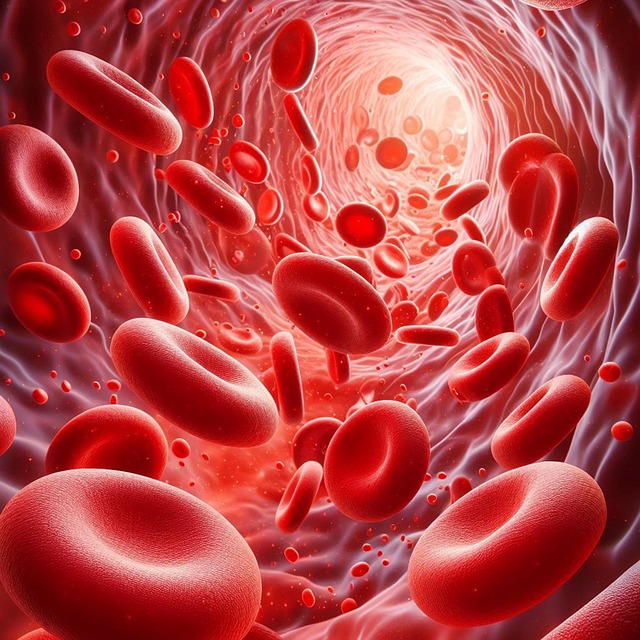
By Jo Nova The one-eyed science monster is here again to scare teenage girliesNo one is funded to poke holes in the CO2-octopus, so researchers can follow a silly idea for a long time. In a normal world someone would have scoffed and squashed this horror show in the tea room. It is yet another meaningless correlation pretending to be a dangerous trend. Supposedly rising levels of carbon dioxide in the air around us is tainting our very blood, causing a public health crisis. Atmospheric CO2 is “higher than anything humans ever experienced” says Dr Phil Bierwirth, worried that current CO2 levels are beyond what we evolved to deal with, and 100% wrong. Poor Dr Bierworth obviously doesn’t realize that even though atmospheric CO2 has risen from 320ppm to 420ppm, normal indoor CO2 levels are 500 to 1,000 ppm, and the air we breathe out is 40,000ppm. We don’t need a quarter century to raise our blood CO2 levels — we can hold our breath and get there in sixty seconds. Or we just need to go jogging. Since he is a retired environmental geoscientist, it was cruel to set him up to fail so badly on what is a beginner medical question.  by Edvard Munch Rising carbon dioxide levels now detected in human blood— Phys Org Rising carbon dioxide levels are being detected within the human body, with new research warning a key blood marker for the gas could near its healthy limit within decades if current trends continue. The findings are especially relevant for children and adolescents, whose developing bodies will experience the longest cumulative exposure to rising atmospheric CO₂. Using data from the U.S. National Health and Nutrition Examination Survey (NHANES), the team examined blood results from around 7,000 people every two years between 1999 and 2020. Average levels of serum bicarbonate—a marker closely linked to carbon dioxide in the body—have risen by approximately 7% since 1999. Over the same period, average calcium and phosphorus levels have declined. So many travesties of correlation in modern science use the term “mirror”: These changes mirror the rise in atmospheric CO₂, which has increased from about 369 parts per million (ppm) in 2000 to more than 420 ppm today. Humans evolved in an atmosphere containing roughly 280–300 ppm of CO₂. The average annual increase over the past decade has been about 2.6 ppm per year, with 2024 recording a 3.5 ppm rise. “It appears we are adapted to a range of CO2 in the air that may now have been surpassed. “As CO2 in the air is now higher than humans have ever experienced, it appears to be building up in our bodies. Maybe we can never adapt such that it is vitally important to limit atmospheric levels of CO2.” We not only evolved to deal with high levels of CO2, it is an important signaling mechanism in our blood — high CO2 levels tell red blood cells to give up their oxygen. It’s how our blood gets oxygen to the cells that need it the most. Whole health movements have been built upon raising the CO2 levels in our blood — like the Buteyko breathing or the Alexander technique — both used to reduce asthma. If bicarbonate levels are slowly rising in blood perhaps it might be because there is more time spend indoors, less sunlight, poor breathing techniques, poor fitness levels, or more people with sleep apnea? The obsession with energy efficiency means air flow indoors is more restricted than ever and thus we probably sleep in rooms with higher levels of CO2 than we did 30 years ago. Whatever it is, modern witchdoctors will try to reduce blood bicarbonate levels with windmills. UPDATE: CO2 dissolves in blood with the equilibrium reaction: CO2 + H2O ⇄ H2CO3 ⇄ HCO3– + H+ If you hyper or hypoventilate for a few minutes it is possible to shift the direction of the flow here and even change blood pH. The pace of breathing, and the shallowness or depth will change the bicarbonate levels (HCO3-). Check out the title of the paper! A ‘potentially toxic atmosphere within 50 years!’ It could only be written by zealots living in a crazy bubble. As Dr Faustus remarks below, most of the CO2 in our blood is created by our metabolisms as we burn fats and sugars. A small rise in the air around us is irrelevant. REFERENCEAlexander N. Larcombe et al, Carbon dioxide overload, detected in human blood, suggests a potentially toxic atmosphere within 50 years, Air Quality, Atmosphere & Health (2026). DOI: 10.1007/s11869-026-01918-5
Don’t forget the Blood Moon happening tonight in Sydney at 8:50pm, Brisbane 7:50pm, Perth 7:04pm (on sunset). The peak ‘totality’ will occur 1 hr 15 mins later, and last an hour (so between 10pm-11pm EDT Australia). In the US it will be visible in the early hours before dawn starting at 4:50am on the East Coast, reaching totality at 6:04am EST (US time) .  Photo by Occultations April 2007
Apologies for what appears to be an attack slowing the site this week. 🙂 I have temporarily added an extra check to reduce the load. Let me know if it is too much of a pest. _________ Best wishes for the people of Iran.
By Jo Nova In a shock move, the German government will allow citizens to use oil and gas to heat their homes again, even though this might increase global temperatures by a thousandth of a degree in 80 years time. The Green groups responded with all the wisdom we’ve come to expect: This reform is a disaster’: Climate groups slam Germany for scrapping renewable heating lawEuroNews One critic has called the move “an unconditional fulfilment of all the wishes of the fossil fuel lobby”. “This reform is a disaster,” Green Party parliamentary group co-leader Katharina Dröge told the German Press Agency (dpa). “The CDU and SPD [Social Democratic Party] have today made it abundantly clear: climate protection is completely irrelevant to this coalition,” she added. “The federal government has abandoned the achievement of the climate targets.” Germany still relies on oil and gas for 80% of its heating needs. The mandate to force people to switch to at least 65% renewables for heating came into place in 2023. People disliked heat pumps so much they just stopped building new homes. Germany accused of ditching climate targets as it scraps renewables mandateBy Deborah Cole, The Guardian She said: “The dilemma was that Robert Habeck’s heating law had unsettled homeowners. Sales of modern heating systems, heat pumps and modern gas boilers plummeted. People stopped building altogether.” The dispute poisoned relations in the coalition of Social Democrats (SPD), Greens and pro-business Free Democrats and is often called the beginning of the premature implosion of that government. The left always go too far. Germans are still free to buy heat pumps, or use biomass or biofuel if they want to. The “disaster” here is that Germans have some freedom to choose. And if the renewable heaters were cheap to run, no one would need a mandate to force compliance. The Green Left Agenda is falling apart. Photos adapted from Image by Image by PayPal.me/FelixMittermeier and Presentsquare Presentsquare
By Jo Nova The Renewable Age of Waste has arrivedHow do you make a solar plant perform best at breakfast and dinner time — when humans need it most? Just build three times as much generation as you *need* and throw away most of what it produces in the middle of the day…. Solar panels peak at midday but demand for electricity is highest when everyone goes home and turns on the oven, the dryer and plugs in a Cybertruck. But that’s no problem when you have billions of taxpayer dollars to waste — just burn the money building generators that spend most of the day working at minimal efficiency. Then call that waste “Economic Curtailment” — supposedly because it not economically worth operating the equipment. This happens when wholesale prices have gone negative and solar plants are *choosing* to blow away the megawatts most of the day. Profligate waste is not just a rare event but our national energy policy. Looking at the graph below, “Availability” is what they could have produced on the left. But what they actually contributed to the country is shown on the right. “Keeping up with the curtailment”By Dan Lee at WattClarity Rising levels of curtailment are increasingly shaping development decisions for both greenfield and brownfield projects across the solar and wind fleet…
Welcome to the ““The National Program of Electrified Futility.”” Dan Lee points out we are throwing away 1.5 Terrawatt-hours in Network curtailment and about 5.7 Terrawatt-hours in Economic curtailment. He argues that 1 Terrawatt-hours is roughly what a turbine at Gladstone Coal fired Power Station made in 2025. In other words — we’re throwing away the output of a full power station. Ominously the rate that curtailment is rising at is faster than production is growing. It was inevitable that renewable energy would reach this point. Gradually, because intermittent generators often work and fail “together”, every extra unit of intermittent generation is slightly more useless than the one before. And in the AEMO latest Quarterly report we see that the rate of economic curtailment has suddenly grown. 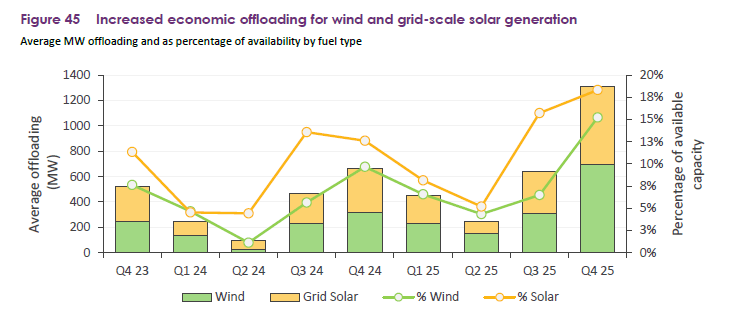 AEMO Economic Curtailment Q2, 2025 Welcome to the The National Program of Electrified Futility. Waste is no longer an exception — it is the operating model.
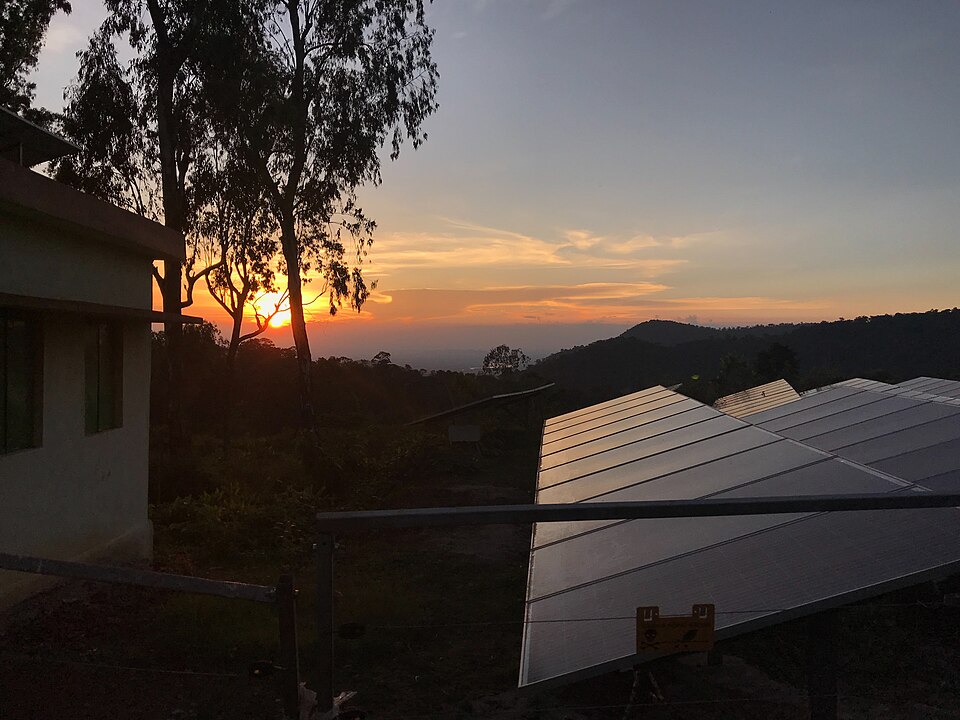
Photo by Prashanthns
February 27th, 2026 | Tags: Renewable Energy, Solar Energy (PV), Wind Power | Category: Global Warming |  Print This Post | | Print This Post | | By Jo Nova It’s rare to see such a dramatic 20 point shift in such a short amount of timeFour years ago, 54% of Brits said they wanted Net Zero to happen even sooner than 2050. Now only 29% do. It’s still a crazy thing to want, to spend billions to change cloud cover in 2100AD, but somehow 20% of the population are more skeptical than what they used to be. This is a sizeable survey of 4,027 UK adults from 21-27 August 2025. 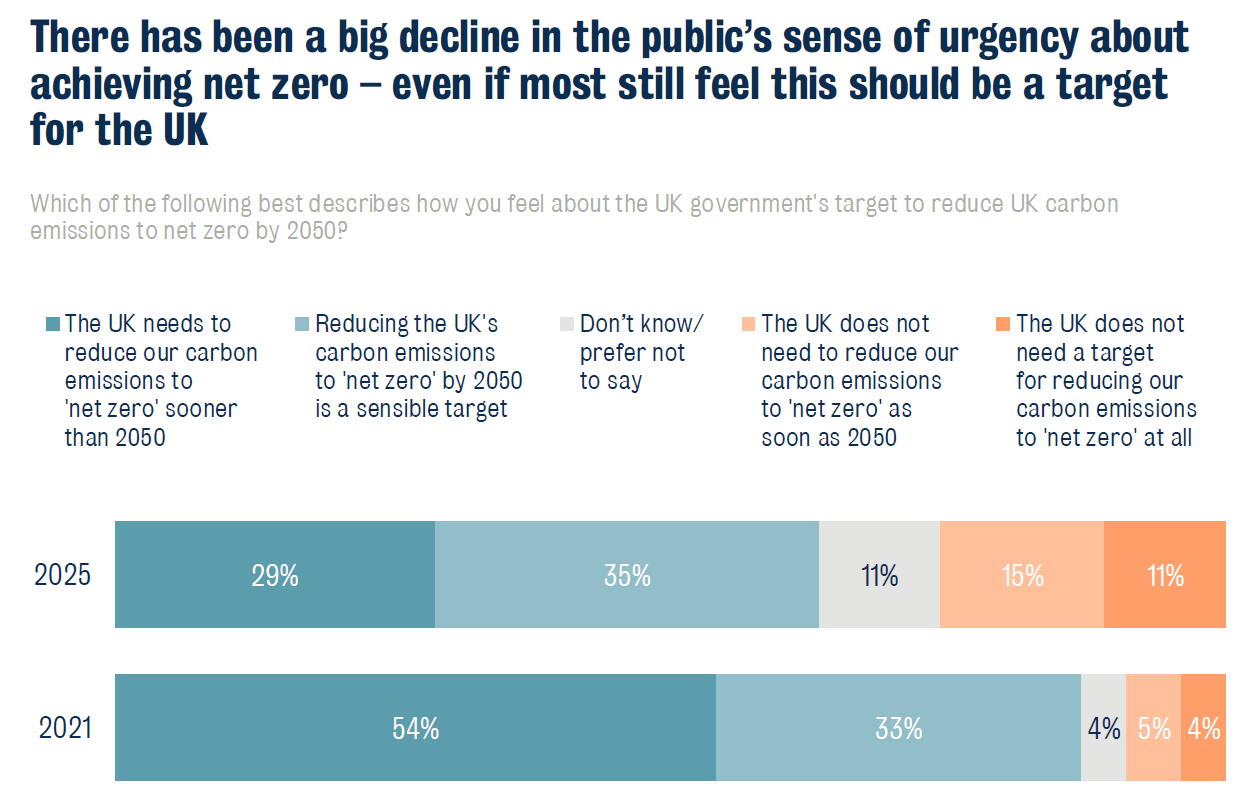 The ‘culture war’ on net zero: Why have Brits stopped supporting climate policies? These anodyne surveys will always overestimate the enthusiasm for Net Zero, because they are not asking people how much they are willing to pay, or whether they would rather the government solved something else. Nor are they giving people gung-ho skeptical choices — like asking them if climate change is more like a religion than a science, for example. A question that gets people thinking in a way that 30 years of propaganda never does. EuroNews asks why this shift happened, but has no idea. They don’t mention the bill shock in electricity prices in the last few years, or the way science was used and abused during the Covid era. Instead they blame the media… The ‘culture war’ on net zero: Why have Brits stopped supporting climate policies?By Liam Gilliver, Euronews How the UK’s net zero attitudes are shiftingIn 2021, surveys found that 54 per cent of the British public believed the UK government should achieve net zero before the 2050 target. Now, this has fallen to just 29 per cent. The study*, carried out by the Policy Institute at King’s College London, Ipsos and the Centre for Climate Change and Social Transformations also found that the proportion who feel the UK either doesn’t need to reach net zero by 2050 – or shouldn’t have a net zero target at all – has risen from nine per cent to 26 per cent over the same period. Researchers warn that between 2024 and 2025, support for climate-driven policies such as low-traffic neighbourhoods, taxes on those who fly more, subsidies for electric vehicle (EV) purchases and a tax on environmentally damaging foods have all declined. The naughty media apparently focus on Net Zero and omit any references to climate change, tsk, tsk. Researchers argue their findings show a “divorcing” of climate change from the solution of preventing emissions from rising, and come amid low levels of understanding around what net zero actually means. The analysis found that a year before the legislation was signed, 100 per cent of articles across nine major publications mentioning the term ‘net zero’ at least three times (including in the headline) also mentioned ‘climate change’ or similar terms such as ‘global warming’. However, by 2024, this figure had plummeted to just 59 per cent. There is hope: …the percentage of 16-34-year-olds backing the target has dropped from 59 per cent in 2021 to 37 per cent in 2025. It’s a big survey of 4,027 UK adults from 21-27 August 2025 REFERENCEDeclining Urgency, enduring support, Public attitudes to Net Zero and climate policy, IPSOS, The Policy Institute, Kings College. [Download PDF]
The site appears to be under a DDOS attack again. Thanks for your patience. The suspicious traffic is very large has been running nearly all day. Hopefully we can limit this soon. More details coming…  Image by Vilius Kukanauskas from Pixabay By Jo Nova The US Threatens to withdraw from the International Energy Agency (IEA)The IEA is a Blob Agency living off the hard earned money of largely Western taxpayers. It was set up during the Oil Crisis in 1974 to advise its 32 member states on oil reserves. Like all Blob creatures it expanded, and now advises on all energy sources, including advocating for the unreliable and fantasy options. Every year it issues the World Energy Outlook, and tells us that coal has peaked and is about to decline. And every year, it’s been wrong. Chris Wright, the US Secretary of Energy slammed the IEA (International Energy Agency) and threatened to withdraw US funding (which is about $6m of the total $22m). The US government wants the IEA to get back to their core mission and stop pushing Net Zero. Chris Wright speaks the blasphemy that The Blob will not say: “There is a 0% chance of the world hitting Net Zero by 2050.” By Energy News Live He said: “This organisation has been pushed off course, and for five years published energy scenarios going forward, none of which had any relevance to reality. “They were all just based on climate ambitions, politics, local domestic politics, do whatever you want.” He claimed governments have spent around $10 trillion (£7.9 trillion) pursuing net zero policies only to add roughly 2.6% of wind solar and battery power to the global grid, while pushing electricity prices sharply higher. Lordy! Imagine an international conglomerate Blob organization being accountable to those who fund it? Naturally the EU rushed to defend the IEA. It was a “trusted pillar of the global energy community”. (The Blob always serves The Blob). But Chris Wright pointed out that the EU could continue “to become former industrial powers” but he didn’t think that was a great choice. All bureaucratic Blobs are destined to grow until they are One World Government. Yet there is no accountability unless our elected representatives demand it before they hand over our cash.
From Renewables Superpower to Stupid-Power: History books will be written about how the world’s largest coal exporter placed a trillion dollar bet that it could lead the world away from coal, and how most of the world ignored it. Australia spent billions to close one lone coal plant while China built 50 new ones — partly so it could power the factories that Australia used to have. Just when things were starting to go horribly wrong, the AI revolution arrived to make it worse. Suddenly the world found itself in a race it could not afford to lose. The winner would have a force-multipler for every field of research, science, weapons, drugs, medicine, and encryption. But information is energy, and the AI need for reliable gigawatts is insatiable. Microsoft is so hungry for electricity, in one year it switched from building “the biggest renewable plant”, to reactivating the infamous Three Mile Island nuclear plant. Australia is the last major coal producer on Earth on a suicidal mission to kill coal, which fits right in with being a uranium powerhouse in an anti-nuclear zone.
RSL Hall, 22 Leake Street, Belmont, WA 6104 Wednesday 25 February 2026, $15 Includes pies, pizzas, sandwiches, coffee and cake. Drinks available at the bar. Book at Ticketebo (Bookings close Tuesday.) h/t David Maddison who’s been talking about Stupidpower.
By Jo Nova Yet more proof that mother nature is far worse than man-made climate change.The extinction of tall trees and land birds on Easter Island became the apocryphal story of a man-made ecological disaster, but a new technique for estimating rainfall shows that there was a terrible drought starting in 1550AD that lasted for 100 years. This would have been a bit dire on a small island that doesn’t even have a river and relied on a crater lakes. In recent times, catastrophic climate change has apparently reduced rainfall by 370mm. But starting around 1550AD rainfall declined by a shocking 600 to 800 mm per year. Despite the severe drought the population wasn’t wiped out — their population doesn’t seem to have collapsed. The rainfall shift coincided with many cultural changes and even the development of rock gardens called lithic mulching – where farmers get desperate enough to use rocks as ground cover and a soil improver to keep the evaporation rates down.  https://www.nature.com/articles/s43247-025-02801-4/figures/3 At the same time as the rain declined, the people changed the way they live... Notable cultural shifts also took place during this time. Fewer ceremonial ‘ahu’ platforms were built, and Rano Kao became an important ritual site. A new social system called Tangata Manu emerged, in which leaders were chosen through athletic contests rather than through family ties to the moai statues. The new rainfall estimate comes from Stein et al, who found a way to estimate rainfall using hydrogen isotopes in leaf wax. “We think leaf waxes on Rapa Nui are only recording information about local rainfall and aridity,” lead author Redmond Stein explained. By measuring the ratio of “heavy” to “light” hydrogen preserved in those waxes, the researchers reconstructed 800 years of rainfall history. The data shows that rainfall declined sharply in the mid-1500s and remained low for more than a hundred years. 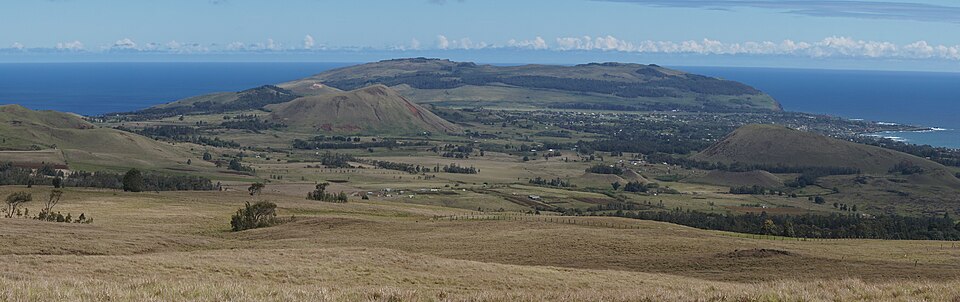 Easter Island has no permant rivers. | Photo by kallerna So rather than being the foolish people who built stone statues and chopped down every last tree, the people of Rapa Nui are a remarkable survival story. I’ve written about Easter Island at length in “What if Easter Island was a sustainable success story instead of an ecocidal disaster?” Benny Peiser (of NetZeroWatch fame) published a research paper detailing how the real disaster was when slave traders, whalers and others came in the 1800s. This tiny patch of land was discovered by European explorers more than three hundred years ago amidst the vast space that is the South Pacific Ocean. Its civilisation attained a level of social complexity that gave rise to one of the most advanced cultures and technological feats of Neolithic societies anywhere in the world. Easter Island’s stone-working skills and proficiency were far superior to any other Polynesian culture, as was its unique writing system. This most extraordinary society developed, flourished and persisted for perhaps more than one thousand years – before it collapsed and became all but extinct. Naturally the media doesn’t mention any of this, instead the headlines talk about how the “enigmatic” the collapse was and how it was more “complex” than anyone thought. These are just weasel ways to not-admit they were wrong. UPDATE: The drought on Easter Island coincides with the Little Ice AgeA cooler world is usually a drier world, because there is less evaporation. Why would anyone want a cooler world? — Thanks to TdeF, El Gordo and Mike Jonas for the reminder. REFERENCEStein, R., Curtin, L., Balascio, N.L. et al. Prolonged drought on Rapa Nui during the decline of megalithic monument construction. Commun Earth Environ 6, 865 (2025). https://doi.org/10.1038/s43247-025-02801-4
February 21st, 2026 | Tags: Civilization (dawn of), Pacific Islands | Category: Global Warming | Print This Post | | 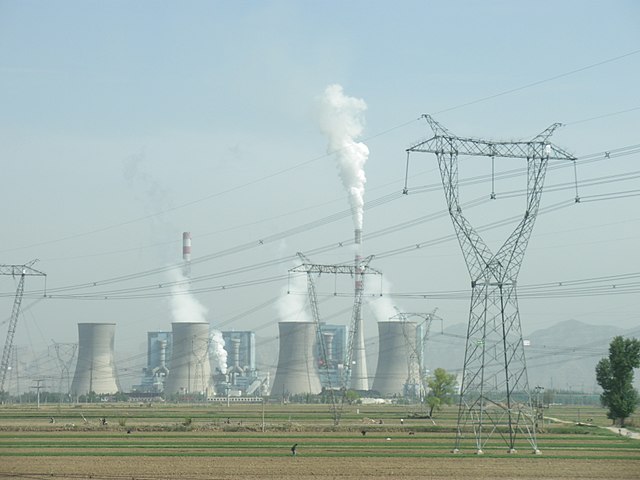 Shuozhou coal power plant. by Kleineolive By Jo Nova It’s almost like China doesn’t give a toss about climate change, eh?Just quietly, while everyone was gushing tears over a two year extension to a fifty year old Australian plant, China added a gargantuan number of brand new coal plants. Australia’s total coal fleet stands at 26 gigawatts in capacity. Yet China added three times that capacity in a single year. Overall, China brought 78 gigawatts of new coal power capacity online in 2025, a sharp uptick from previous years, according to the joint report by the Centre for Research on Energy and Clean Air and Global Energy Monitor. The graph below represents how many gigawatts were added, but only in the largest turbines size. China added 52 gigawatts of energy from one gigawatt units. Presumably the rest of the 78GW came from smaller sized turbines. And here’s the thing, while everyone will pretend this is the peak and tell us “it will decline soon”, another 83 gigawatts of coal plants has already started construction, and another 161GW is newly proposed or applied for. These coal plants are apparently only being used at 50% capacity, but the thing is, if China ever needs to ramp up its energy supply, like say, in a time of war, it could double it in days.
But China is just replacing the old dirty coal plants, right? That’s what they want you to think. See the tiny black bars, top left, marked “Retired”
All the coal power Australia has built in the last 50 years, China just effectively added that in the last four months. According to a research report published on February 3, more than 50 large coal-fired power plants will be connected to the grid in 2025. These are individual boiler and turbine sets with a capacity of at least one gigawatt. In the ten years prior, the number was less than 20 per year. Depending on consumption, one gigawatt can supply several hundred thousand to over two million households with electricity. — Euronews Euronews asks — if wind and solar are booming in China …why is it building so many new coal plants? The answer apparently is that there were blackouts in 2021-22, and it takes a few years to h/t to Eric Worrall at WUWT, and Pierre Gosselin at NoTricksZone, plus Leith van Onselen on Macroeconomics. PS: For those in Perth — I’ll be speaking on Wednesday night next week in Belmont. More details to follow on that soon. Source of Graphs: CREA: Global Energy Monitor
|
Jo appreciates your support to help her keep doing what she does. This blog is funded by donations. Thanks!
 Follow Jo's Tweets
   
 
|
|||
|
Copyright © 2026 JoNova - All Rights Reserved |
||||











.jpg)


Recent Comments