|
|
By Jo Nova
This is the feasibility study for the whole country that the government could have done…
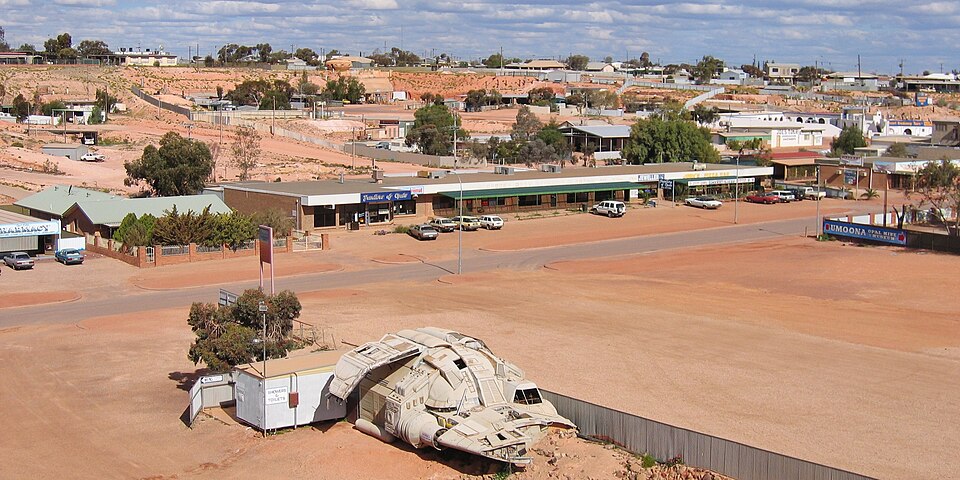
Instead of doing reckless experiments with our national grid, we could have done a practice run and transitioned one small town to see if it worked. If renewables were going to be successful anywhere, it would be in a place like Coober Pedy. After all, these small desert communities have wide open spaces, lots of sun, and new renewables only have to compete with expensive diesel generators, not cheap coal.
Fans of renewables were partying last week because one small town had managed to run for “nearly five days” on renewables. Nearly five!?
You might think this was a new set up, but this is a system that was built in 2017. Basically, the people of Coober Pedy have been waiting for nine long years to get this lucky with the weather.
And the previous record they set with this equipment was in 2019!
By Sophie Vorrath, Reneweconomy
In a LinkedIn update on Tuesday, EDL said its Coober Pedy Hybrid Renewable Power Station recently clocked 116 hours of continuous diesel-free operations. “That’s almost five straight days of energy for the iconic Australian mining town, all generated exclusively by wind, solar and battery power,” the post says.
The previous record for the longest continuous period operating on 100 per cent renewables was 97 hours in December 2019.
It’s been a long time between drinks, so to speak.
And the big question is “How much did that cost”?
This is a town in the South Australian desert with a population of about 1,600 people. They tried to build a big solar system in 2009 for $7 million but it didn’t get off the ground. Then in 2014 they tried again, but this ended up costing about $40 million in capital costs, and the total project ballooned out into $192 million dollar power purchase bonanza over the next twenty years.
It was so bad, The State opposition called for an inquiry, and an independent report estimated that if they had just got another quote, they could have saved $85m (off the $192m bill) over the course of the 20 years operation.
Or they could have given every man, woman and child $120,000 to buy their own generators…
And how much did it save over 20 years?
Wait til you hear:
A DSD spokesperson said the project was forecast to save the Government $5.4 million against diesel generation costs over a 20-year-period.
So the State Government spent about $100m in subsidies that it didn’t need to spend in order to save $5m in fuel costs spread over the next two decades. But the good news is: we know our national renewables grid isn’t worth doing. The bad news: we’ve already wasted hundreds of billions of dollars and we didn’t need to.
How long, exactly, would Australia last without diesel??
See other microgrid “feasibility studies” here — like Flinders Island, Alice Springs, and Onslow.
h/t to Helen D and Jim S.
_____________________________
MORE INFORMATION
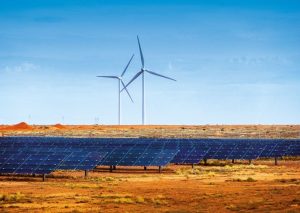
The Coober Pedy hybrid system has a capacity of 9.25MW of which 1 MW is solar, 4MW is wind, and 4.15MW is diesel power.
Other information is available at the Coober Pedy EDL including a live generation report. (Where solar power appeared to be contributing 0.3KW at from 3am to 4.30am in SA).
10 out of 10 based on 98 ratings
9.9 out of 10 based on 18 ratings
9.5 out of 10 based on 22 ratings
9.7 out of 10 based on 24 ratings

By Jo Nova
Google was going carbon free by 2030 right up until it needed reliable hard energy itself, then the Net Zero goals were dropped in a hole. Even though The Goolag has been censoring skeptics and lecturing the public for ten (or twenty) years about the dangers of fossil fuels, now that it wants more power, Google chooses “gas”. Never mind the families that can’t afford dinner …
Google didn’t just promise to use more renewables—it promised to run on carbon-free power every hour of every day. “Climate Change is an urgent threat to humanity,” said Google in 2020. But now Google wants to build a 933MW gas plant in Texas, and is exploring building another huge gas plant in Nebraska.
Google was a key part of the marketing and election campaign to crush fossil fuels and promote the renewables industry, and it’s not even pretending that solar and wind power are the answer any more.
— by Dara Kerr, The Guardian,
Michael Thomas, the founder of Cleanview and author of the report [on Google’s new gas plant] said that this power plant would be one of the first direct investments in fossil fuel infrastructure that he’s seen with Google.
“Google has spent decades crafting an image as a clean energy leader,” said Thomas. “I’ve always considered them to be the most committed to their climate goals. But these projects suggest a major strategic pivot at the company could be under way.”
Google are still pushing for Net Zero (they say) but don’t ask them any hard questions:
Asked by Axios last week at an energy conference in Houston about how natural gas jives with the company’s clean energy goals and overall strategy, Google’s head of advanced energy, Michael Terrell, said: “We don’t have anything to say on that.”
In 2024, the company reported a 48% rise in greenhouse gas emissions since 2019, due to datacenter energy consumption.
What they called climate commitments are now referred to as “climate moonshots.”
10 out of 10 based on 97 ratings
9.2 out of 10 based on 13 ratings
9.3 out of 10 based on 21 ratings
By Jo Nova
What a difference an oil war makes…
Five weeks after it started, suddenly Australians are noticing the bonanza under our feet all along.
That most hated thing, the unthinkable brown coal, could save the day if we would only stop beating it down with blunt sticks and Voodoo dolls.
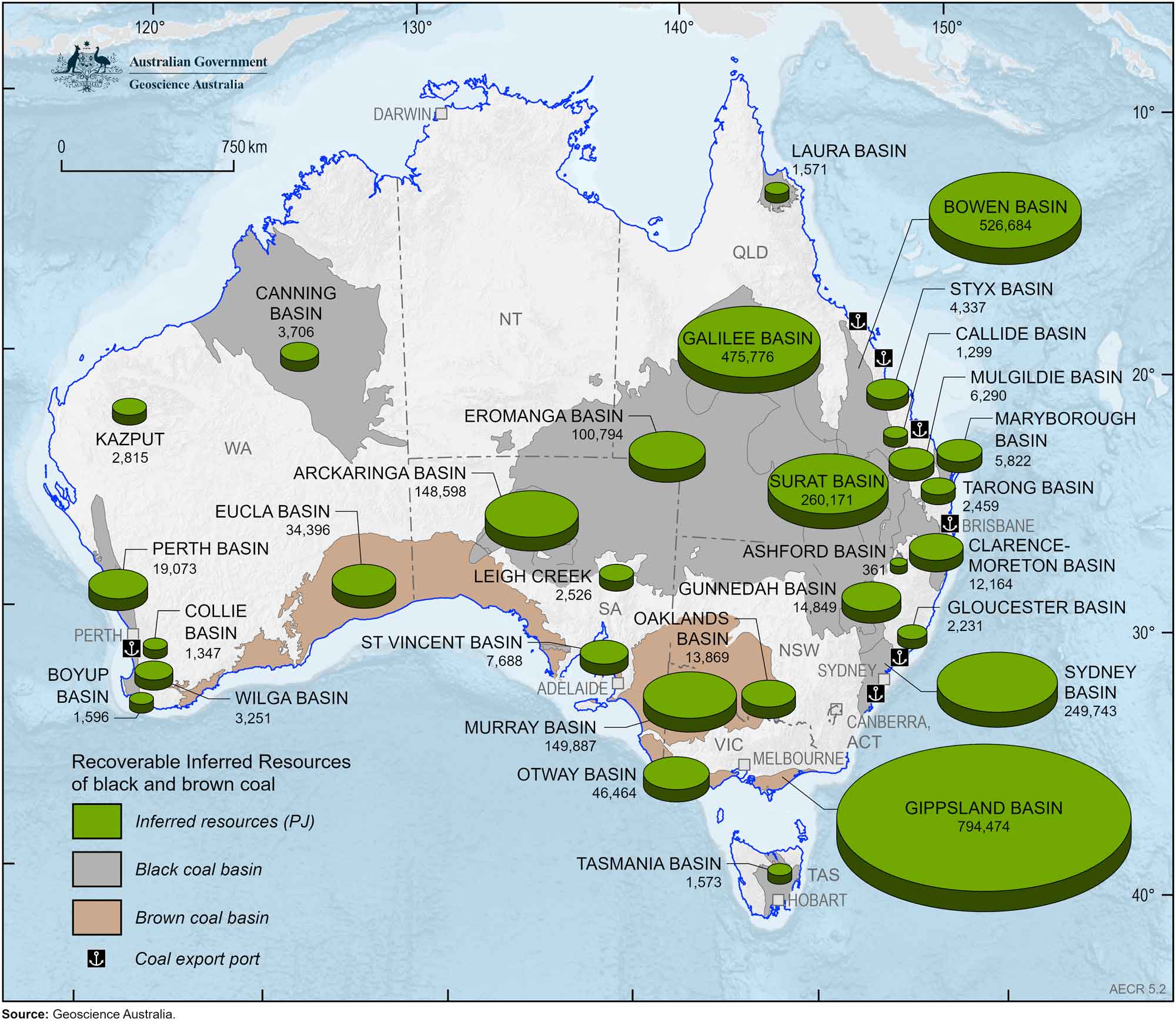
In 2016 Geoscience Australia estimated we have so much brown coal we could keep burning the deposits we already know about at the current rate for our whole lives, and our children’s lives, and their children’s lives too. We could keep going for 40 generations.
“Australia’s recoverable brown coal EDR did not change during 2016. The majority is located within the Latrobe Valley (Victoria). At 2016 production levels, Australia’s recoverable brown coal EDR is expected to last more than 1000 years.”
We burned it to make electricity all year in 2016 but the total amount was so insignificant no one counting national resources could even notice.
Look at the size of the Gippsland Basin deposit. It’s almost like God has a sense of humour putting all that in there so close to socialist HQ.
 https://www.ga.gov.au/aecr2025/coal Brown coal is the cheapest fuel there is for reliable electricity, bar none, but even more importantly, it can be turned into liquid fuels, which Australia desperately needs for trucks, tractors, and mining gear. We need to be able to pour our energy into a tank at room temperature and pressure, and in five minutes flat.
It’s great to see National Party talking about the thousand-year supply, and also about a new method of turning coal to liquid fuel. Do the Liberals have enough gumption to even follow The Nats?
— By Abisha Sapkota and Nathan Schmidt, The Australian
However, 95 per cent of that energy was “locked up in coal and uranium”, Senator Canavan said. “Two things the Labor Party doesn’t like to use,” he said. “In the short term, we need to use the coal and gas we export to these countries in North Asia as a bargaining chip to get liquid fuels.”
In the medium term, the Nationals are urging for the adoption of “coal to liquids” technology, Senator Canavan said, that would turn coal into liquid fuel.
The Nationals also want to get rid of the SafeGuard mechanism (Hallelujah!)
Introduced in July 2023 and reformed in 2023, the [Safeguard] policy requires facilities that emit more than 100,000 tonnes of carbon dioxide to keep net emissions below set limits. It’s a policy to assist Australia to reach net zero by 2050.
“Refineries are covered by the safeguard mechanism, which is designed to put refineries out of business,” [Matt Canavan] said. “OK, that’s what it’s there for, so get rid of that.”
There are two choices in coal liquefaction processes: Bergius and Fischer-Tropsch, both invented in Germany in the 1910s. In the Bergius process, hydrogen is forced into coal molecules at a temperature of 450˚C and a pressure of 170 kg/cm2 (165 atmospheres or 2,420 psi). The Fischer-Tropsch process burns coal in pure oxygen to produce a synthesis gas that is catalysed to long chain hydrocarbons in an oil bath. Bergius is the better process. In WW2, German synthetic fuel production was dominantly via the Bergius process…
For self-sufficiency in liquid fuels, we need 33 Bergius plants producing 30,000 barrels per day at a cost of $4.6 billion per plant for a total outlay of $152 billion. Somehow we have run up a national debt of $1 trillion in the last 25 years and have nothing to show for it. Building the coal liquefaction plants we need will be an enormous benefit by comparison. We can do it.
Bergius plants are the near-term solution. Longer term it will always be nuclear…
Finally, we see a few key topics hitting the media. Things that should have been discussed 10 years ago.
Brown coal could fill an awesome gap in our national energy profile. Imagine we could make all the diesel, jet fuel and petrol we needed yet we were not doing it because we were afraid of 0.0001% more beach-weather a century from now?
China is already converting 400 million tons of coal each year and we’re afraid to copy that because some teenage girls will cry?
Related posts
Inflation be damned: Brown coal power is just 1c per kilowatt hour in 2024
9.9 out of 10 based on 118 ratings
8.2 out of 10 based on 13 ratings
8.8 out of 10 based on 23 ratings
By Jo Nova
The trend is spreading. Coal, the stranded asset of a bygone era, is hot property again everywhere. All it took was a few weeks of an energy crisis, and decades of brainwashing against coal is evaporating.
On Friday, I wrote about how countries like Japan, Korea, and India were redirecting themselves towards coal power. Now Bloomberg, Fortune, and others are reporting this trend. As I write, Italy is considering delaying the closure of all its coal plants til 2038, Germany is reopening old coal plants. Thailand is restarting two coal plants it only shut down last year. Bangladesh is going to run its coal plants at max capacity all summer.
And the Ecoworriers are starting to fear this crisis will trigger a more permanent shift back to coal — which it absolutely will — not because of ‘sunk costs’ or any of the other excuses the greenies tell themselves, but because the oil crisis will break the sacred exorcism spell cast upon coal. Governments have been shocked at how vulnerable they are without fossil fuel energy.
People might be ordering EVs, but governments want fossil fuels.
Activists should be panicking — the whole anti-coal program was based on petty namecalling, teenage girls, and costumes — not hard numbers. It could fall over at any moment, and they will not be able to put it back together.
Italy may keep coal plants open til 2038 now:
A new lease of life for Italian coal-fired power plants. To address the energy crisis, in the event of an emergency, fossil fuels will be allowed to continue to be used until 2038 , thirteen years beyond the deadline set by the National Energy and Climate Plan, which called for a shutdown by December 2025. The extension was included in the billing decree with amendments presented by the League and Azione parties.
The measure also introduces a crackdown on telemarketing and measures to support less polluting transportation. Minister for European Affairs and the National Recovery and Resilience Plan (NRRP), Tommaso Foti, defends the decision: “All energy sources, at least in the immediate future, must be used to their fullest extent.” League MPs in the Productive Activities Committee call the extension “fair and responsible” during a time of international energy crisis.
German government not prepared to gamble on going without coal:
Energy crisis may force Germany to keep coal-fired power plants alive
Chancellor Friedrich Merz questioned Germany’s plans to abandon coal as a source of power. “We may need to keep our coal plants online for longer,” he said at an event organized by the Frankfurter Allgemeine Zeitung in Frankfurt.
“I am not ready to gamble with the core of our energy supply just because we agreed on some deadlines years ago,” Merz said on Friday.
Coal use in Europe could be up 20%:
By Rajesh Kumar Singh, Will Wade, and Eva Brendel, Bloomberg
Power analysts with the London Stock Exchange Group estimate European countries could generate around 20% more electricity from coal this summer than last, if the European gas benchmark averages about 50 euros per megawatt-hour. That figure currently stands at around 54 euros.
“This is a bigger disruption than the Russian war,” said Tony Knutson, global head of thermal coal markets at consultancy Wood Mackenzie Ltd, given the impact on a larger number of countries. Those without enough gas will be forced to pull the coal lever, he added. “I don’t think they have a choice.”
Fortune news lists all the Asian countries reopening coal, and talks about how the effects of the crisis are starting to bite on the details of life like driving and hot showers.
By Nicolas Gordon, Fortune
Asian governments are temporarily pivoting to coal…
For Asia, which buys more than 80% of the crude and LNG that flows through the narrow waterway, the consequences have been swift: severe fuel shortages, export bans, and government budgets stretched to the breaking point.
South Korea urged households to take shorter showers, charge devices during off-peak hours and shift usage of high-energy appliances like washing machines to weekends. Samsung, meanwhile, barred employees from driving their car to work if the last digit of their license plate matches the last digit of the current date.
Southeast Asian governments are rolling out similar restrictions. Thailand introduced a four-day workweek for civil servants, and ordered higher office air-conditioning temperatures to curb demand. Vietnam’s airlines are suspending some domestic routes as the country braces for jet fuel shortages.
Thailand’s government is restarting two coal plants that it decommissioned last year.
Climate activists fear the comeback of coal:
The risk is that once a coal plant is brought back online, the sunk costs and political economy of energy pricing make it difficult to shut down again. “There’s a danger of a long-term carbon lock-in once countries decide to reverse plans to retire aging coal-fired fleets,” warns Sharon Seah, coordinator of the Climate Change in Southeast Asia program at ISEAS–Yusof Ishak Institute.
The long term ‘lock in’ of revived coal plants is what happens when reality hits the fantasy.
10 out of 10 based on 110 ratings
8.7 out of 10 based on 12 ratings
8.5 out of 10 based on 25 ratings
9.3 out of 10 based on 18 ratings
 … by Jo Nova
The Iranian oil and gas crisis is causing a sudden realignment of national energy policy with reality.
Spare a thought for the poor Ecoworriers who are hoping the Straits of
Hormuz will finally be The Springboard to Renewable Heaven. Any day now, they think, the world will wake up to the wonders of low density energy captured in a million square kilometers of industrial glory…

Instead, just like the Ukraine War, the middle east crisis reminds everyone of the importance of fossil fuels.
After thirty years of international pogrom against coal — it only takes a few weeks of an energy crisis to explode propaganda that was six feet deep.
Japan, Korea, India, Europe, The Phillipines, (and that’s just in the last few days) have all announced they will be using more coal to make up for shortages in gas from the Middle East.
And even if the oil crisis ended tomorrow, things are not going back they way they were. The shock of discovering how vulnerable your nation is will leave a mark. National Energy Security is back on the agenda.
Japan will allow more use of coal-fired power plants in an effort to boost security of supply to cope with the energy shock from the war in the Middle East.
The country will let less-efficient coal facilities take part in capacity market auctions in the fiscal year starting in April…
Japan is joining other nations that have shifted course to use the dirtiest fossil fuel more in the wake of of the war. The effective closure of the Strait of Hormuz and the shutdown at the world’s largest liquefied natural gas plant in Qatar have left Asian nations that are heavily reliant on Middle Eastern energy vulnerable.
Increasing coal-fired power will also help insulate Japan from uncertainty over oil imports…
Only last November Korea vowed to phase out coal. This week, the word is that they are going to stop capping coal plants and allow them to operate more freely.
Europe will be burning more coal too…
Europe Boosts Coal-Fired Power as Gas Prices Rally on Iran War
Europe is burning more coal as the surge in natural gas prices forces utilities to switch to cheaper fuels to keep the lights on.
German coal plants have increased their share of generation by about 2% so far this month compared with February, even as sunnier and windier conditions boost renewables, according to Entso-E data. At the same time, gas-fired power output in Europe’s biggest market has dropped by more than a third. Europe’s energy strategy, which relies heavily on gas as a bridge between coal and renewables. It also raises the prospect that governments may prioritize affordability and energy security over emissions cuts.
And it’s coal for The Phillippines:
Philippines declares ‘national energy emergency’ and boosts coal power as Iran war grinds on
The Philippines president, Ferdinand Marcos, has declared a state of “national energy emergency” as a result of the Middle East war, which his administration said posed “an imminent danger of a critically low energy supply”.
The state of emergency, which will initially last for a year, was declared just hours after the country’s energy secretary said the Philippines planned to boost the output of its coal-fired power plants to keep electricity costs down as the war wreaks havoc with gas shipments.
The energy secretary, Sharon Garin, told reporters earlier on Tuesday that with the cost of liquefied natural gas (LNG) soaring, the country would “temporarily” be forced to lean even more heavily on coal.
And the most populous nation on Earth just decided to delay plans to phase out coal….
India Pushes Back Flexible Coal Power Plan Amid Cost Uncertainty
By Tsvetana Paraskova OilPrice, – Mar 25, 2026
India is delaying a plan to have coal-fired power plants operate at reduced rates when solar generation is at its highest, due to uncertainties about how to compensate coal plants for running at minimum levels, according to minutes from government meetings reviewed by Reuters.
All around the world governments are discussing energy security.
They won’t forget a shock…
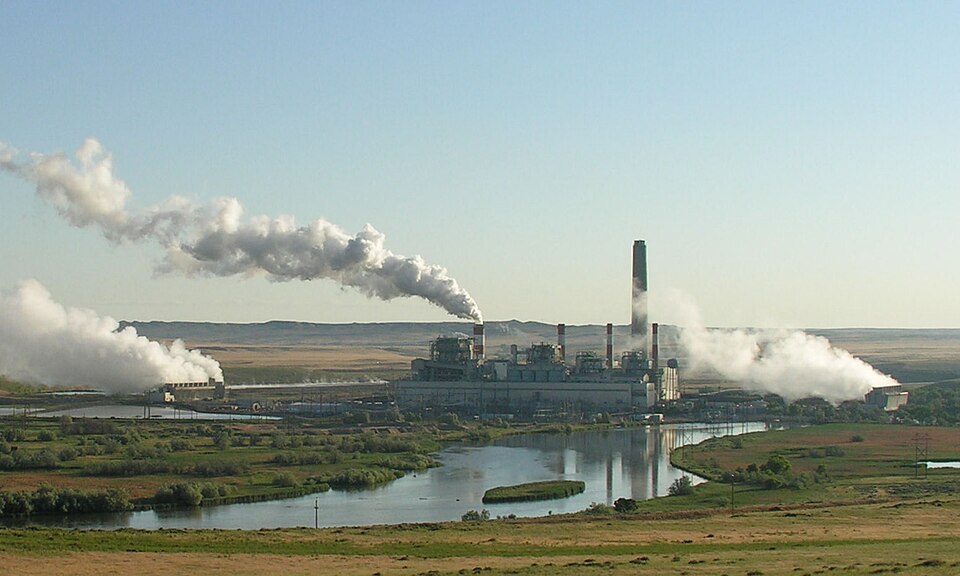
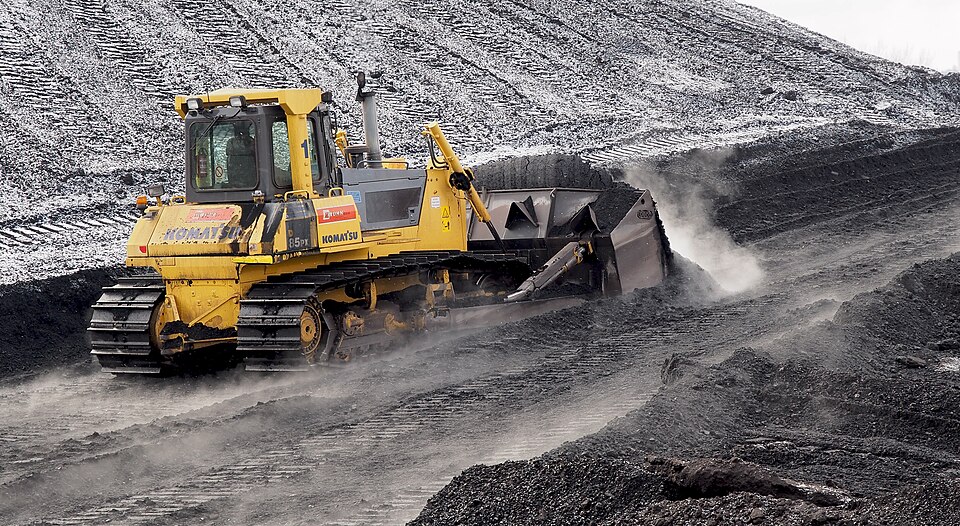
Photo: Coal plant by Dave Johnson
10 out of 10 based on 105 ratings
9.8 out of 10 based on 12 ratings
By Jo Nova
Coal, it turns out, is an infinite chemical wellspring, being converted into everything from plastic, to diesel, jet fuel, gas, methanol and fertilizer. There is no way, just no chance, that China will leave this bounty locked underground. And why are we?
The idea of converting coal to liquid fuel sounds like an expensive exotic chemical reaction that is barely used. If people have even heard of it, it’s mainly because the Nazi’s were so desperate for liquid fuel to power their tanks and armored cars, they converted coal in a large plant that became a wartime target in World War II. It produced 92% of Germany’s air fuel, and 50% of its petroleum. Who knew, those Messerschmidts were coal powered? Later South Africa used it in the 1980s in response to an oil embargo, and they still do.
Quietly China has developed a giant coal-to-liquids industry to reduce its strategic vulnerability to an oil shock or a wartime embargo, and the volume is astounding. Accurate numbers are hard to obtain, but the IEA estimates that every year China is converting 380 million tons of coal into fuel, ammonia and fertilizer.
To put that in perspective, Australia is now the second largest exporter of coal in the world, and China is converting more than we export through coal-to-liquids and coal-to-chemicals. This is also more than the USA uses.
China’s coal production is 4,800 million tons each year. Something like 8% of that converted to something else, like petrol, gas, plastic water bottles, synthetic clothes, and fertilizer for food crops.
And they also make diesel.
by Javier Blas, Bloomberg, 2nd June 2025
Largely unnoticed, the size of this obscure corner of the Chinese coal industry has reached gargantuan proportions: It consumes about 380 million metric tons of coal as a feedstock for chemical and liquid fuel production, according to the International Energy Agency. To understand its size better, it helps to think about the segment as if it were a country. As such, it would rank as the world’s third-largest consumer, only behind the rest of the Chinese coal sector and India, but ahead of the US, Japan and other top coal-consuming nations like Indonesia and Turkey.
People may think that Coal-to-liquids is only something worth doing if the price of oil is high, but that all changes if you care about energy security. And China clearly does.
The modern part of that processing was largely experimental in the early 2000s. Commercial-scale projects mushroomed in the 2010s, and, after a brief hiatus, more have emerged in recent years, particularly in the Chinese heartland, where the bulk of the country’s coal fields are located far from coastal cities. By now, its scale — which dwarfs all other countries’ coal-to-chemicals production — and growth is surprising even veteran industry observers. Look at some modernized plants and coal is nowhere to be seen: It’s mined underground almost directly beneath the chemical facilities, carried by conveyor into the furnaces where it’s gasified and transformed. From there, it goes into your plastic water bottle or synthetic fabric clothes.
And this vast silent industry is set to double. Such is the demand, reports are that Chinese use of coal-to-liquids is rapidly growing.
Any plans of China giving up coal is pure fantasy.
Chinese alchemy: Cheap fuel powers coal-to-gas and chemicals boom
By Sam Li and Colleen Howe, Reuters, 4 Sept, 2025
The fastest-growing sector in the industry is expected to be coal-to-gas.
The capacity under construction is around four times what was built over the past decade, according to Reuters’ analysis of figures from Agora Energy China, the China National Coal Association and Guosen Securities.
That would more than double annual capacity to 19.5 billion cubic metres (bcm), equal to roughly a fifth of China’s LNG imports last year.
Even though China is using less coal for electricity production, it is not using less coal overall. That extra coal is being fed into other energy, industry and agriculture:
China’s Renewable Boom Masks a Quiet Coal-to-Liquids Expansion
By Natalia Katona – OilPrice Mar 02, 2026
China and South Africa are the only countries operating CTL and CTC at an industrial scale.
It is important to note that the largest part of this demand goes into the CTC [Coal to Chemicals] industry. China has effectively replaced gas as its main feedstock for ammonia and methanol production with raw coal, to the extent that roughly 80% of these chemicals’ output is now fed by coal.
China’s largest CTL [Coal to Liquids] facility, the Shenhua Ningxia plant, commissioned in 2016, produces roughly 100,000 b/d of synthetic fuels from approximately 44,000 t/d of coal. By comparison, a conventional refinery would require a third of this amount, equivalent of 14,000 t/d of crude oil to produce a similar volume of refined products. At current prices, coal in Qinhuangdao trades at roughly $105–110 per tonne, while Brent crude equivalent costs about $525 per tonne (at $71/bbl). Even accounting for conversion costs, coal-based synthetic fuels can offer economic advantages, particularly in a volatile oil market.
If we valued energy security, we could have been producing coal to liquids and fertilizer on a smaller scale that was able to be ramped up on short notice. It would be cheap insurance against billions of dollars in losses which threaten entire annual crop cycles, mining production, export income, or even existentially, food distribution, and defense.
Asleep at the wheel in the Lucky Bubble Country.
9.9 out of 10 based on 118 ratings
9.7 out of 10 based on 9 ratings
9.7 out of 10 based on 18 ratings
8.8 out of 10 based on 24 ratings
|
JoNova A science presenter, writer, speaker & former TV host; author of The Skeptic's Handbook (over 200,000 copies distributed & available in 15 languages).

Jo appreciates your support to help her keep doing what she does. This blog is funded by donations. Thanks!


 Follow Jo's Tweets
 To report "lost" comments or defamatory and offensive remarks, email the moderators at: support.jonova AT proton.me
Statistics
The nerds have the numbers on precious metals investments on the ASX
|







.jpg)


.jpg)
Recent Comments