|
|
||||
|
By Jo Nova With the climate olympic-junket just weeks away in Brazil, the race is on for word-salad-catastrophes flavored with science-incense to shake down more cash and concessions from the rich democracies. And thus the University of Exeter proffers the first round of this year’s “on the brink” specials. The first tipping point is almost upon us, just like it was every year for the last 29 years in a row: ‘New reality’ as world reaches first climate tipping pointThe world faces a “new reality” as we have reached the first of many Earth system tipping points that will cause catastrophic harm unless humanity takes urgent action, according to a landmark report released today (13 Oct) by the University of Exeter and international partners. With ministers gathering today ahead of the COP30 summit, the second Global Tipping Points Report finds that warm-water coral reefs – on which nearly a billion people and a quarter of all marine life depend – are passing their tipping point. Widespread dieback is taking place and – unless global warming is reversed – extensive reefs as we know them will be lost, although small refuges may survive and must be protected. We are on the brink of more tipping points, with devastating risks for people and nature: the irreversible melting of polar ice sheets, the collapse of key ocean currents and the dieback of the Amazon rainforest – where COP30 will be held. With global warming set to breach 1.5°C, the report – by 160 scientists at 87 institutions in 23 countries – argues that countries must minimise temperature overshoot to avoid crossing more tipping points. Every fraction of a degree and every year spent above 1.5°C matters. It might as well be straight out of the Neolithic Sorcerers Cookbook — How to wind up the crowd before you ask for the goats and girls:
The experts got nearly everything wrongDespite the claims of coral damage in the Exeter panic report, the largest and best studied reef in the world is just fine. Even though there was “record heat” in the last few years coral cover was better than it had been since 1986. Cyclones are the biggest smasher of reefs and they haven’t changed. Arctic sea ice stopped shrinking 20 years ago, which it wasn’t supposed to, and Antarctic sea ice grew til 2015, then shrank — which none of the experts predicted.  Peter Ridd, Reef Rebels with The AIMS annual reef survey for 2025,
If you can see an effect from man-made CO2 in global cyclones in the last 45 years, the IPCC would like to hear from you:  Ryan Maue, https://climatlas.com/tropical/ Whatever you do, don’t mention The Holocene. It is the wrecking ball. Everything was hotter, seas were higher, but humans and corals survived. Keep reading → October 14th, 2025 | Tags: Hyperbole, Junk Science, Propaganda | Category: Global Warming |  Print This Post | | Print This Post | |  Art by Syaifulptak By Jo Nova Queensland has opened the veil of Sauron — toying with planetary ostracism, death, fire, and cosmic doom.
In a brave move they added up the costs of storing sacred green electrons in an artificial lake upon the mount, and decided they’d rather save the money and just stick with perfectly serviceable, reliable coal plants. Turn on the lights. This move will save every household in Queensland $1000. Somewhere, a thousand bureaucrats are shrieking. The government are summoning forbidden megawatts from the underworld. They’re calling back the black fire! And not just for a few cowardly years, but for two whole decades. The oracles of Paris will not forgive this. Queensland scraps Labor power plan in favour of ‘$26bn cheaper option’By Sarah Elks, The Australian Queenslanders will be saved $26bn – or $1000 a household – by keeping coal-fired power stations open for longer and scrapping or downsizing enormous pumped hydro schemes, Treasury analysis suggests. Energy Minister David Janetzki said the new Treasury modelling indicated the former Labor government’s renewable energy plan – which hinged on building one of the world’s biggest pumped hydro facilities in north Queensland – would have cost the state $86bn in capital expenditure to 2035. The big danger in messing with the delicate Green social conditioning is that if word gets out, this kind of rampant clear-thinking might spread. If the e-Safety commissioner doesn’t ban discussion of cheap coal plants fast enough, other states will hear about this. Consider the state next door, where the owners of Tomago Aluminium Smelter just gave warning that they will have to close down because electricity costs are too high. They’re not waiting for New South Wales to build another 50 Gigawatts of wind and solar, Rio Tinto just don’t see any future where electricity is cheaper. If only we had vast brown coal seams, or the worlds largest uranium deposit…? Tomago on death row and due to close in 2028 with no end in sight to high energy costsBy Brad Thompson, The Australian Rio Tinto is preparing to make a final call on the future of the Tomago aluminium smelter and its more than a thousand workers which could be out of a job by 2028. The mining giant, its partners and the New South Wales and federal governments cannot solve the problem of high east coast energy prices that make the smelter an unviable future prospect. A legacy coal power supply contract with AGL Energy expires in three years’ time, at which point Tomago will likely shut forever. To stay in business, it is faced with paying twice as much for its electricity needs beyond that date, a scenario that Rio and its partners are unlikely to support. If Queensland doesn’t turn into horned turnip or a snivelling hunchback, other states might get the crazy idea that they can do this too. Especially when the businesses move to Queensland…
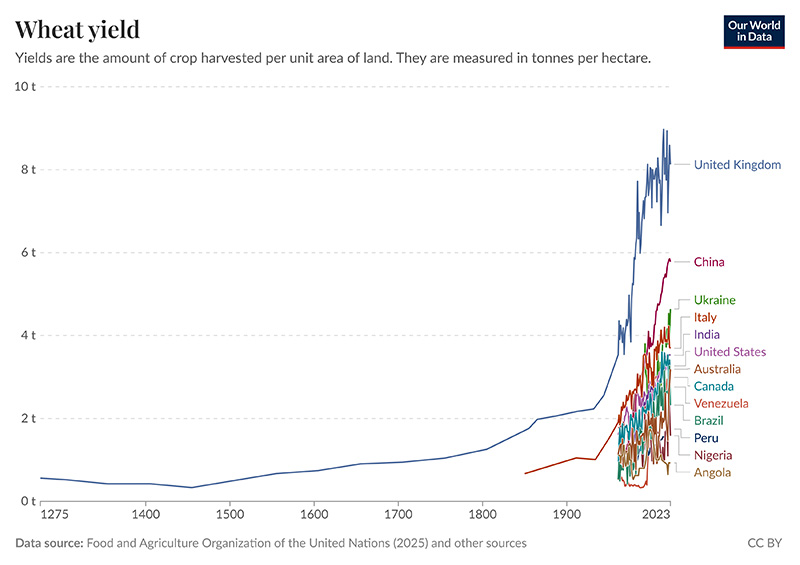
Climate change is now a severe national security threatA secret report by a Joint Intelligence committee in the UK claim climate change poses a severe threat to National Security. It’s one of the biggest risks facing Britain, the report is “understood” to say. Get ready to be bowled over by the hyperbole: It’s a “stark warning” say anonymous sources, and it’s a “hard hitting report” say the journalists who have not seen it. You might wonder how a 0.14° degree rise per decade could creep up and threaten the SAS, apart from nasty cuts from a broken thermometer — but apparently, the food supply chains are at risk, and migration from the worst affected countries might cause “social disorder”. Which begs the question of why the UK doesn’t just stop disorderly migrants at the national moat? This is the country, after all, that once stopped German tanks and bombers but now is in danger of being overrun by unarmed men in inflatable dinghies. It also seems quite incongruous — the experts have told us a million times that all migrants are good migrants, and yet here’s the Joint Intelligence team trying to raise funding by saying climate migrants might “impact UK security”. So which is it? National security threatened by climate crisis, UK intelligence chiefs due to warnMigration from countries worst affected by the climate and biodiversity crises will also have an impact on society and the economy. Some of the countries worst affected are likely to see governments fall and the rise of social disorder, leading to political instability that in turn will have an impact on the UK’s security. This is pure polished vaporware English — the right keywords are all there but the words are carefully assembled so they don’t say anything that can embarrass the Minister on GB News. And let’s not forgot, the ultimate threat here is that thanks to climate change the UK might end up being a bit more like Spain?How bad can it be? Englishmen might stay home for a holiday? The realm may experience an intolerable increase in sunshine, optimism, and outdoor dining? As for food insecurity, the UK grows more crops per hectare than nearly anywhere else in the world. Unlike some nations, Britain can feed itself. Though if supply lines get cut, people may have to live without mangoes for a while. This, below, is the awful impact of climate change on British farmers. Seven centuries of increased yield.Bring in the Hellfire missiles…
The real reason for the climate scare report — They want more money, more power and bigger titlesDefence experts have grown increasingly concerned at the lack of action, and some have called for climate finance to be considered part of national security spending. Why are they halting a climate report?Are they afraid the enemy might find out “about climate change” after they cleverly hid it inside 30 years of propaganda? The hard-hitting report was to be published on Thursday at a landmark event in London. But the Guardian understands that the report, prepared by experts over many months, has been halted. One source told the Guardian they feared it was being suppressed because the government was unwilling to face the issues raised. Overseas aid, formally known as official development assistance (ODA), which could help to stabilise countries most at risk from the climate crisis and avoid some of the impacts warned about, has been slashed. Is this just the same cynical attention-seeking media trick used in Australia last month? Leak the story, “hide” the report, discuss the conspiracy, play the victim. Call it worrying and stark, thus generating media stories which the critics can’t criticize because they haven’t got the details. Then release it anyway. Revel in the attention! Repeat and recycle! This same nation which once repelled the Luftwaffe, cracked the Enigma code, and supplied half the world with coal and steel, now stands imperiled by a mild change in the weather. Imagine having too much sunshine — It’s just not British! Beach image by Judy from Pixabay
By Jo Nova The Rainforest Reserves community group has achieved something that the Dept of Environment, Energy and Perfect-Weather has not been able to do. Not only has Minister Chris Bowen not managed to create a map to show off his achievements, but nor has any other government agency. Even with a billion dollar budget, the CSIRO has not made a map so user friendly, helpful and informative, nor has the Australian Energy Market Operator (AEMO), the Australian Energy Regulator (AER), the Dept of Industry, Science and Resources (DISR), or the Australian Energy Market Commission (AEMC). Neither was the map done by the Clean Energy Finance Corporation (CEFC) and the Australian Renewable Energy Agency (ARENA), and the Climate Change Authority (CCA). It can’t be an accident… but it does look like The Blob doesn’t want to make it easy for Australians to know how vast these projects are. ARENA got $7 billion to throw at renewable projects over 16 years. They and others, spent 3 million dollars mapping Australia to help renewables investors, but didn’t think to do a map to help Australian taxpayers? (The mapping project closed in 2021, and has now been sort of packed away.) Usually when Ministers build industries they like to cut ribbons, wear hard-hats and brag to locals about how many jobs they are creating. Instead, it’s almost like the government doesn’t want Australians to know about all the Clean Green transformation. Perhaps because it looks like this?
 Clarke Creek Wind Turbines. Queensland. — Photo Steve Nowakowski Australians wouldn’t be able to see this at all, if it wasn’t for Steve Nowakowski. Where was the ABC photography team? (Off having coffee in Ultimo and just being another billion dollar agency serving itself?) From the press release: The Truth Map totals include:
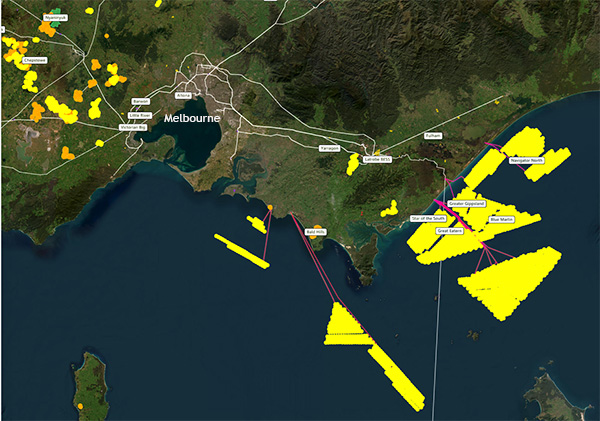
Caught short, Chris “Blackout” Bowen is dishing up the insults for The Australian and Rainforest Reserves.A normal person might think the Minister for Better Weather would be delighted that volunteers have worked so hard to highlight his work and the glorious transition. Instead he made a social media post with petty insults, saying they vastly overestimated the footprint area, and were just anti-renewable, pro-nuclear activists, and the real area was only 12% as large. Later it turned out the 12% figure came from a NSW state report and didn’t apply to the whole country. The Australian asked him to clarify, and he sent back a page of points that didn’t answer the question. The Australian prodded again, and this time the Minister’s team said the maps were inaccurate because 5 wind and 1 solar project are not proceeding. Which means, they used the recent renewables “drop outs” to attack the volunteers who had achieved more than 10 government agencies had done. Meanwhile Rainforest Reserves said they’ve added in some new projects since it was released a few days ago, and the footprint is growing. Bowen’s team said it was “replete with errors” but didn’t explain any. (If only the Minister had an up-to-date map!). Steve Nowakowski said that Rainforest Reserves keep the withdrawn projects on the database because they often restart in a new form later with a new investor. Because this map was done by volunteers, there are some projects that are missing and some that have been shifted or canceled. Footprints are often moving, and investors are also running away as they see how angry the protesting farmers are, how expensive the electricity is to build things in Australia, and how delayed every transmission line is. Rainforest Reserves invites people to send in corrections and suggestions. A few examples I took from the map: The view around Melbourne:
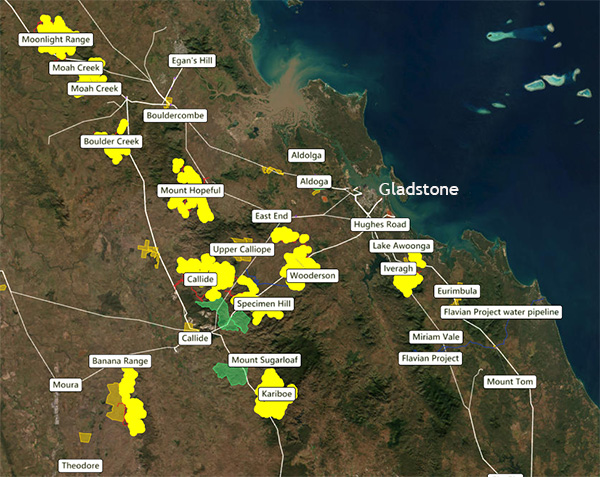
The area near Gladstone in Queensland:
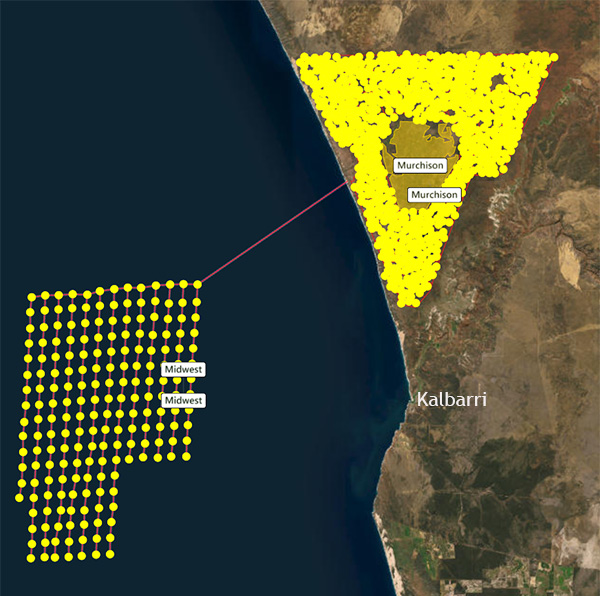
And the giant near Kalbarri in WA. Investors in Denmark have recently abandoned the offshore wind project in this map. But the land based “hydrogen” plant north of the town is still going ahead. They plan to build 500 wind turbines and 10,000 hectares of solar panels, and the government just gave them $814 million dollars of our money to help the foreign investors make a profit. The small town has a population of about 1,500, and the petition to oppose it had already gathered 4,197 signatures. We could add a few more. Even if a project has been cancelled, you know the government wants it to be there…
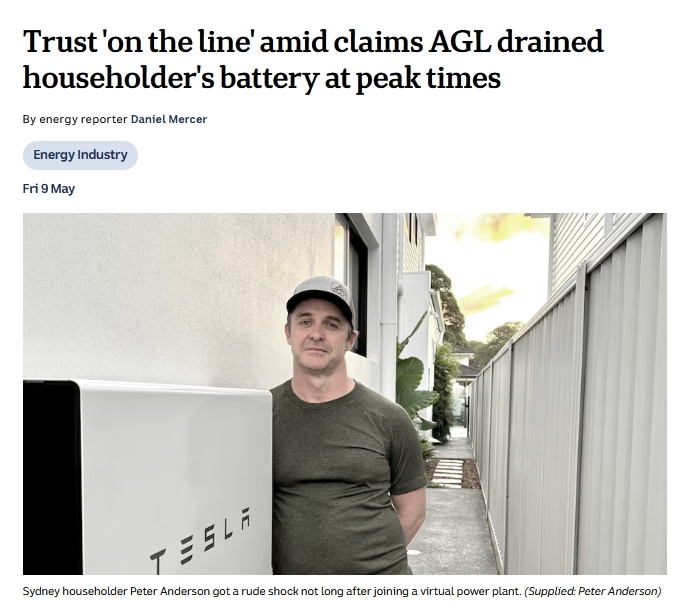
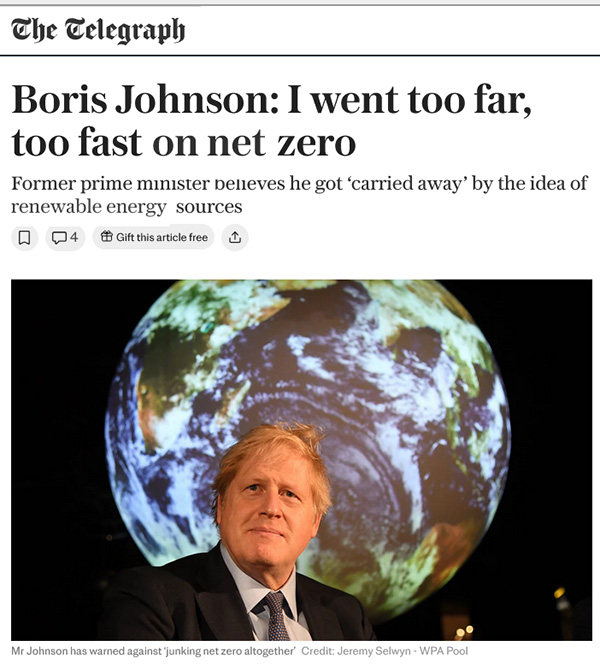
The Rainforest Reserves site and Rainforest Reserves on X * Corrected the Press Release. 28,000 km is only two thirds of the way around the equator. October 9th, 2025 | Tags: Renewable Energy | Category: Global Warming, Renewable | Print This Post | | By Jo Nova There goes that Big Back-Up Battery planIt looks like consumers won’t save the Australian grid by spending thousands to buy the batteries the government can’t afford.Unfortunately, the government has screwed it up again. They’re (we’re) subsiding solar panels and home batteries, and hoping customers will pay thousands to put a battery in their garage so that the grid managers can use it at dinner time to stop wild price spikes and blackouts. Dean Spaccavento is the co-founder and CEO of Reposit Power –– which sells a controller that connects batteries to solar panels. He says almost no homeowners are signing up for the Virtual Power Plans (VPP) where they share their battery to help balance the grid. People don’t trust the agencies, and even if they did, most of the batteries on the market couldn’t be used in a VPP anyway. They’re not fit for purpose. The government, he said, assumed you could just plug in a battery, but it isn’t like that. “The government’s definition of what qualifies as “VPP ready” is meaningless.” he says, so all the manufacturers can say their battery is “VPP ready” when they’re not. Only 4 or 5%! ‘A colossal wasted opportunity’: Reposit CEO slams federal cheaper home batteries schemeReneweconomy “No more than 4% or 5% of those batteries will ever participate in a VPP [virtual power plant] based upon data we’ve seen,” he says in the latest episode of Renew Economy’s weekly SwitchedOn Australia podcast. “That’s just a wasted opportunity. Probably 1.2 maybe 1.3 gigawatt hours of home batteries [have been] installed in the last three months, and 4% — 40 or 50 megawatt hours of that — will actually contribute to the transition of our grid from a coal-fired, gas-fired one to one based upon solar and battery.” Firstly, he explains, people just don’t trust the VPP idea (Virtual Power Plant). The first hurdle, he says, is trust. “People don’t like the VPP thing because they say, I bought this battery. This is my battery, and I don’t want to share it with somebody who’s going to make a bunch of money out of it.” Maybe if electricity retailers and the government hadn’t told everyone lies about how renewable-energy would be cheap, and how we were saving the world, customers might believe the agencies gave a toss about the people they are supposed to serve? Keep reading → By Jo Nova The Net Zero tipping point is here…Even Boris Johnson can see the inevitable grinding collapse of Net Zero is imminent. If he thought it was the way of the future, and was just delayed, he wouldn’t be saying this. But with the writing so obviously on the wall, he’s getting in ahead with the mea culpa — astutely ducking some future barbs and arrows and looking slightly like a leader of relevance still, but only because he’s ahead of the Labour Party. (And the Australian Liberals). Years ago I said the day is coming when everyone will say “I was always a skeptic”. We’re on the way. h/t Andrew Montford who says “We can’t afford politicians who ‘get carried away’.”
Boris got carried away…Boris Johnson has admitted he went “far too fast” on net zero when he was prime minister, in his most outspoken comments against the policy he championed.
Mr Johnson said he got “carried away” by the idea that renewable energy sources could replace fossil fuels and, as a result, electricity is “too expensive for ordinary people”.
Mr Johnson told Lord Elliott: “I think net zero, we went far too fast. And I’ve got to be honest about that, I got carried away by the idea that sustainable and renewable forms of energy could fill the gap. So he’s known since 2022, but said nothing until now: “When the price went up and the Ukraine thing happened, it was obvious that that wouldn’t work. And I think we did allow some more hydrocarbons but I think what you’ve got to do now is just say, you’ve got to see. You’ve got to be like St Augustine. You’ve got to say, ‘we will be chaste, but not yet’.” The wild prices of fossil fuels showed Boris that during a crisis everyone needed coal, oil and gas. It was the grand test. If windmills and solar panels were even slightly useful, everyone would have rushed to order them in 2022 instead of paying nosebleed prices for fossil fuels. Worse, it showed that countries that already had wind and solar had no protection against the price rises, because they needed gas, oil and coal too. Boris’s comments come five months after former British PM Tony Blair dropped a bombshell saying “many leaders know the current approach is unworkable but are terrified of voicing that view for fear of being labeled a climate denier. “ Thus Boris agrees with Blair (belatedly). Yet he still can’t help putting in a plea not to junk it completely: Mr Johnson said: “Blair was completely right. It’s too expensive for ordinary people. It’s too fast. But I think we should be careful about junking net zero altogether, because I think a lot of people out there do worry about the environment and don’t want to feel their government is just completely abandoning the [agenda]. Boris can probably sense that if he left it any longer it will be too late for a mea culpa. The rush is on, now that Kemi Badenoch has promised to axe the Climate Change Act, the conservative parties in the UK are both competing to get rid of Net Zero. The cat is out of the bag and it’s having kittens.
So what do we make of his avid fanatical support for Net Zero in late 2022?According to Boris, the price rise in gas and coal during the Ukraine War was the moment he knew Net Zero “wouldn’t work”. However, the price of gas and coal was high all through 2022 and hit wild historic peaks by August. Yet here is Boris later that same year in November raving about how wind and solar were remarkably cheap and we needed to “double down” on unreliable renewables to win the war?
Boris Johnson: U.K. Must ‘Double Down’ On Green Energy To Weaken PutinBy David Vetter, Forbes Britain will “double down” on investments in renewable energy as a way of achieving energy independence while weakening Russian President Vladimir Putin, U.K. Prime Minister Boris Johnson vowed this week. But in a newspaper article sketching out a revised energy strategy, Johnson also called for additional fossil fuel exploration in the British isles, as well as further investments in nuclear power, leaving some commentators nonplussed. Writing in the U.K.’s Daily Telegraph newspaper, Johnson noted that “Putin’s strength—his vast resource of hydrocarbons—is also his weakness. He has virtually nothing else.” He went on: “If the world can end its dependence on Russian oil and gas, we can starve him of cash, destroy his strategy and cut him down to size.” Johnson argued that renewable energy, such as wind and solar power, offered the best path to achieve this, saying his government would “double down on new wind power” and “do more to exploit the potential of solar power,” which is “remarkably cheap and effective.” Was he lying then, or is he lying now?
In the end, Boris Johnson totally failed his country causing crippling economic losses that were completely avoidable.
PS: please, someone tell The Liberal Party in Australia they are the last ones on Earth who still “believe” in the climate voodoo.
Thanks to Tom Nelson on X
By Jo Nova It was always going to happen, as long as the Minister for Weather was determined to control Pacific Decadal Oscillations with windmills. Everyone would be happy-happy until the bill arrived. In a survey of 500 Australian companies, the rapid rise of energy costs are now the single biggest concern. Any given business was three times as likely to worry about the price of energy rather than about Trump’s tariffs. Yet in the election campaign, mere months ago, media coverage of US tariffs was wall-to-wall. Likewise, the billion-dollar-ABC spends 100 times as long lecturing us on foreign wars as it does discussing the things Australians need, like lights, heat, air conditioning and jobs. The national conversation about electricity grids is nothing more than renewable advertising slogans and fairy wish spells. Everyone can subsidize everyone else to buy solar panels and batteries, and we’ll all have free electricity, yeah? Is there a productivity crisis in Australia. Shh! A survey of more than 500 Australian companies has found energy costs have become the top business challengeMatthew Cranston, The Australian Businesses now rank the cost of energy as the chief concern for their future, rating it almost three times more worrying than US tariff and trade disruptions, according to new analysis. Several corporate leaders, including those in the manufacturing sector, say the cost of energy is rising so fast that it’s now risking their competitiveness with importers… BHP’s Mr Henry told a shareholder forum last month: “The reality is … Australia has electricity costs that are two to three times higher than countries that we are competing with and 50 to 100 per cent higher than the US.” The chief executive of data centre owner NEXTDC, Craig Scroggie, said higher energy costs were crimping Australia’s competitiveness. “No one is happy with higher energy costs, especially when the government says they are going to be low. We’re reached the point where we are thousands of miles away from most factories and smelters, but we still can’t make anything cheaper for ourselves than they can. Energy costs are rising so fast in Australia, it’s less expensive to dig up rocks, put them on ships and send them 6,000 kilometers to China, to smelt the steel with our own coal, and then ship the widgets right back to us. And if it’s made with slave labor and plenty of pollution, that’s OK. Image by James Joyce from Pixabay
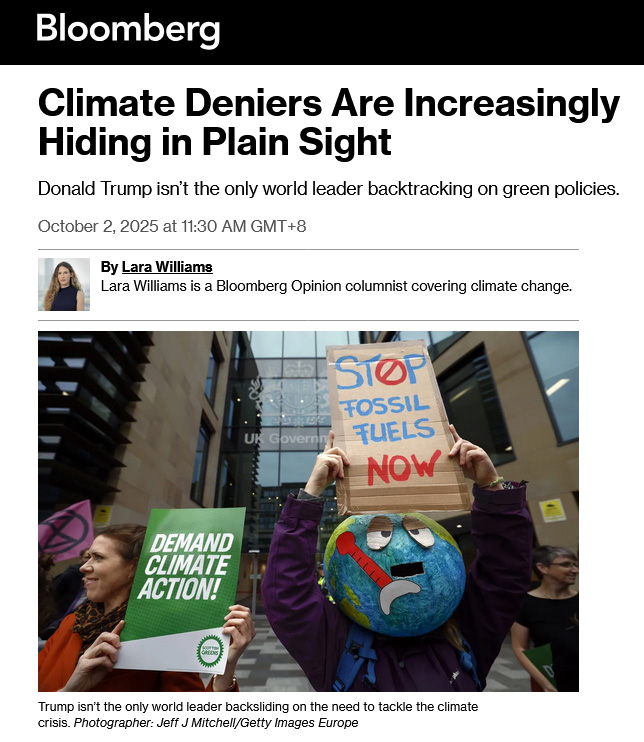
By Jo Nova So many political leaders are backtracking on green policies, Bloomberg laments the Climate Deniers are Hiding in Plain Sight. Sir Kier Starmer was a star at the last COP meeting in Azerbaijan, but this year he doesn’t even want to go to the next COP meeting in Brazil. Apparently his aides “are worried about being criticized by the Reform UK party.” Only two years ago Starmer was criticizing Rishi Sunak for missing COP27, now he’s too scared to go himself lest he look crazy-green. Everywhere countries are saying they care about climate change but are doing the opposite. The EU nations are fighting over their 2035 and 2040 emissions targets, Mexico is borrowing up to keep its oil company afloat, Canada scrapped their carbon tax, and is being “coy” about their 2030 target. Governor Gavin Newsom just boosted oil drilling in California “a year after he described the industry as the “polluted heart of this climate crisis.”” Now Kemi Badenoch, leader of the Tories in the UK, is promising to dump The Climate Change Act if she gets elected. Suddenly, the race is on to be skeptical. She’s in an existential fight for relevance against the storming Reform party which are polling as high as 29% now, compared to the Labour government on 21% and the Tories at just 16%. All those skeptical voters were there all along, enough to break the two party system in Britain. The Climate Voodoo Doll is coming undonePonder how fast it all is. Only one year ago UK voters had a choice of Net Zero by 2050 from both sides of politics. Labour were offering to be recklessly green, and the Tories were aiming to be 95% as reckless, while calling themselves “pragmatic”. The BBC lays out how similar the two main Parties were in 2024 — Labour wanted to decarbonize the whole grid by 2030, while the Tories were aiming for “only” 95% of the grid to be low carbon by 2030. Labour hoped to ban the sale of new petrol and diesel cars by 2030, but Richi Sunak pushed that back all the way to… 2035. Then Trump won, and Nigel Farage stood up and said it is ‘absolutely nuts to call CO2 a pollutant‘, and the crowd roared. Somehow, improbably, Farage is now “nearly as trusted” as Labour on climate change, which only shows how many skeptical voters there are. They trust him to get rid of climate parasites. Kemi Badenoch vows to repeal Climate Change ActTory leader says she would replace it with ‘cheap energy’ strategy, ending decades-long consensus on climate Fiona Harvey and Helena Horton, The Guardian Thu 2 Oct 2025 Kemi Badenoch has vowed to repeal the Climate Change Act if the Conservatives win the next election, doing away with controls on greenhouse gas emissions and dismantling what has been the cornerstone of green and energy policy for successive governments. The Conservative party leader was already committed to scrapping the UK’s net zero target but repeal of the Climate Change Act would go much further. It would remove the need to meet “carbon budgets” – ceilings, set for five-year periods, on the amount of greenhouse gas that can be emitted – and disband the Climate Change Committee, the watchdog that advises on how policies affect the UK’s carbon footprint…. Badenoch’s announcement, before the start of the Conservative party conference this weekend, brings the destruction of the three-decade long consensus on the climate among the UK’s major political parties, under which all have campaigned on strengthening climate action rather than weakening it. Playing a game of “slightly less crazy” was a hopeless trap for the Conservatives. The people trying to be a small target are the weaklings of climate battles. They have nothing to campaign on. They can hardly point out all the flaws in climate policy when they want to make most of the same mistakes. Instead the crazy people look like they have conviction (at least), and the less crazy people just look weak. (I’m looking at you Sussan Ley). When Prime Ministers are promising to control the weather with power stations, the only response is mockery and derision. As it happens, even after busting the 17 year Uniparty consensus, Badenoch is still not much of a skeptic: Badenoch says: “Climate change is real. But Labour’s laws tied us in red tape, loaded us with costs, and did nothing to cut global emissions. Previous Conservative governments tried to make Labour’s climate laws work – they don’t. She says “climate change is real” so the crocodiles won’t eat her first, but it doesn’t work. Donald Trump didn’t pander or pussy-foot and look where it got him — elected twice (and probably three times)? Once a leader breaks the sacred climate vow in any way, they are an Apostate — there’s no point being half-an-Apostate, because The Blob will throw just as many bricks. But there is something inspiring about a leader who takes the bullies on directly instead. Being fearless is inspiring. Everything is a catastropheFormer British PM Theresa May, speaking on behalf of The Blob, called Badenoch’s move a “catastrophic mistake”. It wasn’t that thousands would drown, instead a catastrophe was something that broke “the consensus”. Responding to Ms Badenoch’s plans, the Tory peer said: “I am deeply disappointed by this retrograde step which upends 17 years of consensus between our main political parties and the scientific community. As if there was something wonderful about both political parties and the scientific community all saying the same thing at the same time. As Dave in the States says: “It’s catastrophe for grifters, and the subsidy and grant harvesters. “ And isn’t this just the perfect quote?: “To row back now would be a catastrophic mistake for while that consensus is being tested, the science remains the same.” The science is always the same, anything else is not permitted.
October 3rd, 2025 | Tags: Denier (the insult), Skeptics, UK | Category: Global Warming | Print This Post | | |
Jo appreciates your support to help her keep doing what she does. This blog is funded by donations. Thanks!
 Follow Jo's Tweets
   
 
|
|||
|
Copyright © 2026 JoNova - All Rights Reserved |
||||










Recent Comments