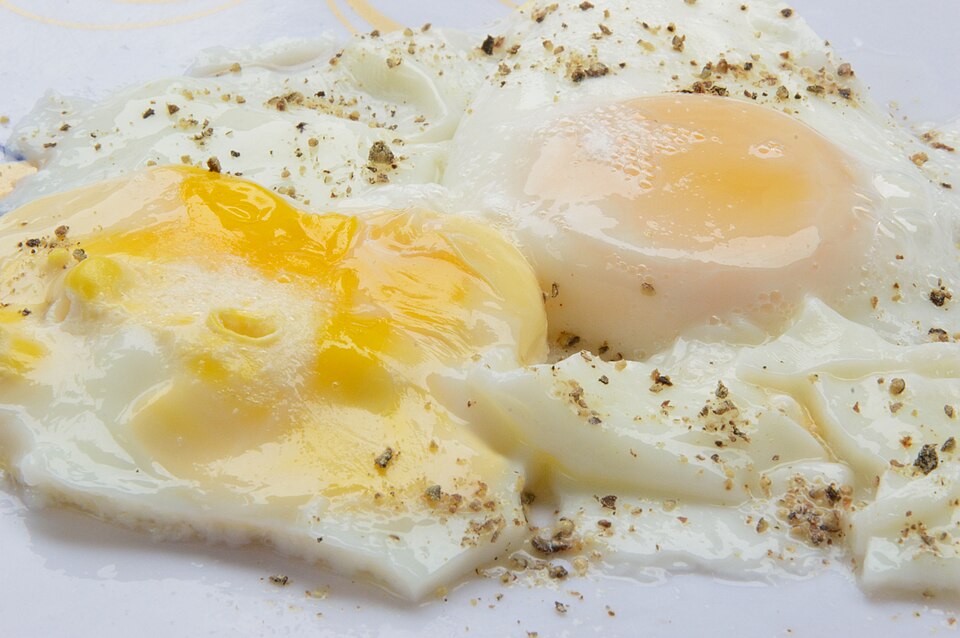
Photo by Biswarup Ganguly
By Jo Nova
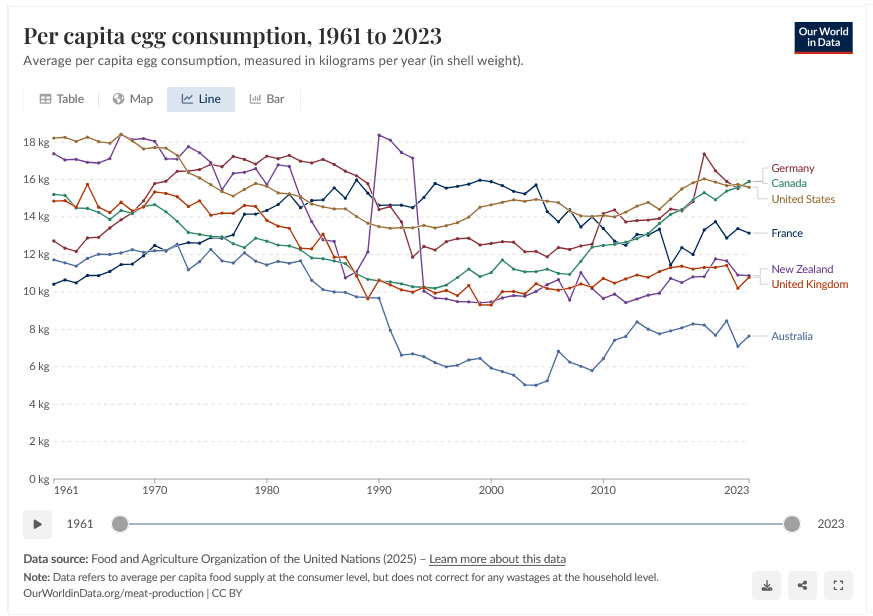
The Experts said eggs were high fat foods with too much cholesterol, and egg consumption halved for twenty years in Australia, and still hasn’t recovered. Though in the last ten years egg consumption is increasing in places like the USA and Canada.
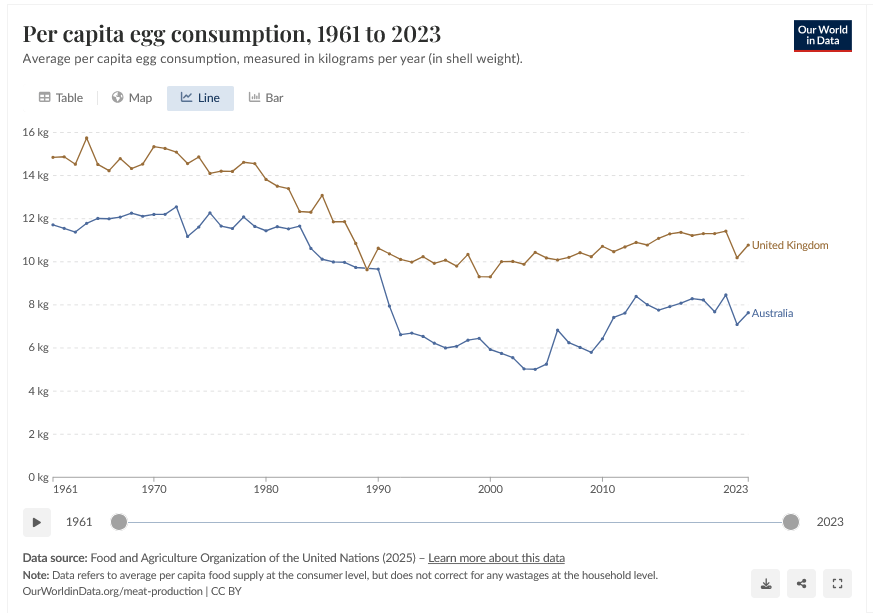
Egg consumption per capita in Australia and the UK. OWID
Research Shows That Avoiding Eggs Entirely Linked To 22% Higher Risk Of Memory-Stealing Disease
[StudyFinds]: But now researchers have tracked nearly 40,000 older adults for more than 15 years, and found that people who ate eggs regularly were far less likely to be diagnosed with Alzheimer’s disease than those who never or rarely touched them. The most frequent egg eaters, those having five or more servings a week, showed a 27% lower risk.
In this graph below, it’s almost like eating less than 10 grams a day of egg is a deficiency….
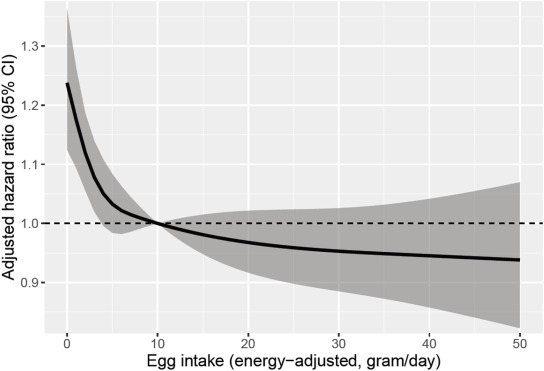
The study was published in The Journal of Nutrition, and drew on data from the Adventist Health Study-2.
The results show there is an association between eggs and dementia, but this sort of study can’t prove causation. It’s always possible that people who have some high risk of dementia for some reason choose not to eat eggs. But on the plus side, the results were dose dependent — the more eggs people ate, the lower their risk of Alzheimers, which is about as good as it gets in this kind of study. And they did exclude all the obvious factors, including vegans, and still found the strong link.
There are reasons…
Eggs are some of the richest sources for choline which is essential from brain and liver health. We know people taking cholinergics (e.g. some antihistamines) may be at higher risk of Alzheimers, and the condition is associated with a loss of cholinergic neurons and a drop in acetyl-choline levels.
Two eggs provides almost as much choline as a 3 oz steak but cost a lot less. Eggs also have antioxidants like lutein and zeaxanthin, and they have some DHA fat that is more common in fish oil (especially if the eggs come from free range chickens.)
The study was funded by the American Egg Board, so there’s a potential bias, but it begs the question — why wasn’t this study done in 1980 before the experts tossed eggs under the bus? Where was the government?
For forty years people thought they were doing “the scientific thing” and were following the experts, but potentially thousands of people suffered with a form of dementia that might have been prevented?
Alzheimers is the fifth leading cause of death in the USA but the leading cause of death in a more egg-deficient Australia and also Number 1 in the UK. Though of course, there are other contributors that differ from country to country, like sunlight, vitamin D, and recent medical experiments.
Tens of thousands of people suffered. They missed out on the joy of eggs, and possibly got Alzheimers too.
For no good reason I can think of, apart from being a rich nation with plenty of beef, Australia has some of the lowest egg eating habits.
Related:
- Is lithium the missing essential nutrient for brains that could prevent Alzheimers?
- One in six dementia cases might be avoided with Vitamin D
REFERENCE
Jisoo Oh, Keiji Oda, Gabriela Chiriac, Gary E. Fraser, Rawiwan Sirirat, and Joan Sabaté, affiliated with the Center for Nutrition, Healthy Lifestyles, and Disease Prevention at the School of Public Health, Loma Linda University, and related departments at Loma Linda University in Loma Linda, California “Egg Intake and the Incidence of Alzheimer’s Disease in the Adventist Health Study-2 Cohort Linked with Medicare Data. . The Journal of Nutrition.” DOI: 10.1016/j.tjnut.2026.101541.
OWID – Egg consumption






I’m glad U.S. Secretary of Health and Human Services Robert F. Kennedy, Jr. is doing such an excellent job revising the food pyramid, at least for the USA. The previous one, based on junk science, emphasised too many carbs and processed seed oils and not enough meat, animal fats or eggs brought nothing but ill health and disease.
For example, you rarely saw obese people before about 1980 when the USDA and the Department of Health and Human Services released the very first edition of the “Dietary Guidelines for Americans” which de-emphased meat and animal fats and promoted carbs and seed oils. This was followed by many other countries including Australia.
351
For a laugh, here’s a Cola advert from decades ago.
https://imgbox.com/Cxc7nhK1
80
Gold. I’m surprised the tobacco industry didn’t adopt the same strategy.
50
Reminds me of a time I saw an infant drinking coca cola out of a babies bottle. I guess their parents do not want teeth for their child! I call it phosphoric acid, sugar caramal solution with carbonation!
10
The powers that be certainly knew something, eh.
Remember the bird flu that was only attacking chickens?
And how many hundreds of thousands of chickens got wiped out.
Just coincidence?
I DO NOT think so.
130
Visiting Noosa at the moment, bought 12 eggs from Coles, i can honestly say they are the most disgusting eggs I have eaten in the past decade; I eat two eggs every morning. How is it possible in a first world country that prides itself etc etc is producing such poor quality food; are these imported free range eggs? As for government health policy, it has always been based on lies; read it to find out what not to do.
230
A big part of the problem is that a big chunk of the best genetic stock for producing eggs was culled during the bird flu panic. It takes years/decades to selectively breed chickens to make sure the best egg layers get to reproduce. Poultry farms are still trying to claw their way out of the hole they dug (or the government dug for them) in 2024, and consumers are stuck with sub-optimal eggs until they do.
310
The government mandated killing all the chickens. But why? It’s rare for humans to get it. Had they just let the bird flu run its course, some chickens would have died while the resistant ones would have lived and improved the flock with more bird flu resistance.
230
If you visit the Chinese factory where they are made, you will understand why they are such poor quality. Seriously though, even if chooks are “free range”, if there is stuff all nutrition in their micro realm and they are given low quality food because of intense cost pressure from Coles, then their eggs will be rubbish.
180
Chinese fake eggs:
https://youtu.be/2ZPiv7JVaxU?si=ztwqOtg-KK4UHrsi
40
I think some eggs every week are a good thing, but I wonder if a multi vitamin pill every day would also help?
I’ve tried to increase my vitamin D intake by taking a capsule every day, but I also try to eat meat every day and I eat vegetables and fruit as well. Who knows?
120
The problem with vitamin tablets/capsules is absorption. Your kidneys send 90% of the vitamins back out your urethra within a couple of hours of taking them. Getting them through food is much better. Or in the case of vitamin D, through sunlight.
170
In winter, when grey skies are persisting and I’m stuck working indoors most of the day, l use D3 transdermal patches.
70
I’m in the tropics and love the sun on my back so wondering if I would still be converting UV into D3 at my age I was recently tested – 870, so I do. If I spend time in the yard my BP comes down but I also think the sun has a NO benefit.
40
I’m in the tropics and love the sun on my back so wondering if I would still be converting UV into D3 at my age I was recently tested – 870, so I do. If I spend time in the yard my BP comes down but I also think the sun has a NO benefit.
30
All things in moderation is the way to go. Some salt, some sugar, some meat, some veg, some fruit, some climate change, some campaigning to remove the Prime Minister, and in no time you will be feeling better.
290
Not really as eggs are quintessential nutrition, except for vitamin C.
https://www.dietvsdisease.org/eggs-nutrition/
100
I spent the better part of a decade eating egg-white omelets. If there was ever a reason to go Luigi on some public health official, that’s about as good a reason as I can think of.
At least the Covid shenanigans only lasted until Delta and Omicron came along and shattered the ‘expert consensus’ (at least for those of us who were paying attention and quit complying) after a year or so. But 10+ years of eating vile egg white omelets and pretending they weren’t disgusting is enough to drive a man towards buying a cabin in the woods, writing an omelet manifesto, and start mailing out letter bombs filled with powdered eggs.
190
Hmmm… The study has potential bias due to funding sources, “dementia” (not Alzheimer’s alone) is a leading cause of death in Australia because people live longer, plenty of evidence also suggests high egg consumption can be a risk factor for a range of diseases, and even this study itself observes that eating nuts/seeds and legumes instead of eggs has a similar effect in reduction of risk for Alzheimer’s disease.
People are free to eat what they like, but I’d not be inclined to think this is proof I should up my egg intake, especially given the vast scale of animal injustice associated with egg production. I think that overall the risks to health from doing so outweigh any possible but not proven effect on Alzheimer’s disease.
Interestingly, as someone who follows a vegan lifestyle, I do still eat some eggs and I think that can be consistent with vegan principles (incidentally about the best tool we have at our disposal for tackling animal injustice). But I’m not gonna start eating more because of this study!
335
You speak of potential bias, then trot out the familiar animal justice routine. Lol, very few groups have displayed more bias than the Animal Justice Leagues of the world. Methinks though dost protest too much.
“Honey, steak and eggs tonight, to honour this miscreant!”
I must replace my “PETA – People Eating Tasty Animals” number plate surrounds, just to feed the economy and displease you.
331
It seems more than a little odd to think that caring about animal injustice is so objectionable that you’d like to displease someone who does, but there you go.
212
Jo did highlight the potential for bias due to the funding source. But it’s also likely that no one but the egg industry has an interest in such a study. So a vested interest is more likely to fund it.
It was also made clear that it is not a proving study. The study only shows an association.
Reader bias will possibly be a greater factor than funding bias. As in who gives this association study any validity and who doesn’t.
150
Get some chickens! Ours are far happier than any wild chicken or commercial egg-layer.
They know the cat won’t eat them and the dogs are on the other side of the fence, and their house at night is safe from foxes. They have far better food than either wild or laying chooks, and get to help the dig the vege gardens and root around in the compost.
I am saving the chickens of the world from animal injustice, 4 chickens at a time! ..and not worrying at all about what some Govt official says about how many eggs to eat!
70
I wonder if this is really a consequence of eating eggs or for people that don’t eat eggs eating a high carbohydrate diet.
If you ask this question in a search engine, “Is there an association between Alzheimer’s and type 2 diabetes from high carbohydrate diets” you get the following response.
Epidemiological and mechanistic research shows that type 2 diabetes (T2DM) is a well-established risk factor for Alzheimer’s disease (AD), and high-carbohydrate diets—especially those leading to chronic hyperglycemia and insulin resistance—are strongly linked to both conditions pmc.ncbi.nlm.nih.gov+1.
How High-Carbohydrate Diets May Contribute
Chronic hyperglycemia: Diets high in refined carbohydrates can cause persistent high blood sugar, damaging blood vessels and impairing cerebral blood flow http://www.myalzteam.com+1.
Insulin resistance: Excess glucose intake over time can reduce the brain’s ability to use insulin effectively, disrupting synaptic plasticity and neuronal survival Diabetes In Control.
Advanced glycation end products (AGEs): High sugar intake increases AGE formation, which promotes amyloid-beta accumulation and tau hyperphosphorylation—hallmarks of AD MDPI+1.
Inflammation and oxidative stress: Poor glycemic control and high insulin levels trigger systemic and brain inflammation, worsening neurodegeneration MDPI.
Shared Pathways Between T2DM and AD
Insulin signaling in the brain: Insulin is essential for cognitive function; insulin resistance in T2DM impairs this signaling Diabetes In Control.
Amyloid-beta and insulin-degrading enzyme: High insulin levels compete with amyloid-beta for breakdown, increasing plaque formation MDPI.
Vascular damage: Diabetes-related microvascular disease reduces blood flow to the brain, contributing to both vascular and Alzheimer’s-type dementia http://www.myalzteam.com+1.
In other words, people who eat more eggs may be less likely to eat as many carbohydrates and less likely to develop Type 2 diabetes and Alzheimer’s disease.
Which brings us back to very bad advice from the US government about diet in 1992. The government introduced the food pyramid which encouraged people to have more grains and less protein. As a result, Type 2 diabetes rates, which were mostly stable during the 1980’s almost doubled between 1990 to 2010.
210
Many researchers refer to Alzheimer’s disease as “Type 3 diabetes” because of the theory that it is caused by insulin resistance and low levels of insulin-like growth factor (IGF-1) in the brain.
90
You’ll have to read the study ( https://www.sciencedirect.com/science/article/pii/S0022316626001902?via%3Dihub ) to see how they’ve accounted for other variables. Such as:
It is possible those who had low egg intake but had alternate protein rich sources of food also had lower carbohydrate diets. That’s if it’s true the higher egg eaters had lower carb diets.
If there is that low carb similarity between the substituted proteins and eggs, but only the egg had the lower incidence of Alzheimers, then it perhaps points to the egg association.
40
That’s food for thought (p.i.). I have often wondered about the connection between diet and the modern health issues (allergies, diabetes, etc). Did the US food pyramid ideas get promoted elsewhere too? Or are destructive foods simply cheaper than constructive foods?
90
The food pyramid did get picked up by other countries and it originated in Sweden in the 70’s. Grains and cereal based products like breakfast cereal and pasta, are often cheaper but shelf life and convenience may be a bigger factor for the poor, particularly those living alone.
00
My wife died from Alzheimer’s in 2023. I heard every expert and what people should do to avoid it. My wife hadn’t read any of those reports but I can assure you that she did not fit the profile. She was 78 years old, not overweight, she did a great deal of physical work, she was very active, she kept her brain active with her fabulous quilting, she read, she ate sensibly including her two eggs a day, vegetables and mainly small meals, no desserts, no alcohol, no smoking ever. She still got that dreadful disease.
They don’t know, do they?
480
There are rules, guidelines, and exceptions. Humans often don’t fit any of them. But most importantly, while she played “a good innings” (as my 87 yo Dad said – and he was horrified at the thought of passing at the age of 87, the devil’s number in Aussie cricket) I feel greatly for your loss and I hope you aren’t lonely.
240
There are numerous studies that seem to show that taking a multi vitamin every day does help with proper brain function.
And probably a good thing if you suffer from a very poor diet.
https://www.massgeneralbrigham.org/en/about/newsroom/press-releases/multivitamins-improve-memory-and-slow-cognitive-aging
100
An interesting study. Our girls, who free range frequently, produce wonderful eggs, many of which I give to friends. We have previously restricted the number of eggs we eat daily, but will now increase the number! On the other hand, the Covid debacle showed the suspicion with which we should regard “studies”.
240
Why do I suddenly have an urge to have a cheese ham and a 150 gram egg omelet?
170
BTW. Covid was such a “ shakeup” of considerations re health. We refused vaccination, and decided to improve our diet to further enhance our resistance to infections of all kinds. To ensure a good start every morning we blended carrots/green apples/frozen blueberries/ celery / slice of unpeeled orange in water for a morning drink. We still do. We also take a vitamin combination which is believed to strengthen arteries, and an excellent probiotic.
We obviously get a good deal of exercise on our farm, but I still do a regular walk, principally because walking is said to be the greatest predicted of longevity. In our case, that may be diminished in summer by the regular presence of snakes! But it also allows me to check pasture, fences etc etc.
Who knows about these factors? However, I did comment to my GP recently that doctors rarely ask their patients about what they eat and how much exercise they get. Much easier for them to write a script or call for “ more tests”……..
230
Incidentally…that GP visit ( for my drivers licence support) was the first visit in over three years…..hope I don’t jinx myself!
200
For what it is worth, here is what grok has to say about this article and the comments here…
Bottom line: Promising signal for eggs as part of a brain-healthy diet (choline, etc.), consistent with other recent data. Eat them if you tolerate them and enjoy—ideally as part of varied whole-food pattern (veggies, etc.). More RCTs or better-controlled studies would strengthen this. Past anti-egg advice was overly cautious for most; current evidence supports moderation-to-regular intake for many. Always consider personal health (e.g., consult doctor for specific conditions).
60
It’s easy to find a dozen eggs, in the shops, for $1.99 or $2.99. Despite my reservations I bought and have tried both. Can’t say there’s much difference but they’re not close to the free rangers I once had. The boxes say “caged eggs” which I thought had been outlawed.
They’ve been researching ALzheimers for decades. Other than the genetic link for early onset Alz, there’s been little headway.
70
I remember seeing a lot of “double-yolker” eggs in the frying pan when I was a kid- haven’t seen one for decades. The internet explains the biological mechanics of why it happens but I’m interested if anyone has a theory why it seems to have been occurring more often many years ago. Or, are people still seeing double-yolkers nowadays?. As a side note, I live in Aus and only buy free range eggs.
Similarly, a mate recently remarked on how you used to see chunks of rind in bacon. Not the outer rind, we’re talking about those gristly oval bits you’d find in the middle of the rashers. Has the bacon changed or is it just the processing of the bacon that has changed?
20
Jon, regarding the bacon rind, I think that you’re talking about cartilage and even bone that used to be in bacon. That disappeared many years ago when they changed the cuts.
20
It all comes down to quality control. The eggs are all “candled” that is passed through a light that detects double yolkers and other non desirable defects. If the egg is essentially the right stuff, not rotten or yolkless, then these eggs go into manufacturing egg. This is in the form of pureed egg with the addition of sugar or salt.
So when you thought you were on a winner, the marketers are only aiming at uniformity, every egg has to be the same as every other egg.
30
“the marketers are only aiming at uniformity, every egg has to be the same as every other egg.”
All modern factory food has that aim, all the ingredients, all the processing and all the product.
This is the ruination of every great food product that started off in Aunty’s kitchen, got sold at local Farmers Markets, was spread around the State in farmers markets, then made in a small factory somewhere until it was bought out by a larger company because it was so successful.
The first thing they do is find cheaper ingredients and faster ways to make it, ruin the product and people stop buying it. End of story.
30
We’ve had quite a few double-yolkers lately. They have been in packs of large free-range eggs we buy in our local supermarket.
20
Video:
How to crack an egg one handed.
https://youtube.com/shorts/q8kP0pRFRMc
30
I think that’s because for decades Australia was a nation that got up in the morning, poured out a bowl of cereal with a cuppa for brekky. Then quickly shoved them down and went off to school/work. We love our Weet Bix and Kellogs. Still do. But certainly the “grab a coffee on the way to work” trend has certainly taken off in the last 40 years, along with the brunch culture where cooked breakfasts are more likely.
71
Gosh the world is becoming an interesting place. Sometimes grok (free version) will respond to dozens of enquiries. Other times it reaches its message limit quite quickly. This morning it did the summary and critique above, responded to one question about automated blog message processing, and when I asked for alternatives that was it.
Sigh. Sometimes the computer just says no and that’s it for the day.
60
It must be female.
60
‘Go to work on an egg’,the tagline,
Eaten five times a week would be fine,
As a good healthy diet,
More Australians should try it,
And evidently slows mental decline.
70
Having read this, one may decide to stop eating altogether. On the other hand we are living longer today, than at any other time in mankind’s history!! Must be doing a lot of things right!!
As Joe Bjelke Peterson once commented, I must go feed the cooks!!
80
Way back in BC this witticism was common –
“Thou does’t not eat thou cans’t not s–t and therefore thou shalt die”
80
Eggs have NEVER been a problem. Just legacy msm bs as usual, just like the low fat nonsense, started by the cane sugar industry.
You can eat 6 a day without issue.
Yes, I can prove that. A ultrafit youtuber I follow did just that with full medical and blood work before and after a month, so 180 eggs. No significant change.
Nature knows best, natural food over synthetic.
Sun rather than a pill for vitamin D.
130
FWIW – more bonuses
“New Research Suggests Moderate Egg Consumption Is Linked to a Longer Life, Doctor Breaks It Down
A 2025 study tracking adults over 70 found that eating eggs one to six times per week was linked to a 29% lower risk of cardiovascular death and a 17% lower risk of dying from any cause.”
https://creators.yahoo.com/lifestyle/story/new-research-suggests-moderate-egg-consumption-is-linked-to-a-longer-life-doctor-breaks-it-down-150000967.html?guccounter=1&guce_referrer=aHR0cHM6Ly9pbnN0YXB1bmRpdC5jb20v&guce_referrer_sig=AQAAAJrZ4T7-71g0Fq6RDhXFVk6MBODz2i6RugM2htkfExQmiCk5vx9laUYTAELunRD9DSiiEyetbc8kPtL1tJcwj4ghnD5oDKtm4DwWsArm4tv7oElh8jFw6E0u8M-Vk99riGFE5Z4WTLxwRY0sUGMJLafnwuMrQlCTohPNh_1N567f
Via https://instapundit.com/796489/#disqus_thread
60
Wait, what! Does that mean some people may never die?
Or is that 17% a consequence of covid vaccines where there was a surge in excess deaths that couldn’t be attributed to anything? 😉
50
I think I had eggs last week.
sarc
40
There was an egg and 5,000 iu of D3 on Mrs H’s plate virtually every morning.
Didn’t help.
110
That’s sad Hanrahan. You can only do what you can do.
110
Thanks Annie. We were together a long time.
80
Sorry about that. No rhyme or reason in many cases.
My wife is an egg fiend but it does not seem to have helped her avoid Alzheimers.
Just the other day she said she wonders why she ever married me.
100
For breakfast we each eat two eggs fried in butter everyday. Sometimes we’ll have an omelette in the evening too.
Something we never did was the yolkless white thing. An insult to the hen, producing all that delicious beneficial yolk.
140
” The Experts said eggs were high fat foods with too much cholesterol, and egg consumption halved for twenty years. ”
Looks like the eggspurts were wrong.
120
Az must be hard to study, I doubt they can even tell when it starts.
I now believe it was slowly eating away at Mrs H’s brain for years before diagnosis. Thinking back I remember low level OCD for her long before then.
If testing a prophylactic, if Az is diagnosed within 5 years, it prolly preexisted. If it preexists you are looking for a cure and I doubt they have any idea about that.
50
Got my sympathy H, my mother developed dementia in her final years.
To be ultra cynical and unfortunately this is reality- the medical / pharmaceutical industry don’t want to find a “cure”. They want to sell sufferers a drug that you take for the rest of your life. That’s the money profit model that suits them best.
Whether it’s dementia/AZ, blood pressure. cholesterol, depression or many others, there has to be a little daily pill otherwise there’s no money. Or a jab or a yearly test to produce some fancy number. If there’s a cure, there’s less customers.
60
Vitamin D keeps popping up as a topic. If you’re not getting enough sun,like today in Perth, this might be handy.
AI Overview
A 2011 “Big Vitamin D Mistake” statistical error by the Institute of Medicine (IOM) resulted in a recommended daily allowance (RDA) ~10x too low, with analyses suggesting nearly 9,000 IU/day—not 600 IU—is needed for 97.5% of the population to reach adequate levels. Current guidelines may leave many deficient, while actual toxicity is rare and typically caused by extreme overdosing, not standard supplementation.
80
John Campbell reported on this about 5 months ago, and gives more details.
20 minutes.
https://www.youtube.com/watch?v=AtoxkK7MeKc
( I’m still taking 8000 IU/day, with its cofactors.)
Cheers,
Dave B
30
While we are on the subject of dementia/AZ, my favourite hobbyhorse, essential trace element low dose lithium orotate actually removes alluminium from the brain.
30
I used to like eggs. Now I don’t. I suppose I’ll start having a 27% greater risk becoming Alzheimic or at least having senior moments. Something more to get worried about? I couldn’t care less.
50
What would Humpty Dumpty say?
20
My father, who passed at the venerable age of 91 lived, besides breakfasts, lunch and dinner, on one raw fresh egg a day, in a mix of milk, (egg flip) and sometimes with a dash of vermouth. A pinch of sea salt was never missed. He never suffered from any sort of dementia or of failing to recognise anyone till the minute before he passed.
I do think that this statistic is valid.
11
A very late comment here, but oestrogen in eggs may be a problem.
‘Eleven common and less-studied natural estrogens (NEs) were identified in 4 types of poultry eggs.’
‘Long-term poultry egg consumption poses health risks, with less-studied metabolites contributing.’
https://www.sciencedirect.com/science/article/abs/pii/S0278691525003758
00