|
|
||||
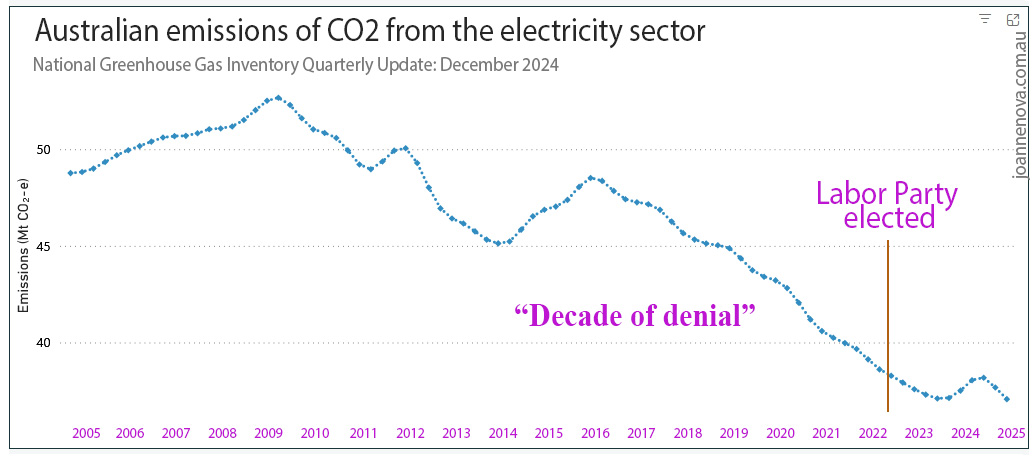
 Image by Manuel Angel Egea from Pixabay By Jo Nova Welcome to Futility IslandAnthony Albanese was elected in May 2022 and set God-like new emissions targets in to legislation. Ponder the scale of the national achievements of the last three years. All that money, all the wind factories, the solar panels, the batteries, the holes bored in the Snowy Mountains, and this is all we have to show for it? This is the graph from the latest Quarterly figures shown on the DCCEEW website (with added notation from me):
Poignantly, Mr Bowen, the Minister for Weather Changing and Energy said — “We’re turning around a decade of denial and delay, by setting serious climate targets in law and delivering the policy certainty to industry to bring down emissions”. Indeed. (Do tell us when you start Chris?) The bump last year was because the clouds didn’t rain on the Tassie Hydro Scheme as much as we needed. And the wind didn’t blow anywhere much in Australia in Quarter 2 last year. Who can forget the calm days of April-May-June last year when the wind turbines on the continent stood still? At one point, $20 billion dollars worth of wind power could only make as much power as two diesel generators. For some reason none of our expert Climate Models saw any of that coming far enough in advance for us to plan ahead. So we just had to burn a bit more gas and coal. You’d think at this point, the failure of extra wind and solar would be so obvious, the Greens would be begging the Labor Party to build some nuclear plants. But they don’t care about CO2 either. Beyond that, ponder that even despite weather anomalies, the Labor Government and all the extra “renewables” have not seemingly achieved much in the last three years (or not much in the way of emissions). With all the money spent, wasn’t the line supposed to dip below the trend, not plateau? The thing is, more than a million people have immigrated to Australia since 2022, and they like emitting carbon dioxide too, and need houses and cars, but no one talks about that. Does the Labor Government care about our national emissions, or is it all just a performance art to justify trips to Davos and Brazil, and enrich their friends and donors? Carbon emissions go up, hydro power down, data showsBy Greg Brown and Perry Williams, The Australian Anthony Albanese’s 2030 target to reduce emissions is on life support after new data showed Australia’s carbon footprint rose slightly last year driven by a 2.2 per cent increase in the electricity sector. Figures released by the Climate Change Department show carbon dioxide emissions rose by 0.05 per cent in 2024 to 446.4 million tonnes, equivalent to 27 per cent lower than in 2005. Despite Labor going all in on renewables as part of its climate change agenda, emissions in the electricity sector increased in 2024 with coal and gas needing to step up due to a lack of water limiting hydro generation in Tasmania. Australia has currently reduced its emissions by 27% in total since 2005 (mostly due to land use changes, not electricity, but that’s another story). Supposedly, if something supernatural happens, like aliens visit, or a meteor hits Sydney, we’re going to get to a 43% reduction by 2030. Otherwise to have even the faintest ethereal chance we’d need to increase “renewable-unreliables” from the current 40% up to 82% and 2030 is only five years away? Everyone knows it’s impossible, and yet the crazy bus keeps going? Even the believers like Bruce Mountain are saying he did not think there was a chance… yet Mr Bowen is still emphatic that “we’re on track”. (Like we live in a different decade of denial now?) We’re so “on track”, that 75% of the projects the Minister is expecting are not taking off: Only a quarter of the large-scale renewable energy generation required to hit Labor’s 2030 target in the first three months of 2025 progressed to a firm capital commitment, new data showed this week, sparking a warning that the pace of investment must quickly accelerate to hit the end of decade goal. At this point in our breakneck transition, wind-factories and solar panels should be going in all over the country. But we just heard that the price of high voltage transmission towers was going to cost up to 55% more than expected, and the AEMO was throwing their previous plans to the wind. Now, we’re all supposed to subsidize each other to buy home batteries, EVs, and solar panels. What do we call that — a pyramid scheme?
May 31st, 2025 | Tags: CO2 emissions, Emissions (CO2) | Category: Australia, CO2 emissions, Global Warming |  Print This Post | | Print This Post | |
By Jo Nova Nothing like mucking up the holiday plans of the overbearing bureaucrat… To combat the rise of the Blob’s new insidious censorship laws Donald Trump will deny visas to any foreign officials who are now or ever were involved in censorship of American citizens. Suddenly EU lawmakers, and Brazilian Judges will find they can’t get a visa to the USA, and the ban may apply to their family members too. This should slow down the spread of new cancerous “content moderation” laws around the world, and the attacks on the US Tech Giants. It would also apply to the Australian Prime Minister, Anthony Albanese if he brings back the Misinformation and Disinformation laws he tried to rush through last November. Thus, it may be that Donald Trump may yet prevent some of the worst laws ever dreamed up in Australia (hallalujah). Not that anyone in the government will ever admit that. Announcement of a Visa Restriction Policy Targeting Foreign Nationals Who Censor AmericansPress Statement, Marco Rubio, Secretary of State Today, I am announcing a new visa restriction policy that will apply to foreign nationals who are responsible for censorship of protected expression in the United States. It is unacceptable for foreign officials to issue or threaten arrest warrants on U.S. citizens or U.S. residents for social media posts on American platforms while physically present on U.S. soil. It is similarly unacceptable for foreign officials to demand that American tech platforms adopt global content moderation policies or engage in censorship activity that reaches beyond their authority and into the United States. We will not tolerate encroachments upon American sovereignty, especially when such encroachments undermine the exercise of our fundamental right to free speech.
One of the worst offenders, the EU, brought in the “Digital Services Act,” (DSA) which threatens monster fines of 6% of global turnover if companies did not “moderate content” to the EU’s vague, ambiguous satisfaction. This would have meant all the large platforms would have had to second guess what was acceptable speech, and censor it automatically. These censorship-by-proxy laws meant the EU could technically claim they weren’t censoring anyone directly, but in reality, they were farming out the censorship to platforms like X, Meta, Google, Apple and Amazon. And because of the risk of obscene fines, the lawyers for all these companies would have been sweating on their automated word hunts, and the censorship would have been worse than if the EU did it openly. The EU wanted to be the Global Regulator of the Internet. Most of the large platforms would not want to run two different mirror platforms in order to comply with the EU rules, so they would adopt the new moderation rules around the world. US to ban foreign officials over ‘flagrant censorship’ on social mediaBy Simon Lewis and Daphne Psaledakis, Reuters WASHINGTON, May 28 (Reuters) – The U.S. will impose visa bans on foreign nationals it deems to be censoring Americans, Secretary of State Marco Rubio said on Wednesday, and he suggested the new policy could target officials regulating U.S. tech companies. U.S. tech companies and the Trump administration have challenged U.S. allies in Europe, alleging censorship of social media platforms. Restricting officials from visiting the U.S. appeared to be an escalation by Washington. The dispute comes as the EU seeks a trade deal with Washington to avoid President Donald Trump’s threatened 50% tariffs on European imports. Rubio’s announcement came just before he met with German Foreign Minister Johann Wadephul in Washington. The Australian government dreams of bringing in its own worse-version of the EU lawsThe Combatting Misinformation Laws here, would have been more draconian, more sweeping and apply to even smaller platforms, including fines for solo bloggers. The Australian rules were aimed at stopping people professing things that “undermined trust in institutions” or caused “harm to public health” so (don’t criticize vaccines, don’t be nasty to the ABC, BoM or CSIRO and don’t say bad things about the Government!) At the time, even the US based CATO Institute warned the Australian rules would hit free speech around the world, including Americans. So obviously Mr Albanese could find himself on the visa ban list if he did. (Lucky for him, he failed, eh?) The Transnational Streisand EffectImagine if the Australian government rewrites the Misinformation laws so that US companies only have to censor Australians. The Labor Party might accidentally set up a transnational feedback loop of defiance, where censorship at home creates more speech abroad. It would surely spring forth a radioactive Streisand Effect as those same censored Australians sent messages to friends and ex-pats in the US who could thus wreck havoc and mischief and speak up for them. It could spawn a whole new industry in the US of proxy content providers, paid to say things about Australia that Australians were not allowed to say. It could be all-American sport pointing out the stupid things that were banned in Australia. Wouldn’t that be fun? An E.U. bureaucrat on free speech was woken, –Ruairi Mt Rushmore image Image by Pete Linforth from Pixabay. Airplanes image by dakotaviking from Pixabay
May 29th, 2025 | Tags: Free Speech, Misinformation | Category: Free Speech, Global Warming, USA | Print This Post | |  Maanshan Nuclear Power Plant, Taiwan. Photo by Jnlin By Jo Nova The energy situation is flipping on a dime around the worldPolitical entities are waking up to the need for reliable mass power. Consider the whiplash in Taiwan. They closed the last of six nuclear reactors on May 17th, marking the end of a nuclear era that started in 1970. But, hey ho, two weeks later, they’ve decided to hold a referendum on whether to restart the same plant. The vote is set for August 23. Taiwan Plans Referendum on Nuclear Energy Reversal
Taiwan will hold in August a referendum on whether the just-shuttered last nuclear reactor should be restarted once safety checks are completed, in a major reversal of the country’s policy amid energy security concerns. Since 2018, Taiwan has shut down four other nuclear reactors and cancelled construction of two others following a referendum in 2021. Earlier this month, Taiwan’s Parliament amended the country’s nuclear power act to allow plant operators to apply for a 20-year license renewal beyond the existing 40-year limit. This legislative amendment effectively opens the door to restarting nuclear power plants in the country. The reasons given for reopening the plant are both the escalation in energy needs for Taiwan’s silicon chip industry (is that code for “AI”?), and heightened fears of a military blockade from China. Because the plant needs to be comprehensively checked for safety, apparently it may be three years before it is operational again. A country torn between Net Zero goals, and aggression from ChinaApparently the Taiwanese government was full bore on the sacred green goals in 2016 (and wouldn’t that suit Beijing?) but lately things have got too hot and people are starting to add up the security risks of being on an island where 97% of the energy is imported. In the new uncertain world, suddenly coal is better than gas (it’s easier to store) and old nuclear plants are an asset. Taiwan worsens its vulnerability to a Chinese energy blockadeJane Rickards, The Strategist, ASPI Lai’s government is understandably concerned about energy security, as at least 97 percent of the island’s energy is imported. But it also wants to reduce carbon emissions, having established a goal of net-zero by 2050. The Taiwanese government views LNG as a cleaner type of energy and is phasing out the widespread use of coal. Natural gas powered 32 percent of Taiwan’s electricity in 2016. The figure rose to 42 percent last year, and Lai is pushing for it to reach 50 percent by 2030. The drive for LNG grew following Donald Trump’s election as US President. Taiwan plans buy more US LNG over the next decade to help reduce its trade surplus with the United States. However, LNG is difficult to store long term, which would create problems in the event of a quarantine or blockade. Taiwan is densely populated and has limited space for the fuel’s expensive storage infrastructure. Lu Tsaiying, an energy expert with Taiwan’s Research Institute for Democracy Society and Emerging Technology, notes that Taiwan holds enough LNG for 12 days’ ordinary consumption. In contrast, the coal stock is enough for 42 days and the crude oil stock for 146 days. Lu predicts that coal, which currently powers 39 percent of Taiwan’s electricity, and renewables, powering 12 percent, would be the main sources of energy during a blockade, quarantine or even a war. In the world we thought we lived in, trading partners didn’t do naked industrial sabotageIn an extraordinary move Chinese Communist Party appears to be actively cutting and damaging submarine cables around Taiwan — with accidents involving Chinese controlled ships that change names frequently and are registered in foreign countries. In a grey war, there is always plausible deniability, but Taiwan have arrested at least one captain and charged him accordingly. Countering China’s Subsea Cable Sabotageby Gahon Chia-Hung Chiang, staff of Legislator Kuan-Ting Chen, Taiwan China’s illegal, coercive, aggressive, and deceptive (ICAD) activities pose a mounting threat to global democracies, with subsea cable sabotage emerging as a particularly alarming tactic. These fiber-optic cables, which carry over 99 percent of global internet traffic, form the backbone of modern communication networks—underpinning economic transactions, defense coordination, and digital infrastructure. In early 2025, the Xingshun 39 (興順39), a Tanzania-flagged vessel controlled by a Chinese entity, deliberately severed subsea cables near Keelung, disrupting Taiwan’s external communications…. Just weeks later, in late February 2025 another incident occurred when the Hongtai 58 (宏泰58)—a Togolese-registered cargo vessel suspected of having a Chinese crew—severed Taiwan’s third subsea cable linking Taiwan and Penghu. These were not isolated incidents, but rather part of a troubling persistent pattern. According to Chunghwa Telecom, in 2023 cables connecting Taiwan and the Matsu Islands—Taiwan’s off-shore islands near China—were severed 12 times, resulting in repair costs of NTD $96.4 million (USD $2.9 million). [1] While China has consistently denied involvement, the pattern of repeated cable disruptions, which align with its strategy of leveraging civilian assets for military purposes, suggests a concerted effort to degrade Taiwan’s ability to maintain stable digital infrastructure. The brazen hostility would be enough to make even a crazy nation think about national security instead of fixing the weather 100 years from now. Given that a Chinese ship recently circumnavigated Australia following our submarine cable network, maybe we should be too? UPDATE: The referendum was held and voters were 74% in favour of reopening the plant, however only 29% of voters turned up to vote, (another issue was voted on the month before) and so the referendum failed despite the massive support. In Taiwanese law at least 25% of the total voter pool must vote for the yes case, and it did not reach that.
By Jo NovaThe Transmission line cost bomb just went off and it changes everythingThis is big. So big the AEMO just announced transmission line costs are up as much as 55%, and they are going to re-visit projects they previously said needed to proceed (which is the nice way of saying they will have to axe some or many of them). What no one is spelling out, is that if the transmission lines can’t be built, they also can’t build the vast solar and wind “farms” that the Labor government was depending on. Suddenly a lot of renewable projects are orphans. Australia is supposed to build 10,000 kilometers of high voltage transmission lines by 2050. But last week, the AEMO admitted in their Draft 2025 Electricity Network Options Report that these interconnectors would cost between 25 to 55% more than expected, which makes them essentially unaffordable. Plan B is where they pretend cars, home solar and batteries can save the “Transition”The old plan of massive wind and solar factories spread across the continent is quietly mutating into a DIY version where the government hopes homeowners will rescue the Net Zero transition by buying the batteries the government and the wind and solar factories can’t afford. What did I say a year ago: “They want you in an EV so they can use your battery to rescue the unreliable grid they built“. The code word for this is CER or Consumer Energy Resources. What happens when the poor realize they are paying more for electricity so rich people can have solar panels and batteries and (slightly) cheaper electricity? Hell to pay. Now they talk about “social licence”?The AEMO and renewables fans are also admit the farmers didn’t like them, so the routes had to be redrawn on longer, more difficult paths, and the payments for the pain and inconvenience turned out to be much larger than the inner city latte set expected. Thus and verily, the timelines have also blown out. The farmer’s pain is referred to as a “social licence” consideration. The farmers, though, don’t mince words: 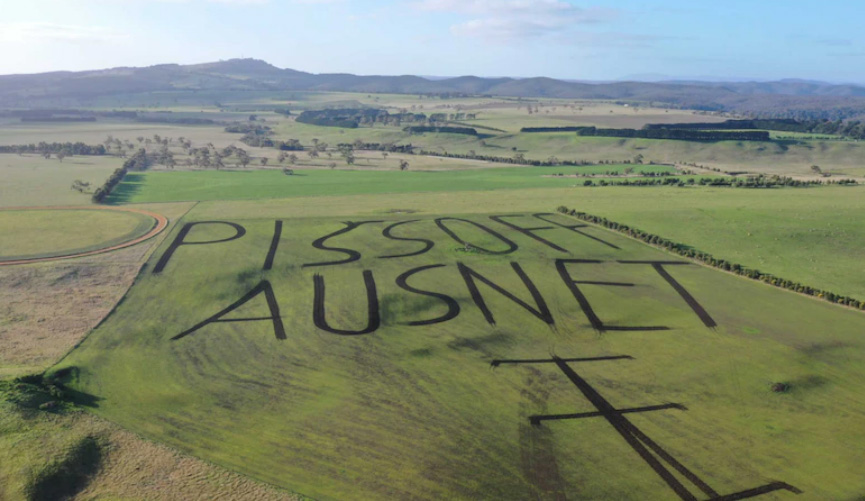 Western Victorian Farmer Would the AEMO care so much about social license if they could have forced the lines through? What they are really afraid of is burning off the whole damn country when families everywhere realize they had to pay for $20 thousand million dollars of high voltage lines so renewables factories could make a profit from the subsidies the families also had to pay for too. Professional leaches at 440,000 volts. There is karma here. Renewables need high voltage lines, but high voltage line installers need cheap reliable energy. Once upon a time, when we had lots of cheap coal power, we might have been able to afford to make the transmission towers that industrial renewables need. But now that the same people who want renewables have banned gas exploration, and destroyed cheap electricity, they can’t possibly afford to build more transmission lines. Suddenly the AEMO realizes that transmission line costs will hurt consumers. Now they tell us? They should have seen this coming years ago: Transmission cost blowout threat to power bills, AEMO warnsBy Perry Williams, The Australian A massive surge in costs to build $20bn worth of electricity transmission would trigger a hit in household power bills, the Australian Energy Market Operator says, amid skill shortages and a battle to win over communities and farmers to the green energy switch. The cost of overhead transmission line projects has ballooned by up to 55 per cent, with substations rising as much as 35 per cent compared with equivalent estimates provided for AEMO’s 2024 electricity plan. This is big. So big the AEMO is going to reconsider projects it previously said needed to proceed. “AEMO recognises that increases in costs for electricity transmission network development would impact bills for electricity consumers,” the operator said. “The 2026 ISP will revisit transmission network projects previously identified as needing to proceed … seeking to ensure that overall costs for consumers are optimised.”
Hence the “Plan B” is to get the consumer to foot the bill:One area where AEMO may be able to cut back on costs is by leaning more heavily on household sources such as rooftop solar, electric vehicle to grid supplies and batteries which received a recent subsidy boost. Taxpayers will contribute $4000 for an average household battery installation under a $2.3bn election commitment by the Prime Minister, with Labor promising the policy will push electricity prices down for “everyone”. As Graham Lloyd points out, the power utilities are all warning that shifting the burden to householders is not going to work: Future of power uncertain and expensiveBy Graham Lloyd, The Australian In April, Transgrid said assumptions that Virtual Power Plants will experience the same level of availability and flexibility to respond to market conditions as an equivalently sized utility-scale battery energy storage system are not reasonable. Households were unlikely to accept that their assets may be accessed frequently and run very hard because household solar and batteries are primarily investments intended to provide utility and value to consumers rather than the market, Transgrid said. In March, Queensland power utilities Ergon Energy and Energex gave a similar warning. “We are cautious of the approach to model customer behaviour based on economically rational models, as we consider most CER investments do not conform to these modelling outcomes,” the utilities said. “For example, based on our anecdotal experience, AEMO’s assumptions regarding the level of battery energy storage systems uptake supported by Virtual Power Plants may be overstated.” We know this is the new desperate rescue plan for the doomed transition because even the industry lobby site, Reneweconomy, is working so hard to sell it as “handing power to the people”Giles Parkinson puts on a brave face, pretending that this is “sailing with the wind” and has been “brewing for a while” (as if it’s not a surprise) but this is a big backflip by the AEMO and it’s not remotely good for all those wind and solar projects. Even he admits this is a fundamental rethink. Australia is about to see a step change in its renewable transition strategyGiles Parkinson, Reneweconomy One thing that seems certain, however, is that the manner of getting there, and closer to 100 per cent renewables over the following decade, is about to get a fundamental rethink, and it could end up delivering the most significant change to the country’s renewable energy blueprint yet. The document flags a new focus on using existing local networks for more wind, solar and storage, and on leveraging consumer energy resources – the rooftop solar, household batteries and EVs that will be bought and installed by consumers themselves. That’s a funny way to phrase it Giles? Killing the business…
It’s a significant move. In the absence of a carbon price, rooftop solar has been the most effective tool in killing the business case for Australia’s aging fleet of dirty fossil fuel generators. But it has created issues of its own, and will remain a wild card for the grid if it can’t be tamed by an army of small batteries. And who pays for that army of small batteries Giles? Wait, now you tell us that the best way to reduce costs is with “consumer energy resources”, and it’s supposed to be cheaper for everyone. Why didn’t you say so before… And the growth of consumer energy resources is possibly the best way to ensure that prices do, as promised, actually fall in the transition from coal to green energy – both for those who own and install them, and those who don’t. He blames the big bad capitalists — but never acknowledges that it was the stupid socialists who rewrote the market: The evidence so far is that it hasn’t, mostly because the new assets – wind, solar and especially storage – are largely controlled by the same companies that own and control the coal and gas assets. Indeed, the socialists make it possible for predatory capitalism to monopolize the market and then they act surprised when it does? Even Giles Parkinson say it’s an appalling mess: However the plan is framed, social licence remains absolutely critical. Despite the best efforts of some really good renewable energy developers, it’s been poorly handled. The worst of it has come in the management of the transmission routes, but a combination of entitled development companies, bloody-minded opposition and some appalling planning regimes have created an appalling mess – highlighted by the latest backflip by the new Queensland state LNP government. Blame the management indeed. Anything but admit it was always a stupid idea. The renewables fantasy was never going to work. It was a horrible plan to cover the country-side in expensive, intrusive, live infrastructure that ruined views, raised the risk of fires, and got in the way of farming and firefighting. And it was all done in the futile hope of changing the weather. But rejoice, in part, at least, the protests by farmers and communities are working The industry is so rattled, they even asked Reneweconomy not to publicize their projects lest the people notice what they want to do: Little wonder some developers are wary of scrutiny. One even asked Renew Economy last week to stop reporting on projects put in front of the federal government’s EPBC process because of the risks of unwanted scrutiny. Clearly, we need to watch the EPBC list. Can anyone help identify where these are officially listed? If they don’t want us to see, then I’d like to know… Image by Nerijus jakimavičius from Pixabay
May 27th, 2025 | Tags: AEMO, Electricity Cost, Interconnectors | Category: Australia, Global Warming, Renewable | Print This Post | |
By Jo Nova Major flooding has struck New South Wales with 50,000 people evacuated and three deaths. Even as one person is still missing, The Sydney Morning Herald and the Climate Council are already milking the disaster as a Witchdoctor Psy-Op for the Blob. Our thoughts are with everyone in the major flood areas. Shameless: The Climate Council is already exploiting floods in NSW as a climate scare
The Sydney Morning Herald reads the tea-leaves of climate seance
The intensifying climate driver behind the coastal deluges and inland droughtCaitlyn Fitzsimmons, The Sydney Morning Herald Note the spooky tea-leaf reading in the second paragraph — pay attention to the psychological operation. This dichotomy of drought and flooding rains is not new to Australia, but for it to occur simultaneously on opposite sides of the Great Dividing Range is a phenomenon that scientists say is likely to increase with climate change. Firstly they say the obvious, lulling the reader into thinking they are sensible — then there’s the “but” — followed by a bizarrely trite, and largely unknowable tea-leaf pattern. It’s that “simultaneous rain on opposite sides of the mountains”, which turns out not to even be an actual observation of a cherry-picked 10-year-trend, but the vaporous emptiness of a “phenomenon” that someone predicts might happen. In other words, they have nothing at all, but they say it anyway in hushed significant tones, like tribal sorcerers have for thousands of years. They all wheel out the line that climate change increases humidity — the same line they promptly forget the minute there is a drought or a fire: “Climate change is increasing the amount of moisture the atmosphere can hold by about 7 percentage points of humidity for every degree of warming.” If humidity doesn’t prevent a single drought how do we know it causes any floods? They never mention that. Then, buried under 21 paragraphs of fortune-telling-sages winding up the audience, they find one semi-honest scientist who says it’s impossible to say it was climate change: Dr Chiara Holgate in the ARC Centre of Excellence for Weather of the 21st Century at the Australian National University, said Australia had a highly variable climate, and without an attribution analysis, it was impossible to say that climate change was the cause of any particular drought or floods. A very honest scientist would also mention that rampant flooding has happened many times before, like in the 1820s, in 1857, 1866, 1893, 1949 and 1955 and CO2 had nothing to do with any of them. And a half decent cub scout reporter would ask these obvious questions. Where are they? We should do up charity rescue package for SMH readers. Indeed, the not-so-great journalist could have just googled, I’ve written this all up before. In 1857 floods were so bad one boat was washed out to sea and the people on board spent ten days trying to get back, surviving on biscuits. The beaches were piled high with furniture, goats, pigs, melons and “five years of wood”. Then the Manning River flooded again in 1866, this time rising so fast overnight people went to sleep not realizing they were in danger and the losses were terrible because they had no time to prepare. There are heart-wrenching stories. From my post on the 2021 floods: The more money we put into government funded science the more it looks like witchcraftDoes CO2 cause floods? It takes 3 minutes in the historic Trove archives to test this theory. In a surprise to climate models everywhere, getting CO2 back to 310ppm (even if it were possible) would return Australia to 1950, so we already know how this works out. There were a spate of floods in Eastern Australia in the 1950’s and 1960s when La Ninas were more common and the world was cooling. For example, in 1949, 8 people were killed and 20,000 were left homeless in New South Wales by flooding. The Adelaide Chronicle June 23, 1949  … In Maitland in 1955, 25 people died, 2,000 homes were inundated and 58 homes washed away. This was only three years after the previous floods when The Hume Highway at Camden was under 30 feet of water. There were floods in New South Wales in 1857 even before coal fired power was inventedA quarter century before the first coal power plant was built anywhere in the world, devastating floods washed over New South Wales. There were three separate floods in 1857, “each worse than the one before”. The floods and storms were described as afflicting an area from far north of Taree down to Goulburn.
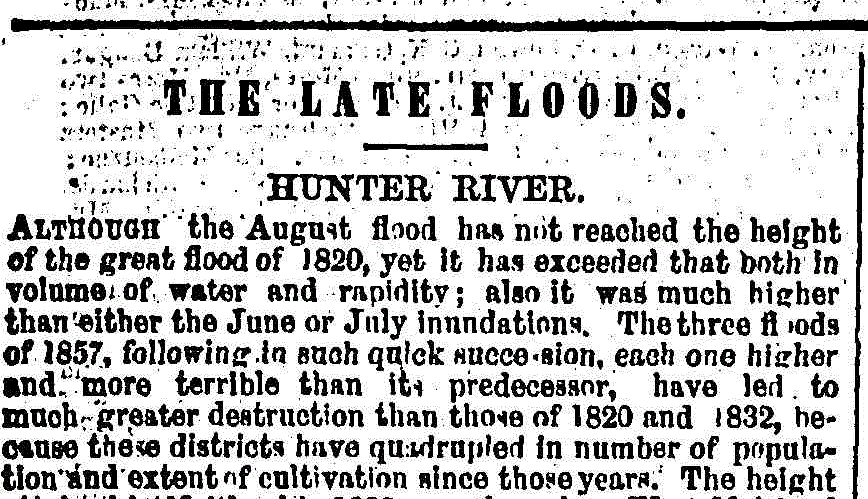 Hunter River Floods, 1857 “Five years of firewood” washed up: What amount of property was destroyed by the flood it is impossible to ascertain. The piles of wood, which of themselves would supply the inhabitants of both East and West Maitland with firewood for the next five years, have buried in, without doubt, some hundreds of pounds’ worth of property. Many families are left entirely destitute of food and raiment. It is impossible to give an accurate description of this desolate scene. On the Hawkesbury “Windsor was almost an island, there was no escape by dry land.” In Mudgee, the “consequences were most disastrous “. .. the rain fell in torrents… ” “Other floods occurred at Penrith, Camden, Gouldburn and Cassilis.” Read the story of boats trapped for days, including one “small trusty craft” that was “driven off course by the violence of the tempest some thousand miles” and out of sight of land for ten days, while the people survived on biscuits. The beaches were covered to “an incredible height with the trophies of some devastating flood…” the debris included the sides and roofs of houses, furniture, cabbages, pumpkins, goats and pigs. Mail was stopped, and at least three boats were seen wrecked.
 Part a Floods, NSW, September 10th, 1857, Manning River, Trove, NSW. Sydney Morning Herald| Click to enlarge. 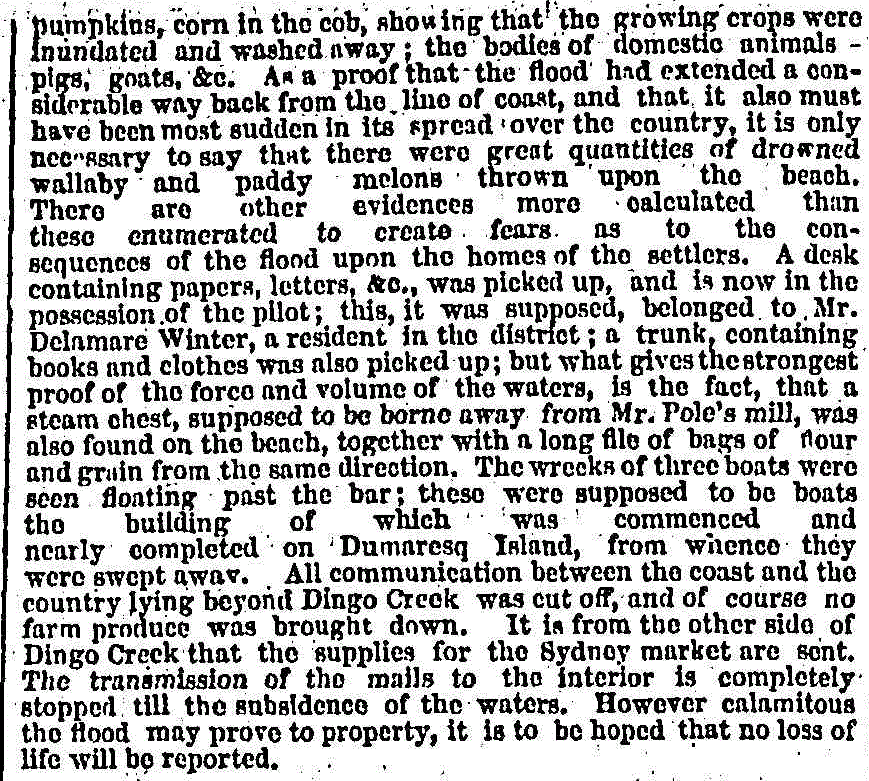 Part b. Floods, NSW, September 10th, 1857, Manning River, Trove, NSW. Sydney Morning Herald| Click to enlarge. In 2025, as with 2021, among other things, cows are even being rescued from the surf on beaches, which probably makes them a lot luckier than the ones that got washed downriver in 1857. Thoughts and best wishes for everyone caught in this awful natural disaster. We hope a generation of farmers hasn’t been wiped out. Related:
Witchdoctor image by Julius H. from Pixabay
May 23rd, 2025 | Tags: Floods, NSW (New South Wales) | Category: Australia, FakeNews, Global Warming, Lies-by-Omission, Meteorology | Print This Post | |
A very special note to Edward in Ohio, and Rusty somewhere in Australia. I checked the post box for the first time in weeks. Smiling! A nice surprise from both of you. — Thank you!
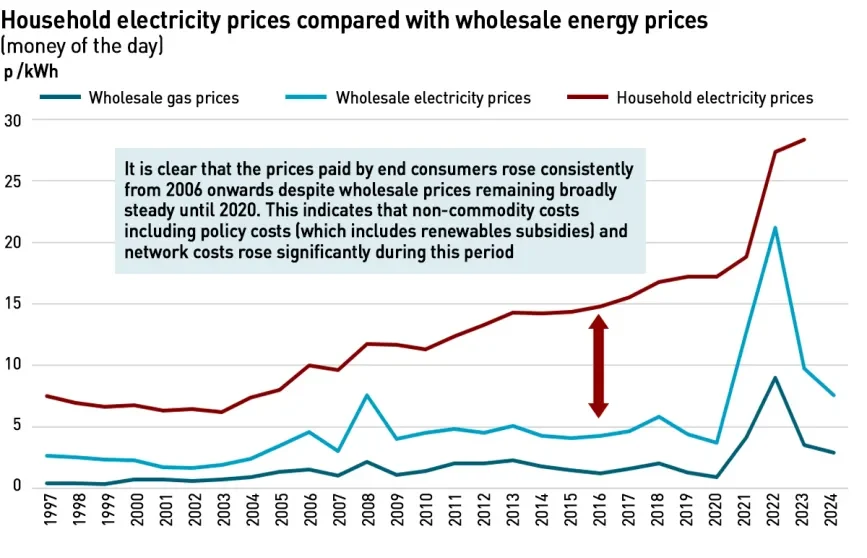
By Jo Nova If the UK had kept the old gas policy, skipped “renewables” — they’d be £220 billion better off
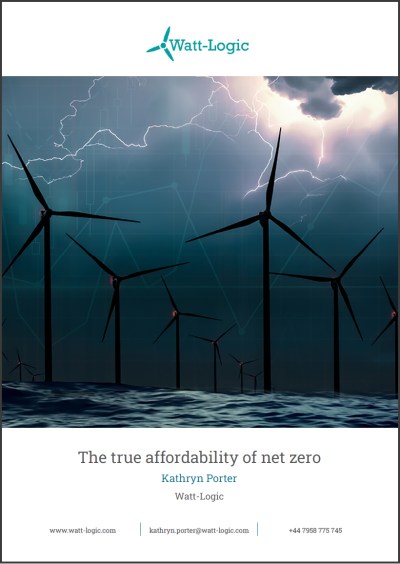
Kathryn Porter has painstakingly unpacked the bureaucratic polyglot to add up the ghastly bill, and published “The true affordability of net zero” “..had Britain continued with its legacy gas-based power system in the period since 2006, consumers would have been almost £220 billion better off (2025 money) even taking into account the impact of the gas crisis.“ Even if the fuel is free, every other thing about collecting, storing and distributing “free energy” is very expensive. Ed Milliband might blame fossil fuels for the train-wreck that is UK electricity — but the prices have been rising in the UK ever since vainglorious politicians first dreamt of fiddling with the weather. In the UK, even though wholesale prices remained the same largely, all the other costs of renewables snuck in to household prices to inflate them like the Hindenburg.
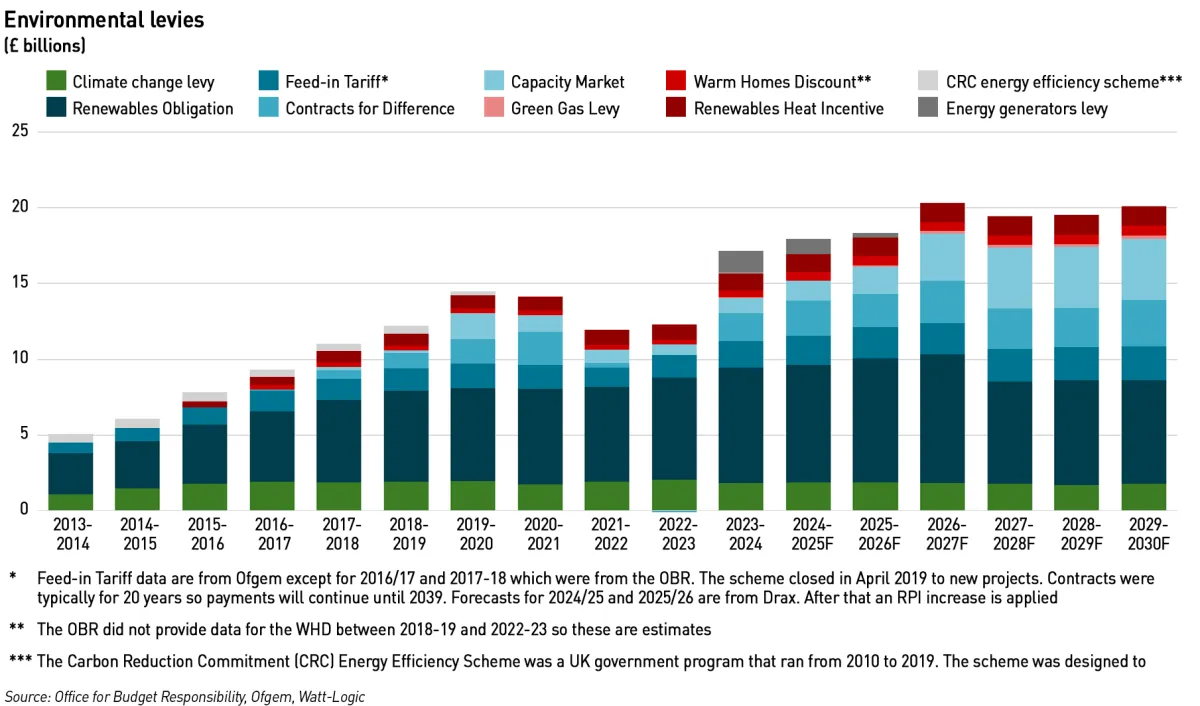
Renewables “profits” come from trickery, deceit and subsidy lies, and not from a free market in electricityFirstly they lied that wind and solar would be cheaper, then they lied that the subsidies were temporary. Instead the subsidies are still growing 35 years after they started. Last year the total cost of UK levies was £17.2 billion. These renewable subsidies were buried under boring anesthetic labels like “contracts for difference”, “capacity market” or the “CRC Energy Efficiency Scheme”. Look at the rainbow cluster of levies in the graph below, and their growth in the last decade. If wind and solar were actually cheaper, or even just competitive, environmental levies would be “zero”. If wind and solar were getting more effective, the subsidies would be falling, not rising.
And if those levies had honest names they’d be called “Climate Changing Slush Fund”, or “Forced Renewable Support Fee”. The Contracts for Difference would be the “Guaranteed Profits for Windpower Levy”. The Renewables Obligation levy could be the Banker Support Fund, or perhaps “Foreign Aid for China”. Ed Miliband’s net zero crusade is adding billions to Britons’ energy billsBy Johnathon Leake, The Telegraph: According to analysis by consultant Kathryn Porter, green levies on energy bills will hit £20bn by the end of the decade. Staggeringly, this is up from £5bn in 2014, as the vast cost of Miliband’s radical clean energy ambitions rapidly adds up. As part of Porter’s report into green levies, The True Affordability of Net Zero, she claims the renewables obligation scheme – which is responsible for supporting wind farm construction – is alone adding £7.8bn a year to power bills. That is despite it being closed to new entrants seven years ago. Its successor, the Contracts for Difference scheme (CfD), is adding another £2.3bn, she says. Kathryn Porter points out that there are 10 levies that are added quietly to electricity bills, rather than being an honest tax. (It’s the same here in Australia). “If this money was being raised through taxation, it would be scrutinised by the Treasury, the Office for Budget Responsibility, and by voters at general elections,” says Porter. “But instead, Miliband is taking these subsidies from the pockets of consumers and giving them to renewable generators – without ever having had to win approval for the idea in an election. These are forced payments from customers who get no choice, and which are hidden in their bills, disguised by lying labels in public announcements, and which are fed through electricity retailers to corporations. Except for extremely rare circumstances, everything about renewable energy only profits because of State force, deception and trickery. Read it all: Kathryn Porter: The true affordability of net zero
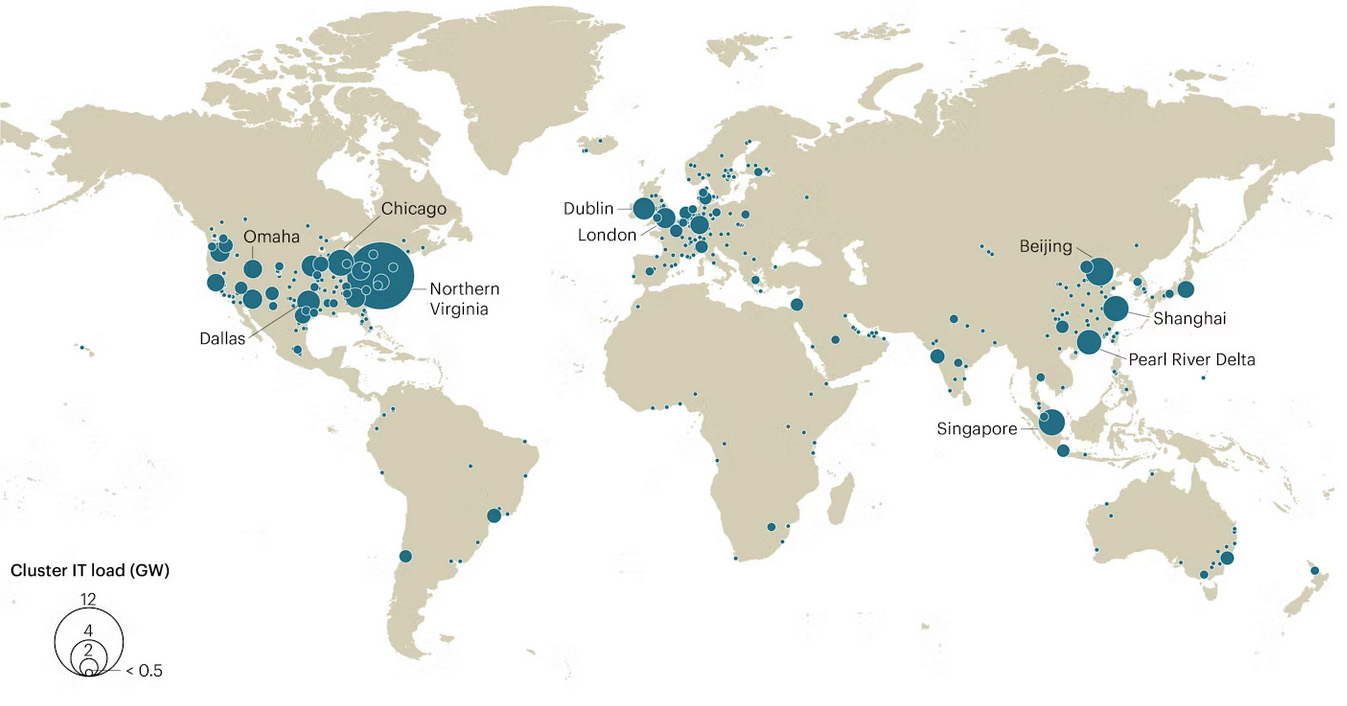
May 22nd, 2025 | Tags: Electricity Cost, Net Zero, Renewable Energy, UK | Category: Global Warming | Print This Post | | By Jo Nova The winds of change are howling through electricity gridsSince 2022, AI -related firms have stormed the S&P 500 market — growing by $12 trillion dollars. The IEA just posted a whole report dedicated to AI. The demand from data-centers is so large in some places it is already rivaling the kind of monster consumption we are used to seeing from aluminum smelters. There are six states in the United States where data centers already consume over 10% of the electricity supply. In Ireland, data centers swallow about 20% of the electricity. Currently, a normal data center consumes the same amount of electricity as 100,000 houses. But the new gargantuan data centers under construction will consume 20 times as much — equivalent to adding 2 million homes to the grid. Data centers of the world are not spread evenly. In Virginia, the largest conglomeration of industrial data, their demand for power pulls in a quarter of the state’s electricity.
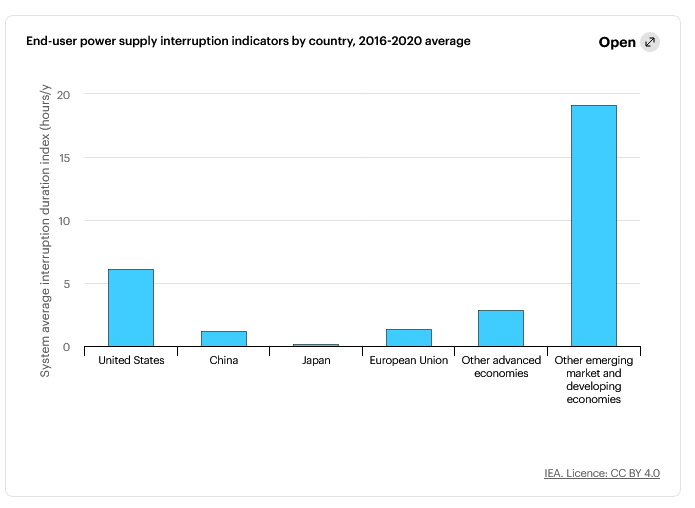
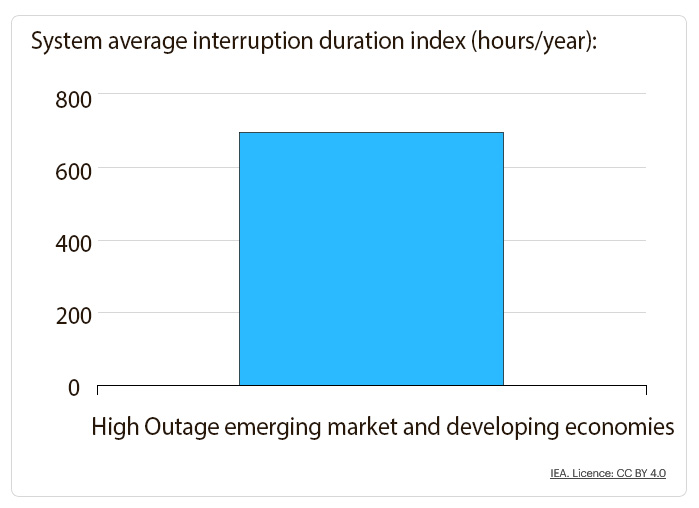
Australia is being left behind, because we won’t build coal plants in case we offend the UN, and we banned nuclear power as a fashion statement in 1998. The AI global race is on, but digital machines need reliable cheap electricity and lots of it. Also not looking sparkling on the graph above — New Zealand, Norway, Sweden and Canada. Sometime between now and 2030 (which is like ‘next week’) the world has to build a new network the size of Japan’s national grid — the fourth largest economy in the world. Data centres accounted for around 1.5% of the world’s electricity consumption in 2024, or 415 terawatt-hours (TWh). The United States accounted for the largest share of global data centre electricity consumption in 2024 (45%), followed by China (25%) and Europe (15%). Globally, data centre electricity consumption has grown by around 12% per year since 2017, more than four times faster than the rate of total electricity consumption. AI-focused data centres can draw as much electricity as power-intensive factories such as aluminium smelters, but they are much more geographically concentrated. Nearly half of data centre capacity in the United States is in five regional clusters. Data centre electricity consumption is set to more than double to around 945 TWh by 2030. This is slightly more than Japan’s total electricity consumption today. There is no single factor driving up electricity demand more than AI at the moment: In the United States, data centres account for nearly half of electricity demand growth between now and 2030. By the end of the decade, the country is set to consume more electricity for data centres than for the production of aluminium, steel, cement, chemicals and all other energy-intensive goods combined. The IEA report, which was always a sop for “renewables” — suddenly isn’t that concerned about carbon emissions. This is an interesting shift. Almost like there is a sea-change in priorities of whoever it is that controls agencies like the IEA. Now it’s making excuses for industry… “Concerns that AI could accelerate climate change appear overstated, as do expectations that AI alone will address the issue”The widespread adoption of existing AI applications could lead to emissions reductions that are far larger than emissions from data centres – but also far smaller than what is needed to address climate change. Just like private jets for billionaires, big new AI computers will save us from carbon emissions (sure)AI will find cost savings all over the place, they say, but then again, if everyone has their own automated self-driving car, the plebs won’t need to catch the bus will they? Oh the dilemma…! Just look at the clutching excuses they come up with to justify monster energy increases. AI applications in transport can improve efficiency and save costs, but they could also increase demand for personal mobility. AI applications are being used to manage traffic, optimise routes, predict maintenance needs and develop autonomous vehicles. The widespread adoption of AI applications across the transport sector could lead to energy savings equivalent to the energy used by 120 million cars. While autonomous vehicles operate more efficiently than conventional ones, they might also attract people away from public transport as costs fall and availability increases, leading to rebound effects. In buildings, there is significant potential for AI-led optimisations to make heating and cooling systems more efficient and electricity use in buildings more flexible Even the IEA admits we need affordable and reliable powerCountries with a record of reliable and affordable power will be best placed to unlock data centre growth, localise the computing power that is critical to homegrown AI development, and spur the IT industry more generally. This graph with a microscopic gray font, compares how extensive those blackouts are around the world, with the First-World looking good (so far):
Beside that graph they have a very strange graph with microscopic fonts (which I expanded below) which has one solid square all by itself. This turns out to be the other emerging markets and developing economies they didn’t mention in the last graph. The High Outage Country class of 2025 has more like 700 hours of average system interruption a year. It’s “off the charts” bad.
Tacitly, it suggests that the AI revolution won’t be moving to South Africa or Cuba. Is there any industrial complex in the universe that works better on a part time random basis than it does on a predictable, reliable schedule? History will show that countries with energy to spare will take over the world, and maybe the solar system.
REFERENCES
May 21st, 2025 | Tags: Artificial Intelligence (AI), Electricity Grids, IEA | Category: Energy, Geostrategic, Grids, USA | Print This Post | | |
Jo appreciates your support to help her keep doing what she does. This blog is funded by donations. Thanks!
 Follow Jo's Tweets
   
 
|
|||
|
Copyright © 2026 JoNova - All Rights Reserved |
||||











Recent Comments