The biggest and best studied reef in the world is looking good
Despite record high emissions of carbon dioxide, and hottest ever temperatures, the Great Barrier Reef was again enjoying one of its best years yet. In the 40 years that AIMS has been studying it, the last four years are great results.
Judging by the data, corals are coping fine with today’s heat and CO2. But the more money we spend finding a climate crisis, the worse our science institutions get. One-sided money and monopoly science can turn any institute into a tax-grabbing-machine, that serves the Blob, not the people. Thus is it so.
So Peter Ridd took the same data and did the graph that AIMS, with $90 million in taxpayer dollars, couldn’t do, so we can all appreciate the full disaster. And here it is:
AIMS also tells us that the “reef is more volatile”, and has suffered the tragedy of declining from record highs all the way back to “near long term average trends”, which sounds awful, I mean, “normal”. Like regression to the mean. Though it doesn’t look very “average” in the long term graph that AIMS don’t want you to see.
The Blob Media promptly took the one-sided, politically-convenient AIMS press release, investigated no claims, asked no hard questions and churned out the worst possible interpretation of a good result. Which is apparently exactly what AIMS expected, because they didn’t complain.
The ABC, with a billion dollar budget, could have done the graph Peter Ridd did. They could have asked AIMS for it. Heck, they could have just phoned Peter, he would have given it to them, and with a smile. Instead they pressed the “Climate Alarm: Give us Your Money” button.
It’s clear that The Australian Institute of Marine Science’s (AIMS) is not even trying to give Australians the most meaningful information they can on the reef. When the media exaggerates the crisis, the experts are happy. AIMS don’t ring up the journalists and correct them. They don’t explain the bigger perspective.
Corals got bleached way back in 1862, before the first coal plant, and long before the Ford Model T. Most likely corals have been bleached on and off for millions of years, it’s just that there were not many scuba divers around to take a photo or collect an ARC grant in 2 million BC.
After millions of years of asteroids, volcanoes, wild temperature changes and dramatic shifts in atmospheric gases, (plus sea level swings of 125m) it would be a shock if corals did not have a full toolkit to cope with a bit of climate change.
Australia couldn’t build a nuclear plant “til 2045”, but NASA is going to put one on the moon in five years time.
The new NASA chief, Sean Duffy, is set to announce urgent plans to get a very small nuclear reactor on the moon. What was going to be a 40MW microreactor in the “early 2030s” is now said to be a 100MW one launched in 2029. The reason for the rush is because three months ago China and Russia announced plans to cooperate and build their own nuclear plant on the moon in the early 2030s. They want the power to set up what they call an international lunar base. According to Politico, the fear is that the first nation to colonize the moon could declare a “keep out zone” — a quasi form of ownership that would stop another nation setting up in the same area.
NASA’s interim chief Sean Duffy has made deploying a nuclear reactor on the Moon his top priority, framing the effort as a “second space race”.
Solar power isn’t much use on the moon where each night lasts two weeks. The back-up battery payload would be enormous (and who wants to be in a moon colony when a big battery catches fire?) Nuclear power is the only thing that makes sense.
“We need a lot of energy for future missions to the Moon,” said Simon Middleburgh of the Nuclear Futures Institute at Bangor University in Wales. “To establish permanent Moon bases, we would need to be generating our own water and oxygen.”
Nuclear power, by contrast, offers an advantage in energy density. “It’s very dense, which means that a reactor the size of a small car could theoretically power a lunar base for around six years without refuelling,” Middleburgh said.
Transporting a scaled-down reactor is not the same as launching a nuclear power plant into orbit, but it is still likely to be an expensive operation. For one, it’s unclear how many microreactors will be needed. While a single unit might suffice, backup reactors would be essential in case of failure. Experts told FRANCE 24 said it was impossible to imagine a lunar base without an alternative power source if the lights were to go out. All in all, launching and installing the reactors could cost several billion dollars, factoring in both manufacturing and delivery.
Meanwhile in Australia our “most advanced” science bureau, the CSIRO, says nuclear power will take years to build and cost too much to use in Australia even though we have the largest uranium reserves in the world. Apparently, NASA can put a reactor on the moon, but CSIRO says small modular reactors are “too immature” for us. While the CSIRO waits for the rest of the world to master nuclear power and sell it back to us, it keeps us firmly locked in an era of windmills.
Australia has more space for launchpads close to the equator than any first-world nation. That makes us ideal as a launch pad for satellites. It’s an industry we could have had. Thankfully, given the spectacular government failure, one small company in Australia is trying to catch us up. The first rocket launch in fifty years in Australia was a week ago. It only lasted 14 seconds, but Gilmour Space are ambitious and serious. For some reason the ABC didn’t mention this on the nightly news, preferring to repeat the same stories on foreign wars and e-scooter accidents it ran the day before instead. Presumably they didn’t want to show a small private company being innovative and scientific because it makes the billion dollar Blob agencies look bad. And there’s always the horrible risk that if they turn a bunch of engineers into stars, they might say things like Elon Musk.
David Maddison comments about how Australia has been missing opportunities for 50 years:
Of course, all Australian efforts to get into space are reminiscent of when Australia first launched its own satellite in 1967 on a surplus US Army Redstone first stage which the US donated after they had done testing in Australia.
The Americans were prepared to donate more of the rockets as they didn’t want to return them to America but the Minister for Education and Science and also later PM Gorton at the time, could see no future in Australia being involved in space and rejected a proposal for a low cost space program along the lines of WRESAT. The cluelessness was staggering. Australia’s fledgling space program more or less languished after that.
Australia was the third country to design and launch a satellite from its own soil and one of only six other countries to have launched a satellite at the time along with USSR (1957), United States (1958), United Kingdom (1962). Canada (1962), Italy (1964) and France (1965).
Yet another lost opportunity by Australia due to second or lower rate politicians and the senior public serpents who tell them what to think.
Instead of being the worlds launchpad in the space race, or leaders in nuclear energy, the Labor Government plans to spend $22 billion dollars on a Future Made in Australia that no one wants to buy anymore.
PS: Some interesting details in this video about what the Gilmour launch did well, and theories of what might have gone wrong:
Big Battery prices on fire in Australia last quarter
The Renewable Crash Test Dummy suffers yet another nasty price surprise. We have more batteries than last year but the average price per megawatt hour has doubled.
In June there were a few hellfire price spikes where the prices on the National Energy Market launched up to an obscene $10,000 a megawatt-hour and then levitated there for hour after hour. These spikes had a width like we rarely see. Now, with the latest AEMO Quarterly Report we know that the spikes were due to the batteries.
On the left, the price spike of June 26th. On the right, the timing of the battery discharging…
And just so everyone can see how much energy the batteries provided — note the patch marked “Battery” below in the daily load curve of June 26th. The black line across the top is “total demand”. Most of the area under that curve was provided by the evil, but reliable, fossil fuels. Batteries contributed just 0.7% of total NEM generation.
These spikes were so bad they moved the quarterly average costs
The average daily price for June 26th was 24 long hours at $1,408/MWh. It was the fourth highest price day in NEM history.
Quarter two used to be the sleepy shoulder season for grid managers, now it’s a white-knuckle ride. Below are the winning bids on the national market graphed by their fuel type. In Quarter 2 last year when batteries won bids the whole market earned, on average $245/MWh. But in Quarter 2 this year, batteries won a higher percentage of the time (because we ran out of cheaper options), and the average winning bid was $478/MWh.
If only we’d built another gas plant instead of buying big batteries and then burning money on $600 million dollar price spikes.
The gas plants saved the day (somewhat) with prices of $170/MWh — or nearly a third of the price of the Big Batteries.
Note that brown coal prices also jumped from $12/MWh last year to $59/MWh this year — showing that even after the price quadrupled, brown coal is still cheap. (Ignore the negative prices on solar and wind power, which just show how subsidized they are.) We could run the whole grid on brown and black coal if we wanted to — with a peaking gas plant or two — just like we did for decades when electricity bills were cheap.
Can you afford to set up an AI Data centre in Australia — it depends on the weather
Quarter 2 is now the most expensive quarter of the year, and very weather dependent. Things were warm and sunny in April and May and prices were only three times what they used to be twenty years ago. The real bonfire was in June when a few cold fronts were followed by chilly windless days. Look at the difference in those monthly prices!
Poor Giles Parkinson at Reneweconomy thought batteries would reduce the price spikes, not exacerbate them. The big hope, of course, is that batteries will save the forced transition, and make solar and wind power more useful. He is baffled and disappointed that market players are doing what market players do, and are trying to maximize profits. (Don’t they realize that thousands of renewable grifters depend on the illusion that batteries are cheap?)
Australia’s growing fleet of big batteries are now entrenching themselves as the major force behind the huge price spikes that have become a regular feature of Australia’s National Electricity Market, and which were the dominant factor in soaring wholesale prices in the June quarter.
Big batteries had been expected to be a softening influence on price spikes on the grid, given their cost of fuel (charging) is significantly lower than peaking gas stations, and based on the assumption that they would bring new competition to the market.
But market power is market power, whatever the technology that is deployed. The costs of battery storage may well have fallen, but their market power has grown, and so has their asking price.
It’s perhaps proof, if any was needed, that the owners of big batteries will not behave any differently from the owners of peaking gas and pumped hydro.
And that’s largely because they are one and the same group, the same oligopolists who have dominated the grid for decades, and they are not about to break their addiction to unchecked market power.
Dear Giles, those same oligopolists gave us cheap electricity for decades until we screwed up the free market and tried to turn it into a socialist weather-control machine. That’s the point of free market competition. It makes greedy people work for the greater good.
You cheered on the oligopolists when they drove cheap coal fired plants out so they could profit from subsidized wind and solar plants in a rigged market. Reap what you sow, eh? Did you think they would be nice?
Once the government started to pick winners, subsidize losers, and allow predatory giants (and foreign interests) to have cross ownership of competing generators there is no free market and the whole country gets screwed.
Quietly, the world manufacturing base for solar panels has been shrinking for nearly two years and yet hardly anyone knows. Especially not the Prime Minister of Australia who set up the the $1 billion Solar Sunshot a year ago to artificially create an Australian solar panel manufacturing industry, twenty years too late, and with the worst possible timing.
China has already captured the solar market and killed it.
Gluts have consequences
The CCP is making twice as many solar panels as the world wants to buy. The latest trend is from bad to worse.
Let’s remember this story, the next time the propaganda media try to tell us solar panels are setting new records. Isn’t this the sort of thing our investigative sleuths at the ABC-BBC-CBC should have been digging out before elections were held? Doesn’t this change everything?
BEIJING, August 1 (Reuters) – China’s biggest solar firms shed nearly one-third of their workforces last year, company filings show, as one of the industries hand-picked by Beijing to drive economic growth grapples with falling prices and steep losses.
Layoffs are politically sensitive in China, where Beijing views employment as key to social stability. Other than a 5% cut acknowledged by Longi last year, none of the firms mentioned above have announced any job cuts or responded to questions from Reuters.
“The industry has been facing a downturn since the end of 2023,” said Cheng Wang, an analyst at Morningstar. “In 2024, it actually got worse. In 2025, it looks like it’s getting even worse.”
There is a glut on our grids too
The Duck Curve has been quacking on grids in California and Australia for years. Finally the market is starting to pay people what solar power is really worth. Many solar feed in tariffs in Australia are shrinking to nothing. The tragedy is that this was not done 10 years ago, so homeowners were not misled (and not squeezed to cough up the payments to subsidize too).
… 4 million Australian homeowners are set for disappointment as energy retailers all but stop buying their solar power – blowing out the promised return on investment (ROI) and pushing customers towards costly batteries.
Solar customers in Victoria, in particular, recently received notifications from their retailers that their feed-in tariff (FIT) had been slashed as of 1 July,…
Excess solar is so toxic, that prices are negative. Things are so crazy, solar farms often have to disconnect at midday, right at their peak, or they will have to pay people to take the power away.
Unlike all the expert prophesies, coal production is still growing, and solar factories are the stranded assets.
In a nasty shock, the VNI West interconnector price has doubled and doubled again
The whole renewables fantasy is unraveling before our eyes.
In 2023 the Victorian NSW interconnector was supposed to cost $1.8 billion. By May this year the price-tag had doubled to $3.6 billion, and now a mere two months later, the estimate has been revised again up to $7.6 billion and that’s plus or minus 30 to 50%. So it could cost as much as $11 billion. (And who knows where this trend ends?)
Without this transmission line, many future wind and solar farms evaporate, not just ones that wanted to connect to it, but other ones further away. Even offshore wind farms are less profitable without the VNI and other mainland connectors. Intermittent generators make more profits when there are bigger mainland lines to spread their erratic surges of electricity through.
“The Jacobs review also notes that without VNI-West, other significant renewable energy generation and network projects like offshore wind off the coast of Victoria will be less effective.”
This is why it’s a blockbuster problem that the costs are rising exponentially. We are only just now finding out how shockingly expensive it is to build a short 190km high voltage line through good farmland.
Meanwhile, the Victorian government is facing a make or break crisis and so, with the gentle diplomacy of a Panzer Tank, has just legislated that farmers can be fined $12,000 if the government sends someone to their property and they don’t let them in. Now farmers hate the project even more. They have heavy machinery and are threatening to use it to block any entry, even if they risk fines.
The Victorian opposition has said they will repeal this after the next election if they can.
And now there is the new two-year delay as well. This map just marks the new interconnectors the AEMO are dreaming of adding to make the fantasy forced-transition grid come to life. The VNI is in the middle.
Electricity bills are expected to rise 50% for households or even double for businesses, if the Victorian Labor government builds this monster:
VNI-West costs may blow out to $11.4bn
By Rachel Baxendale, The Australian
Electricity bills for energy intensive businesses could more than double, and households could pay 50 per cent more, amid massive cost blowouts on a project that is integral to the Albanese and Allan governments’ renewable energy rollout.
Energy experts, industry and farmers have sounded the alarm on the VNI-West interconnector after the Australian Energy Market Operator released a report indicating the proponents of the project believe it is likely to cost $7.6bn, with a range of 30 per cent lower or 50 per cent higher, meaning it could cost as much as $11.4bn.
Victorian Energy Policy Centre director Bruce Mountain said the cost revisions were “laughable”, and followed a 2023 estimate of $1.8bn.
“This could increase power bills for large customers by between 2.5 and 3.5 times, and for households, at least 50 per cent,” Professor Mountain said.
And the only benefit of all this money spent, property invaded, and the eyesore of the high voltage towers and turbines — is so we cool the world by 0.0001 degree in 2100AD (maybe), and our useless universities don’t have to admit they were wrong, and China makes a trillion dollars more profit.
Donald Trump is not just slowing down the Blobocrats-of-Climate-Control, he’s on a quest to destroy it at the source. He asked the EPA Chief, Lee Zeldin, to reconsider the 2009 Endangerment Finding, and the EPA chief has delivered. Without the Finding that greenhouse gases endanger public health, the central mechanism for US climate regulation disintegrates.
Skeptics Francis Menton and Anthony Watts are celebrating this historic win after years of work. But the quest is not over. Menton estimates that the official unwinding and legal battles could continue for the rest of the Trump Presidency. He hopes it will clear the Supreme Court before the next election.
Essentially the sacred EPA finding of 2009 was that atmospheric concentrations of six key greenhouse gases threatens both the public health and the public welfare of current and future generations. At that moment, CO2, the building block of life, became also “a pollutant”. By issuing this “finding”, the EPA was therefore legally required under the Clean Air Act to regulate cars, houses, power plants, factories, hamburgers and your light bulbs.
Thus the Endangerment Ring binds all others, employs a million regulators, and centralizes control. Ultimately, it corrupts all those on the sacred quest to control the weather (if they were not corrupt to start with). It’s power reaches right into your home and takes your money, and shrinks the shower-head too.
Like the Ring, the Finding is treated as sacred — “It shalt not be questioned.” Like the Ring, the Finding was forged by an undeserving power — this large political decision was not set by elected representatives in Congress, but by bureaucrats using the Clean Air Act in a way its authors never intended.
And like The One Ring of Middle Earth, the Endangerment finding would corrupt even the good hearted. It is so toxic, it could not be used for good without being corrupted. And it makes the wielder of the power invisible — the hidden bureaucrats are the ones choosing what car you can have, or where you buy your oranges, or what kind of power stations you are allowed to buy electricity from. Soon they want to keep you in a 15 minute city…
In some fields of science, The Blob owns almost all the scientists. Because the case was scientifically weak, those who even challenged the sacred Endangerment were cast as heretics or enemies of progress.
Energy Secretary Chris Wright, who was also on hand for the announcement, added that he asked five scientists who “have not been cowed by the politics of climate change” to conduct “an honest, credible, data and fact-driven assessment of climate change.”
“We want to end the cancel culture Orwellian future reality we’ve been in where climate change is not treated as a serious science, is treated as a political force to silence and shame people,” Wright said.
Also on Tuesday, EPA proposed scrapping all limits on carbon dioxide pollution from cars and trucks
As Francis Menton says: . The Big Question, is Can the administration get this process to the Supreme Court in time to avoid a reversal of this whole regulatory effort by a Democratic administration that could be elected in 2028?
As the shackles are released and the US Economy takes off — the last few nations still practicing climate sorcery will slow to a crawl. Whole nations will become the stranded assets.
The Blob cometh to shake some more money out of us
Australia is due to set a global weather target for 2035 in September, so the UN sent a former Minister of Climate Resilience from Grenada to poke pins in his Voodoo dolls on national TV. He invoked the No-Fruit Incantation and prophesied that Australians will only get one bit of fruit a year, which is 99.7% reduction from current production levels of 150 kilograms per capita. No one batted an eyelid. The ABC repeated it all, unquestioningly.
What no one said, was that thanks to the horrors of extra CO2 the world now grows twice as much fruit for every, man women and child, as we did in 1960. It’s that bad.
In toto, following The “UN Science” — fossil fuels have thus caused total global production of fruit to increase five fold. Even though we were besieged by all those droughts and floods, fungus, rat plagues and jellyfish, somehow we all grew five times as much fruit.
As we can see, this is the total collapse of global living standards, graphed by the OWID:
Perhaps being ludicrous is the point?
There is not one thing that makes any sense about his speech. The threats about fruit are like a nanny berating a preschooler.
While speaking to investors in Sydney, Mr Stiell surely knew, just as they all knew, that what he was saying was preposterous fruity nonsense. Either the bloated corruption at the UN has run off the rails, which is believable, or perhaps there’s a kind of perverse psychological warfare going on here. Maybe the message he was sending is that the UN is so powerful they can send nobodies who say crazy things, and they don’t get laughed out of town? In a stock market boom, investors are not asking if it makes sense, they just want to know if it will keep going.
By Sarah Ison, Geoff Chambers, and Matthew Cranston, The Australian
The UN’s climate chief has declared Australia will let the world “overheat” and fruit will be a “once-a-year treat” if Labor does not lift its clean-energy ambitions, as Anthony Albanese prepares to trumpet an ambitious emissions target to world leaders in his bid to host the next global green summit.
“Mega-droughts (will make) fresh fruit and veg a once-a-year treat. In total, the country could face a $6.8 trillion GDP loss by 2050,” Mr Stiell warned at an event hosted by the Smart Energy Council in Sydney on Monday.
Like a school football cheerleader — egging on the under-eights:
“Australia has a strong economy and among the highest living standards in the world. If you want to keep them, doubling down on clean energy is an economic no-brainer. Bog standard is beneath you. The question is: how far are you willing to go?
Stephen Dziedzic, theoretically a journalist and part of the $1-billion-a-year-ABC, could have spent five minutes looking up the same graphs that unfunded bloggers do, but instead did the full free marketing and PR sell out for Blob-Industries and Blob-Governments:
Mr Stiell called the new climate target a “defining moment” for Australia, and said the government had “one shot to build a blueprint that protects Aussie workers and businesses by preparing them for a fast-changing global economy”.
He used a speech to a group of investors and clean energy representatives in Sydney to warn “unchecked climate change” would be an “economic wrecking ball” for the Australian and global economy, and that action was imperative.
… The United States has slashed clean energy subsidies and pulled out of the Paris Agreement under Mr Trump. However, Mr Stiell said investment in renewables in countries like India and China was “off the chart” and “trillions of dollars are shifting” globally.
He didn’t blink when the UN witchdoctor forecast the complete collapse of our 4 billion ton fruit industry, which I suppose was more believable that Antony Guterres boiling the oceans last year.
The last word: Even though the Australian population has increased 260% and humankind has emitted nearly all the planet-wrecking CO2 that we’ve ever produced (or 80% thereof), the total Australian fruit production has freakishly remained the same at 150 kilograms per person year after year. It’s almost like we eat as much as we want. Yay, free market.
We use cookies to ensure that we give you the best experience on our website. If you continue to use this site we will assume that you are happy with it.
 Print This Post | |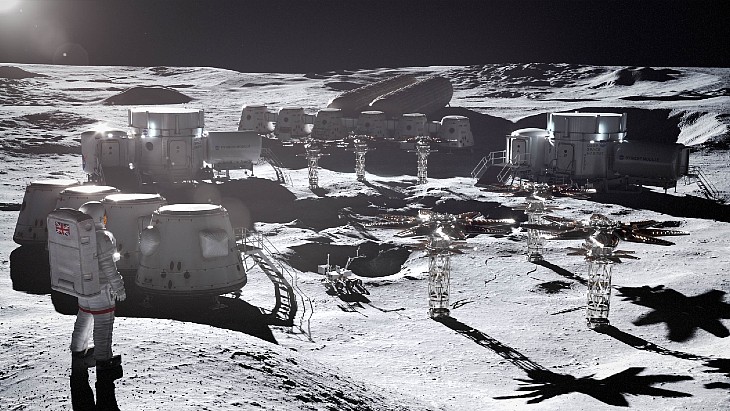
 Follow Jo's Tweets












Recent Comments