Who knew, we can solve global warming by moving suburbs, planting trees, limiting immigration?
A new study used satellite data to look at ten cities around the world to see which parts of cities are the warmest, and how that has changed in the last twenty years as they grew.
It looks like man-made global warming mainly applies to airports and industrial areas. We put most of our thermometers at airports which awkwardly turn out to be 2.5 degrees Celsius warmer than surrounding areas, and presumably warmer than they were 120 years ago when there wasn’t 3 square kilometers of concrete runway there sitting in the sun. Industrial zones were even worse, being 2.8°C hotter. Conversely leafy green areas with a lot of vegetation were nearly 4 degrees cooler than the average. So airports are at least 6 degrees warmer than forests. Places near bodies of water were, not surprisingly, even more than 4 degrees cooler. It’s part of why people pay $5 million for a beachside mansion isn’t it?
The worst climate change in Melbourne is on Boundary Road
One of the ten cities they studied was Melbourne and there is a special mention for Boundary Road in Laverton North where daytime temperatures rose from 22.49 °C in 2001 to 30.82 ° in 2021. So that’s 8 degrees of warming in 20 years, surely the fastest rate of warming in a million years. Bring out your dead?
This 8 degree local warming trend compares to a general city-wide background warming effect over the twenty years of about 0.5°C.
Contrast that apocalypse with the western Quandong region, which is primarily agricultural. There man-made climate change caused a cooling trend of −0.12 °C/year during the day.
Melbourne, Australia: The top graphs are the day time land surface temperatures in 2001 compared to 2021.
The bottom two graphs are the night time temperatures. Figure 12. LST means Land Surface Temperature.
Does anyone really care about the workers in the urban deserts?
The next time a smug Blob Academic panics about how 1.5 degrees of global warming will imperil pregnant women, babies, and cats and dogs, lets ask them if they know of the deadly microclimate threat. If a small rise in temperature is that serious, all the mascots, I mean victims, face a far bigger threat from high density development and unrestrained urban population growth than from coal and gas power plants a hundred miles away. When the experts tell us climate change causes school students marks to fall, or ruins the sleep of senior citizens, we can ask them why they think windmills and solar will cool folks better (or cheaper) than tree canopies? I mean, do they care or don’t they?
And instead of installing 4 million solar panels on rooftops in the hope of shifting ocean currents to cool the suburbs, we could have planted trees instead. And given that we chop down trees that shade the panels, the big question is whether the local heating effect of solar panels can ever be compensated for by altering Antarctic jet streams via carbon reduction. These people are witchdoctors.
The next time the electricity grid managers plot and scheme to switch off our air conditioners at peak times, we can ask them whether tree planting has a better cost-benefit ratio than demand management. Is it cheaper to grow trees or to turn off smelters and factories at 6pm?
I’m sure there’s room for a thousand PhD theses comparing microclimate management as a way to solve “climate change” and I’m also sure most of them will never be done.
If anyone really believes an extra degree is dangerous, the fastest, cheapest fix is air-conditioning with cheap electricity. But in the long run, the lifestyle answer is trees, parks, and ponds. Not “green steel,” not jet-stream manipulation, not billion-dollar grid schemes. Just shade, water, and leaves — the original solar harvesting technology.
The ten cities they compared were spread across the world: Cairo (Africa), Chongqing (Asia), Delhi (Asia), Istanbul (Europe/Asia), Melbourne (Oceania), Mexico City (North America), Moscow (Europe), Nuuk (North America), São Paulo (South America), and Tokyo (Asia).
A couple of weeks ago at the Australian Clean Energy summit, there was a dawning realization that in our rush to diversify the energy grid we are accidentally “diversifying” our cyber security risks too.
Where, once upon a time, we could double and triple check the barriers around big old coal plants, now we have opened electronic doors to our grid on homes all over Australia. Energy geniuses told us solar panels would be decentralized, but instead, now that Australia has 25,000 megawatts of household solar, we have to add wireless gadgets to control them remotely. And some of these gadgets are coming in from fly-by-night small time operators. If, hypothetically, a foreign power wanted to be mean, or just hold an extra negotiating or blackmail card up its sleeve, we’re making it very easy. If Mr Chin wants something approved, he could say “Nice grid you have there…”
Small scale solar is so big, As Williamson points out, that it supplied 13% of the electricity to the NEM so far this year. And in Western Australia, it has generated 20%. (Boy is the West in trouble?)
On top of this, to deal with the hellfire price spikes at 6pm, the government is subsidizing industrial batteries in homes, wired to the grid, often working in shared “virtual power plants”. Meaning that homes will have large boxes of chemical energy, controlled remotely, and nearly every gadget is made in China.
A combination of state- and regulator-mandated access points with woefully insecure small devices are building an open door for cyber attackers, says Darren Gladman, regulator manager for major equipment supplier SMA Australia.
“My god, small scale. We’ve just introduced an emergency backstop mechanism to turn everything off. If you wanted to make a hacker’s life easy, how could you have made it any easier?” he said during the panel session at ACES.
“The battery rebate, it’s great. However, it’s led to a lot of battery suppliers, a flood of batteries coming in. Some of these companies, when you look at their structure, they might be two or three people in Australia. They’re not thinking about cybersecurity. They’re trying to survive in a really competitive, cutthroat industry.
“And then you’ve got on top of the backstop mechanism. You’ve got virtual power plants. You’ve got this space that lends itself to manipulation so easily, an industry that’s so competitive and so under-resourced that this is seen as a complete luxury, until you’re told that it’s not, and no one’s been told that it’s not.”
The federal battery rebate requires that all home batteries bought with the subsidy be VPP-enabled, and in Western Australia they must be connected to one.
Apparently the rush of insecure gadgets into Australian homes is so bad, that it was referred to as “Digital Asbestos” by David Owen, a Deloitte partner. He wonders who will pay for the replacement of all the inverters if we realize, too late, that they pose an unacceptable risk?
Rachel Williamson reports that everyone in the Australian renewable industry is fine with talking about buying things from China until someone says the word “cybersecurity”. Then suddenly people won’t-mention-the-CCP-word, except to hint anonymously. It’s a strange state of affairs.
In the end, the nation that lied about a pandemic, then launched hostile trade wars when we asked for answers, now potentially has access to many of our homes. It may also have control over explosive batteries and potentially could bring down our grid…
Maybe we should have thought of that ten years ago?
Could it get more vacuous? We used to think climate simulations were bad. Now we don’t even have the modeling, we have unverified, imaginary, rumors of modeling…
In a new PR tactic, the Labor government has leaked that it has “held back” an intense and scary report. This means the Blob-Media can put out frightening headlines about how dire the report is (and none of those horrid critics can ridicule the assumptions).
This new extended version of vague “non-releases” allows the Ministry of Climate Panic to get in a few extra weeks of baseless media speculation, hyperbole and uninformed discussion. Furthermore the Greens can pretend to be relevant by demanding its release, as if they want transparency, and as if the government is “covering up” the climate disaster while they actually promote it. It’s a win-win for the Blob. The reason for the tabloid theatre is that next month the Australian government is announcing new sacred emissions targets for UN Climate Piety and Net Zero goals by 2035. Hence if there actually was a climate crisis, and if Australia could make any meaningful contribution to solving it, the report should have been released late last year when “the modeling was done”. Instead, like a Hollywood movie release, the leaked secrets have been not-dropped a month ahead, just in time to wind up the crowd without allowing for any meaningful scrutiny. Just like the original emissions target, which was “held back” instead of being released before the election.
Obviously, if the modeling was bad AND convincing, they would have released it all months ago.
Sources familiar with the modelling, who asked for anonymity to speak about sensitive government information, described some of the scenarios outlined in the report – known as the National Climate Risk Assessment – as “dire”, “diabolical” and “extremely confronting”.
The report’s modelling has been largely complete since late 2024 and stakeholder groups have been repeatedly notified about its imminent publication.
What Stakeholders have been notified? It seems everyone who expects to score money from this has been told about it, and everyone who has to pay for it doesn’t count. In this case “stakeholders” means people in on the grift. Not people who have a “stake” in the outcome.
Why “hide” the dire report?
Wait for it… the excuse for holding back a science report about a coming catastrophe is that there is a big budgetary shock coming which will be “severe”. Presumably they are afraid people will have heart attacks and they haven’t got enough epipens and defibrillators or something:
A major reason for the hesitation to release the assessment is related to the budgetary implications of the associated adaptation measures required by the government, which are expected to be severe, the sources said.
Is anyone buying this? “We’re hiding news of the tidal wave to protect you from the budgetary shock”?
In a nation of adults, the Investor Group on Climate Change has been forewarned, but not the farmers, landowners, firefighters and taxpayers. So the industry reps for 100 Superannuation Funds (the pension funds) have been forewarned, but not the fourteen million employees who are forced to put their money into these funds, and whom, supposedly the funds, and the government are supposed to serve.
Clearly the government are winding us up to expect very tough carbon emissions targets. Will the opposition get its act together before Anthony Albanese sells out the nation in a vainglorious race to “win” the right to host a pointless UN conference of private jet flying lecturing celebrities?
“No wind project, not a single one, was signed off financially in the first half of 2025.”
There is a bit of paralysis of green investment Downunder.
BloombergNEF sells itself as the analysts of the energy transition for investors. According to them, Australia’s rapid transition is “seen as a global test case” and if so, the green wish-fairy needs an ambulance full of money. This year investments in grid-scale solar shrank to just 30% of what they were a year ago, and no wind project at all was committed in the first half of 2025.
This is a fall that is accelerating. 2023 was the boom year and in 2024 investment “fell 48%” which sounds pretty drastic. But this year is even worse.
Investment in new wind and solar projects dropped by 64 per cent in the first half of 2025, compared to the same period in 2024, underscoring concerns that Australia’s energy transition is not attracting nearly enough capital.
“In the first half of 2025, Australia saw $556 million of investment in utility-scale solar, falling sharply from $1.6 billion in the same period in 2024,” the report says. No wind projects at all reached financial close over the period.
This is a far cry from the roughly $US59 billion ($A92 billion) BloombergNEF has said that Australia needs to invest some (sic) every year between now and 2030 to meet its economy wide net zero target – currently set for 2050.
At Bloomberg, they know this is serious: “the slowdown in wind farm development has come despite government support for wind being at an all-time high” they say wistfully. A month ago they surveyed investors who managed as much as $38b in renewable “assets” so the Bloomberg team already knew from investors that the transmission lines are delayed, the communities hate the projects, and the costs have reached escape velocity.
Australia’s transition is “sluggish” and “slow” and new projects are “stranded”:
Australia’s rapid energy transition to replace aging coal-fired plants is seen as a global test case, but its sluggish build out of transmission infrastructure has left new solar and wind projects stranded, and helped make its power market one of the most volatile in the world.
Transmission delays and slow planning processes are the biggest barriers to deploying capital, closely followed by costly and slow grid connections, according to the survey of members of the Clean Energy Investor Group
To be fair, part of the slowdown this year was also the uncertainty over the recent Australian election, not that the opposition opposed NetZero, or even mentioned it much. But it’s a dire statement anyway — if an industry depends on the outcome of an election in a life-and-death kind of way, it only proves they are not and never were competitive, needed, or popular products. To that end, the Labor government has tried to make up for that by dropping money from helicopters with a boost to the Capacity Investment Scheme (CIS)” which will “support” another 3GW of unreliable generation.
But even Ross Garnaut, perpetual fan of green energy, says this is not enough, and he is long past mincing his words:
“The renewable energy transition is sick,” he said. “We are, for the time being, on a path to comprehensive failure.”
If the quote above from Sophie Vorrath is accurate, then according to Bloomberg, Australia needs to spend $92 billion every year for the next five years to meet it’s Net Zero Target. (Just $460 billion!) Where was that price tag in the Australian election when we needed it?
The biggest and best studied reef in the world is looking good
Despite record high emissions of carbon dioxide, and hottest ever temperatures, the Great Barrier Reef was again enjoying one of its best years yet. In the 40 years that AIMS has been studying it, the last four years are great results.
Judging by the data, corals are coping fine with today’s heat and CO2. But the more money we spend finding a climate crisis, the worse our science institutions get. One-sided money and monopoly science can turn any institute into a tax-grabbing-machine, that serves the Blob, not the people. Thus is it so.
So Peter Ridd took the same data and did the graph that AIMS, with $90 million in taxpayer dollars, couldn’t do, so we can all appreciate the full disaster. And here it is:
AIMS also tells us that the “reef is more volatile”, and has suffered the tragedy of declining from record highs all the way back to “near long term average trends”, which sounds awful, I mean, “normal”. Like regression to the mean. Though it doesn’t look very “average” in the long term graph that AIMS don’t want you to see.
The Blob Media promptly took the one-sided, politically-convenient AIMS press release, investigated no claims, asked no hard questions and churned out the worst possible interpretation of a good result. Which is apparently exactly what AIMS expected, because they didn’t complain.
The ABC, with a billion dollar budget, could have done the graph Peter Ridd did. They could have asked AIMS for it. Heck, they could have just phoned Peter, he would have given it to them, and with a smile. Instead they pressed the “Climate Alarm: Give us Your Money” button.
It’s clear that The Australian Institute of Marine Science’s (AIMS) is not even trying to give Australians the most meaningful information they can on the reef. When the media exaggerates the crisis, the experts are happy. AIMS don’t ring up the journalists and correct them. They don’t explain the bigger perspective.
Corals got bleached way back in 1862, before the first coal plant, and long before the Ford Model T. Most likely corals have been bleached on and off for millions of years, it’s just that there were not many scuba divers around to take a photo or collect an ARC grant in 2 million BC.
After millions of years of asteroids, volcanoes, wild temperature changes and dramatic shifts in atmospheric gases, (plus sea level swings of 125m) it would be a shock if corals did not have a full toolkit to cope with a bit of climate change.
Australia couldn’t build a nuclear plant “til 2045”, but NASA is going to put one on the moon in five years time.
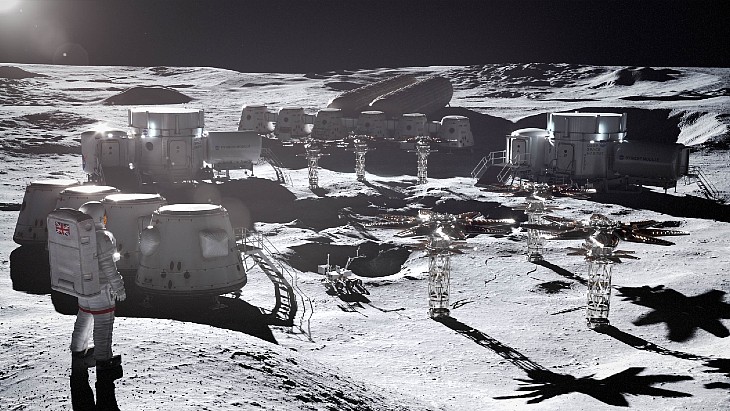
The new NASA chief, Sean Duffy, is set to announce urgent plans to get a very small nuclear reactor on the moon. What was going to be a 40MW microreactor in the “early 2030s” is now said to be a 100MW one launched in 2029. The reason for the rush is because three months ago China and Russia announced plans to cooperate and build their own nuclear plant on the moon in the early 2030s. They want the power to set up what they call an international lunar base. According to Politico, the fear is that the first nation to colonize the moon could declare a “keep out zone” — a quasi form of ownership that would stop another nation setting up in the same area.
NASA’s interim chief Sean Duffy has made deploying a nuclear reactor on the Moon his top priority, framing the effort as a “second space race”.
Solar power isn’t much use on the moon where each night lasts two weeks. The back-up battery payload would be enormous (and who wants to be in a moon colony when a big battery catches fire?) Nuclear power is the only thing that makes sense.
“We need a lot of energy for future missions to the Moon,” said Simon Middleburgh of the Nuclear Futures Institute at Bangor University in Wales. “To establish permanent Moon bases, we would need to be generating our own water and oxygen.”
Nuclear power, by contrast, offers an advantage in energy density. “It’s very dense, which means that a reactor the size of a small car could theoretically power a lunar base for around six years without refuelling,” Middleburgh said.
Transporting a scaled-down reactor is not the same as launching a nuclear power plant into orbit, but it is still likely to be an expensive operation. For one, it’s unclear how many microreactors will be needed. While a single unit might suffice, backup reactors would be essential in case of failure. Experts told FRANCE 24 said it was impossible to imagine a lunar base without an alternative power source if the lights were to go out. All in all, launching and installing the reactors could cost several billion dollars, factoring in both manufacturing and delivery.
Meanwhile in Australia our “most advanced” science bureau, the CSIRO, says nuclear power will take years to build and cost too much to use in Australia even though we have the largest uranium reserves in the world. Apparently, NASA can put a reactor on the moon, but CSIRO says small modular reactors are “too immature” for us. While the CSIRO waits for the rest of the world to master nuclear power and sell it back to us, it keeps us firmly locked in an era of windmills.
Australia has more space for launchpads close to the equator than any first-world nation. That makes us ideal as a launch pad for satellites. It’s an industry we could have had. Thankfully, given the spectacular government failure, one small company in Australia is trying to catch us up. The first rocket launch in fifty years in Australia was a week ago. It only lasted 14 seconds, but Gilmour Space are ambitious and serious. For some reason the ABC didn’t mention this on the nightly news, preferring to repeat the same stories on foreign wars and e-scooter accidents it ran the day before instead. Presumably they didn’t want to show a small private company being innovative and scientific because it makes the billion dollar Blob agencies look bad. And there’s always the horrible risk that if they turn a bunch of engineers into stars, they might say things like Elon Musk.
David Maddison comments about how Australia has been missing opportunities for 50 years:
Of course, all Australian efforts to get into space are reminiscent of when Australia first launched its own satellite in 1967 on a surplus US Army Redstone first stage which the US donated after they had done testing in Australia.
The Americans were prepared to donate more of the rockets as they didn’t want to return them to America but the Minister for Education and Science and also later PM Gorton at the time, could see no future in Australia being involved in space and rejected a proposal for a low cost space program along the lines of WRESAT. The cluelessness was staggering. Australia’s fledgling space program more or less languished after that.
Australia was the third country to design and launch a satellite from its own soil and one of only six other countries to have launched a satellite at the time along with USSR (1957), United States (1958), United Kingdom (1962). Canada (1962), Italy (1964) and France (1965).
Yet another lost opportunity by Australia due to second or lower rate politicians and the senior public serpents who tell them what to think.
Instead of being the worlds launchpad in the space race, or leaders in nuclear energy, the Labor Government plans to spend $22 billion dollars on a Future Made in Australia that no one wants to buy anymore.
PS: Some interesting details in this video about what the Gilmour launch did well, and theories of what might have gone wrong:
Big Battery prices on fire in Australia last quarter
The Renewable Crash Test Dummy suffers yet another nasty price surprise. We have more batteries than last year but the average price per megawatt hour has doubled.
In June there were a few hellfire price spikes where the prices on the National Energy Market launched up to an obscene $10,000 a megawatt-hour and then levitated there for hour after hour. These spikes had a width like we rarely see. Now, with the latest AEMO Quarterly Report we know that the spikes were due to the batteries.
On the left, the price spike of June 26th. On the right, the timing of the battery discharging…
And just so everyone can see how much energy the batteries provided — note the patch marked “Battery” below in the daily load curve of June 26th. The black line across the top is “total demand”. Most of the area under that curve was provided by the evil, but reliable, fossil fuels. Batteries contributed just 0.7% of total NEM generation.
These spikes were so bad they moved the quarterly average costs
The average daily price for June 26th was 24 long hours at $1,408/MWh. It was the fourth highest price day in NEM history.
Quarter two used to be the sleepy shoulder season for grid managers, now it’s a white-knuckle ride. Below are the winning bids on the national market graphed by their fuel type. In Quarter 2 last year when batteries won bids the whole market earned, on average $245/MWh. But in Quarter 2 this year, batteries won a higher percentage of the time (because we ran out of cheaper options), and the average winning bid was $478/MWh.
If only we’d built another gas plant instead of buying big batteries and then burning money on $600 million dollar price spikes.
The gas plants saved the day (somewhat) with prices of $170/MWh — or nearly a third of the price of the Big Batteries.
Note that brown coal prices also jumped from $12/MWh last year to $59/MWh this year — showing that even after the price quadrupled, brown coal is still cheap. (Ignore the negative prices on solar and wind power, which just show how subsidized they are.) We could run the whole grid on brown and black coal if we wanted to — with a peaking gas plant or two — just like we did for decades when electricity bills were cheap.
Can you afford to set up an AI Data centre in Australia — it depends on the weather
Quarter 2 is now the most expensive quarter of the year, and very weather dependent. Things were warm and sunny in April and May and prices were only three times what they used to be twenty years ago. The real bonfire was in June when a few cold fronts were followed by chilly windless days. Look at the difference in those monthly prices!
Poor Giles Parkinson at Reneweconomy thought batteries would reduce the price spikes, not exacerbate them. The big hope, of course, is that batteries will save the forced transition, and make solar and wind power more useful. He is baffled and disappointed that market players are doing what market players do, and are trying to maximize profits. (Don’t they realize that thousands of renewable grifters depend on the illusion that batteries are cheap?)
Australia’s growing fleet of big batteries are now entrenching themselves as the major force behind the huge price spikes that have become a regular feature of Australia’s National Electricity Market, and which were the dominant factor in soaring wholesale prices in the June quarter.
Big batteries had been expected to be a softening influence on price spikes on the grid, given their cost of fuel (charging) is significantly lower than peaking gas stations, and based on the assumption that they would bring new competition to the market.
But market power is market power, whatever the technology that is deployed. The costs of battery storage may well have fallen, but their market power has grown, and so has their asking price.
It’s perhaps proof, if any was needed, that the owners of big batteries will not behave any differently from the owners of peaking gas and pumped hydro.
And that’s largely because they are one and the same group, the same oligopolists who have dominated the grid for decades, and they are not about to break their addiction to unchecked market power.
Dear Giles, those same oligopolists gave us cheap electricity for decades until we screwed up the free market and tried to turn it into a socialist weather-control machine. That’s the point of free market competition. It makes greedy people work for the greater good.
You cheered on the oligopolists when they drove cheap coal fired plants out so they could profit from subsidized wind and solar plants in a rigged market. Reap what you sow, eh? Did you think they would be nice?
Once the government started to pick winners, subsidize losers, and allow predatory giants (and foreign interests) to have cross ownership of competing generators there is no free market and the whole country gets screwed.
Quietly, the world manufacturing base for solar panels has been shrinking for nearly two years and yet hardly anyone knows. Especially not the Prime Minister of Australia who set up the the $1 billion Solar Sunshot a year ago to artificially create an Australian solar panel manufacturing industry, twenty years too late, and with the worst possible timing.
China has already captured the solar market and killed it.
Gluts have consequences
The CCP is making twice as many solar panels as the world wants to buy. The latest trend is from bad to worse.
Let’s remember this story, the next time the propaganda media try to tell us solar panels are setting new records. Isn’t this the sort of thing our investigative sleuths at the ABC-BBC-CBC should have been digging out before elections were held? Doesn’t this change everything?
BEIJING, August 1 (Reuters) – China’s biggest solar firms shed nearly one-third of their workforces last year, company filings show, as one of the industries hand-picked by Beijing to drive economic growth grapples with falling prices and steep losses.
Layoffs are politically sensitive in China, where Beijing views employment as key to social stability. Other than a 5% cut acknowledged by Longi last year, none of the firms mentioned above have announced any job cuts or responded to questions from Reuters.
“The industry has been facing a downturn since the end of 2023,” said Cheng Wang, an analyst at Morningstar. “In 2024, it actually got worse. In 2025, it looks like it’s getting even worse.”
There is a glut on our grids too
The Duck Curve has been quacking on grids in California and Australia for years. Finally the market is starting to pay people what solar power is really worth. Many solar feed in tariffs in Australia are shrinking to nothing. The tragedy is that this was not done 10 years ago, so homeowners were not misled (and not squeezed to cough up the payments to subsidize too).
… 4 million Australian homeowners are set for disappointment as energy retailers all but stop buying their solar power – blowing out the promised return on investment (ROI) and pushing customers towards costly batteries.
Solar customers in Victoria, in particular, recently received notifications from their retailers that their feed-in tariff (FIT) had been slashed as of 1 July,…
Excess solar is so toxic, that prices are negative. Things are so crazy, solar farms often have to disconnect at midday, right at their peak, or they will have to pay people to take the power away.
Unlike all the expert prophesies, coal production is still growing, and solar factories are the stranded assets.
We use cookies to ensure that we give you the best experience on our website. If you continue to use this site we will assume that you are happy with it.










Recent Comments