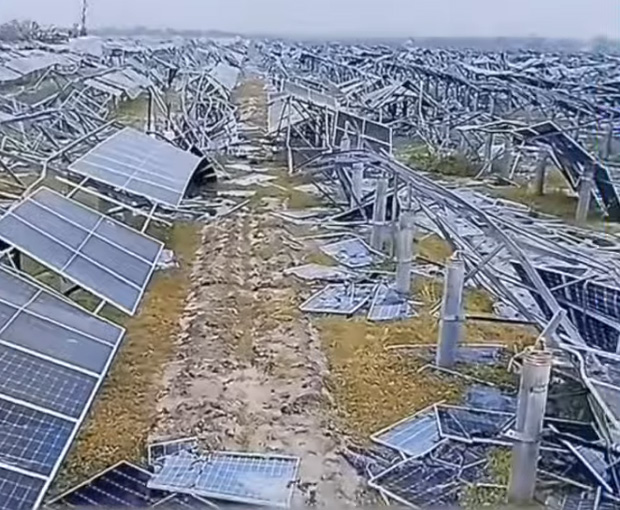
A Solar “farm” in the path of Typhoon Bavi. (From the video below).
By Jo Nova
The price of low intensity energy is large vulnerable infrastructure
Typhoon Bavi travelled right through a zone of multiple coastal solar parks in Zhejiang, China on July 12th. It’s difficult to confirm details, as there are few news reports and the CCP don’t seem to want to put out a press release. But we know Typhoon Bavi made landfall in Zhejiang in Eastern China near Taiwan, and Google satellite shots show quite a few large solar panel installations were right there in the water and on the tidal flats where the typhoon hit. These sitting ducks of glass had no protection.
Some hybrid solar “farms” double as fish farms too. The largest one, called the 550MW Taihan Fishing-Solar hybrid project has (or had) 1.4 million solar PV panels covering 4.7 square kilometers,. It was finished in December 2021. Another one, the Hengtai 550MW fishery and photovoltaic farm was only connected up on July 30 last year. It cost 1.46 billion yuan ($200m US) and covered 194 hectares. It was not even a year old before it faced it’s first Super Typhoon. It was a baby. Presumably all these “farms” would have been expected to last 25 years or so, not 1 to 3. Insurers must be hurting. Rates will rise.
And if the solar parks are rebuilt, they’ll need to be stronger, so construction costs will rise too. An expensive lesson.
As @Luanne_Ashe said: Toxic waste dumps on the water. DON’T EAT THE FISH
As commenter @donrane said: No one could have predicted these annual returning Typhoons to return.
Imagine putting something like this in front of a typhoon
Imagine if a coal plant was destroyed by a storm?
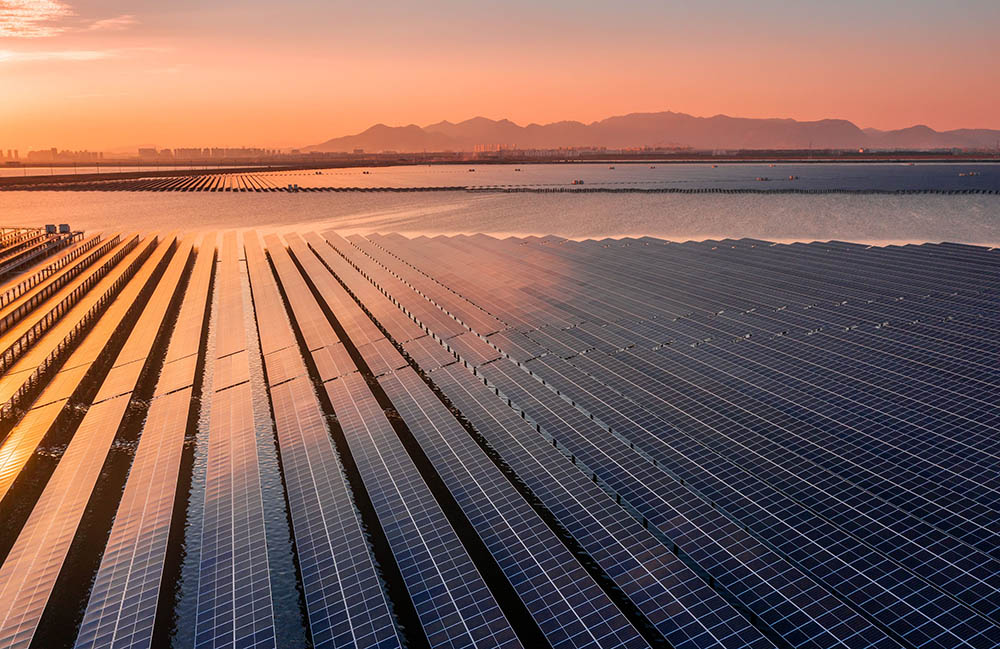
Taihan 550MW Fishing-Solar Hybrid Project
The aftermath of one solar array (in the video). Stripped.
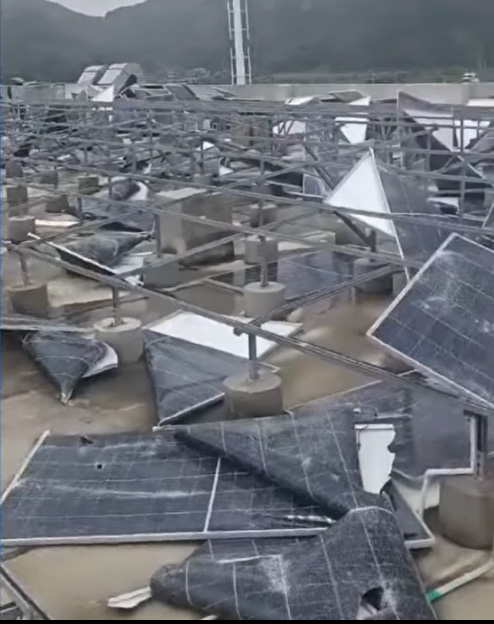
…
China Observer has put together the solar panel footage:
..
Before the typhoon, there are several large solar parks on tidal flats, in the water and on the beaches looking very vulnerable.
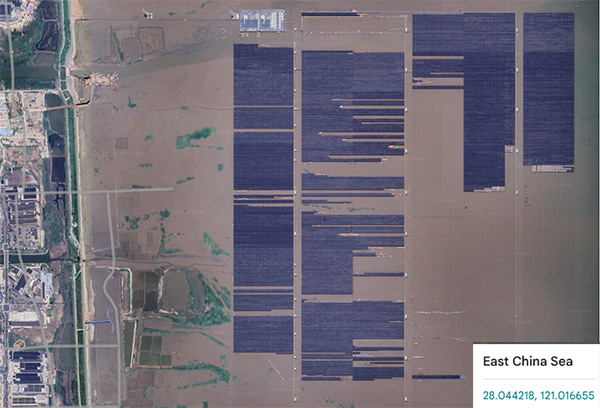
As seen in Google Maps.
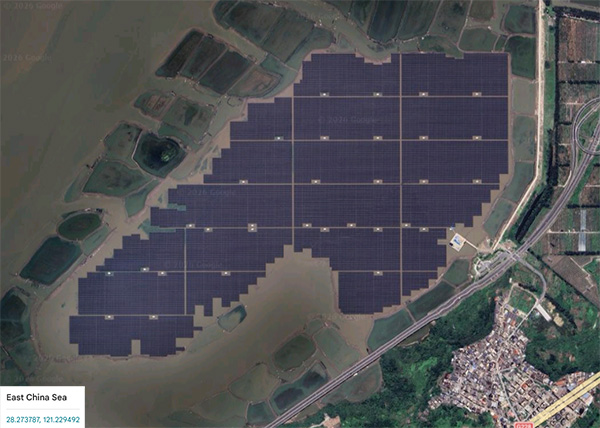
As seen in Google Maps.
The second video shows waves that would have pummeled those panels. (The preview frame looks AI but not the rest.)
Luckily there are no reports of injuries or deaths so far, apart from wallets, and in the future — marine life.
h/t Willie Soon, Tonyb, ClimateDepot






There you go you Climate Alarmists. That will teach you.
Mother Nature can often be quite difficult.
She has turned your Renewables Project into a Ruinables one.
70
Yeah,
That’ll learn ’em!!
Of course, Black-Out Bowen will have his blinkers on.
And, coming to a solar plant near you.
I just wonder, are they insured against “climate events”?
50
To some people, a story doesn’t exist if it isn’t reported by the ABC. This story is – um – dead in the water.
Note: my understanding is that the ABC reported the typhoon but not this impact. The sooner they are de-funded the better, though it does seem that a new broom may have arrived. We will see.
70
Renewable Plan = Renewable Farce.
Centralised power makes bad decisions and enables corruption. Poor construction practise due to money winding up in wrong pockets, and failure is the result. Good old Socialism. Kill it please, the sooner the better.
50
You never see coal, gas, nuclear or real hydro (not SH2) power stations destroyed by the weather.
60
Low energy intensity energy collectors like wind or solar plantations are far more susceptible to weather damage than are high energy intensity generators like coal, gas or nuclear or real hydro plant.
This is because low energy density collectors like solar and wind plantations need vast areas of collectors (solar panels or windmills) to collect a low energy density source (sun or wind). Economics dictates that to achieve these vast areas of collectors they must be inexpensive, mass produced and lightweight and therefore not robust (although they are designed to withstand design loads, it’s a probabilistic assessment as to what proportion will withstand an extreme weather event).
On the other hand, high energy density (coal, gas, nuclear, hydro*) generators are dealing with enormous high intensity energy sources in small areas and have to withstand extreme temperatures, pressures and forces, leading to thick steel/concrete construction built to far stricter standards (nuclear especially, with seismic, flood and missile protections) and are almost indestructible so are therefore not susceptible to weather damage.
*Note that hydro is a low energy intensity storage medium (huge areas of pondage) as it uses low energy density gravitational potential energy but the generator itself is a high energy density relatively compact installation and located in one single place, just like coal, gas or nuclear plant.
30
Don’t forget the highly exposed and vulnerable transmission system required by Ruinables. Happily multiplying the possibility of Natural Disaster impact, while wrecking the Forests and Farms, killing Native Wildlife and just making a mess.
60
Just like a yacht hit by a savage squall, sails ripped and shredded, rigging damaged, dead in the water, would that be ‘unprecedented’.
10