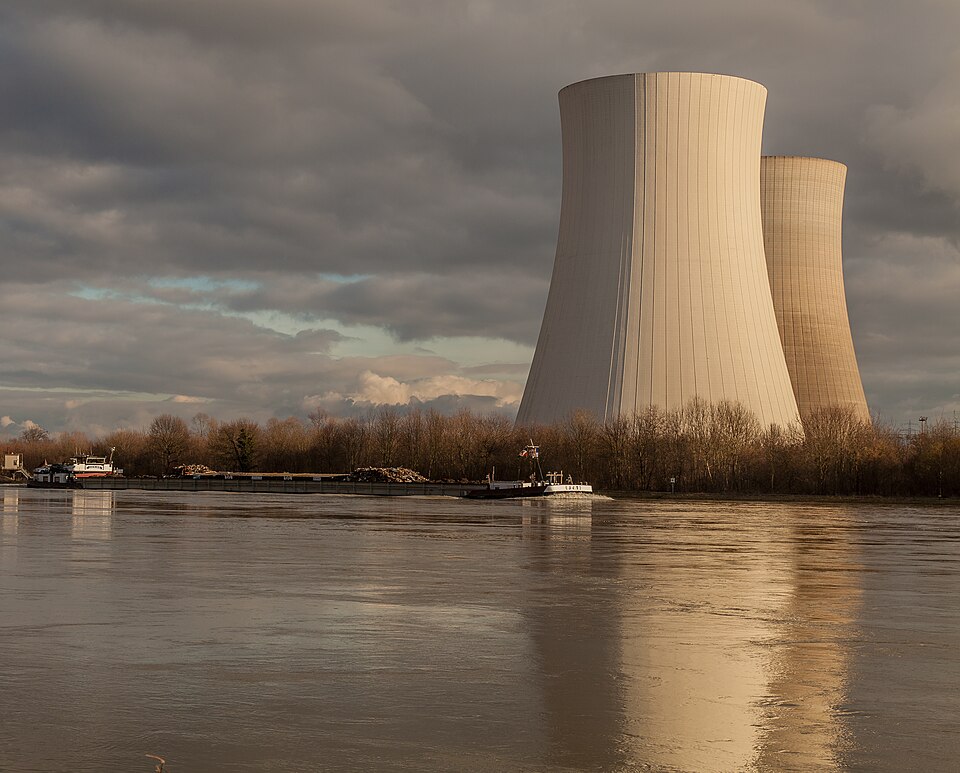
Germany had nuclear power for 66 years | Kühltürme AKW in Phillipsburg, Baden-Württemberg, Germany By Fischer.H

By Jo Nova
If renewables are expensive, it’s volatile coal’s fault!
How can it be? Germany has all that free wind and solar power but the price of electricity is the second highest in Europe.
Apparently a nation with 45% of its generation from wind and solar is still “tied to volatile fossil fuel”. This is like a hostage situation, it’s so cruel?!
EuroNews is spinning a fairy tale at 100 miles an hour.
Germany is a leader in renewables, so why does it have one of the highest EU electricity prices?
German households pay around a third more for electricity than the EU average, despite the country’s impressive efforts to ditch fossil fuels.
According to energy think tank Ember, Germany is one of the “global leaders” for wind and solar energy deployment, with 59 per cent of its electricity coming from clean sources in 2025.
Since the introduction of its landmark renewable energy law (Erneuerbare-Energien-Gesetz) in 2000, the country’s share of generation from wind and solar alone has skyrocketed from less than two per cent to almost 45 per cent last year.
At the same time, coal – which is often described as the ‘dirtiest’ form of energy – fell from supplying more than half of Germany’s electricity to just 21 per cent.
The stark truth: The system costs are awful
A wind and solar grid is really two grids for the price of … two grids. One grid helps impress your shallow academic friends at dinner, while the other grid (the reliable one) could run all the time, but has to sit around waiting for the first grid to fail, which it does often, and then it swings in to gear to save the day. Neither grid is running efficiently, the unreliable one forces the reliable one to stop and start. So we get the worst of all worlds and a big electricity bill.
Wind and solar power are only cheap if you don’t mind blackouts or shutting down factories and destroying your manufacturing base (BASF, Volkswagen, anyone?)
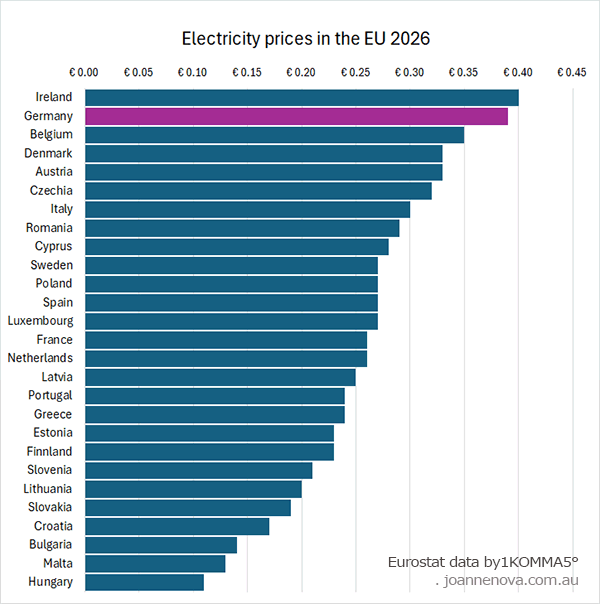
EuroNews delivers the bad news: €500 a family wasted on a weather shifting project
For a typical single household (consuming 1,500 kWh), Germany’s high electricity prices mean households will be paying around €150 per year compared to the EU average – or an additional €500 for a family with a 5,000 kWh electricity consumption.
The one thing wind and solar can’t buy — Flexibility
Why does Germany waste clean energy?
But as Jannik Schall, co-founder of 1KOMMA5°, points out: “Germany does not have too much cheap wind and solar power, but too little flexibility in the system.”
Last year, Germany spent €435 billion euros on renewable energy curtailment. This involves intentionally shutting down electricity production in areas of oversupply and ramping up supply elsewhere.
System costs get you every time
Unreliable generators need a massive oversupply of generation, frequency stability, transmission lines, back up batteries, new market arrangements, payments for curtailment of the oversupply of generators, and then you have to throw away all the generators after 20 to 25 years, bury them in a big hole and start again.
Crazy people thought two grids would be cheaper than one.