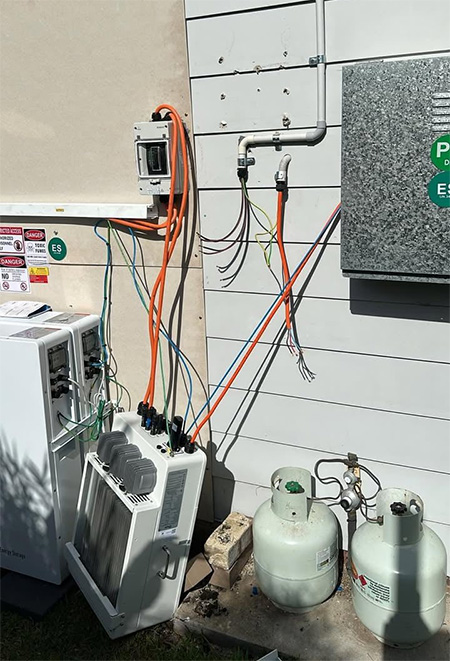
Facebook “Crap Home Battery Installs Australia”. It seems the inverter fell off the wall, but luckily missed the gas bottles.
By Jo Nova
It’s like the “Pink Batts” debacle but this time with potentially explosive electrochemical gear
The costs have blown out in the subsidized home battery scheme– and now so have the safety standards.
Costs of the Cheaper Home Batteries Program were supposed to be $2.3 billion but when homeowners realized they got huge subsidies for installing bigger batteries than they needed, they … installed bigger batteries than they needed. Thus and verily the Cheaper Home Batteries Program blew out to $7.2 billion. And since most of the lucky homeowners won’t be sharing their battery with the voracious energy cartels, their batteries will sit at home barely used.
The government only woke up to their own inept scheme after 160,000 home units had been installed. Then they suddenly had to slap an end point on the scheme in order to stem the bleeding. So just as night follows day — that created a rush to install as many batteries as possible before the deadline, eventually reaching 250,000. Ponder that a 25kWh battery (the average size in Australia) is around 200 to 300 kg. It’s a big piece of equipment.
But a new survey of 1,250 installations shows that 1.2% were actually unsafe.
Over 60 per cent of popular Cheaper Home Batteries Program installations ‘substandard’
By Rusty Landon, The Conversation, via SBS
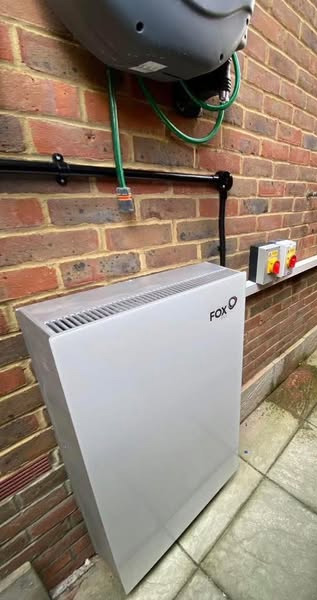
Hope no one turns the hose on!
Between July 2025 and April 2026, the Clean Energy Regulator carried out 1,278 compliance inspections on battery systems installed under the program.
Some 60.8 per cent of inspected system installations were found to be “substandard” and 1.2 per cent of installs were found to be “unsafe”. The problems weren’t about the batteries themselves, but the way they had been installed.
The sample size in the regulator’s report is small — 0.5 per cent of the total number of systems installed.
With such a small sample size, it is hard to extrapolate the level of installation non-compliance across all systems in Australia. But if similar trends continue in inspections over a larger sample size, there could be approximately 3,000 battery installs that are unsafe and a further 152,000 that are non-compliant.
Exposed wiring is also a common issue that needs to be addressed as a priority. If wiring is not enclosed, it can be damaged and increase the risk of a severe electric shock if touched. The independent solar energy website, SolarQuotes, highlights the exposed wiring issue well, showcasing several installations with non-compliant wiring.
For batteries, no amount of exposed cable is compliant. Cables need to be protected from mechanical damage for the full cable run, using electrical conduit or metal ducting.
Alarmingly, reports from experts in the field indicate that only 10 peer cent of installers are following these wiring practices correctly.
A quick scroll of social media groups that rate battery installation jobs visually confirms the issues. Posts of substandard installations show exposed cables, batteries placed in full sun, delicately anchored to a wall with standard masonry wall plugs or supported with loose bits of timber and pavers.
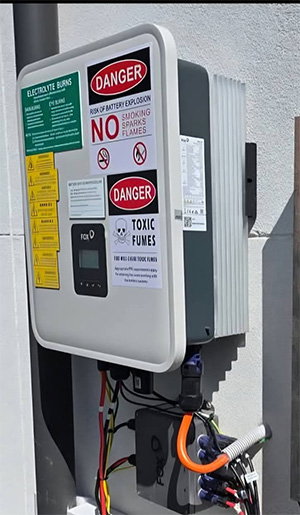
After creating all the right conditions for dangerous rushed boom the government is talking tough about “ramping up inspections” and identifying the poor performers. More money on this bonfire!
The regulator is even talking about limiting the number of installations that each installer can do in one day.
Many of the non-compliant issues relate to the sticker forest that has grown on most batteries. And while a misplaced sticker won’t set the battery on fire, if a battery is deemed non-compliant, it may void the insurance. Wouldn’t that be a nasty surprise?
There’s even a Facebook group called Crap Home Battery Installs Australia.
There are a lot of jokes about stickers, like “A few more stickers would’ve fixed that”.
The Solar Quotes article on “cheap batteries” has plenty of photos.
An advert for “Cheap Home Batteries” in Qld shows that customers only needed to pay a few hundred dollars more to drain the public purse by $4,000 extra and get a battery three times larger than they will probably ever use.

….