By Jo Nova
Rich nations protect the Earth
Despite the UN blaming the rich nations for destroying the planet, the data shows that wealthy nations have cleaner air and water and less deforestation.
A team at Yale compile a score called the Environmental Performance Indicator. It tracks 58 factors like biodiversity, species protection, particulates in air, pollution in water, forest integrity and fish stocks. It also, sadly, considers “climate change mitigation” measures — which no doubt adds some pointless noise to the line. But the underlying trend is clear. The only countries in the highest ranks of Environmental Performance are the ones with a GDP per capita higher than $30,000 US.
Possibly the best thing we could do for the environment is help poor nations grow their own economy. And the stupidest thing we could do is push unreliable energy onto the third world and deprive them of coal plants “for the sake of the environment”.
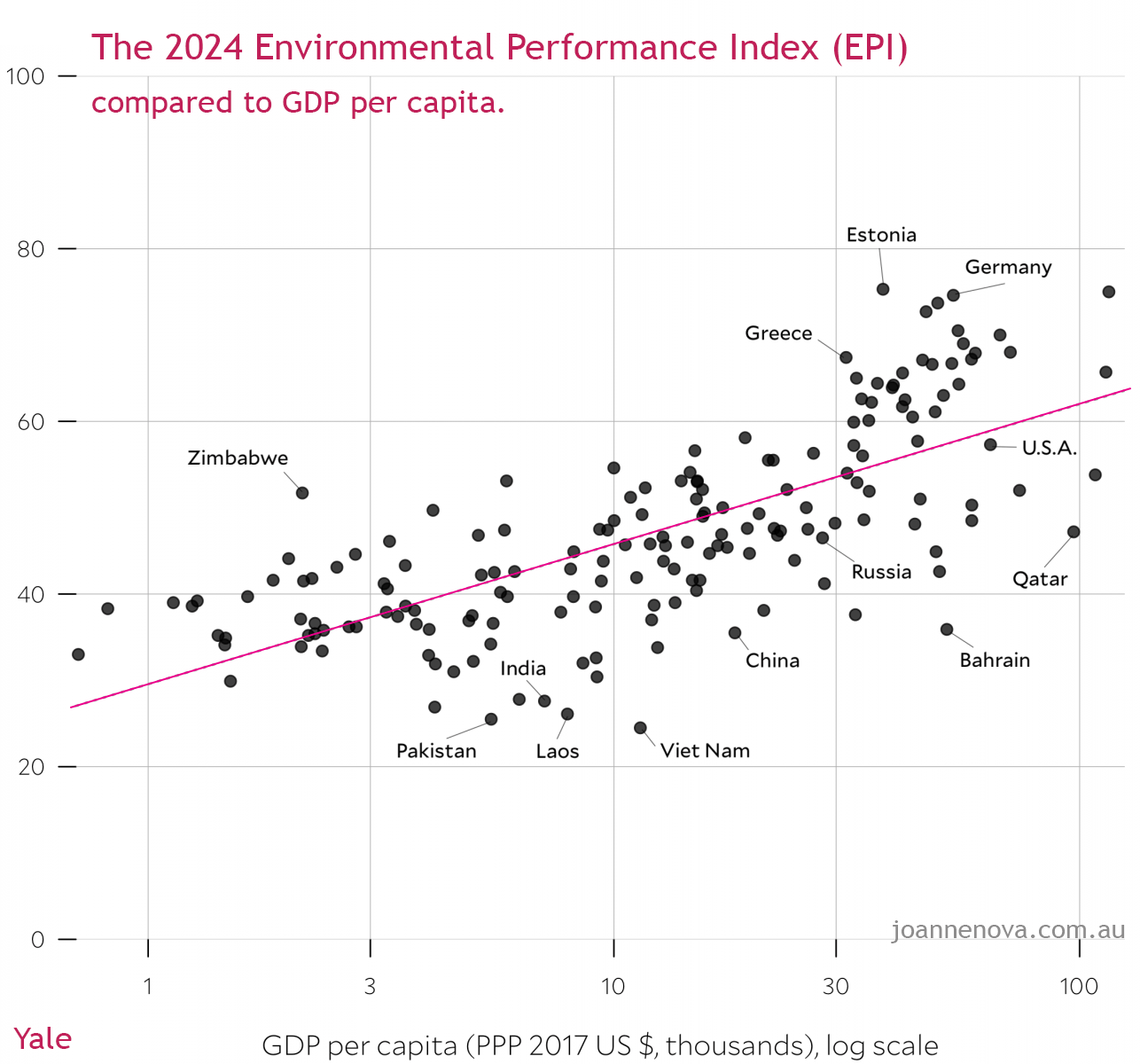
https://epi.yale.edu/
Obviously, anyone can raze a forest, and throw rubbish in the river, but it costs money to protect trees and plants, clean up waste, and filter factory chimneys. People who are hungry understandably, don’t care much about setting up national parks.
The Yale dataset itself, is updated every year. This article, discussed below, came out in 2021:
Study Finds Economic Prosperity is Associated With a Cleaner Environment
By Ethan Yang, Human Progress
The study finds that higher levels of income per capita are associated with lower levels of air pollution and deforestation.
The Environmental Performance Index
The Environmental Performance Index (EPI) is a joint project of the Yale Center for Environmental Policy and Law and the Center for International Earth Science Information Network at Columbia University. The index has been a leading resource on accessing environmental protection in individual countries for over 20 years.
The latest 2020 edition ranks 180 countries based on metrics, such as air quality, ecosystem vitality, environmental health, drinking water, CO2 emissions, etc. However, what stands out about the 2020 edition is its conclusion:
Good policy results are associated with wealth (GDP per capita), meaning that economic prosperity makes it possible for nations to invest in policies and programs that lead to desirable outcomes. This trend is especially true for issue categories under the umbrella of environmental health, as building the necessary infrastructure to provide clean drinking water and sanitation, reduce ambient air pollution, control hazardous waste, and respond to public health crises yields large returns for human well-being.
For some reason Yale researchers even admit free speech and private property rights help the environment. Perhaps priorities become clear when people look closely at environmental stewardship in Zimbabwe?
Furthermore, the report notes that although urbanization and industrialization can lead to increased pollution (especially in developing countries), tradeoffs between environmental protection and economic growth can be greatly mitigated by sound policy. For example, “commitment to the rule of law, a vibrant press, and even-handed enforcement of regulations – have strong relationships with top-tier EPI scores.” That’s because open governments allow for greater public scrutiny, whereas dictatorial governments, like the former Soviet Union, can silence their critics and continue destroying the environment unimpeded.
Undermining of private property rights, for example, can incentivize poor ecological stewardship – as it did most recently in Zimbabwe and Venezuela.
Economic growth is painted as a bad, bad bogeyman. Growth is supposedly synonymous with greed, and yet wealth saves the day.
Giving up wealth to protect the environment is not the trade-off they want us to think it is. But it might be the excuse for keeping people poorer.
REFERENCES
Block, S., Emerson, J. W., Esty, D. C., de Sherbinin, A., Wendling, Z. A., et al. (2024). 2024 Environmental Performance Index. New Haven, CT: Yale Center for Environmental Law & Policy. epi.yale.edu
Graph by the Yale Center for Environmental Law & Policy – CC BY 4.0, https://commons.wikimedia.org/w/index.php?curid=154237043
Thanks to Peter Ridd for asking the right question.